Castricum, North Holland, Netherlands — Northwestern Europe
Dorpskerk Protestantse Gemeente
⎯⎯⎯
Protestant Community Village Church
Photographed by Andrew Ruppenstein, March 21, 2025
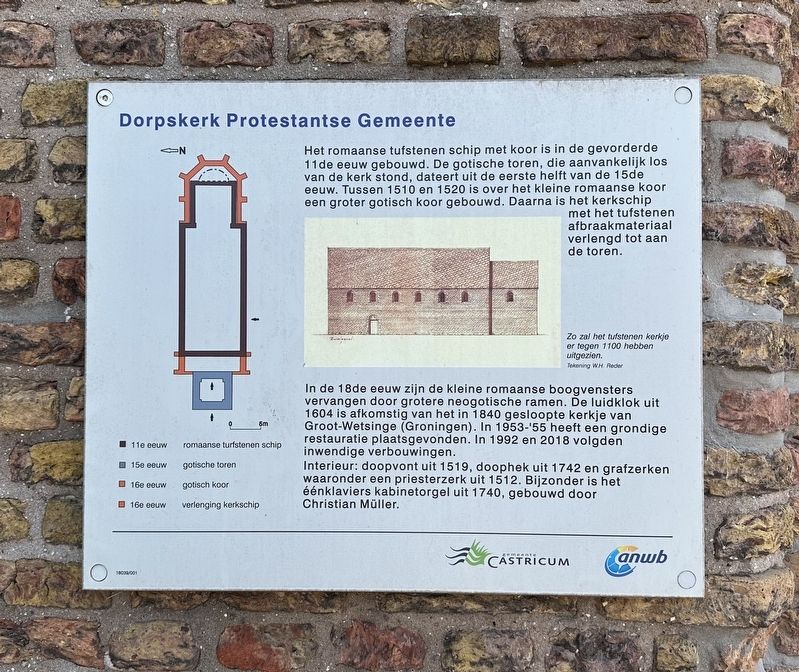
1. Dorpskerk Protestantse Gemeente / Protestant Community Village Church Marker

In de 18de eeuw zijn de kleine romaanse boogvensters vervangen door grotere neogotische ramen. De luidklok uit 1604 is afkomstig van het in 1840 gesloopte kerkje van Groot-Wetsinge (Groningen). In 1953-'55 heeft een grondige restauratie plaatsgevonden. In 1992 en 2018 volgden ip inwendige verbouwingen. Interieur: doopvont uit 1519, doophek uit 1742 en grafzerken waaronder een priesterzerk uit 1512. Bijzonder is het éénklaviers kabinetorgel uit 1740, gebouwd door Christian Müller.
The Romanesque tuff stone nave with choir was built in the late 11th century. The Gothic tower, which initially stood separate from the church, dates from the first half of the 15th century. Between 1510 and 1520 a larger Gothic choir was built over the
this page online
In the 18th century, the small Romanesque arched windows were replaced by larger neo-Gothic windows. The bell from 1604 comes from the church of Groot-Wetsinge (Groningen), which was demolished in 1840. A thorough restoration took place in 1953-'55. In 1992 and 2018, internal renovations followed. Interior: baptismal font from 1519, baptismal fence from 1742 and tombstones including a priest's tombstone from 1512. Special is the one-manual cabinet organ from 1740, built by Christian Müller.
Erected by Gemeente Castricum, ANWB.
Topics. This historical marker is listed in this topic list: Religion & Religious Structures. A significant historical year for this entry is 1510.
Location. 52° 32.786′ N, 4° 39.836′ E. Marker is in Castricum, Noord-Holland (North Holland). It is on Kerkpad. Touch for map. Marker is at or near this postal address: Kerkpad 1, Castricum, Noord-Holland 1901 GV, Netherlands. Touch for directions.

Regionally, it is in Europe, the European Union, Atlantic Europe, the Benelux Low Countries,
Photographed by Andrew Ruppenstein, March 21, 2025
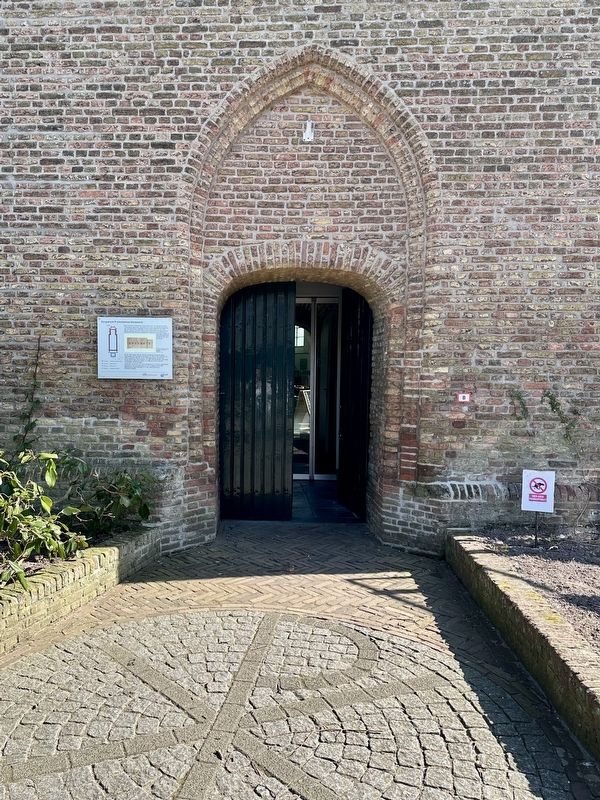
2. Protestant Community Village Church Marker - wide view
Other nearby markers. At least 8 other markers are within walking distance of this marker: Kogel / Cannonball (within shouting distance of this marker); Voormalig Raadhuis / Former Town Hall (within shouting distance of this marker); Castricum Holocaust Memorial (within shouting distance of this marker); Dingstal (within shouting distance of this marker); Jan Hoberg Memorial (approx. 0.3 kilometers away); De rooms-katholieke Sint-Pancratiuskerk / The Roman Catholic Saint Pancratius Church (approx. 0.4 kilometers away); Woonhuis en Stolpboerderij / House and Farmhouse (approx. 0.6 kilometers away); Monument Slag bij Castricum / Battle of Castricum Monument (approx. 0.6 kilometers away). Touch for a list and map of all markers in Castricum.
Also see . . . Dorpskerk (Castricum) (Wikipedia, in Dutch). Excerpt (in translation):
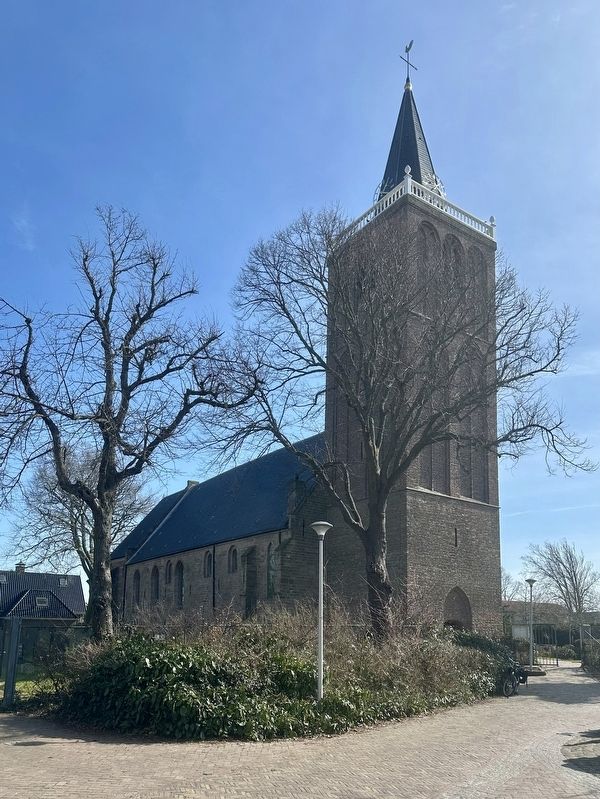
The village church of Castricum is a medieval church in the North Holland village of Castricum. Today, substantial parts of the old church are still standing. The church(Submitted on April 1, 2025.)is still in use by the Protestant community.Photographed by Andrew Ruppenstein, March 21, 20253. Protestant Community Village Church and Marker
The history of the church begins in the 11th century. The village church was built at this time at the far western end of the area between the Oosterbuurt and the Kerkbuurt.
The parish of Castricum is first mentioned in sources from 1231, but the church is of an earlier date. The church was dedicated to Saint Pancratius and was a daughter church of Heiloo. The noble family Van Castricum may have played a role in the foundation of the church.

Photographed by Andrew Ruppenstein, March 21, 2025
4. Dorpskerk Protestantse Gemeente / Protestant Community Village Church
Credits. This page was last revised on April 1, 2025. It was originally submitted on April 1, 2025, by Andrew Ruppenstein of Lamorinda, California. This page has been viewed 102 times since then and 19 times this year. Photos: 1, 2, 3, 4. submitted on April 1, 2025, by Andrew Ruppenstein of Lamorinda, California.
