
Clarksville in Montgomery County, Tennessee — The American South (East South Central)
Clarksville's Most Iconic Structure
from parcels...to Power...to Enlightenment
Photographed by Darren Jefferson Clay, February 26, 2022
1. Clarksville's Most Iconic Structure Marker
Inscription.
Clarksville's Most Iconic Structure. from parcels...to Power...to Enlightenment.
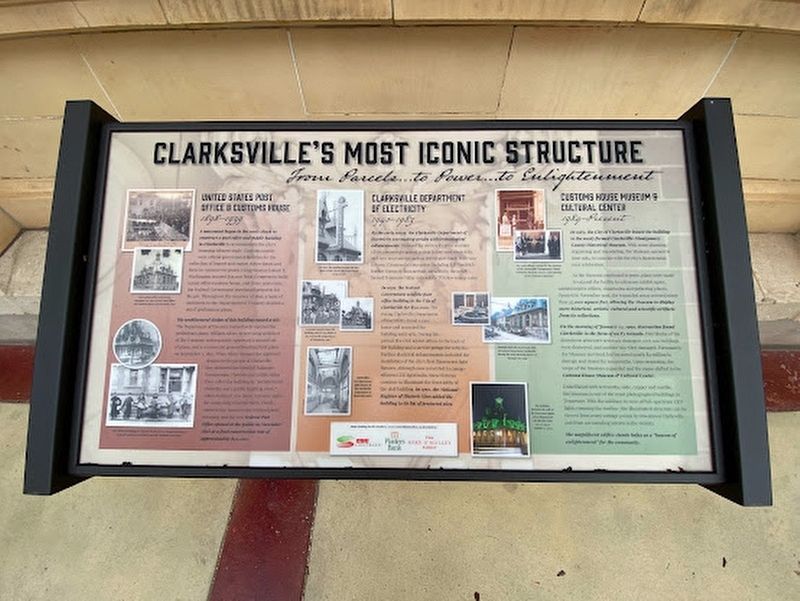
United States Post Office and Customs House 1898-1939, . A movement began in the early 1890s to construct a post office and public building in Clarksville to accommodate the city's booming tobacco trade. Customs houses were official government facilities for the collection of import and export duties (taxes and fees) on commercial goods. Congressman Joseph E. Washington secured $35,000 from Congress to build a post office/customs house, and three years later, the Federal Government purchased property for $6,500. Throughout the summer of 1896, a team of architects in the Department of Treasury drafted a set of preliminary plans., The architectural design of this building caused a stir. The Department of Treasury immediately rejected the preliminary plans. William Aiken, supervising architect of the Treasury, subsequently approved a second set of plans, and a ceremonial groundbreaking took place on September 1, 1897. When Aiken released the approved designs to the people of Clarksville, they abhorred the blend of Italianate, Romanesque, Flemish and Gothic styles. They called the building an "architectural absurdity and a public laughing stock." Aiken designed new plans, but once again, the community rejected them. Finally, construction based on the original plans resumed and the new Federal Post Office opened to the public in November 1898 at a final construction cost of approximately $42,000. ,
Clarksville Department of Electricity 1940-1983, . By the early 1930s, the Clarksville Department of Electricity was making strides with technological advancements. Demand for electricity grew as more of the community gained access to low-cost electricity, and new innovations such as streetlights made their way to town. Commercial enterprises including BF Goodrich Rubber Company soon arrived, attracted by the newly formed Tennessee Valley Authority (TVA) low energy rates., In 1939, the Federal Government sold the post office building to the City of Clarksville for $30.000. The young Clarksville Department of Electricity found a new home and occupied the building until 1983. During this period, the CDE added offices to the back of the building and a service garage for vehicles. Further electrical enhancements included the installation of the city's first fluorescent light fixtures. Although now converted to energy efficient LED light bulbs, these fixtures continue to illuminate the front lobby of the 1898 building. In 1972, the National Register of Historic Sites added the building to its list of protected sites. ,
Customs House Museum and Cultural Center 1984-Present , . In 1983, the City of Clarksville leased the building to the newly formed Clarksville-Montgomery County Historical Museum. With some planning, organizing and remodeling, the Museum opened in June 1984, to coincide with the city's bicentennial year celebration., As the Museum continued to grow, plans were made to expand the facility to add more exhibit space, administrative offices, classrooms and gathering places. Opened in November 1996, the expanded areas covered more than 35,000 square feet, allowing the Museum to display more historical, artistic, cultural and scientific artifacts from its collections., On the morning of January 22, 1999, destruction found Clarksville in the form of an F3 tornado. Five blocks of the downtown area were seriously damaged over 100 buildings were destroyed, and another 150 were damaged. Fortunately, the Museum survived, but incurred nearly $52 million in damage and closed for ten months. Upon reopening, the scope of the Museum expanded and the name shifted to the Customs House Museum and Cultural Center. , Embellished with terracotta, slate, copper and marble, the Museum is one of the must photographed buildings in Tennessee. With the addition in 2020 of full-spectrum LED lights rimming the roofline, the illuminated structure can be viewed from many vantage points in Downtown Clarksville and from surrounding streets in the vicinity., The magnificent edifice stands today as a "beacon of enlightenment for the community.
United States Post Office and Customs House 1898-1939
A movement began in the early 1890s to construct a post office and public building in Clarksville to accommodate the city's booming tobacco trade. Customs houses were official government facilities for the collection of import and export duties (taxes and fees) on commercial goods. Congressman Joseph E. Washington secured $35,000 from Congress to build a post office/customs house, and three years later, the Federal Government purchased property for $6,500. Throughout the summer of 1896, a team of architects in the Department of Treasury drafted a set of preliminary plans.
The architectural design of this building caused a stir.
The Department of Treasury immediately rejected the preliminary plans. William Aiken, supervising architect of the Treasury, subsequently approved a second set of plans, and a ceremonial groundbreaking took place on September 1, 1897. When Aiken released the approved designs to the people of Clarksville, they abhorred the blend of Italianate, Romanesque, Flemish and Gothic styles. They called the building an "architectural absurdity and
Click or scan to see this page online
a public laughing stock." Aiken designed new plans, but once again, the community rejected them. Finally, construction based on the original plans resumed and the new Federal Post Office opened to the public in November 1898 at a final construction cost of approximately $42,000.
Clarksville Department of Electricity 1940-1983
By the early 1930s, the Clarksville Department of Electricity was making strides with technological advancements. Demand for electricity grew as more of the community gained access to low-cost electricity, and new innovations such as streetlights made their way to town. Commercial enterprises including BF Goodrich Rubber Company soon arrived, attracted by the newly formed Tennessee Valley Authority (TVA) low energy rates.
In 1939, the Federal Government sold the post office building to the City of Clarksville for $30.000. The
young Clarksville Department of Electricity found a new home and occupied the building until 1983. During this period, the CDE added offices to the back of the building and a service garage for vehicles. Further electrical enhancements included the installation of the city's first
Photographed by Darren Jefferson Clay, February 26, 2022
2. Clarksville's Most Iconic Structure Marker
fluorescent light fixtures. Although now converted to energy efficient LED light bulbs, these fixtures continue to illuminate the front lobby of the 1898 building. In 1972, the National Register of Historic Sites added the building to its list of protected sites.
Customs House Museum & Cultural Center 1984-Present
In 1983, the City of Clarksville leased the building to the newly formed Clarksville-Montgomery County Historical Museum. With some planning, organizing and remodeling, the Museum opened in June 1984, to coincide with the city's bicentennial year celebration.
As the Museum continued to grow, plans were made to expand the facility to add more exhibit space, administrative offices, classrooms and gathering places. Opened in November 1996, the expanded areas covered more than 35,000 square feet, allowing the Museum to display more historical, artistic, cultural and scientific artifacts from its collections.
On the morning of January 22, 1999, destruction found Clarksville in the form of an F3 tornado. Five blocks of the downtown area were seriously damaged over 100 buildings were destroyed, and another 150 were damaged.
Photographed by Darren Jefferson Clay, February 26, 2022
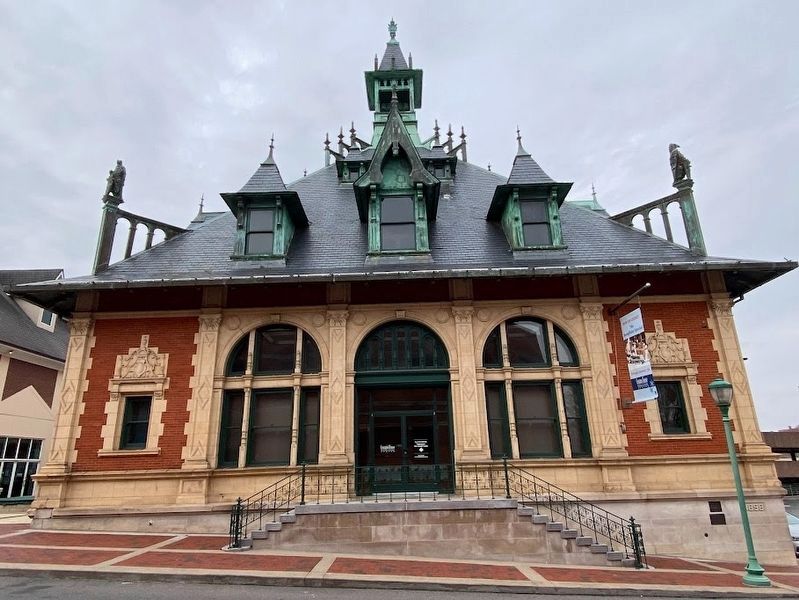
3. The front of Clarksville's most iconic structure
Fortunately, the Museum survived, but incurred nearly $52 million in damage and closed for ten months. Upon reopening, the scope of the Museum expanded and the name shifted to the Customs House Museum & Cultural Center.
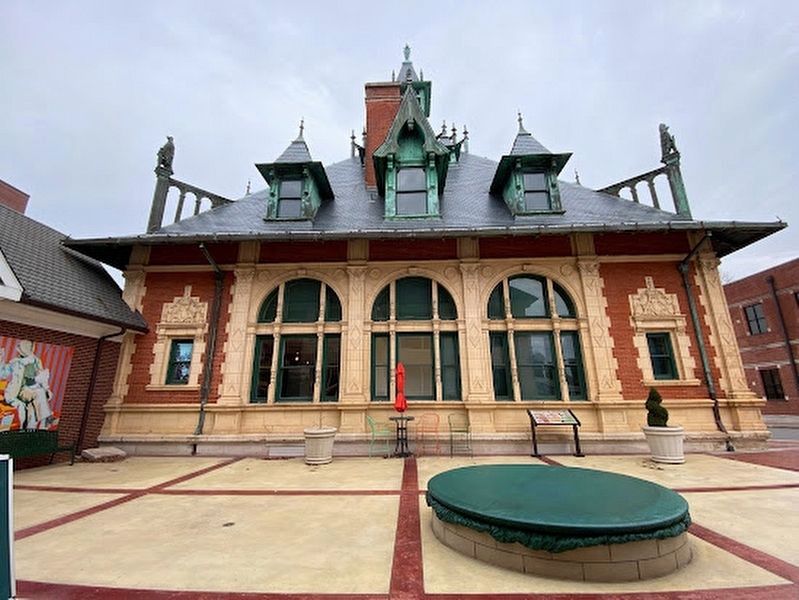
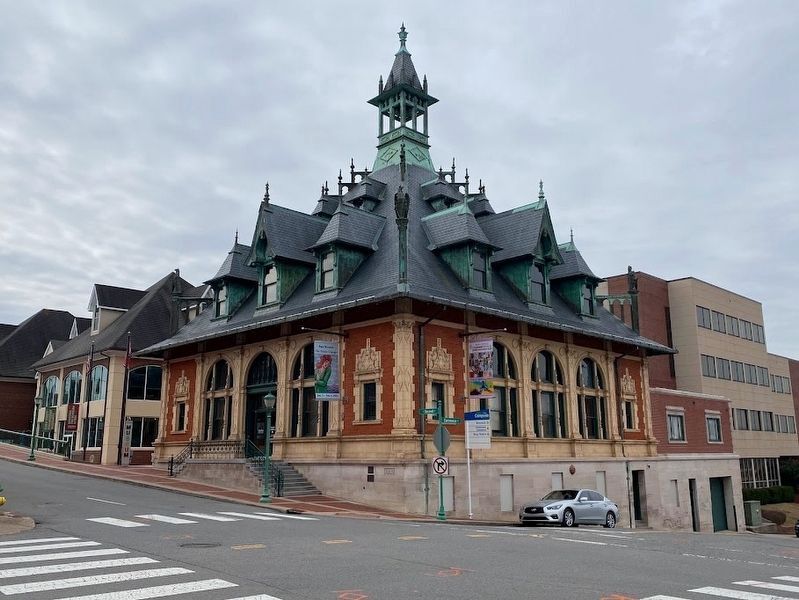
Embellished with terracotta, slate, copper and marble, the Museum is one of the must photographed buildings in Tennessee. With the addition in 2020 of full-spectrum LED lights rimming the roofline, the illuminated structure can be viewed from many vantage points in Downtown Clarksville and from surrounding streets in the vicinity.
The magnificent edifice stands today as a "beacon of enlightenment for the community.
Topics. This historical marker is listed in this topic list: Notable Buildings.
Location. 36° 31.565′ N, 87° 21.503′ W. Marker is in Clarksville, Tennessee, in Montgomery County. It can be reached from South 2nd Street south of Commerce St, on the right when traveling south. Touch for map. Marker is at or near this postal address: 200 S 2nd St, Clarksville TN 37040, United States of America. Touch for directions.

Regionally, this marker is in Middle
Photographed by Darren Jefferson Clay, February 26, 2022
4. Clarksville's Most Iconic Structure Marker
Tennessee and in the Highland Rim. It is also in the American South and specifically in the Upper South. Globally, it is in North America, the Western Hemisphere, the Western World, and the Anglosphere. Historically, it finds itself in what was once the territory of the Mississippian Culture, one of the Confederate States of America, and the Antebellum South.
Credits. This page was last revised on April 23, 2025. It was originally submitted on April 5, 2025, by Darren Jefferson Clay of Duluth, Georgia. This page has been viewed 198 times since then and 29 times this year. Photos:1. submitted on April 5, 2025, by Darren Jefferson Clay of Duluth, Georgia. 2, 3, 4. submitted on April 18, 2025, by Darren Jefferson Clay of Duluth, Georgia. • James Hulse was the editor who published this page.
Editor’s want-list for this marker. Clear readable primary photo of marker. • Can you help?
