
Douglas (Bronzeville) in Chicago in Cook County, Illinois — The American Midwest (Great Lakes)
Black Metropolis-Bronzeville
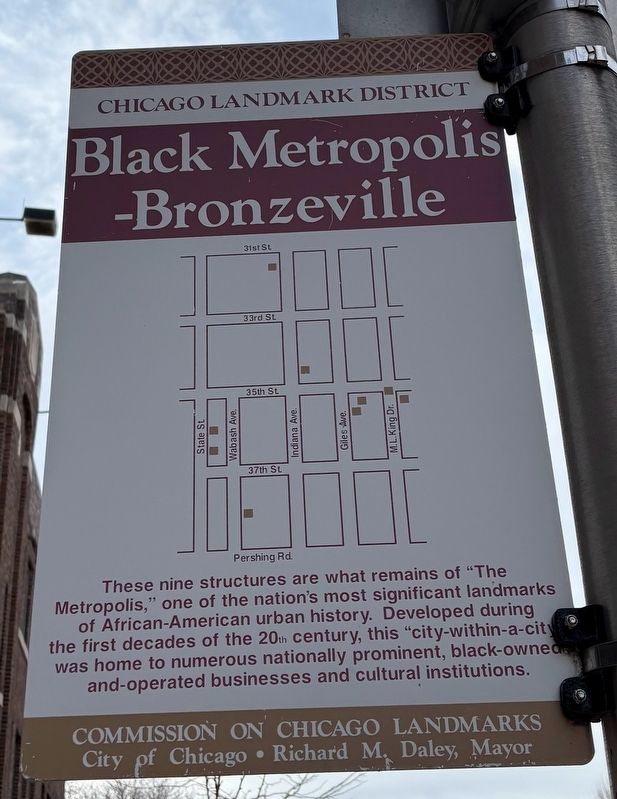
Photographed by Sean P. Flynn, April 14, 2025
1. Black Metropolis-Bronzeville Marker
Erected by Commission on Chicago Landmarks; City of Chicago.
Topics and series. This historical marker is listed in these topic lists: African Americans • Industry & Commerce • Settlements & Settlers. In addition, it is included in the Illinois, Chicago Landmarks Commission series list. A significant historical year for this entry is 1910.
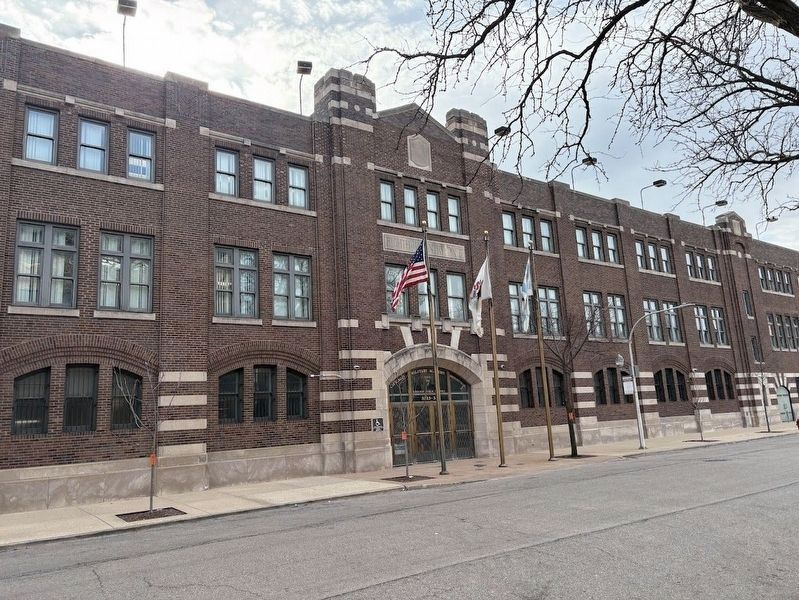
Location. 41° 49.818′ N, 87° 37.154′ W. Marker is in Chicago, Illinois, in Cook County. It is in Douglas (Bronzeville). It is on South Giles Avenue. The marker is affixed to a lamppost near the Giles Avenue entrance to the 8th Regiment Armory, which today houses the Chicago Military Academy. Touch for map. Marker is at or near this postal address: 3515 S Giles Ave, Chicago IL 60616, United States of America. Touch for directions.

Regionally, this marker
this page online
Other nearby markers. At least 8 other markers are within walking distance of this marker: The History of the "Fighting Eighth" Infantry Regiment and the Giles Armory (within shouting distance of this marker); Sunset Cafe (about 300 feet away, measured in a direct line); Earl “Fatha” Hines (about 500 feet away); Calumet-Giles-Prairie (about 600 feet away); Gwendolyn Brooks (about 600 feet away); Victory, World War I Black Soldiers’ Memorial (about 600 feet away); Mjr. Robert H. Lawrence, Jr. (about 600 feet away); Truman Gibson Sr. / Truman Gibson Jr. (about 600 feet away). Touch for a list and map of all markers in Chicago.
More about this marker. As is typical for this type of Chicago Landmark District sign, the marker includes a map of the historic district, and the front and back of the sign have identical text.
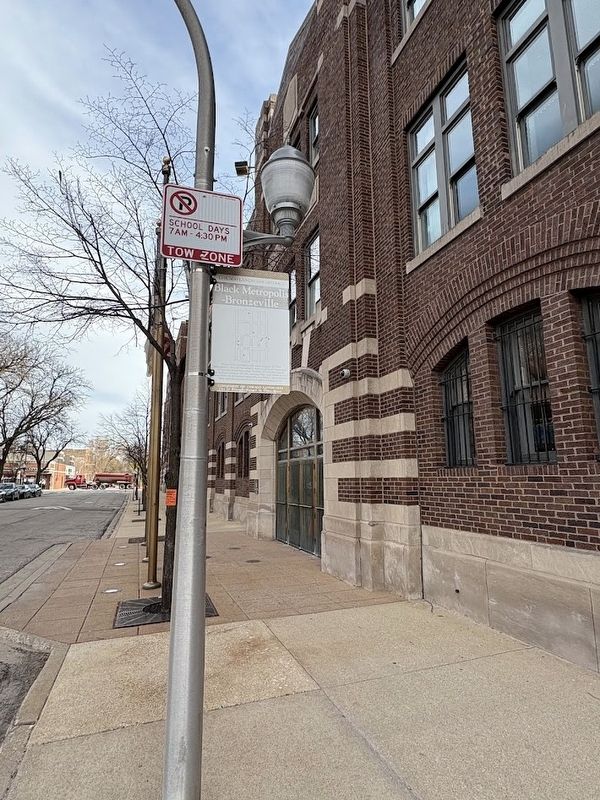
Photographed by Sean P. Flynn, April 14, 2025
2. South-facing side of the Black Metropolis-Bronzeville marker, 8th Regiment Armory in the rear
Regarding Black Metropolis-Bronzeville. As hinted at by this sign, the historic Bronzeville neighborhood underwent a massive transformation amid urban renewal projects in the mid-20th century, which led to many of its historic buildings, dating to the "Great Migration" of the 1910s and 1920s, being razed and replaced by modern developments. According to the Commission on Chicago Landmarks, the term "Black Metropolis" comes from a 1945 sociological study of this neighborhood; "Bronzeville" is attributed to an editor for the Chicago Bee, a Bronzeville-based newspaper.
Also see . . .
1. WTTW-TV Chicago (Channel 11): Bronzeville: The Black Metropolis. A look at the history of Bronzeville and some of its famous sites and residents. (Submitted on April 17, 2025, by Sean P. Flynn of Oak Park, Illinois.)
2. Commission on Chicago Landmarks: Black Metropolis District.
Excerpt: "This district offered a commercial alternative to the race restrictions and indifference that characterized much of the city during the early part of the 20th(Submitted on April 17, 2025, by Sean P. Flynn of Oak Park, Illinois.)century. Between 1910 and 1920, during the peak of the 'Great Migration,' the population of the area increased dramatically when thousands of African-Americans fled the oppression of the south and emigrated to Chicago in search of industrial jobs. Further development of the area was halted by the onset of the Great Depression. Many famous people were associated with the development of the area including: Jesse Binga, banker; Anthony Overton, entrepreneur; Joseph Jordan, musician; Andrew "Rube" Foster, founder of the Negro National Baseball League; Ida B. Wells, a civil rights activist, journalist and organizer of the NAACP; Bessie Coleman, the first African-American woman pilot; and Louis Armstrong, the legendary trumpet player and bandleader who performed at many of the area's night clubs."Photographed by Sean P. Flynn, April 14, 20253. 8th Regiment ArmoryThe Bronzeville marker is on the lamppost to the right of the entrance.
Credits. This page was last revised on April 17, 2025. It was originally submitted on April 17, 2025, by Sean P. Flynn of Oak Park, Illinois. This page has been viewed 210 times since then and 46 times this year. Photos: 1, 2, 3. submitted on April 17, 2025, by Sean P. Flynn of Oak Park, Illinois.
