Sault Ste. Marie in Algoma District, Ontario — Central Canada (North America)
Ermatinger Old Stone House
Oldest Stone Building Northwest of Toronto
| — | Ermatinger • Clergue National Historic Site | — |
Photographed by Cosmos Mariner, June 11, 2024
1. Ermatinger Old Stone House Marker
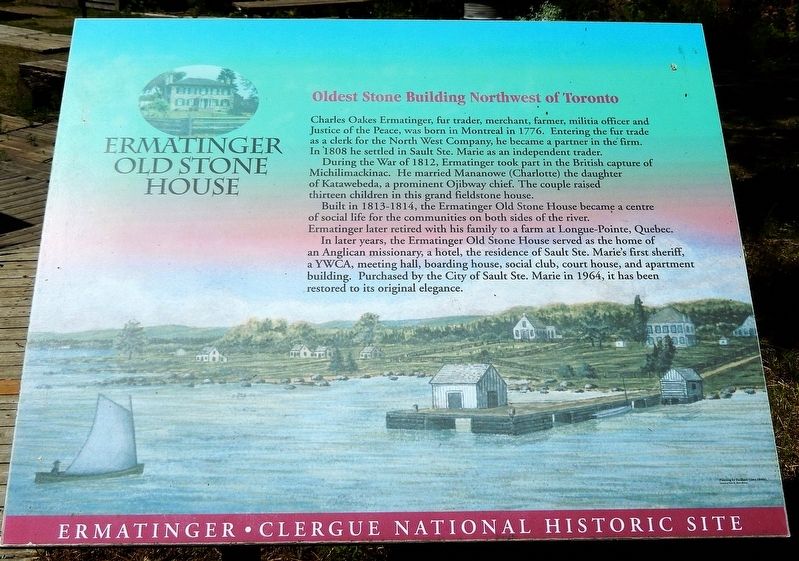
Charles Oakes Ermatinger, fur trader, merchant, farmer, militia officer and Justice of the Peace, was born in Montreal in 1776. Entering the fur trade as a clerk for the North West Company, he became a partner in the firm. In 1808 he settled in Sault Ste. Marie as an independent trader.
During the War of 1812, Ermatinger took part in the British capture of Michilimackinac. He married Mananowe (Charlotte) the daughter of Katawebeda, a prominent Ojibway chief. The couple raised thirteen children in this grand fieldstone house.
Built in 1813-1814, the Ermatinger Old Stone House became a centre of social life for the communities on both sides of the river. Ermatinger later retired with his family to a farm at Longue-Pointe, Quebec.
In later years, the Ermatinger Old Stone House served as the home of an Anglican missionary, a hotel, the residence of Sault Ste. Marie's first sheriff, a YWCA, meeting hall, boarding house, social club, court house, and apartment building. Purchased by the City of Sault Ste. Marie in 1964, it has been restored to its original elegance.
Topics. This historical marker is listed in these topic
this page online
Location. 46° 30.385′ N, 84° 19.469′ W. Marker is in Sault Ste. Marie, Ontario, in Algoma District. It can be reached from Bay Street just west of Pim Street, on the left when traveling east. The marker and Ermatinger Old Stone House are located on the Ermatinger • Clergue National Historic Site grounds. Touch for map. Marker is at or near this postal address: 800 Bay Street, Sault Ste Marie ON P6A 3G4, Canada. Touch for directions.

Regionally, this marker is in the Sault Ste. Marie and Algoma Area and in Northern Ontario. It is also in Central Canada. Globally, it is in North America, in the Great North Woods, on the Great Lakes, on Lake Superior’s North Shore, in the Western Hemisphere, in the Western World, and in the Anglosphere. Historically, it finds itself in what was once a British colony, the Viceroyalty of New France, the Haudenosaunee (Iroquois) Confederacy, and Rupert’s Land.
Other nearby markers. At least 8 other markers are within walking distance of this marker:
Photographed by Cosmos Mariner, June 11, 2024
2. Ermatinger Old Stone House Marker
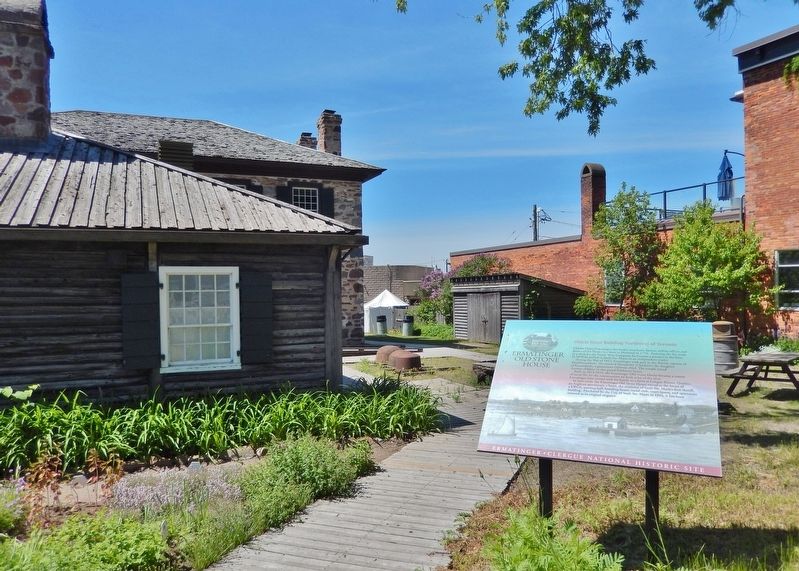
Looking south from Queen Street East; the Old Stone House is partially visible behind the wooden frame building in the left background.
Related markers. Click here for a list of markers that are related to this marker. Ermatinger • Clergue National Historic Site
Also see . . .
1. Ermatinger Clergue National Historic Site (Wikipedia).
Excerpt: The Ermatinger Old Stone House was built by Charles Oakes Ermatinger, a former North West Company fur trader who lived in the home with his wife and children. He resided there until 1828, when he cut his ties in Sault Ste. Marie after the death of his brother Frederick William. It was designated as a national historic site in 1957.(Submitted on May 12, 2025, by Cosmos Mariner of Cape Canaveral, Florida.)The house is
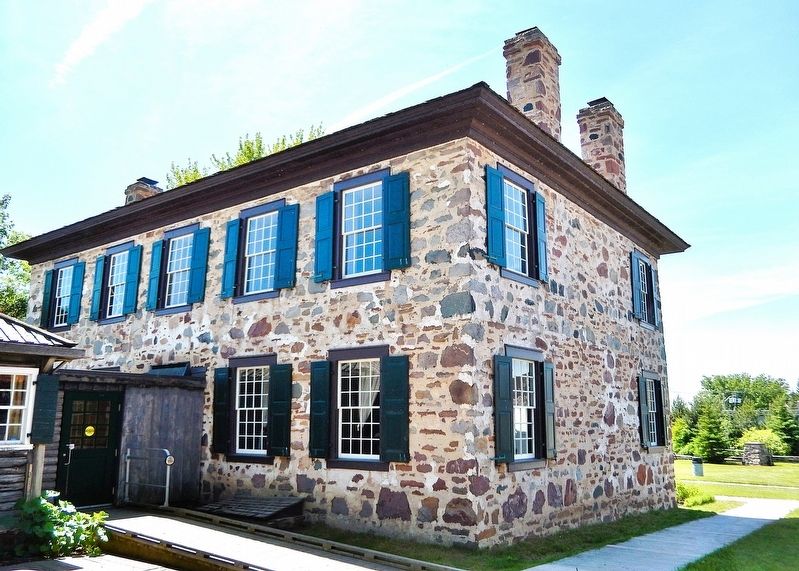
constructed from local stone and timber and faces the St. Mary's River. It was considered big for its time and was an imposing landmark when it was constructed. After the Ermatinger family left, the stone house was used by succeeding occupants as a mission, hotel, tavern, courthouse, post office, dance hall, tea room and apartment building. The house was bought by the City of Sault Ste. Marie in 1965 and was restored before opening to the public as a house museum.Photographed by Cosmos Mariner, June 11, 20243. Ermatinger Old Stone House (northwest elevation)
2. Charles Oakes Ermatinger (Dictionary of Canadian Biography).
Excerpt: During the War of 1812 Charles Oakes participated as a militia captain in the expedition led by Captain Charles Roberts from Fort St Joseph (St Joseph Island, Ont.) which captured Michilimackinac (Mackinac Island, Mich.) from the Americans on 17 July 1812. By August 1814 Ermatinger had what Gabriel Franchère described as “an attractive establishment,” and had just completed a windmill, constructed “to encourage agriculture.”(Submitted on May 12, 2025, by Cosmos Mariner of Cape Canaveral, Florida.)During this period Ermatinger constituted the only serious rival to John Jacob Astor’s
American Fur Company on United States territory around Sault Ste. Marie. He displayed considerable ingenuity in circumventing restrictions placed by the Americans on British traders and goods; in 1817, for example, to trade British merchandise brought up from Montreal, he sold it to an American trader and then got himself employed as the trader’s agent to work the south shore of Lake Superior and the country beyond Fond du Lac.Photographed by Cosmos Mariner, June 11, 20244. Ermatinger Old Stone House (south/front entrance)
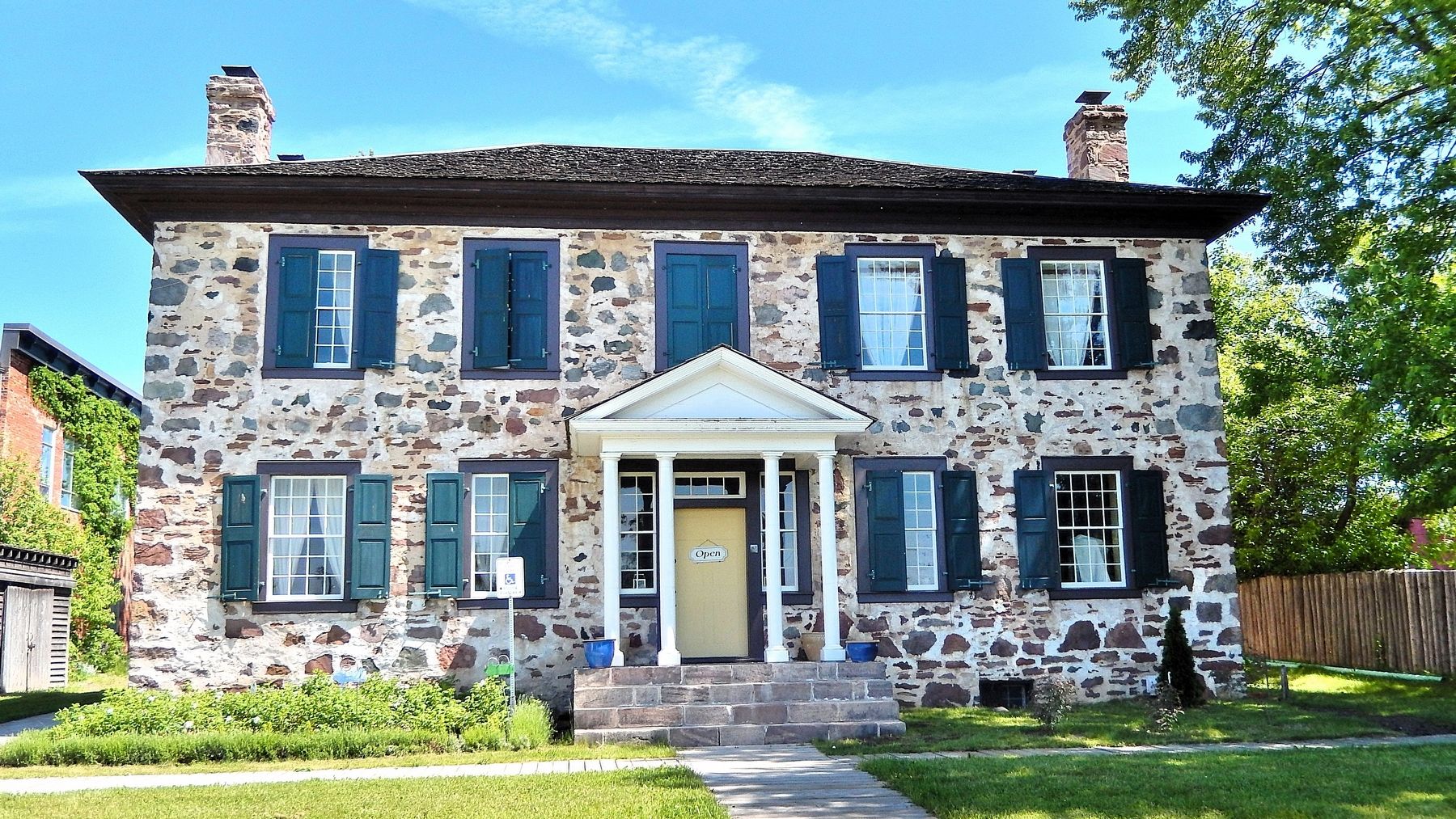
Photographed by Cosmos Mariner, June 11, 2024
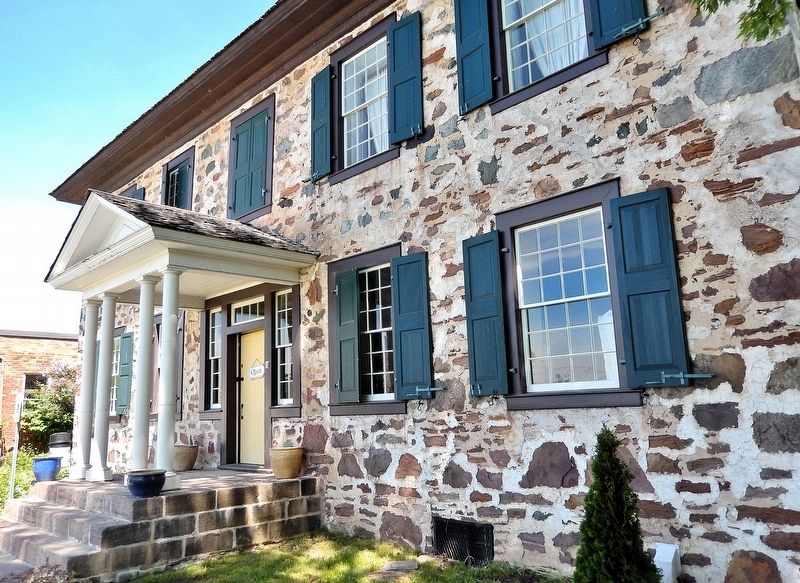
5. Ermatinger Old Stone House (south/front elevation)
Credits. This page was last revised on May 13, 2025. It was originally submitted on May 9, 2025, by Cosmos Mariner of Cape Canaveral, Florida. This page has been viewed 173 times since then and 49 times this year. Photos: 1, 2, 3, 4, 5. submitted on May 12, 2025, by Cosmos Mariner of Cape Canaveral, Florida.
