Manzanar National Historic Site near Independence in Inyo County, California — The American West (Pacific Coastal)
Manzanar Reservoir
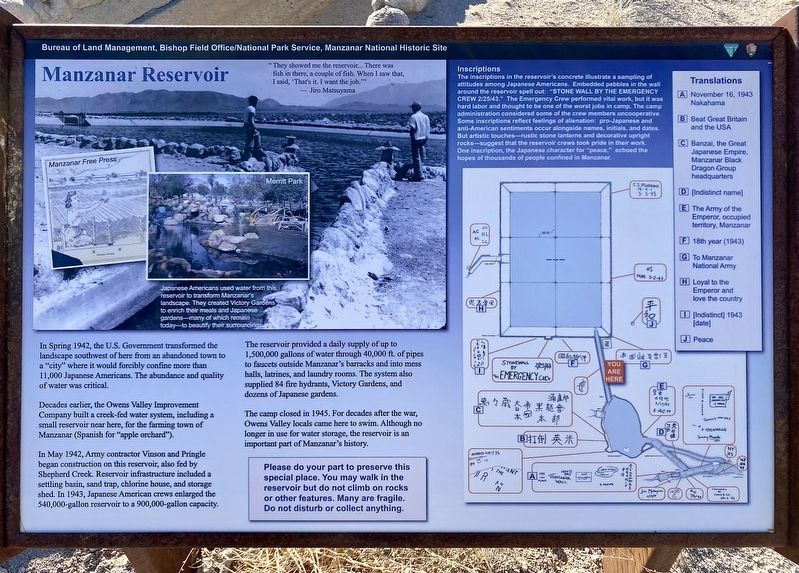
Photographed by Craig Baker, October 30, 2025
1. Manzanar Reservoir Marker
In Spring 1942, the U.S. Government transformed the landscape southwest of here from an abandoned town to a "city" where it would forcibly confine more than 11,000 Japanese Americans. The abundance and quality of water was critical. Decades earlier, the Owens Valley Improvement Company built a creek-fed water system, including a small reservoir near here, for the farming town of Manzanar (Spanish for "apple orchard").
In May 1942, Army contractor Vinson and Pringle began construction on this reservoir, also fed by Shepherd Creek. Reservoir infrastructure included a settling basin, sand trap, chlorine house, and storage shed. In 1943, Japanese American crews enlarged the 540,000-gallon reservoir to a 900,000-gallon capacity. The reservoir provided a daily supply of up to 1,500,000 gallons of water through 40,000 ft. of pipes to faucets outside Manzanar's barracks and into mess halls, latrines, and laundry rooms. The system also supplied 84 fire hydrants, Victory Gardens, and dozens of Japanese gardens.
The camp closed in 1945. For decades after the war, Owens Valley locals came here
this page online
Japanese Americans used water from this reservoir to transform Manzanar's landscape. They created Victory Gardens to enrich their meals, and Japanese gardens - many of which remain today - to beautify their surroundings.
Inscriptions
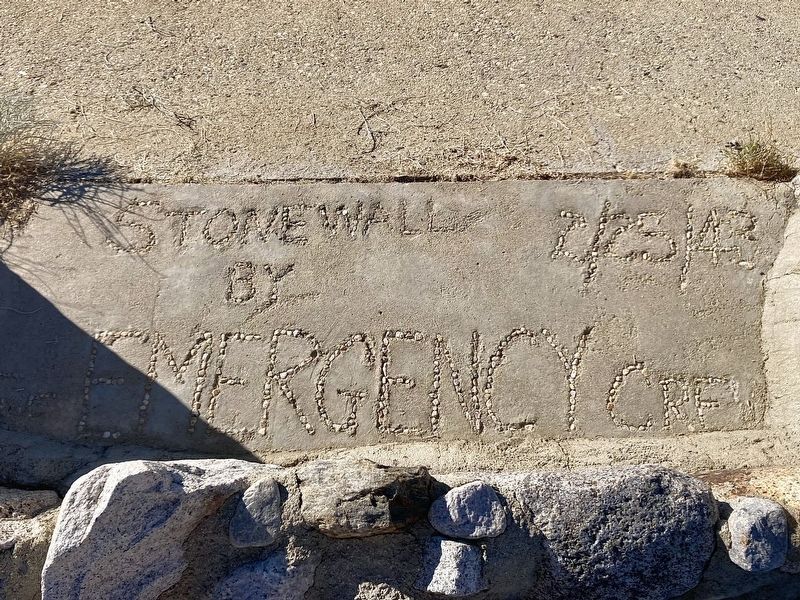
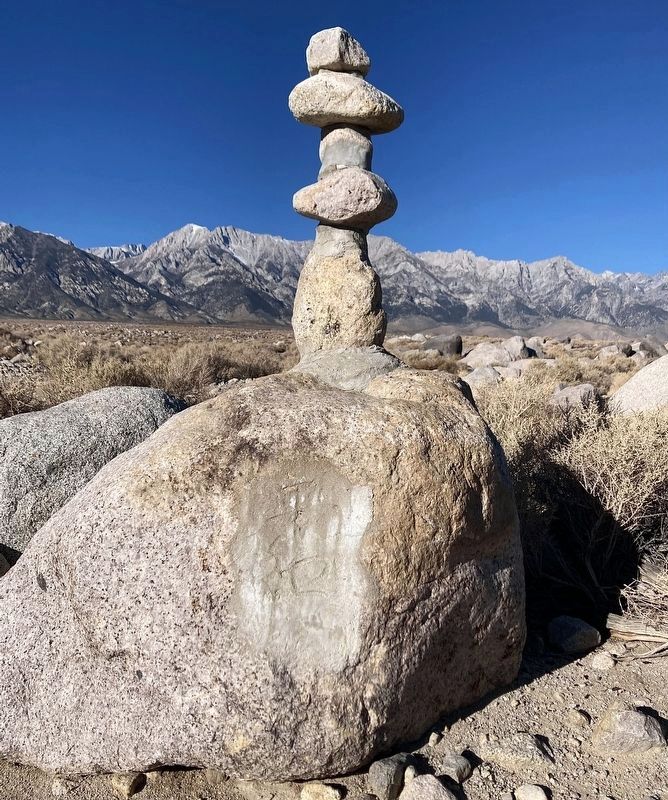
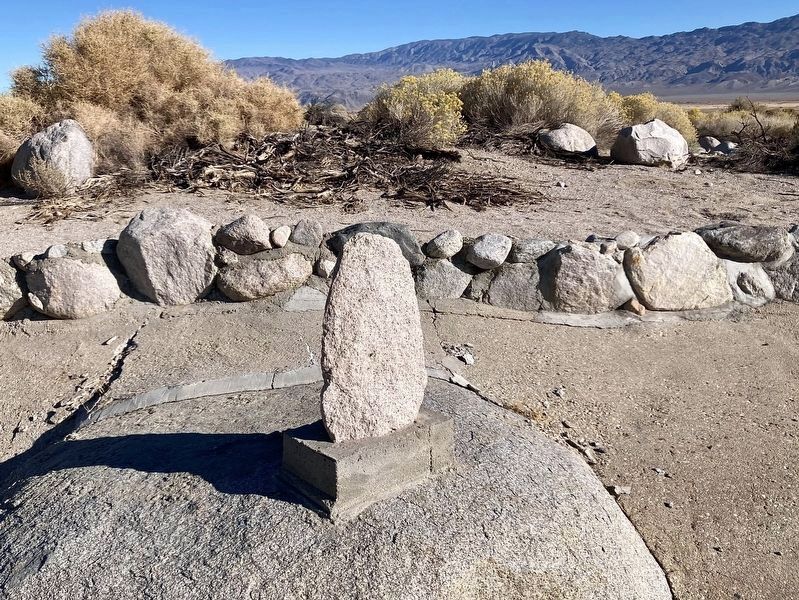
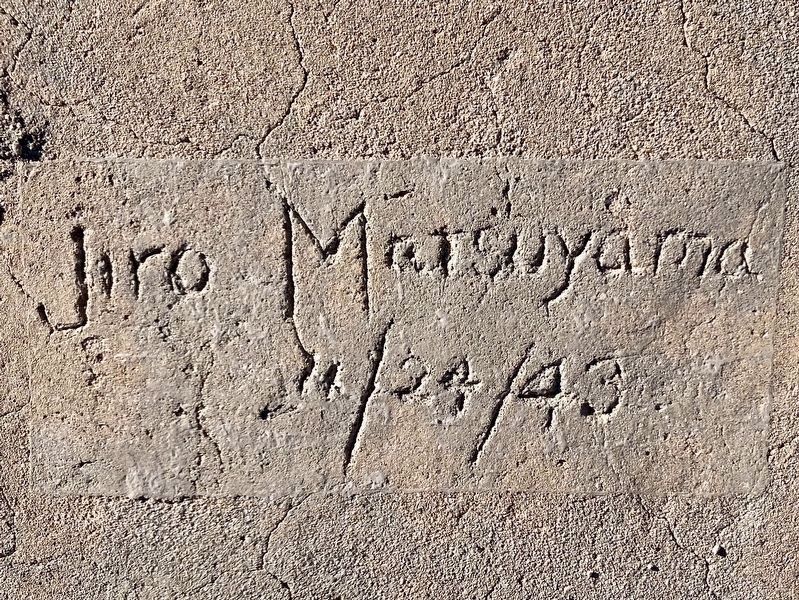
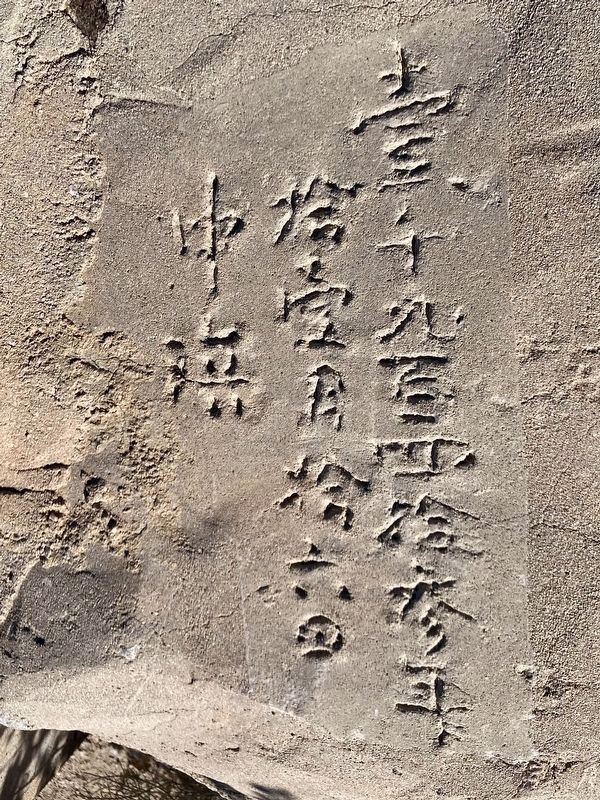
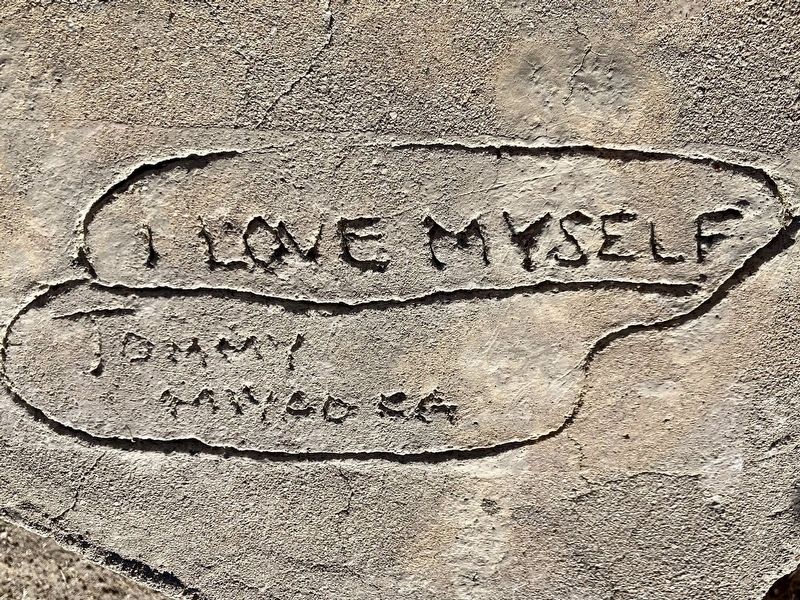
The inscriptions in the reservoir’s concrete illustrate a sampling of attitudes among Japanese Americans. Embedded pebbles in the wall around the reservoir spell out “Stone wall by the Emergency Crew 2/25/43.” The emergency crew performed vital work, but it was hard labor and thought to be one of the worst jobs in camp. The camp administration considered some of the crew members uncooperative. Some inscriptions reflect feelings of alienation: pro-Japanese and anti-American sentiments occur alongside names, initials, and dates. But artistic touches – rustic stone lanterns and decorative upright rocks – suggest that the reservoir crews took pride in their work. One inscription, the Japanese character for “peace”, echoed the hopes of thousands of people confined in Manzanar.
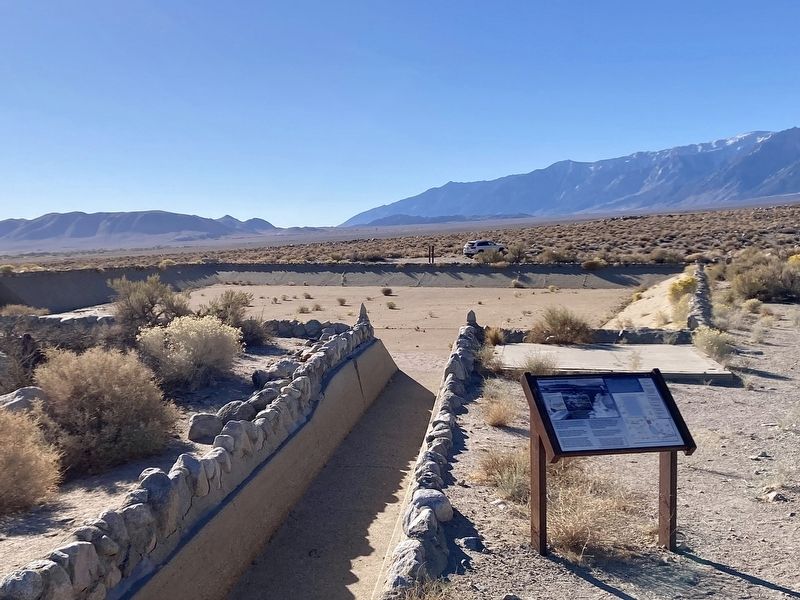
Photographed by Craig Baker, October 30, 2025
2. Reservoir and Marker
Please do your part to preserve this special place. You may walk in the reservoir but do not climb on rocks or other features. Many are fragile. Do not disturb or collect anything.
Erected by Bureau of Land Management, and National Park Service.
Topics. This historical marker is listed in these topic lists: Asian Americans • War, World II. A significant historical year for this entry is 1942.
Location. 36° 43.887′ N, 118° 10.625′ W. Marker is near Independence, California, in Inyo County. It is in Manzanar National Historic Site. It can be reached from Manzanar Reward Road west of U.S. 395. Touch for map. Marker is at or near this postal address: 5001 US-395, Independence CA 93526, United States of America. Touch for directions.

Regionally, this marker is in California’s Sierra Nevada. It is also in the American Mountain West. Globally, it is in North America, on the Ring of Fire, in the Pacific Rim, in the Western Hemisphere, in the Western World, and in the Anglosphere. Historically, it finds itself in what was once New Spain and also Mexico’s Alta California.
Other nearby markers. At least 10
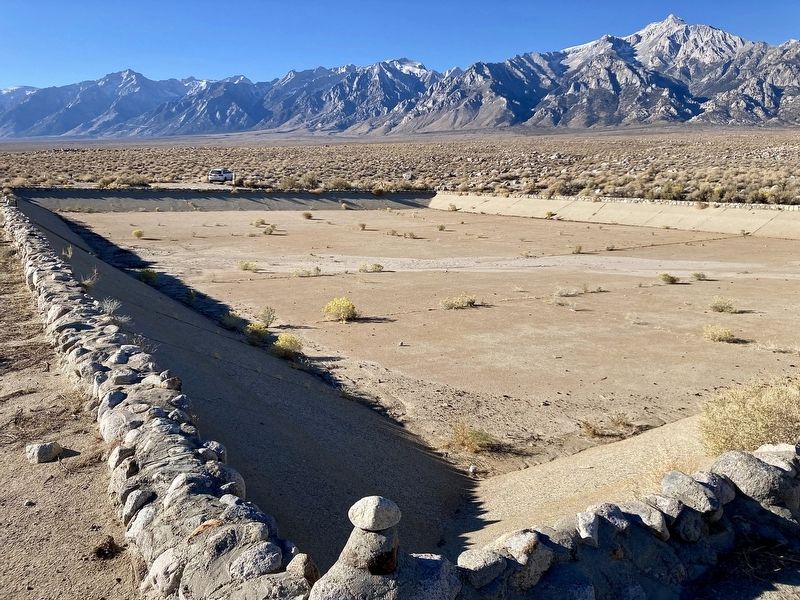
Photographed by Craig Baker, October 30, 2025
3. Manzanar Reservoir
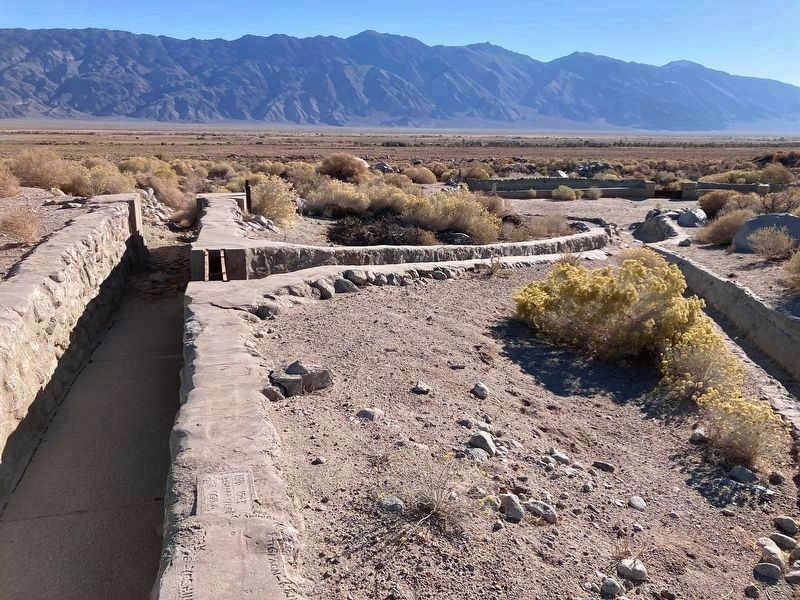
Photographed by Craig Baker, October 30, 2025
4. Channels with Inscriptions
Located southwest of the reservoir & marker.
Photographed by Craig Baker, October 30, 2025
5. Inscription in Reservoir
“Stone Wall by the Emergency Crew 2/25/43”
Photographed by Craig Baker, October 30, 2025
6. 平 和 (Peace)
Photographed by Craig Baker, October 30, 2025
7. Upright Decorative Rock
Photographed by Craig Baker, October 30, 2025
8. Jiro Matsuyama 11/24/43
Photographed by Craig Baker, October 30, 2025
9. Japanese Inscription
Photographed by Craig Baker, October 30, 2025
10. Inscription
Credits. This page was last revised on January 11, 2026. It was originally submitted on May 24, 2025, by Craig Baker of Sylmar, California. This page has been viewed 296 times since then and 69 times this year. Photos: 1, 2, 3, 4. submitted on May 24, 2025, by Craig Baker of Sylmar, California. 5, 6, 7, 8, 9, 10. submitted on November 12, 2025, by Craig Baker of Sylmar, California.
