Downtown Augusta in Richmond County, Georgia — The American South (South Atlantic)
First Presbyterian Church World War I Memorial
Photographed by J.T. Lambrou, April 10, 2025
1. First Presbyterian Church World War I Memorial Marker
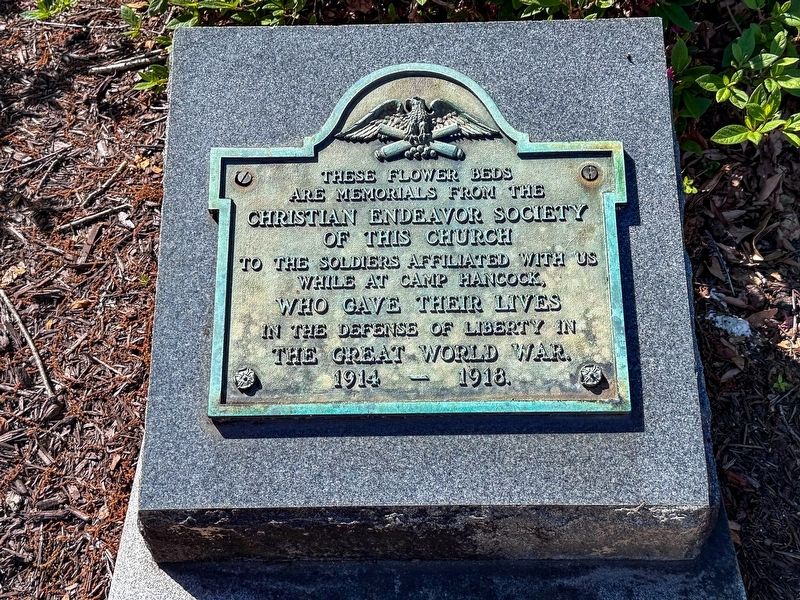
are memorials from the
Christian Endeavor Society
of this church
to the soldiers affiliated with us
while at Camp Hancock,
who gave their lives
in the defense of liberty in
The Great World War.
1914 - 1918.
Erected by Christian Endeavor Society First Presbyterian Church.
Topics. This memorial is listed in these topic lists: Religion & Religious Structures • War, World I.
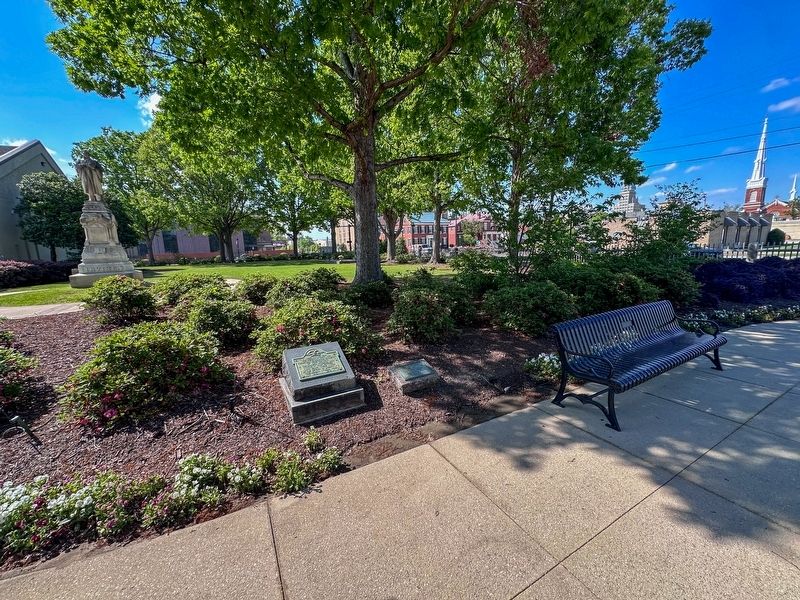
Location. 33° 28.254′ N, 81° 57.869′ W. Memorial is in Augusta, Georgia, in Richmond County. It is in Downtown Augusta. It is at the intersection of Telfair Street and 7th Street, on the right when traveling east on Telfair Street. Touch for map. Memorial is at or near this postal address: 642 Telfair Street, Augusta GA 30901, United States of America. Touch for directions.

Regionally, this memorial is in the American South and specifically in the Deep South. Globally, it is in North America, the Western Hemisphere, the Western World, and the Anglosphere. Historically, it finds itself in what was once the territory of the Mississippian Culture, one of the original
this page online
Other nearby markers. At least 8 other markers are within walking distance of this marker: The First Presbyterian Church (within shouting distance of this marker); a different marker also named The First Presbyterian Church (within shouting distance of this marker); Boyhood Home of Woodrow Wilson (about 300 feet away, measured in a direct line); Eve (about 400 feet away); Old Medical College (about 400 feet away); Joseph R. Lamar, Associate Justice (about 500 feet away); Medical College Building (about 500 feet away); Paul Fitzsimmons Eve (about 600 feet away). Touch for a list and map of all markers in Augusta.
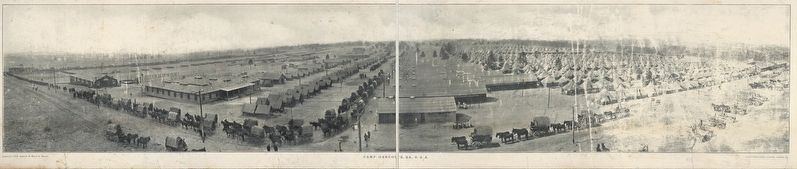
Also see . . . Camp Hancock. Excerpt:
Named after Union general Winfield Scott Hancock, a hero at Gettysburg, Pennsylvania, during the Civil War, this camp near Augusta consolidated Pennsylvania National Guard units into the Twenty-eighth Infantry Division. The division’s specialties were machine gun and ordnance training, though supplies and equipment were severely lacking. The Twenty-eighth mobilized in 1918 to the Western(Submitted on May 31, 2025, by J.T. Lambrou of New Boston, Michigan.)Front, where it trained with British troops. Like the Eighty-second at Camp Gordon, the Twenty-eighth participated in the Meuse-Argonne Offensive. There it earned the enduring nickname “Iron Division,” after General John Pershing praised the troops as “men of iron.”Photographed by J.T. Lambrou, April 10, 20252. First Presbyterian Church World War I Memorial
After the war ended, the Twenty-eighth developed its distinctive red Keystone patch, returning to its Pennsylvania origins. The division was later distinguished in World War II under General Omar Bradley and afterward resumed its status as a Pennsylvania National Guard Unit. It has continued to serve in combat situations, from the Korean War (1950-53) to the 2003 Iraq War.
Nothing survives of old Camp Hancock in Richmond County, and no historical marker exists.
Photographed by J.T. Lambrou, April 10, 2025
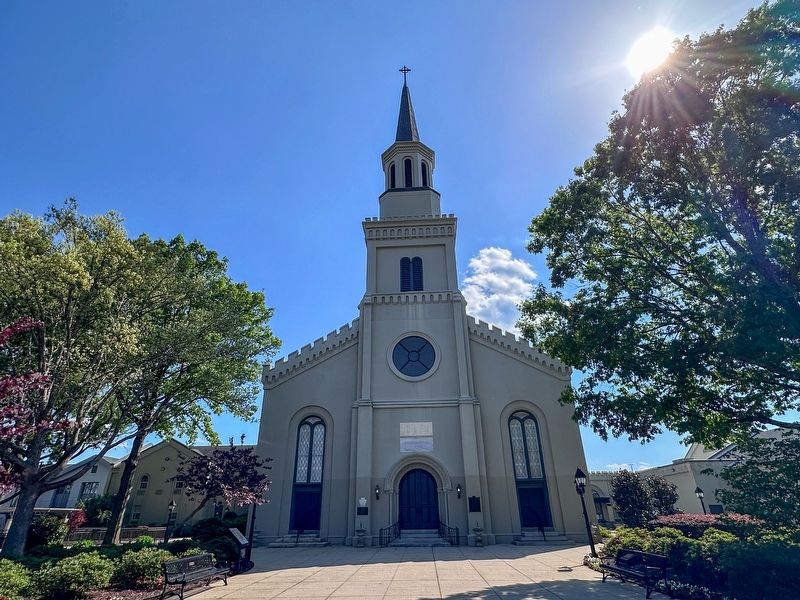
3. First Presbyterian Church
Library of Congress, circa 1918
4. Camp Hancock
Credits. This page was last revised on June 2, 2025. It was originally submitted on May 31, 2025, by J.T. Lambrou of New Boston, Michigan. This page has been viewed 172 times since then and 16 times this year. Photos: 1, 2, 3, 4. submitted on May 31, 2025, by J.T. Lambrou of New Boston, Michigan. • Andrew Ruppenstein was the editor who published this page.
