
University District in Toronto, Ontario — Central Canada (North America)
The Grey Cup
⎯⎯⎯
La Coupe Grey
Photographed by Tim Boyd, June 1, 2025
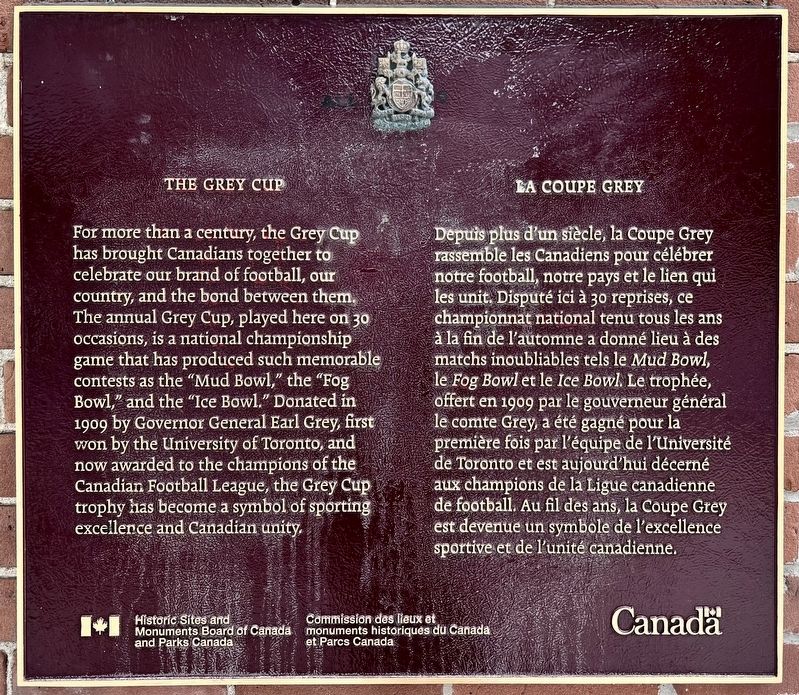
1. The Grey Cup/La Coupe Grey Marker

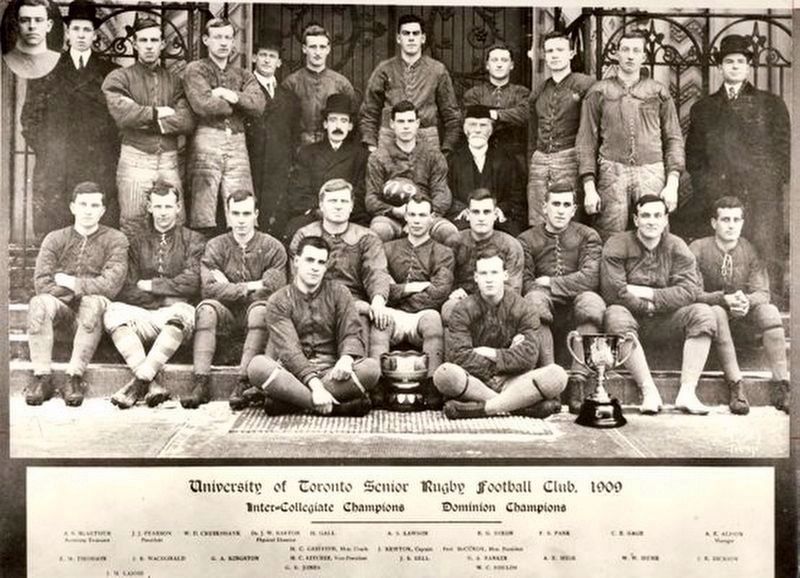
For more than a century, the Grey Cup has brought Canadians together to celebrate our brand of football, our country, and the bond between them. The annual Grey Cup, played here on 30 occasions, is a national championship game that has produced such memorable contests as the "Mud Bowl," the "Fog Bowl," and the "Ice Bowl." Donated in 1909 by Governor General Earl Grey, first won by the University of Toronto, and now awarded to the champions of the Canadian Football League, the Grey Cup trophy has become a symbol of sporting excellence and Canadian unity.
Depuis plus d'un siècle, la Coupe Grey rassemble les Canadiens pour célébrer notre football, notre pays et le lien qui les unit. Disputé ici à 30 reprises, ce championnat national tenu tous les ans à la fin de l'automne a donné lieu à des matchs inoubliables tels le Mud Bowl, le Fog Bowl et le Ice Bowl. Le trophée, offert en 1909 par le gouverneur général le comte Grey, a été gagné pour la première fois par l'équipe de l'Université de Toronto et est aujourd'hui décerné aux champions de la Ligue canadienne de
this page online
Erected by Historic Sites and Monuments Board of Canada and Parks Canada.
Topics and series. This historical marker is listed in this topic list: Sports. In addition, it is included in the Canada, Historic Sites and Monuments Board series list. A significant historical year for this entry is 1909.
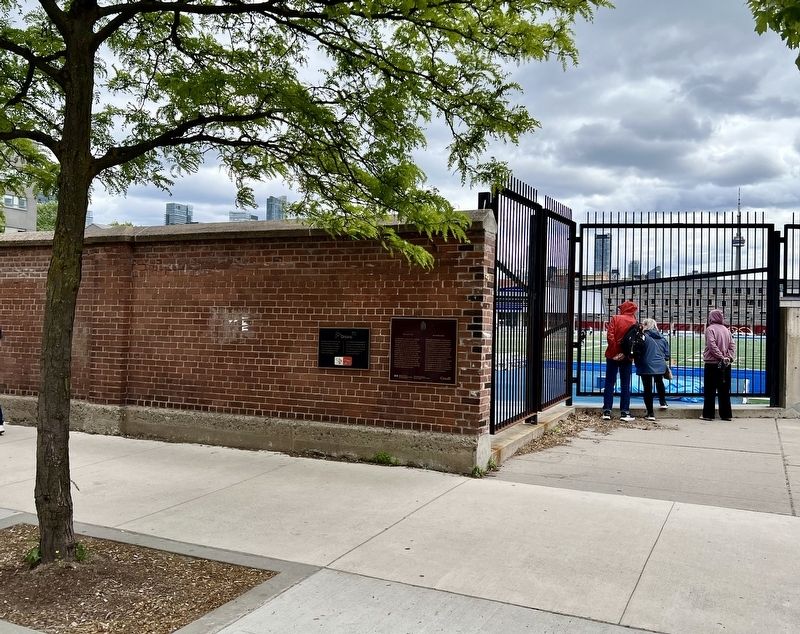
Location. 43° 40.07′ N, 79° 23.873′ W. Marker is in Toronto, Ontario. It is in the University District. It is at the intersection of Bloor Street West and Devonshire Place, on the right when traveling east on Bloor Street West. Touch for map. Marker is at or near this postal address: 248 Bloor Street W, Toronto ON M5S 1V4, Canada. Touch for directions.

Regionally, this marker is in Greater Toronto and on the Golden Horseshoe. It is also in Central Canada. Globally, it is in North America, on the Great Lakes, in the Western Hemisphere, in the Western World, and in the Anglosphere. Historically, it finds itself in what was once a British colony, the Viceroyalty of New France, the Haudenosaunee (Iroquois)
Photographed by Tim Boyd, June 1, 2025
2. The Grey Cup/La Coupe Grey Marker
Other nearby markers. At least 8 other markers are within walking distance of this marker: Early meteorology in Canada / Les débuts de la météorologie au Canada (within shouting distance of this marker); John M. Lyle Studio (about 90 meters away, measured in a direct line); The Medical Arts Building (about 180 meters away); Queen Alexandra Gateway (about 180 meters away); Charles Trick Currelly 1876-1957 (approx. 0.3 kilometers away); Saint Thomas’s Anglican Church (approx. 0.3 kilometers away); William Arthur Parks 1868-1936 (approx. 0.3 kilometers away); Taddle Creek (approx. 0.3 kilometers away). Touch for a list and map of all markers in Toronto.
1909
3. First Grey Cup Champions, the University of Toronto, 1909
Source; Wikipedia (the Canadian Football League, public domain)
Photographed by Tim Boyd, June 1, 2025
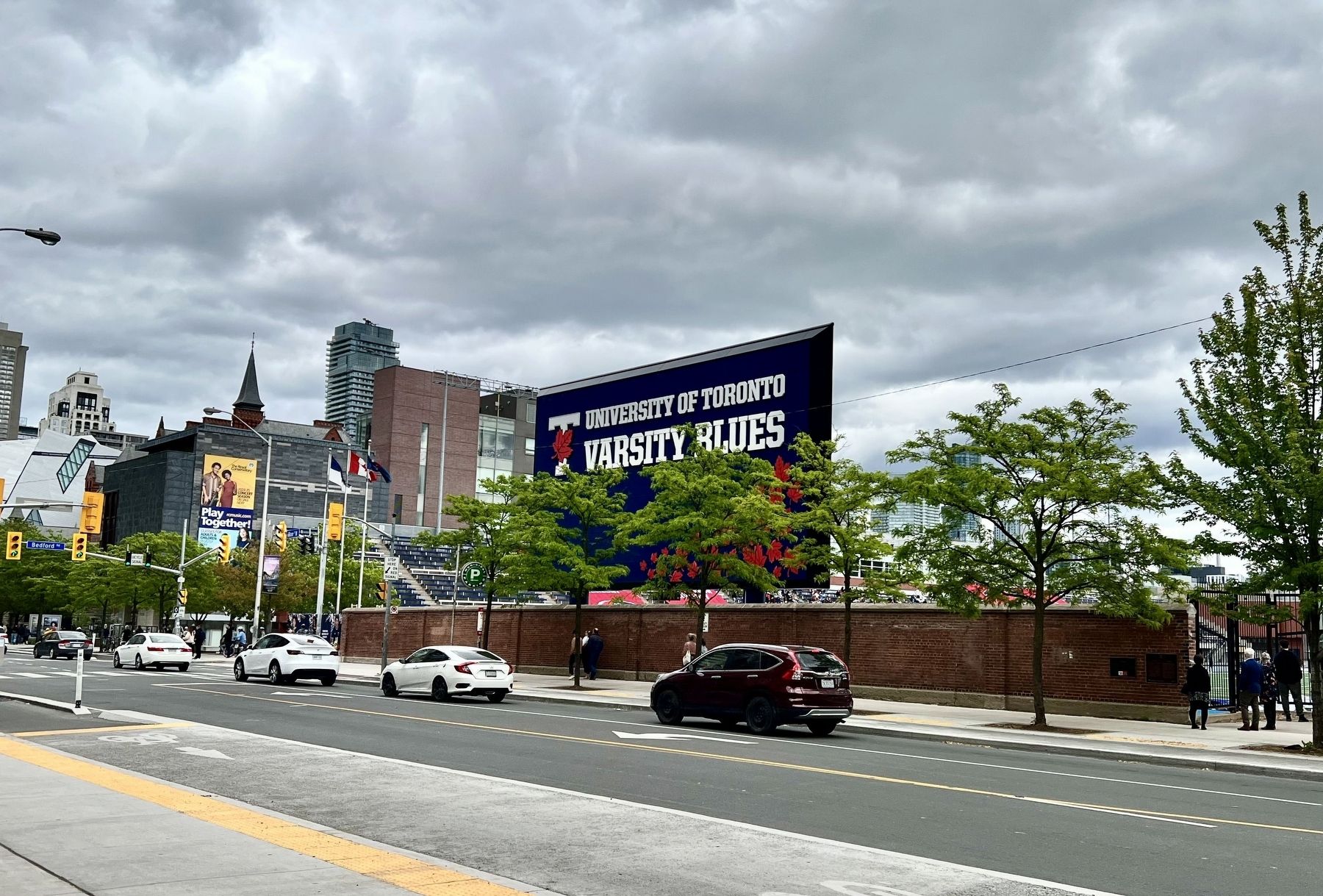
4. Varsity Stadium in 2025 (location of 30 Grey Cup Championships)
Marker is visible at the far right of the wall
Credits. This page was last revised on June 8, 2025. It was originally submitted on June 5, 2025, by Tim Boyd of Hamilton, Ontario. This page has been viewed 106 times since then and 13 times this year. Photos: 1, 2, 3, 4. submitted on June 5, 2025, by Tim Boyd of Hamilton, Ontario. • Andrew Ruppenstein was the editor who published this page.
