Near McConnells in York County, South Carolina — The American South (South Atlantic)
The Combatants
| — | Huck's Defeat Battlefield Trail | — |
Photographed by Mark Parker, May 3, 2025
1. The Combatants Marker
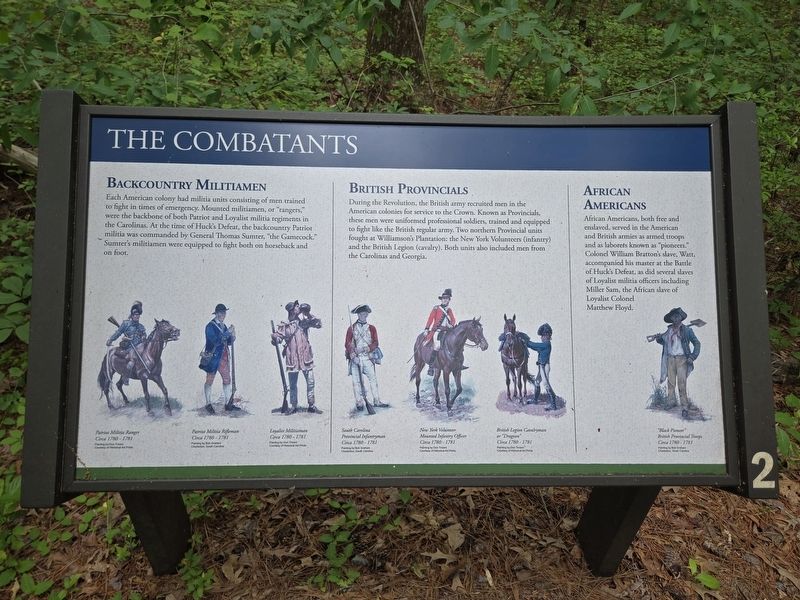
Backcountry Militiamen
Each American colony had militia units consisting of men trained to fight in times of emergency. Mounted militiamen, or "rangers," were the backbone of both Patriot and Loyalist militia regiments in the Carolinas. At the time of Huck's Defeat, the backcountry Patriot militia was commanded by General Thomas Sumter, "the Gamecock." Sumter's militiamen were equipped to fight both on horseback and on foot.
British Provincials
During the Revolution, the British army recruited men in the American colonies for service to the Crown. Known as Provincials, these men were uniformed professional soldiers, trained and equipped to fight like the British regular army. Two northern Provincial units fought at Williamson's Plantation: the New York Volunteers (infantry) and the British Legion (cavalry). Both units also included men from the Carolinas and Georgia.
African Americans
African Americans, both free and enslaved, served in the American and British armies as armed troops and as laborers known as "pioneers." Colonel William Bratton's slave, Watt, accompanied his master at the Battle of Huck's Defeat,
this page online
Captions
Patriot Militia Ranger
Circa 1780-1781
Painting by Don Troiani
Courtesy of Historical Art Prints
Patriot Militia Rifleman
Circa 1780-1781
Painting by Bob Graham
Charleston, South Carolina
Loyalist Militiaman
Circa 1780-1781
Painting by Don Troiani
Courtesy of Historical Art Prints
South Carolina
Provincial Infantryman
Circa 1780-1781
Painting by Bob Graham
Charleston, South Carolina
New York Volunteer
Mounted Infantry Officer
Circa 1780-1781
Painting by Don Troiani
Courtesy of Historical Art Prints
British Legion Cavalryman
or "Dragoon"
Circa 1780-1781
Painting by Don Troiani
Courtesy of Historical Art Prints
"Black Pioneer"
British Provincial Troops
Circa 1780-1781
Painting by Bob Graham
Charleston, South Carolina
Topics. This historical marker is listed in these topic lists: African Americans • War, US Revolutionary. A significant historical date for this entry is July 12, 1780.
Location. 34° 51.964′ N, 81° 10.383′ W. Marker is near McConnells, South Carolina,
Photographed by Mark Parker, May 3, 2025
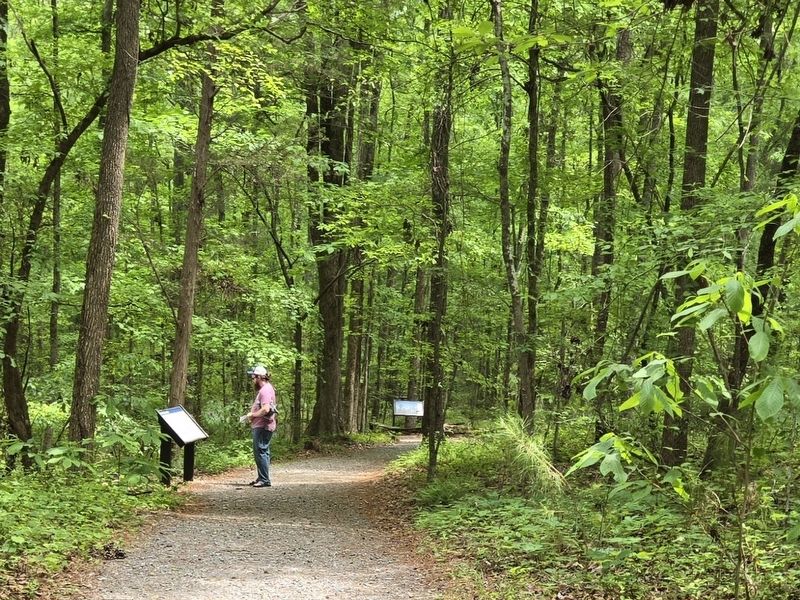
2. The Combatants Marker on the Huck's Defeat Battlefield Trail

Regionally, this marker is in the Midlands and in the Olde English District. It is also in the American South and specifically in the Deep South. Globally, it is in North America, the Western Hemisphere, the Western World, and the Anglosphere. Historically, it finds itself in what was once the original Cherokee Nation, the territory of the Mississippian Culture, one of the original Thirteen Colonies, one of the Confederate States of America, and the Antebellum South.
Other nearby markers. At least 8 other markers are within walking distance of this marker: Attack on the Loyalist Militia Camp (a few steps from this marker); Martha and Watt (within
Photographed by Mark Parker, May 3, 2025
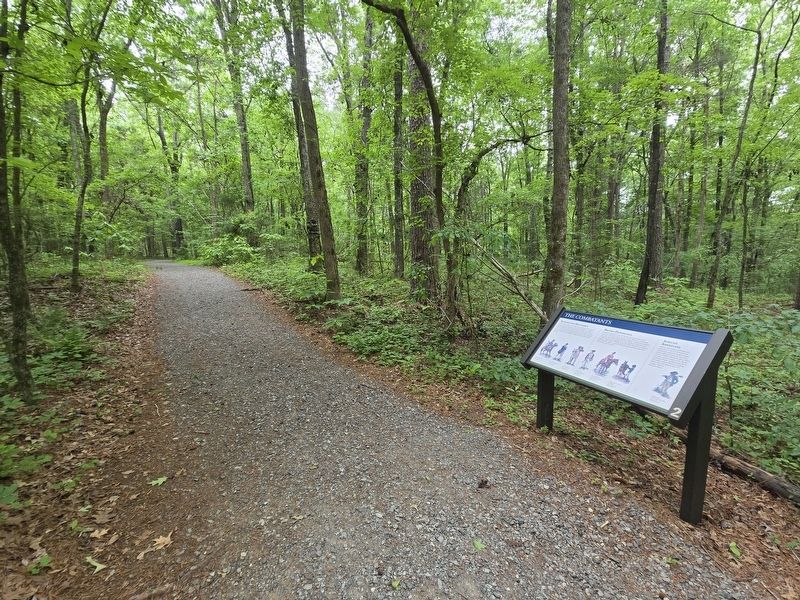
3. The Combatants Marker on the Huck's Defeat Battlefield Trail
Also see . . . Battle of Huck's Defeat.
In the spring and summer of 1780, the Revolutionary War moved full force into York County. On the evening of July 10th, Captain Christian Huck of the British Legion was sent to arrest Patriot leaders in the area with about 120 of his men, but many eluded capture. Huck’s forces headed for Colonel William Bratton’s plantation. On the way, the British confiscated food, horses, and other valuables from local families. Colonel Bratton was away with the militia at Thomas Sumter’s camp along the Catawba River.(Submitted on June 11, 2025, by Mark Parker of Hickory, North Carolina.)
Photographed by Mark Parker, May 3, 2025
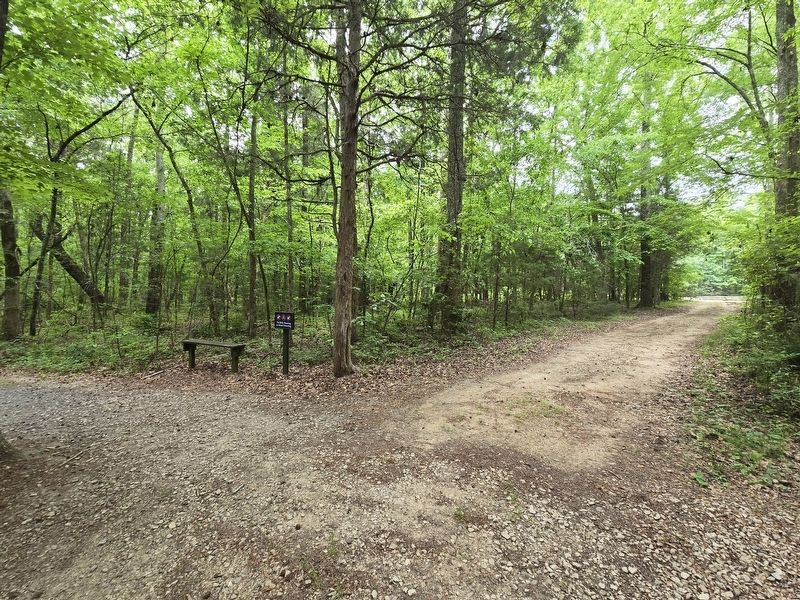
4. Battlefield Trail entrance to the left. Brattonsville parking lot on the right
Note: battlefield trail is a part of the entry fee, which is paid at the visitors center
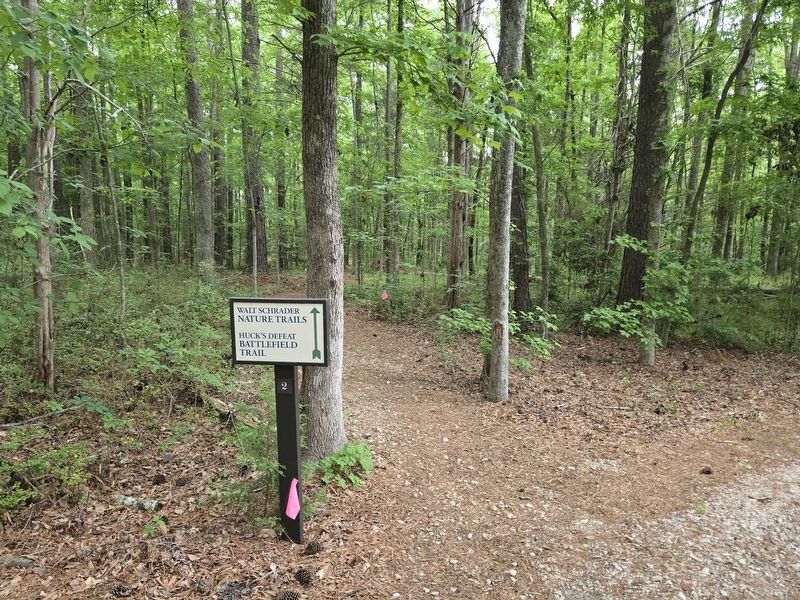
Photographed by Mark Parker, May 3, 2025
5. Battlefield Trail sign behind the visitors center
Credits. This page was last revised on June 27, 2025. It was originally submitted on June 10, 2025, by Mark Parker of Hickory, North Carolina. This page has been viewed 152 times since then and 38 times this year. Last updated on June 11, 2025, by Mark Parker of Hickory, North Carolina. Photos: 1, 2, 3, 4, 5. submitted on June 10, 2025, by Mark Parker of Hickory, North Carolina. • Bernard Fisher was the editor who published this page.
