French Quarter in Charleston in Charleston County, South Carolina — The American South (South Atlantic)
Huguenot Church
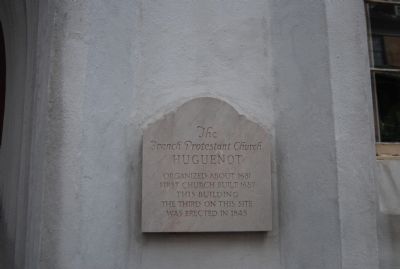
Photographed by Michael Sean Nix, February 13, 2010
1. Huguenot Church Marker
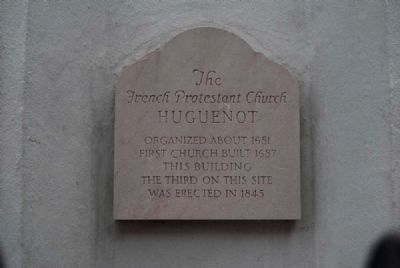
French Protestant Church
Huguenot
Organized about 1861
First church built in 1867
This building
the third on this site
was erected in 1845
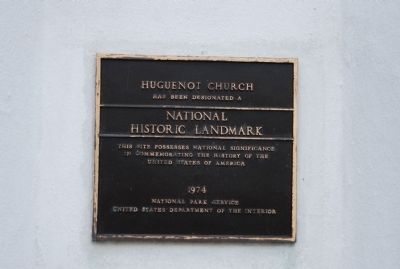
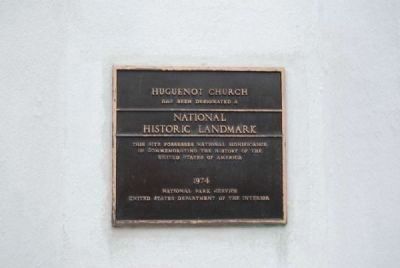
[National Historic Landmark Plaque]:
has been designated a
National Historic Landmark
This site possesses national significance
in commemorating the history of the
United States of America
1974
National Park Service
United States Department of the Interior
Topics and series. This historical marker is listed in these topic lists: Notable Buildings • Religion & Religious Structures. In addition, it is included in the National Historic Landmarks series list. A significant historical year for this entry is 1861.
Location. 32° 46.692′ N, 79° 55.758′ W. Marker is in Charleston, South Carolina, in Charleston County. It is in the French Quarter. It is at the intersection of Church Street and Queen Street, on the right when traveling north on Church Street. Touch for map. Marker is at or near this postal address: 136 Church Street, Charleston SC 29401, United States of America. Touch for directions.

Regionally, this marker is in Historic Charleston
this page online
Other nearby markers. At least 10 other markers are within walking distance of this marker: A different marker also named Huguenot Church (a few steps from this marker); Johnson's Row (within shouting distance of this marker); The Douxsaint House (within shouting distance of this marker); The Footlight Players Workshop (within shouting distance of this marker); St. Philip's Church (within shouting distance of this marker); Edward Rutledge (within shouting distance of this marker); Calhoun (within shouting distance of this marker); Charles Pinckney (within shouting distance of this marker); Slave Trading Complex (about 300 feet away, measured in a direct line); 54 Queen Street (about 300
Photographed by Brian Scott, September 20, 2011
2. Huguenot Church Marker
Regarding Huguenot Church. Completed in 1845, the Huguenot Church was the first Gothic Revival building built in Charleston. It is an excellent example of Edward Brickell White’s versatility for he had recently completed both Greek Doric and Roman Doric buildings within the city. Though White was probably at his best in the design of buildings in the classic manner, the Huguenot Church appears to have been his first essay in Gothic. The building is stucco on brick with a single tier of Gothic windows and is three by six bays in proportion. It shows a quantity of pinnacle-topped buttresses, a battlement parapet, and dripstones. Cast-iron crockets are located on the pinnacles over the front windows and front gable. The use of pinnacled buttresses on the front elevation as well as the flanks might lead one to expect an interior with nave and aisles; however, the interior is a single cell with plaster ribbed grained vaulting. Its width in relation to its height gives it an unexpected sense of spaciousness for a building of its size. This is the third edifice on this
Photographed by Michael Sean Nix, February 13, 2010
3. Huguenot Church Marker
Listed in the National Register November 7, 1973; Designated a National Historic Landmark November 7, 1973.
(South Carolina Department of Archives and History)
Huguenot Church *** (added 1973 - - #73001687)
136 Church St. , Charleston
• Historic Significance: Architecture/Engineering
• Architect, builder, or engineer: White,E.B.
• Architectural Style: Gothic Revival
• Area of Significance: Architecture
• Period of Significance: 1825-1849
• Historic Function: Religion
Also see . . .
1. South Carolina Department of Archives and History. Completed in 1845, the Huguenot Church was the first Gothic Revival building built in Charleston. (Submitted on February 15, 2010, by Michael Sean Nix of Spartanburg, South Carolina.)
2. Huguenot. The Huguenots were members of the Protestant Reformed Church of France during the 16th and 17th centuries. (Submitted on October 6, 2011, by Brian Scott of Anderson, South Carolina.)
Photographed by Brian Scott, September 20, 2011
4. Huguenot Church
National Historic Landmark Plaque
National Historic Landmark Plaque
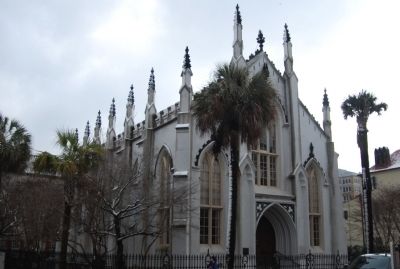
Photographed by Michael Sean Nix, February 13, 2010
5. Huguenot Church
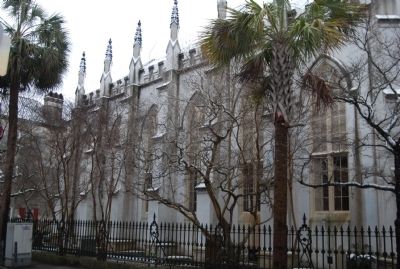
Photographed by Michael Sean Nix, February 13, 2010
6. Huguenot Church
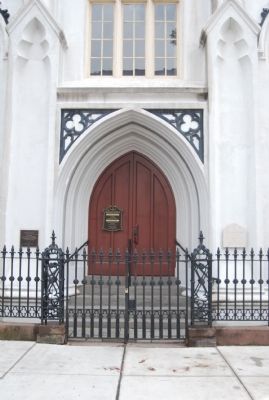
Photographed by Michael Sean Nix, February 13, 2010
7. Huguenot Church
Front door
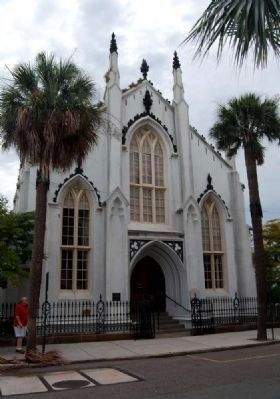
Photographed by Brian Scott, September 20, 2011
8. Huguenot Church
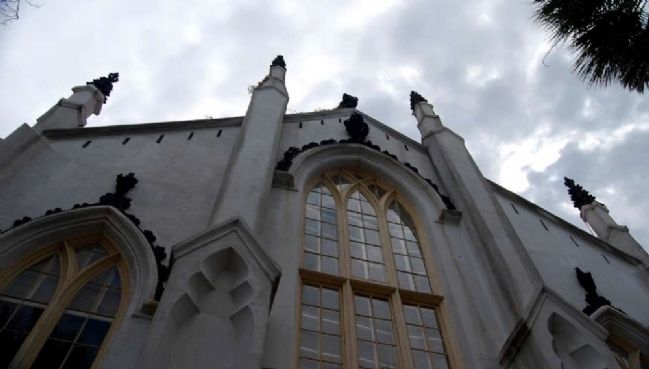
Photographed by Brian Scott, September 20, 2011
9. Huguenot Church
Credits. This page was last revised on February 16, 2023. It was originally submitted on February 15, 2010, by Michael Sean Nix of Spartanburg, South Carolina. This page has been viewed 1,368 times since then and 45 times this year. Photos: 1. submitted on February 15, 2010, by Michael Sean Nix of Spartanburg, South Carolina. 2. submitted on October 6, 2011, by Brian Scott of Anderson, South Carolina. 3. submitted on February 15, 2010, by Michael Sean Nix of Spartanburg, South Carolina. 4. submitted on October 6, 2011, by Brian Scott of Anderson, South Carolina. 5, 6, 7. submitted on February 15, 2010, by Michael Sean Nix of Spartanburg, South Carolina. 8, 9. submitted on October 6, 2011, by Brian Scott of Anderson, South Carolina. • Craig Swain was the editor who published this page.
