
Falaise in Calvados, Normandy, France — Western Europe
Château Guillaume-le-Conquérant
⎯⎯⎯
William the Conqueror’s Castle
Photographed by James Hulse, June 2, 2025
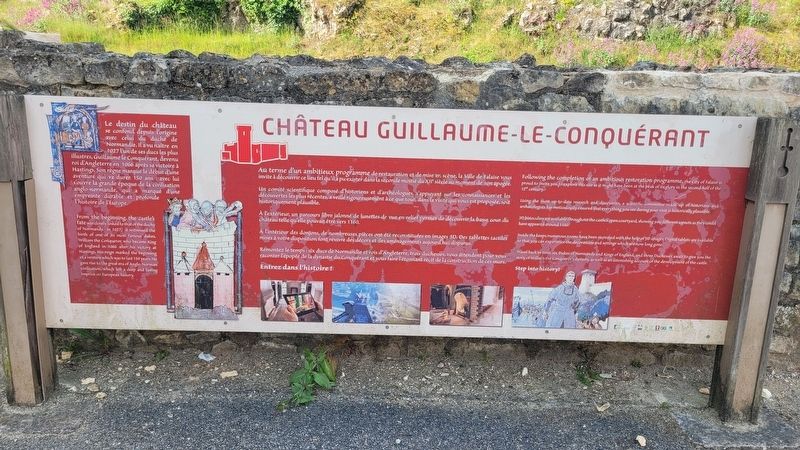
1. Château Guillaume-le-Conquérant / William the Conqueror’s Castle Marker

Le destin du château se confond depuis l'origine avec celui du duché de Normandie. Il a vu naître en 1027 l'un de ses ducs les plus illustres, Guillaume le Conquérant, devenu roi d'Angleterre en 1066 après sa victoire à Hastings. Son règne marque le début d'une aventure qui va durer 150 ans : avec lui s'ouvre la grande époque de la civilisation anglo-normande, qui a marqué d'une empreinte durable et profonde l'histoire de l'Europe.
Au terme d'un ambitieux programme de restauration et de mise en scène, la Ville de Falaise vous invite à découvrir ce lieu tel qu'il a pu exister dans la seconde moitié du XIIe siècle au moment de son apogée. Un comité scientifique composé d'historiens et d'archéologues, s'appuyant sur les connaissances et les découvertes les plus récentes, a veillé rigoureusement à ce que tout, dans la visite qui vous est proposée, soit historiquement plausible. À l'extérieur, un parcours libre jalonné de lunettes de vue en relief permet de découvrir la basse cour du château telle qu'elle pouvait être vers 1160. À l'intérieur des donjons, de nombreuses pièces ont été reconstituées en images 3D. Des tablettes tactiles mises à votre disposition font revivre des décors et des aménagements aujourd'hui disparus. Remontez le temps: six ducs de Normandie et rois d'Angleterre, trois duchesses, vous attendent pour vous raconter l'épopée de la dynastie du Conquérant et vous faire l'étonnant récit de la construction de ces murs. Entrez dans l'histoire !
From the beginning, the castle's fate was closely linked to that of the duchy of Normandy. In 1027, it witnessed the birth of one of its most famous dukes, William the Conqueror, who became King of England in 1066 after his victory at Hastings. His reign marked the beginning of a venture which was to last 150 years. He gave rise to the great era of Anglo-Norman civilisation, which left a deep and lasting imprint on European history.
Following the completion of an ambitious restoration programme, the City of Falaise is proud to invite you to explore this site as it might have been at the peak of its glory in the second half of the 12th century. Using the most up-to-date research and discoveries, a scientific committee made up of historians and archaeologists has meticulously ensured that everything you see during your visit is historically plausible. 3D binoculars are available throughout the castle's open courtyard, showing you different aspects as they could have appeared around 1160. Inside the keeps, numerous rooms have been recreated with the help of 3D images. Digital tablets are available so that you can experience the decorations and settings which are now long gone. Travel back in time: six Dukes of Normandy and Kings of England, and three Duchesses await to give you the story of William the Conqueror's dynasty, as well as an astonishing account of the development of the castle. Step into history!
Erected by Ville
this page online
Topics. This historical marker is listed in this topic list: Forts and Castles.
Location. 48° 53.619′ N, 0° 12.137′ W. Marker is in Falaise, Normandie (Normandy), in Calvados. It is at the intersection of Place Guillaume le Conquérant and Rue Blacher on Place Guillaume le Conquérant. The marker is located at the entrance to the Château Guillaume-le-Conquérant. Touch for map. Marker is at or near this postal address: 13 Pl Guillaume le Conquérant, Falaise, Normandie 14700, France. Touch for directions.

Regionally, it is in the North Atlantic Region, Europe, the European Union, Atlantic Europe, the Schengen Area, Western Europe, a coastal Mediterranean country, and the Western World. Historically, it finds itself in what was once a French colony and also the Roman Empire.
Other nearby markers. At least 8 other markers are within walking distance of this marker: A different marker also named Château Guillaume-le-Conquérant / William the Conqueror’s Castle (a few steps from this marker); La bataille de Normandie / The Battle of Normandy (a few steps from this marker);
Photographed by James Hulse, June 2, 2025
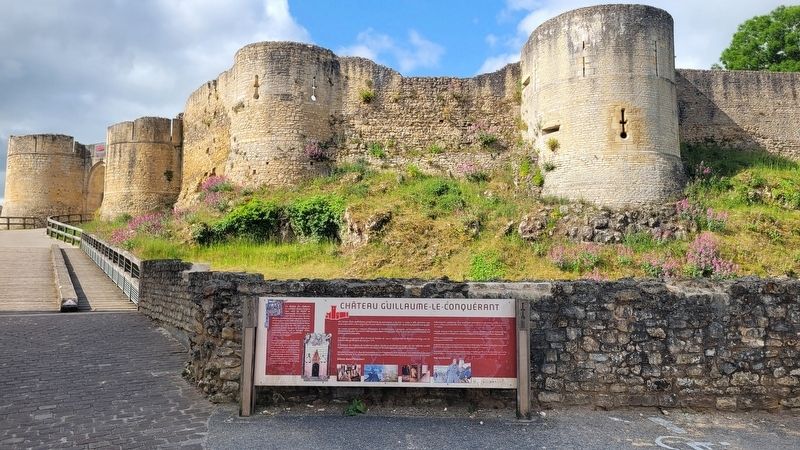
2. William the Conqueror’s Castle and Marker
Also see . . . William the Conqueror. Wikipedia
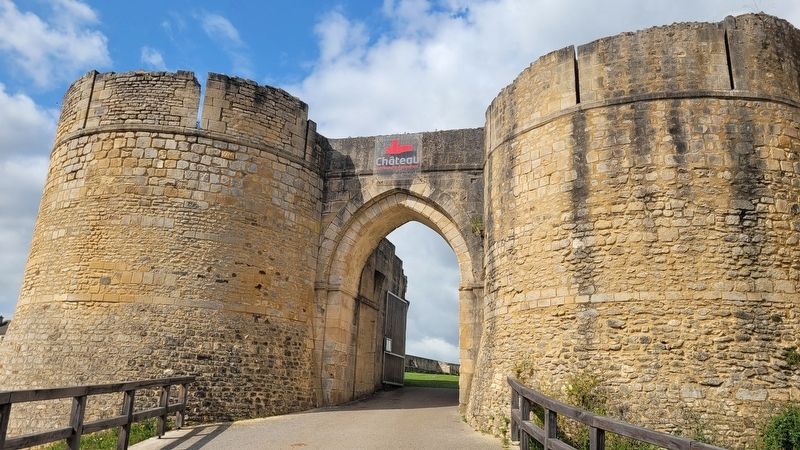
William the Conqueror (c. 1028 – 9 September 1087), sometimes called William the Bastard, was the first Norman king of England (as William I), reigning from 1066 until his death. A descendant of Rollo, he was Duke of Normandy (as William II) from 1035 onward. By 1060, following a long struggle, his hold on Normandy was secure. In 1066, following the death of Edward the Confessor, William invaded England, leading a Franco-Norman army to victory over the Anglo-Saxon forces of Harold Godwinson at the Battle of Hastings, and suppressed subsequent English revolts(Submitted on June 20, 2025, by James Hulse of Medina, Texas.)in what has become known as the Norman Conquest. The rest of his life was marked by struggles to consolidate his hold over England and his continental lands, and by difficulties with his eldest son, Robert Curthose.Photographed by James Hulse, June 2, 20253. The entrance to the William the Conqueror’s Castle
Photographed by James Hulse, June 2, 2025
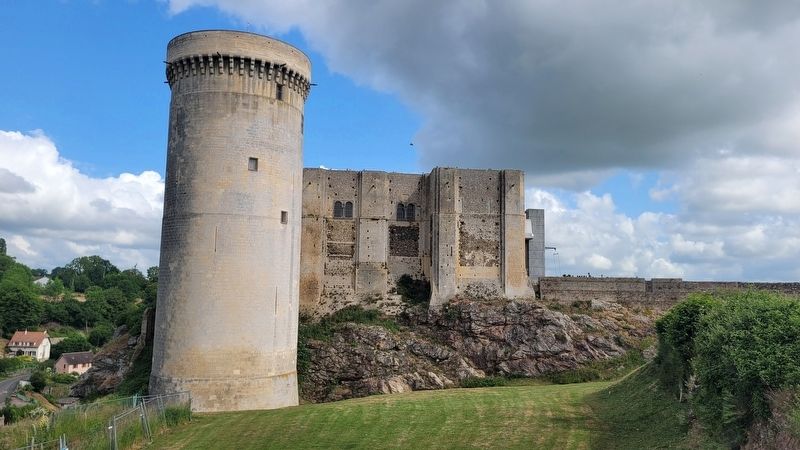
4. William the Conqueror’s Castle
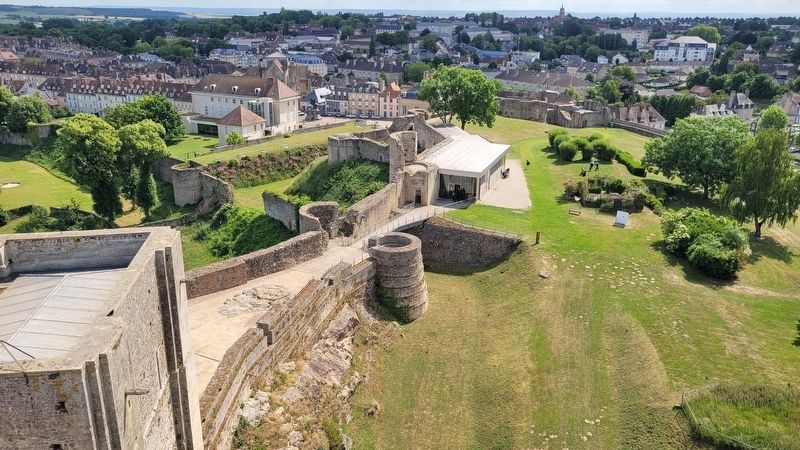
Photographed by James Hulse, June 2, 2025
5. Looking down from the William the Conqueror’s Castle Tower
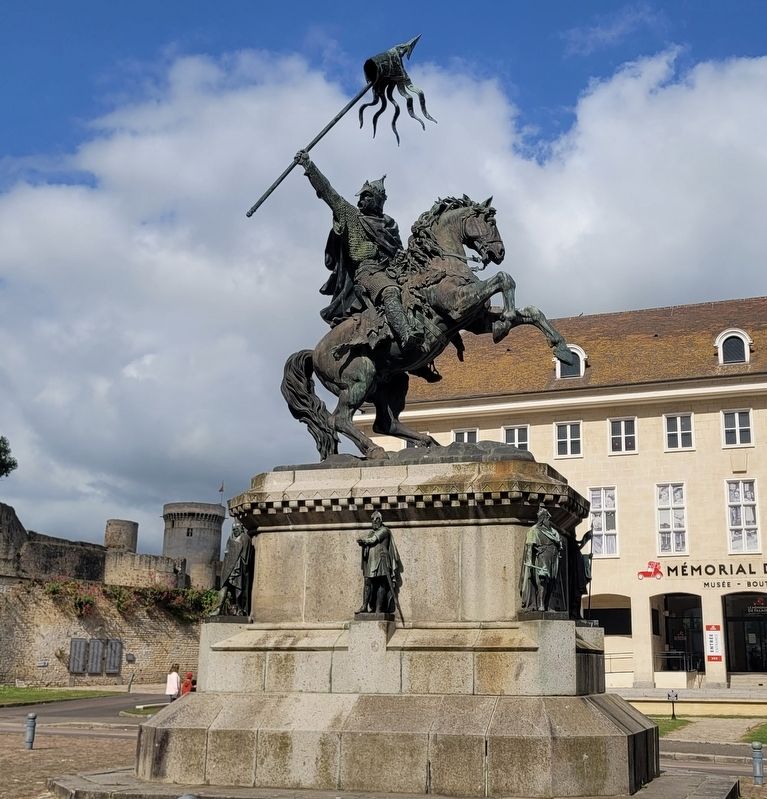
Photographed by James Hulse, June 2, 2025
6. William the Conqueror’s Statue in front of the castle
Credits. This page was last revised on June 20, 2025. It was originally submitted on June 20, 2025, by James Hulse of Medina, Texas. This page has been viewed 128 times since then and 32 times this year. Photos: 1, 2, 3, 4, 5, 6. submitted on June 20, 2025, by James Hulse of Medina, Texas.
