
Falaise in Calvados, Normandy, France — Western Europe
Château Guillaume-le-Conquérant
⎯⎯⎯
William the Conqueror’s Castle

Photographed by James Hulse, June 2, 2025
1. Château Guillaume-le-Conquérant / William the Conqueror’s Castle Marker

Un témoin de l'architecture anglo-normande
Site stratégique, le château de Falaise témoigne de la puissance anglo-normande, depuis Guillaume jusqu'à Richard Cœur de Lion et Jean Sans Terre. Né à Falaise en 1027, Guillaume accomplit son premier fait d'armes au château. Sa victoire est l'acte fondateur de l'affirmation de son pouvoir en Normandie. Son troisième fils, Henri Beauclerc naît en Angleterre après la Conquête de 1066; héritier du duché de Normandie et de la couronne d'Angleterre, il transforme totalement le château de son père. Vers 1123, il construit un grand donjon carré du même type que ceux qu'il a vu construire par le Conquérant en Angleterre pour garantir les droits et les terres des nouveaux seigneurs normands. C'est un des rares témoins en France de l'architecture anglo-normande.
A testimony to Anglo-Norman architecture
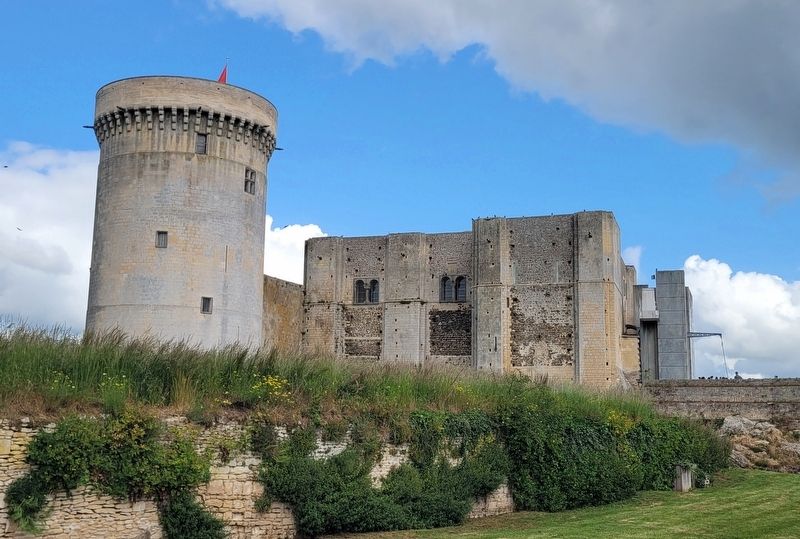
The strategic site of Falaise Castle bears witness to the great Anglo-Norman power, from William to Richard the Lionheart and John Lackland. Born in Falaise in 1027, William accomplished his very first feat of arms within this castle. His victory was the first act to seal his power over Normandy. His third son, Henry Beauclerc, was born in England following the Norman Conquest in 1066; as heir to both the Dukedom of Normandy and the Crown of England, he totally transformed his father's former castle. Around 1123, he had a great square keep built, similar to those he had seen his father, the Conqueror, build in England to secure the new Norman lords' rights and properties. It is one of France's rare examples of Anglo-Norman architecture.
Erected by Ville de Falaise, Norman Connections, Conseil Général du Calvados.
Topics. This historical marker is listed in this topic list: Forts and Castles.
Location. 48° 53.617′ N,
this page online

Regionally, it is in the North Atlantic Region, Europe, the European Union, Atlantic Europe, the Schengen Area, Western Europe, a coastal Mediterranean country, and the Western World. Historically, it finds itself in what was once a French colony and also the Roman Empire.
Other nearby markers. At least 8 other markers are within walking distance of this marker: A different marker also named Château Guillaume-le-Conquérant / William the Conqueror’s Castle (a few steps from this marker); L’apparition des armes à feu / Firearms are introduced (within shouting distance of this marker); La bataille de Normandie / The Battle of Normandy (within shouting distance of this marker); Les Graffiti / Graffiti (within shouting
Photographed by James Hulse, June 2, 2025
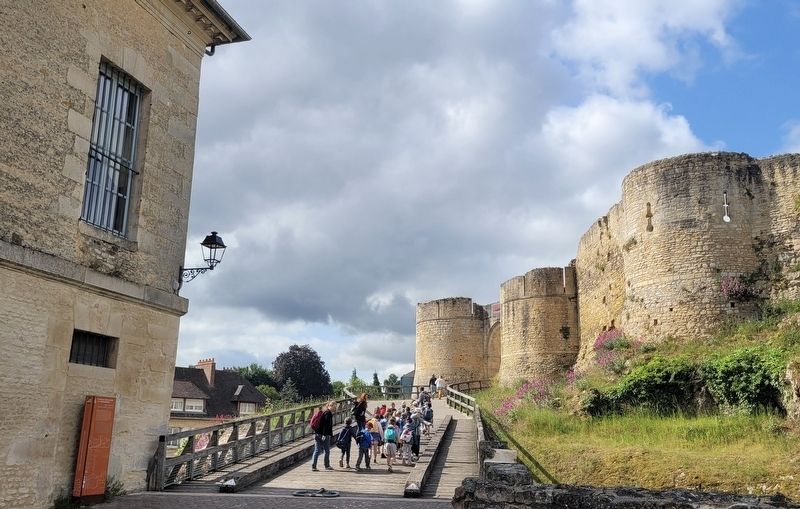
2. William the Conqueror’s Castle and Marker (left side)
Also see . . . William the Conqueror. Wikipedia
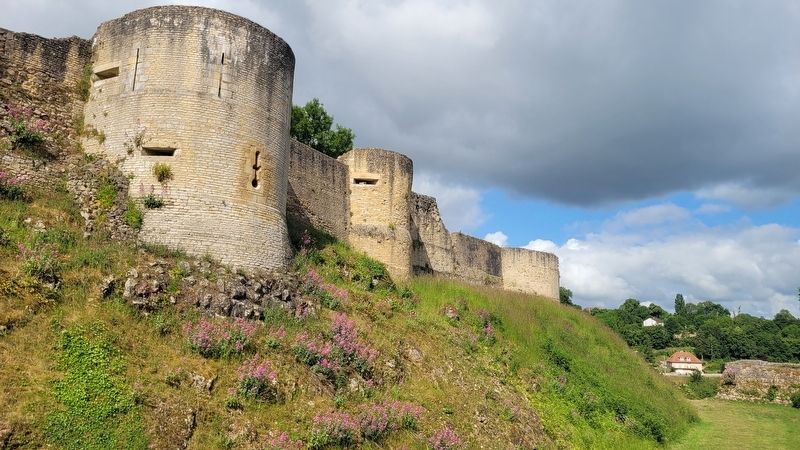
William the Conqueror (c. 1028 – 9 September 1087), sometimes called William the Bastard, was the first Norman king of England (as William I), reigning from 1066 until his death. A descendant of Rollo, he was Duke of Normandy (as William II) from 1035 onward. By 1060, following a long struggle, his hold on Normandy was secure. In 1066, following the death of Edward the Confessor, William invaded England, leading a Franco-Norman army to victory over the Anglo-Saxon forces of Harold Godwinson at the Battle of Hastings, and suppressed subsequent English revolts in what has become known as the Norman Conquest. The rest of his life was marked by struggles to(Submitted on June 20, 2025, by James Hulse of Medina, Texas.)consolidate his hold over England and his continental lands, and by difficulties with his eldest son, Robert Curthose.Photographed by James Hulse, June 2, 20253. The walls of William the Conqueror’s Castle
Photographed by James Hulse, June 2, 2025
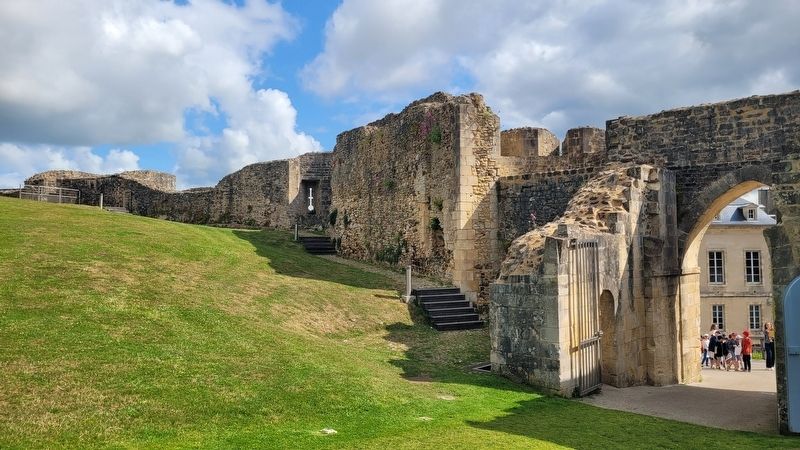
4. A section of wall to the William the Conqueror’s Castle
Photographed by James Hulse, June 2, 2025
5. William the Conqueror’s Castle Tower
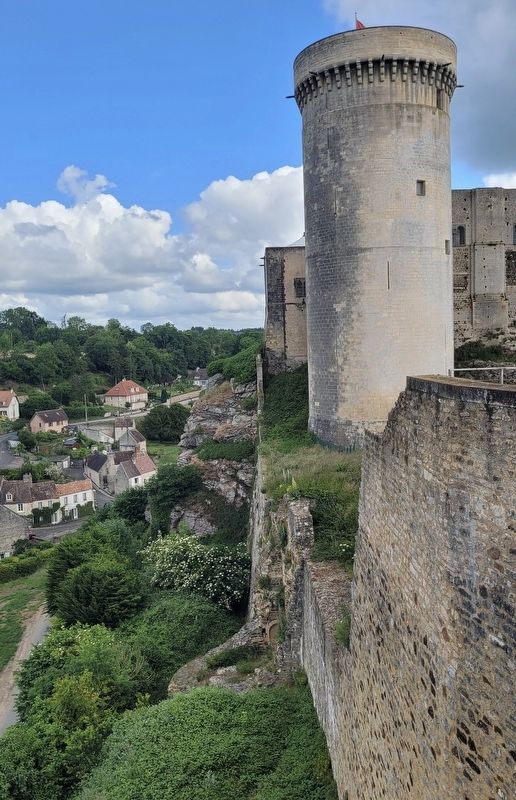
Photographed by James Hulse, June 2, 2025
6. The exterior wall and the tower
Credits. This page was last revised on June 20, 2025. It was originally submitted on June 20, 2025, by James Hulse of Medina, Texas. This page has been viewed 184 times since then and 55 times this year. Photos: 1, 2, 3, 4, 5, 6. submitted on June 20, 2025, by James Hulse of Medina, Texas.
