
Caen in Calvados, Normandy, France — Western Europe
La porte des Champs
⎯⎯⎯
The Castle Gate
Photographed by James Hulse, June 2, 2025
1. La porte des Champs / The Castle Gate Marker

La porte des Champs
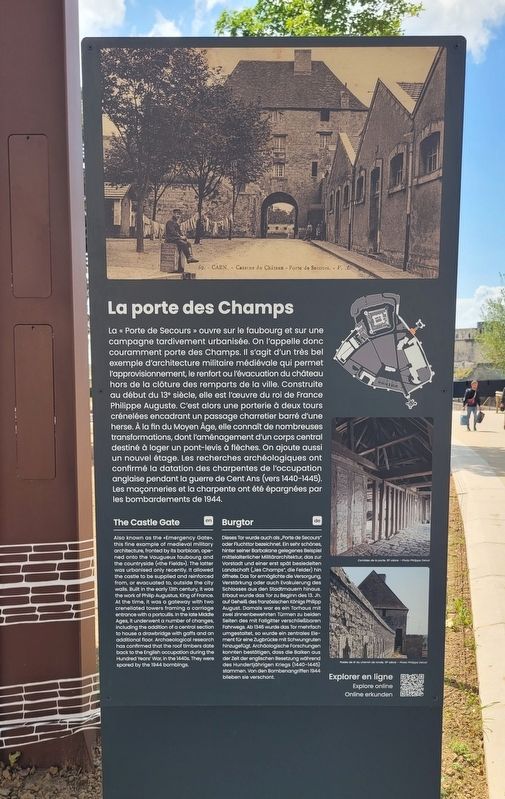
La «Porte de Secours» ouvre sur le faubourg et sur une campagne tardivement urbanisée. On l'appelle donc couramment porte des Champs. Il s'agit d'un très bel exemple d'architecture militaire médiévale qui permet l'approvisionnement, le renfort ou l'évacuation du château hors de la clôture des remparts de la ville. Construite au début du 13e siècle, elle est l'œuvre du roi de France Philippe Auguste. C'est alors une porterie à deux tours crénelées encadrant un passage charretier barré d'une herse. À la fin du Moyen Âge, elle connaît de nombreuses transformations, dont l'aménagement d'un corps central destiné à loger un pont-levis à flèches. On ajoute aussi un nouvel étage. Les recherches archéologiques ont confirmé la datation des charpentes de l'occupation anglaise pendant la guerre de Cent Ans (vers 1440-1445). Les maçonneries et la charpente ont été épargnées par les bombardements de 1944.
Légendes
(Photo #1) Combles de la porte, 15e siècle - Photo Philippe Delval
(Photo #2) Postes de tir du chemin de ronde, 19e siècle - Photo Philippe Delval
The Castle Gate
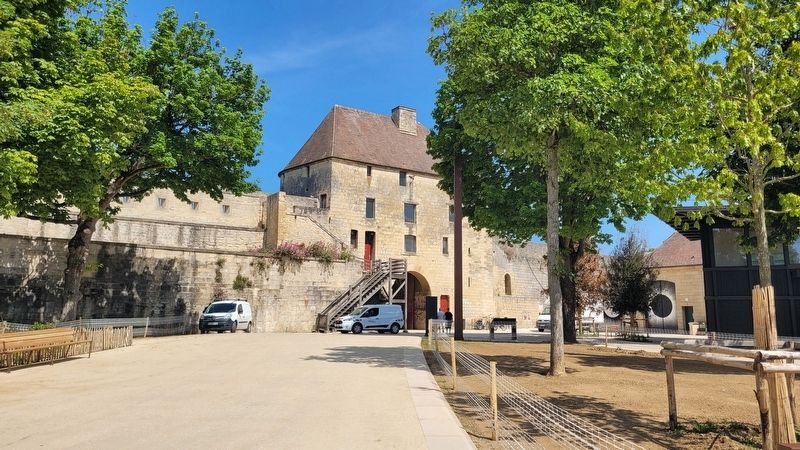
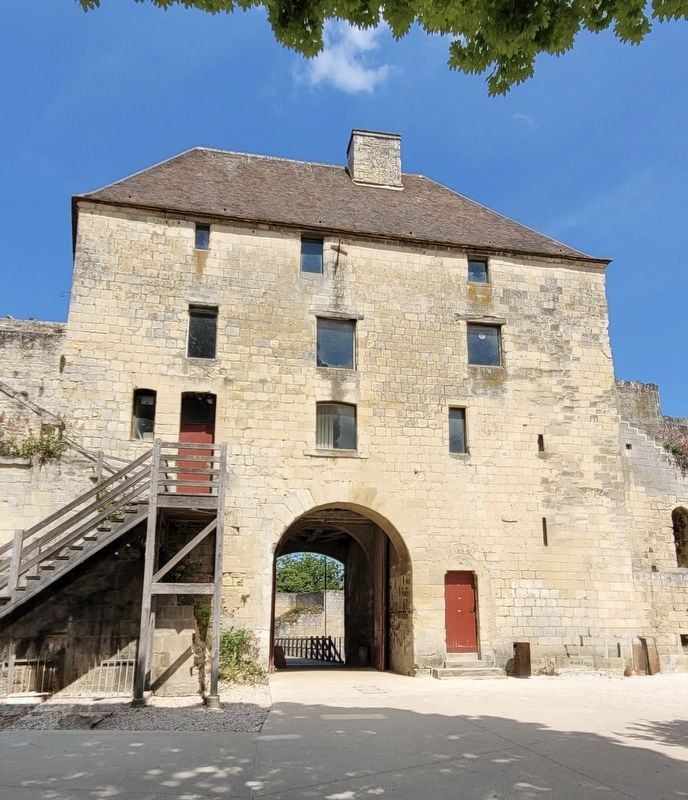
Also known as the «Emergency Gate», this fine example of medieval military architecture, fronted by its barbican, opened onto the Vaugueux faubourg and the countryside («the Fields»). The latter was urbanised only recently. It allowed the castle to be supplied and reinforced from, or evacuated to, outside the city walls. Built in the early 13th century, it was the work of Philip Augustus, King of France. At the time, it was a gateway with two crenellated towers framing a carriage entrance with a portcullis. In the late Middle Ages, it underwent a number of changes, including the addition of a central section to house a drawbridge with gaffs and an additional floor. Archaeological research has confirmed that the roof timbers date back to the English occupation during the Hundred Years' War, in the 1440s. They were spared by the 1944 bombings.
Captions
(Photo #1) Attic of the door, 15th century - Photo Philippe Delval
(Photo #2) Shooting positions on the patrol path, 19th century - Photo Philippe Delval
Burgtor
Dieses Tor wurde auch als „Porte de Secours“ oder Fluchttor bezeichnet. Ein sehr schönes, hinter seiner Barbakane gelegenes Beispiel mittelalterlicher Militärarchitektur, das zur Vorstadt und einer erst spät besiedelten Landschaft („les Champs“, die Felder) hin öffnete. Das Tor ermöglichte die Versorgung, Verstärkung oder auch Evakuierung des Schlosses aus den Stadtmauern hinaus. Erbaut wurde das Tor zu Beginn des 13. Jh. auf Geheiß des französischen Königs Philipp August. Damals war es ein Torhaus mit zwei zinnenbewehrten Türmen zu beiden Seiten des mit Fallgitter verschließbaren Fahrwegs. Ab 1346 wurde das Tor mehrfach umgestaltet, so wurde ein zentrales Element für eine Zugbrücke mit Schwungruten hinzugefügt. Archäologische Forschungen konnten bestätigen, dass die Balken aus der Zeit der englischen Besetzung während des Hundertjährigen Kriegs (1440-1445) stammen. Von den Bombenangriffen 1944 blieben sie verschont.
Bildunterschriften
(Foto #1) Dachboden der Tür, 15. Jahrhundert - Foto Philippe Delval
(Foto #2) Schießstände auf dem Patrouillenweg, 19. Jahrhundert - Foto Philippe Delval
Erected by Château
this page online
Topics. This historical marker is listed in this topic list: Forts and Castles. A significant historical year for this entry is 1944.
Location. 49° 11.218′ N, 0° 21.72′ W. Marker is in Caen, Normandie (Normandy), in Calvados. It is at the intersection of Av. de la Libération and Rue Montoir Poissonnerie on Av. de la Libération. The marker is located on the grounds of the Château de Caen. Touch for map. Marker is at or near this postal address: Château de Caen, Caen, Normandie 14000, France. Touch for directions.

Regionally, it is in the North Atlantic Region, Europe, the European Union, Atlantic Europe, the Schengen Area, Western Europe, a coastal Mediterranean country, and the Western World. Historically, it finds itself in what was once a French colony and also the Roman Empire.
Other nearby markers. At least 8 other markers are within walking distance of this marker: La barbacane et la porte des Champs / The Barbican and Castle Gate (within shouting distance of this marker); Le Donjon / From the Anglo-Norman keep to the French chatelet (about 90 meters away, measured in a direct line); Province of Ontario Memorial
Photographed by James Hulse, June 2, 2025
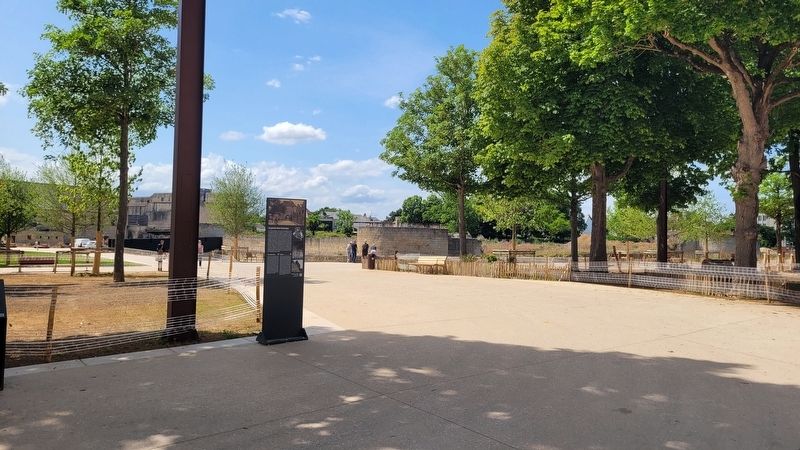
2. La porte des Champs / The Castle Gate Marker
Also see . . . The Field Gate. (Submitted on June 27, 2025, by James Hulse of Medina, Texas.)
Photographed by James Hulse, June 2, 2025
3. The view of the Castle Gate from the castle grounds
Photographed by James Hulse, June 2, 2025
4. Closeup of the Castle Gate
Credits. This page was last revised on June 27, 2025. It was originally submitted on June 26, 2025, by James Hulse of Medina, Texas. This page has been viewed 185 times since then and 46 times this year. Photos: 1, 2, 3, 4. submitted on June 27, 2025, by James Hulse of Medina, Texas.
