
Regensburg, Bavaria, Germany — Central Europe
Denkmal König Ludwig I. von Bayern
⎯⎯⎯
Monument to King Ludwig I of Bavaria
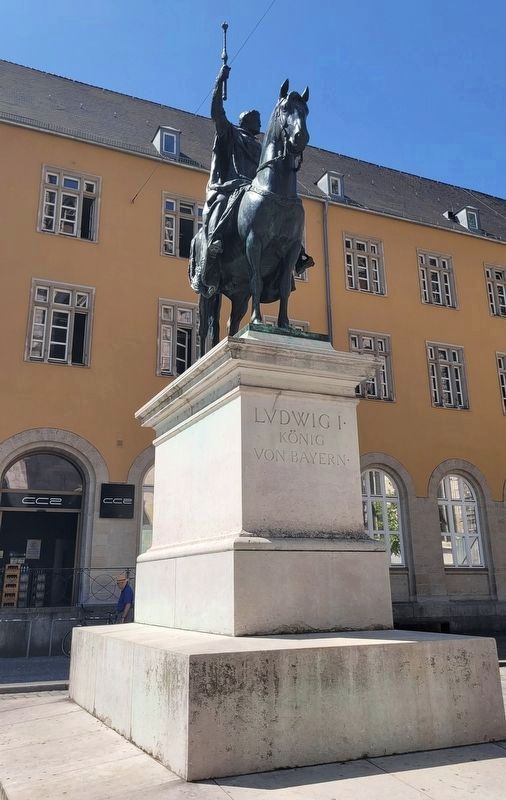
Photographed by James Hulse, June 25, 2025
1. King Ludwig I of Bavaria

Errichtet 1902 – entfernt 1936, restauriert und wiedererrichtet 2010 durch den Welterbekulturfonds Regensburg und Die Förderer e.V.
Built in 1902 – removed in 1936, restored and rebuilt in 2010 by the Regensburg World Heritage Cultural Fund, The Supporters Association (Die Förderer e.V.).
Erected by City of Regensburg.
Topics. This historical marker is listed in this topic list: Notable Places. A significant historical year for this entry is 1902.
Location. 49° 1.144′ N, 12° 5.914′ E. Marker is in Regensburg, Bayern (Bavaria). It is on Domplatz just east of Pfauengasse, on the right when traveling east. The marker is located along the base of the statue on the ground. Touch for map. Marker is at or near this postal address: Domplatz 25, Regensburg BY 93047, Germany. Touch for directions.

Regionally, it is in Europe, the European Union, Atlantic Europe, Central Europe, the Schengen Area, Western Europe, and the Western World. Historically, it finds itself in what was once the Holy Roman Empire.
Other nearby markers. At least 8 other markers are within walking distance of this marker: „Judensau“ - Darstellungen / "Judensau" sculptures (within shouting distance of this marker); Maria-Läng-Kapelle / Maria Läng Chapel (within shouting distance of this marker); Max Wissner (within shouting distance of this marker); Kaiser Napoleon / Emperor Napoleon (about 90 meters away, measured in a direct line); Dr. Johann Maier (about 90 meters away); Granary (about 180 meters away); Steuer'sches Haus / Steuer House (about 180 meters away); Goliath-Haus / Goliath House (about 180 meters away). Touch for a list and map of all markers in Regensburg.
Also see . . . Ludwig I of Bavaria. Wikipedia
Ludwig I or Louis I (25 August 1786 – 29 February 1868) was King of Bavaria(Submitted on July 5, 2025, by James Hulse of Medina, Texas.)from 1825 until the 1848 revolutions in the German states. When he was crown prince, he was involved in the Napoleonic Wars. As king, he encouraged Bavaria's industrialization, initiating the Ludwig Canal between the rivers Main and the Danube. In 1835, the first German railway was constructed in his domain, between the cities of Fürth and Nuremberg, with his Bavaria joining the Zollverein economic union in 1834. After the July Revolution of 1830 in France, Ludwig's previous liberal policy became increasingly repressive; in 1844, Ludwig was confronted during the Beer riots in Bavaria. During the revolutions of 1848 the king faced increasing protests and demonstrations by students and the middle classes. On 20 March 1848, he abdicated in favour of his eldest son, Maximilian.
Click or scan to see
this page online
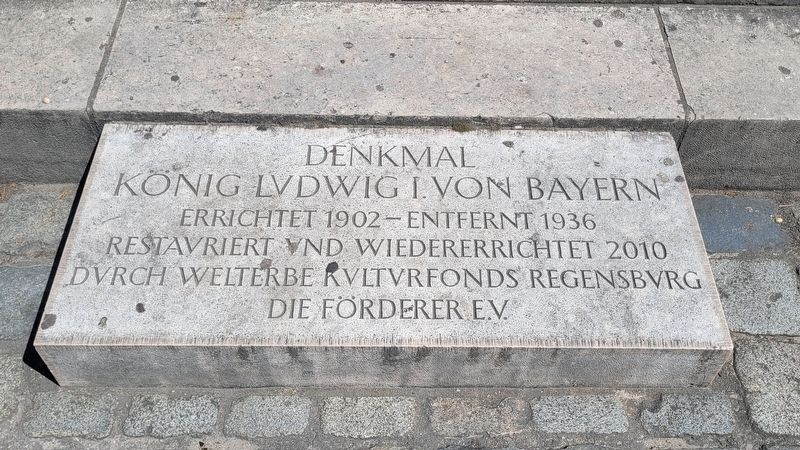
Photographed by James Hulse, June 25, 2025
2. Denkmal König Ludwig I. von Bayern / Monument to King Ludwig I of Bavaria Marker
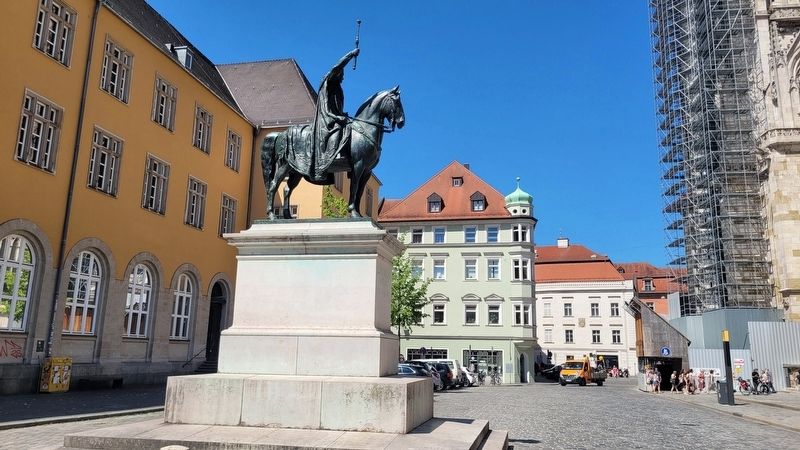
Photographed by James Hulse, June 25, 2025
3. The view of the monument along the street
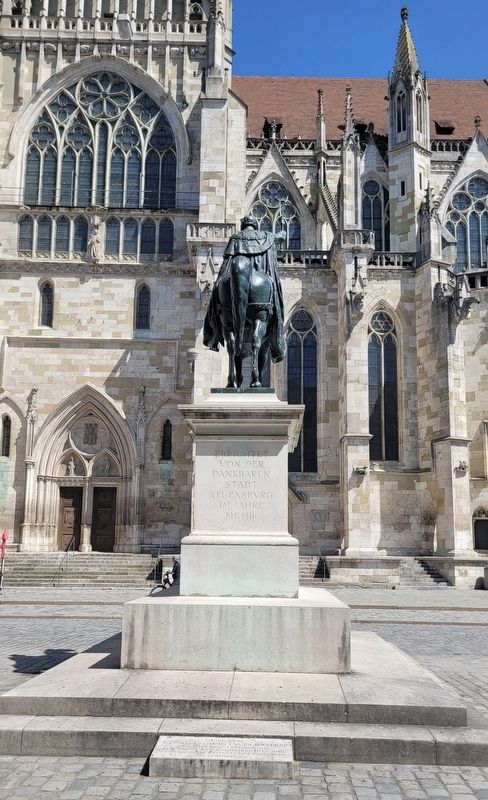
Photographed by James Hulse, June 25, 2025
4. The reverse side of the monument to King Ludwig I of Bavaria
The marker is located at the base of the statue.
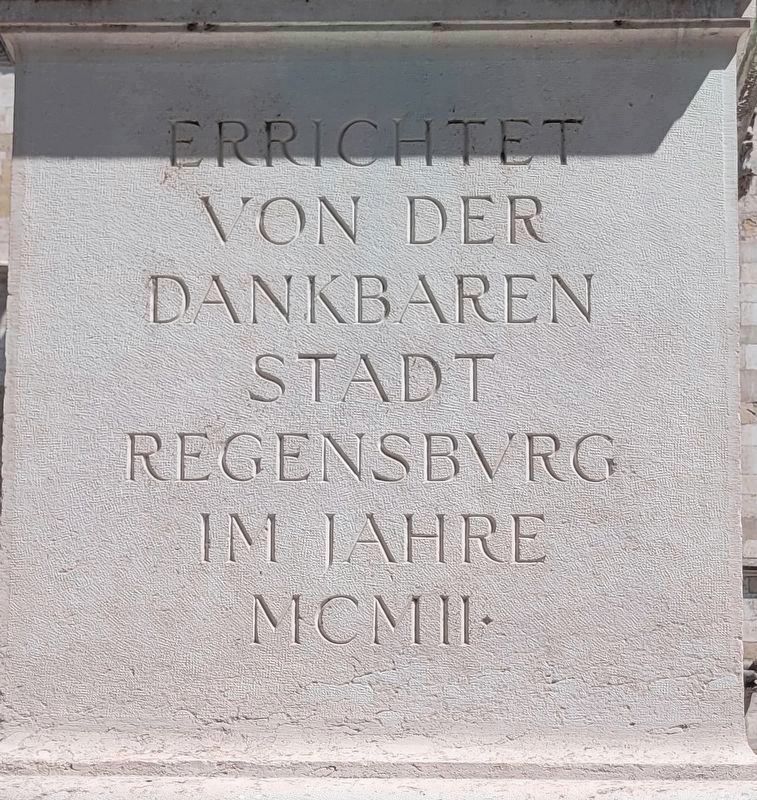
Photographed by James Hulse, June 25, 2025
5. Reverse side of statue
Erected by the grateful city of Regensburg in the year 1902
Credits. This page was last revised on July 5, 2025. It was originally submitted on July 4, 2025, by James Hulse of Medina, Texas. This page has been viewed 107 times since then and 21 times this year. Photos: 1, 2, 3, 4, 5. submitted on July 5, 2025, by James Hulse of Medina, Texas.
