Marion in Marion County, Ohio — The American Midwest (Great Lakes)
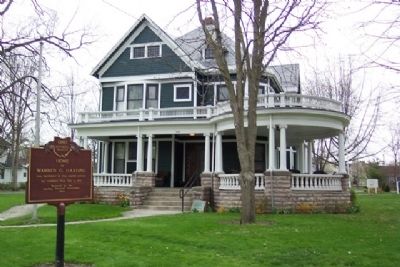
Home of Warren G. Harding
29th President of the United States
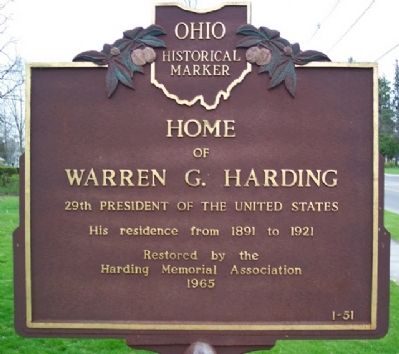
Photographed by William Fischer, Jr., April 19, 2009
1. Home of Warren G. Harding Marker
Warren G. Harding Presidential Sites website entry
Click for more information.
Click for more information.
Restored by the Harding Memorial Association
Erected 1965 by Harding Memorial Association and The Ohio Historical Society. (Marker Number 1-51.)
Topics and series. This historical marker is listed in these topic lists: Government & Politics • Notable Buildings. In addition, it is included in the Former U.S. Presidents: #29 Warren G. Harding, and the Ohio Historical Society / The Ohio History Connection series lists. A significant historical year for this entry is 1891.
Location. Marker has been permanently removed. It was located near 40° 35.179′ N, 83° 7.296′ W. Marker was in Marion, Ohio, in Marion County. It was on Mount Vernon Avenue (Ohio Route 95), on the right when traveling west. Marker is about 200 feet west of Bradford Street. Touch for map. Marker was at or near this postal address: 380 Mount Vernon Avenue, Marion OH 43302, United States of America.
We have been informed that this marker is no longer there and will not be replaced. This page is an archival view of what was.
Regionally, this marker was in the Scioto Valley and in the Till Plains. It was also in the

this page online
Other nearby markers. At least 8 other markers are within walking distance of this location: The Harding Home (a few steps from this marker); Warren G. Harding Home (a few steps from this marker); Freeland House (within shouting distance of this marker); Horseshoes (within shouting distance of this marker); Press House (within shouting distance of this marker); Christian House (within shouting distance of this marker); Sentry Guard House (about 300 feet away, measured in a direct line); a different marker also named Home of Warren G. Harding (about 400 feet away). Touch for a list and map of all markers in Marion.
More about this marker. This marker no longer stands. It was removed when new signage was installed. According to the site director, there are no plans to reinstall it in the near future.
Also see . . . Warren G. Harding Presidential Sites.
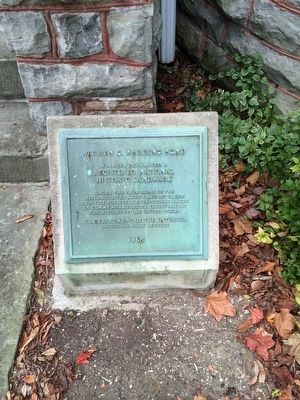
Photographed by Pat Filippone, September 27, 2015
2. Home of Warren G. Harding Marker
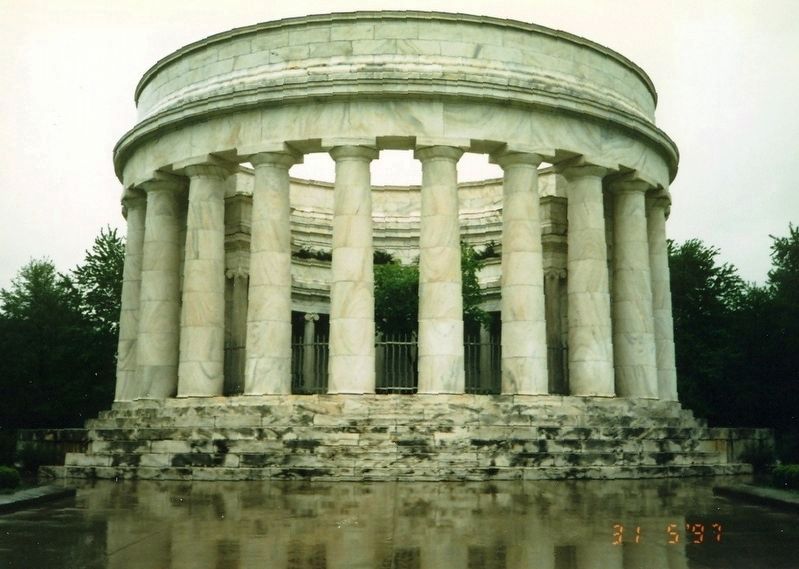
Photographed by Don Morfe, May 31, 1997
3. Warren G. Harding Memorial Park and Grave
Harding Memorial Park is located in Marion OH. The GPS Coordinates are N40.5733 W83.1233
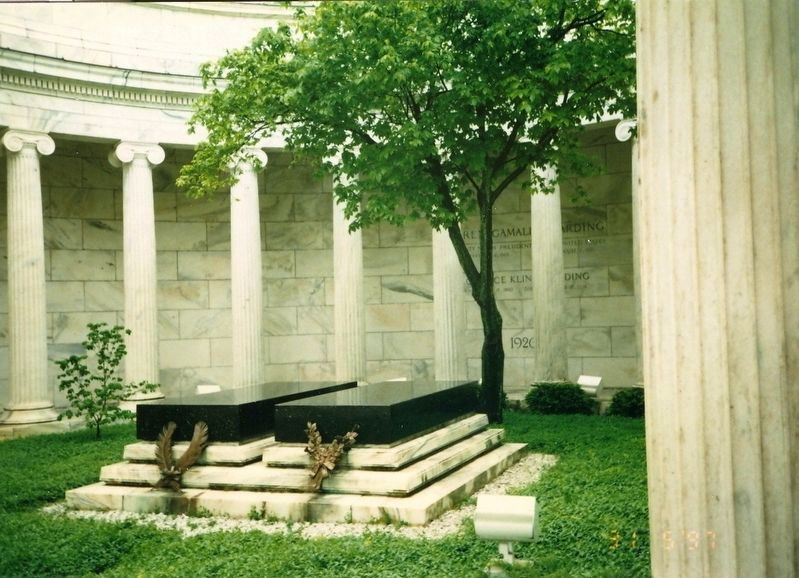
Photographed by Don Morfe, May 31, 1997
4. Warren G. Harding and wife Grave Markers in Memorial Park
Photographed by William Fischer, Jr., April 19, 2009
5. Home of Warren G. Harding and Marker
Photographed by Allen C. Browne, August 9, 2015
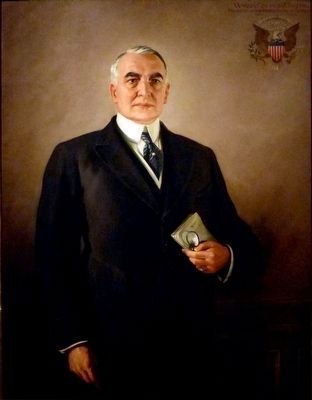
6. Warren G. Harding
This 1923 portrait of Warren G. Harding by Margaret Lindsay Williams hangs in the National Portrait Gallery in Washington, DC.
“The first two decades of the twentieth century had been marked by American involvement in a world war and a host of progressive reforms in the country's economic and social institutions. By 1920, voters wanted a rest from all this change and ferment and were ready for a brand of White House leadership that did not threaten the status quo. In Warren G. Harding, that year's Republican presidential candidate, they found what they wanted. A convivial onetime newspaper editor, Harding made ‘normalcy’ the keynote of his campaign. Although the meaning of the newly coined term was uncertain, it at least promised no unsettling changes.
Harding's administration was marked by scandals. A trusting individual, he appointed cronies to his administration who proved all too ready to use their offices for private gain. Harding, however, escaped having to face the corrupt behavior of his appointees. Just as stories of their wrongdoing were coming to light, he collapsed and died.” — National Portrait Gallery
“The first two decades of the twentieth century had been marked by American involvement in a world war and a host of progressive reforms in the country's economic and social institutions. By 1920, voters wanted a rest from all this change and ferment and were ready for a brand of White House leadership that did not threaten the status quo. In Warren G. Harding, that year's Republican presidential candidate, they found what they wanted. A convivial onetime newspaper editor, Harding made ‘normalcy’ the keynote of his campaign. Although the meaning of the newly coined term was uncertain, it at least promised no unsettling changes.
Harding's administration was marked by scandals. A trusting individual, he appointed cronies to his administration who proved all too ready to use their offices for private gain. Harding, however, escaped having to face the corrupt behavior of his appointees. Just as stories of their wrongdoing were coming to light, he collapsed and died.” — National Portrait Gallery
Photographed by Pat Filippone
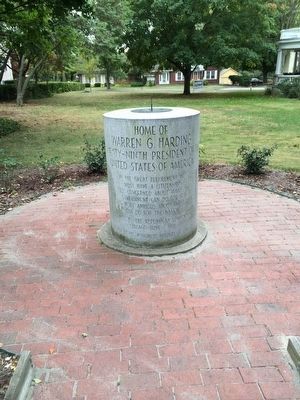
7. Home of Warren G. Harding Marker
Credits. This page was last revised on July 8, 2025. It was originally submitted on March 24, 2010, by William Fischer, Jr. of Reynoldsburg, Ohio. This page has been viewed 1,936 times since then and 51 times this year. Last updated on July 5, 2025, by Ian Lefkowitz of New York, New York. Photos: 1. submitted on March 24, 2010, by William Fischer, Jr. of Reynoldsburg, Ohio. 2. submitted on January 21, 2016, by Pat Filippone of Stockton, California. 3, 4. submitted on August 13, 2016, by Don Morfe of Baltimore, Maryland. 5. submitted on March 24, 2010, by William Fischer, Jr. of Reynoldsburg, Ohio. 6. submitted on August 14, 2015, by Allen C. Browne of Silver Spring, Maryland. 7. submitted on January 21, 2016, by Pat Filippone of Stockton, California. • Devry Becker Jones was the editor who published this page.
