Tower Township in Buffalo in Cass County, North Dakota — The American Midwest (Upper Plains)
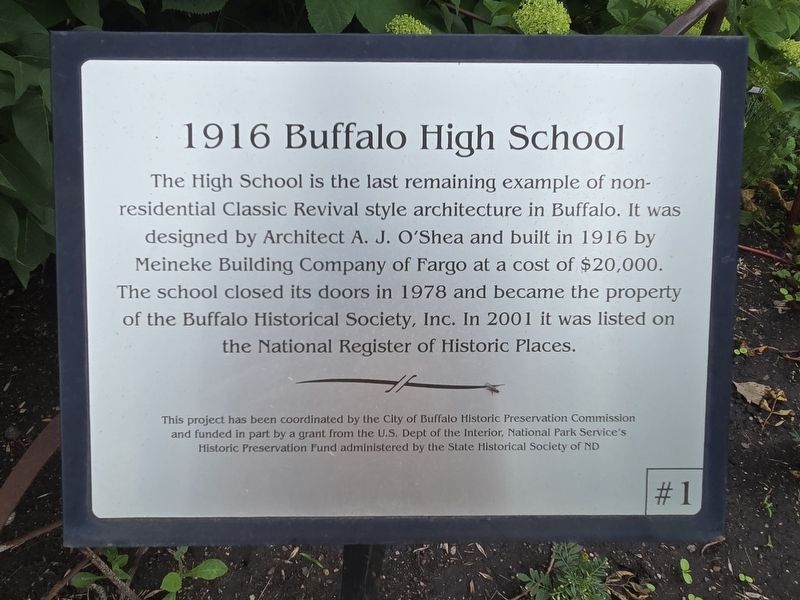
1916 Buffalo High School
| — | Buffalo Historical Tour | — |
Photographed by Mark Parker, June 27, 2025
1. 1916 Buffalo High School Marker
Erected by City of Buffalo Historic Preservation Commission, U.S. Dept of the Interior, National Park Service's Historic Preservation Fund. (Marker Number 1.)
Topics. This historical marker is listed in these topic lists: Architecture • Education. A significant historical year for this entry is 1916.
Location. 46° 55.257′ N, 97° 33.025′ W. Marker is in Buffalo, North Dakota, in Cass County. It is in Tower Township. It is on Pearl Street North west of Bush Avenue North, on the right when traveling west. The marker is in a planter to the right of the main stairs. Touch for map. Marker is at or near this postal address: 303 Pearl Street North, Buffalo ND 58011, United States of America. Touch for directions.

Regionally, this
this page online
Other nearby markers. At least 8 other markers are within walking distance of this marker: First Presbyterian Church (about 300 feet away, measured in a direct line); Calgary Episcopal Church Rectory (about 300 feet away); More House (about 300 feet away); Old Stone Church (about 300 feet away); Bateman Drugstore (about 400 feet away); St. Thomas Church, Grotto and Crucifix Shrine (about 500 feet away); Buffalo Area Veterans Monument (about 500 feet away); Quirk Lumber Office (about 600 feet away). Touch for a list and map of all markers in Buffalo.
Also see . . . 1916 Buffalo High School. National Register Nomination Form, prepared by Dale Roland Bentley - Chairman, City of Buffalo Historic Preservation Commission, 2000<blockquote>The 1916 High School was

Photographed by Mark Parker, June 27, 2025
2. 1916 Buffalo High School and Marker
Buffalo had already outgrown its first one-room schoolhouse, and had lost its second wooden schoolhouse to fire in 1901. As with most rural settlements, education of children was considered a type of luxury; therefore, school buildings showed the level of pride a community placed on its youth. After fire destroyed the second Victorian style wood-frame school, a petition was circulated and enough emphasis was placed on the construction of a new "brick" schoolhouse to bring in one of the premiere architectural firms in the area, Hancock Bros, of Fargo, ND. The 1902 Buffalo Public School was a fine example of the Hancock Bros.' distinctive style of work. The Classical Revival style, with Victorian and Italianate suggestions, was typical of their work at the time.
The 1916 High School
Photographed by Mark Parker, June 27, 2025
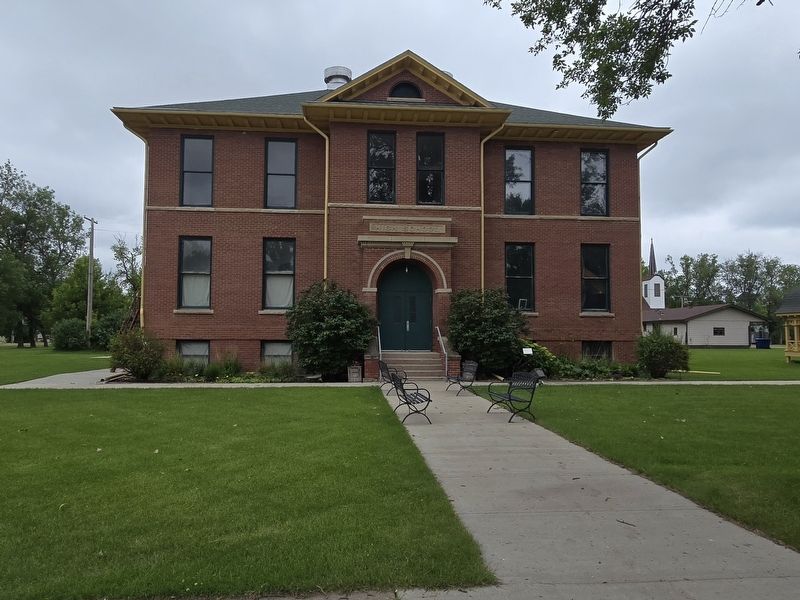
3. Full view Buffalo High School, now home to Buffalo Historical Society
The new high school was built with materials that resembled those used in the construction ofthe earlier public school section of the property. It is speculated, based on photographs, that the wooden porch on the 1902 public school was removed at this time and replaced with an entrance that more closely resembled the one on the new high school. The architect for the

Photographed by Mark Parker, June 27, 2025
4. 1916 Buffalo High School National Register Historic Places Marker
Photographed by Mark Parker, June 27, 2025
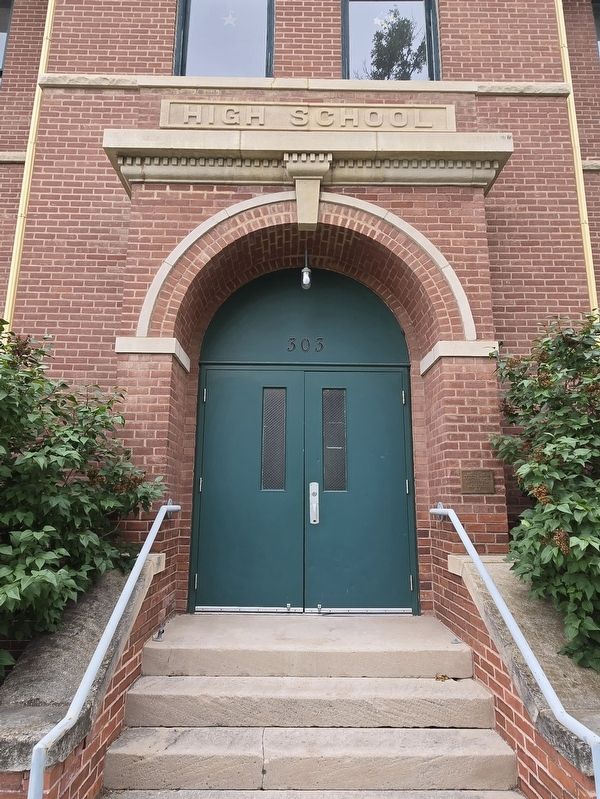
5. Buffalo High School entrance. National Register plaque on the right
Credits. This page was last revised on July 18, 2025. It was originally submitted on July 17, 2025, by Mark Parker of Hickory, North Carolina. This page has been viewed 207 times since then and 101 times this year. Photos: 1, 2, 3, 4, 5. submitted on July 17, 2025, by Mark Parker of Hickory, North Carolina. • Andrew Ruppenstein was the editor who published this page.
