Tower Township in Buffalo in Cass County, North Dakota — The American Midwest (Upper Plains)
Old Stone Church
| — | Buffalo Historical Tour | — |
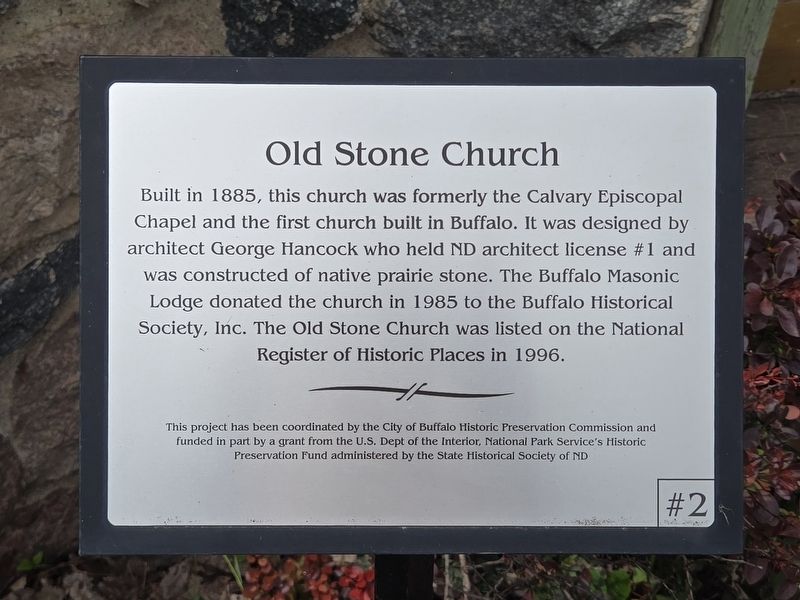
Photographed by Mark Parker, June 27, 2025
1. Old Stone Church Marker
Erected by City of Buffalo Historic Preservation Commission, U.S. Dept of the Interior, National Park Service's Historic Preservation Fund. (Marker Number 2.)
Topics. This historical marker is listed in this topic list: Religion & Religious Structures. A significant historical year for this entry is 1885.
Location. 46° 55.296′ N, 97° 33.081′ W. Marker is in Buffalo, North Dakota, in Cass County. It is in Tower Township. It is at the intersection of Wilcox Avenue North and 3rd Street North, on the right when traveling south on Wilcox Avenue North. The marker is left of the sanctuary entrance. Touch for map. Marker is at or near this postal address: 206 Wilcox Avenue N, Buffalo ND 58011, United States of America.
this page online

Regionally, this marker is in the Red River Valley and in Greater Fargo Area. It is also in the American Lewis & Clark Corridor, on the prairies, and on the Northern Plains. Globally, it is in North America, the Western Hemisphere, the Western World, and the Anglosphere. Historically, it finds itself in what was once Rupert’s Land and also the Louisiana Purchase.
Other nearby markers. At least 8 other markers are within walking distance of this marker: Calgary Episcopal Church Rectory (within shouting distance of this marker); More House (about 300 feet away, measured in a direct line); 1916 Buffalo High School (about 300 feet away); First Presbyterian Church (about 400 feet away); St. Thomas Church, Grotto and Crucifix Shrine (about 600 feet away); Peterson House (about 600 feet away); Bateman Drugstore (about 800 feet away); Buffalo Area Veterans Monument (approx. 0.2 miles away). Touch for a list and map of all markers in Buffalo.
Also see . . . Old Stone Church. National Register Nomination Form prepared by Dale Bentley and Rolene R. Schliesman. SHSND, Buffalo Historical Society,
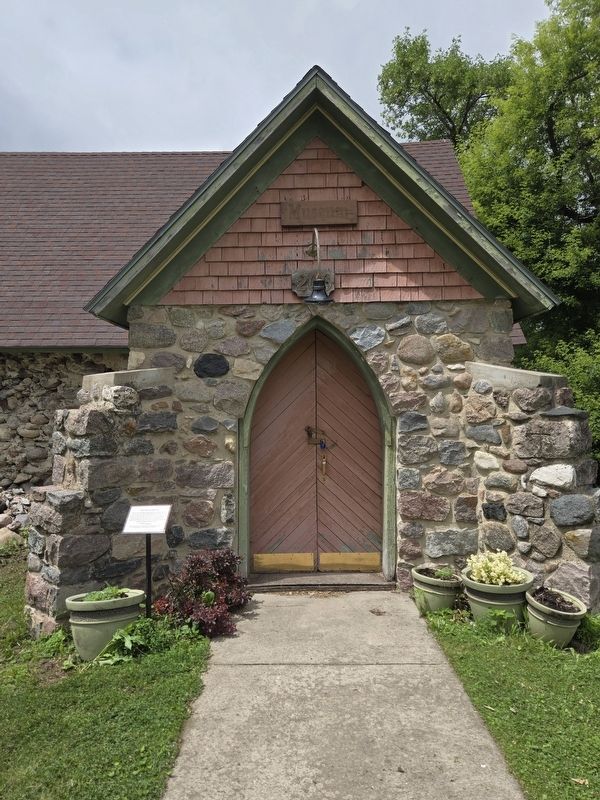
Photographed by Mark Parker, June 27, 2025
2. Old Stone Church Marker left of the sanctuary entrance
Built in the Second Gothic Revival style, the Old Stone Church is nominated under Criterion C for its statewide significance in architecture. A fine example of an "ecclesiologically correct" Gothic Revival Church, the building was designed by prominent Fargo architect George Hancock.’ As the first stone Episcopal church built in Cass County, it represents a rare type of Episcopal church construction, that being uncut fieldstone rather than the dressed version. Ordinarily National Register criteria excludes religious buildings, however the Old Stone Church is eligible under Criteria Consideration A, because it derives its primary significance from its architectural distinction...
Plans for Calvary Episcopal Church in Buffalo began in 1884. At the time, there were six Episcopal churches in North Dakota, with the first built in Fargo in 1874. Episcopal Bishop William D. Walker sent Reverend
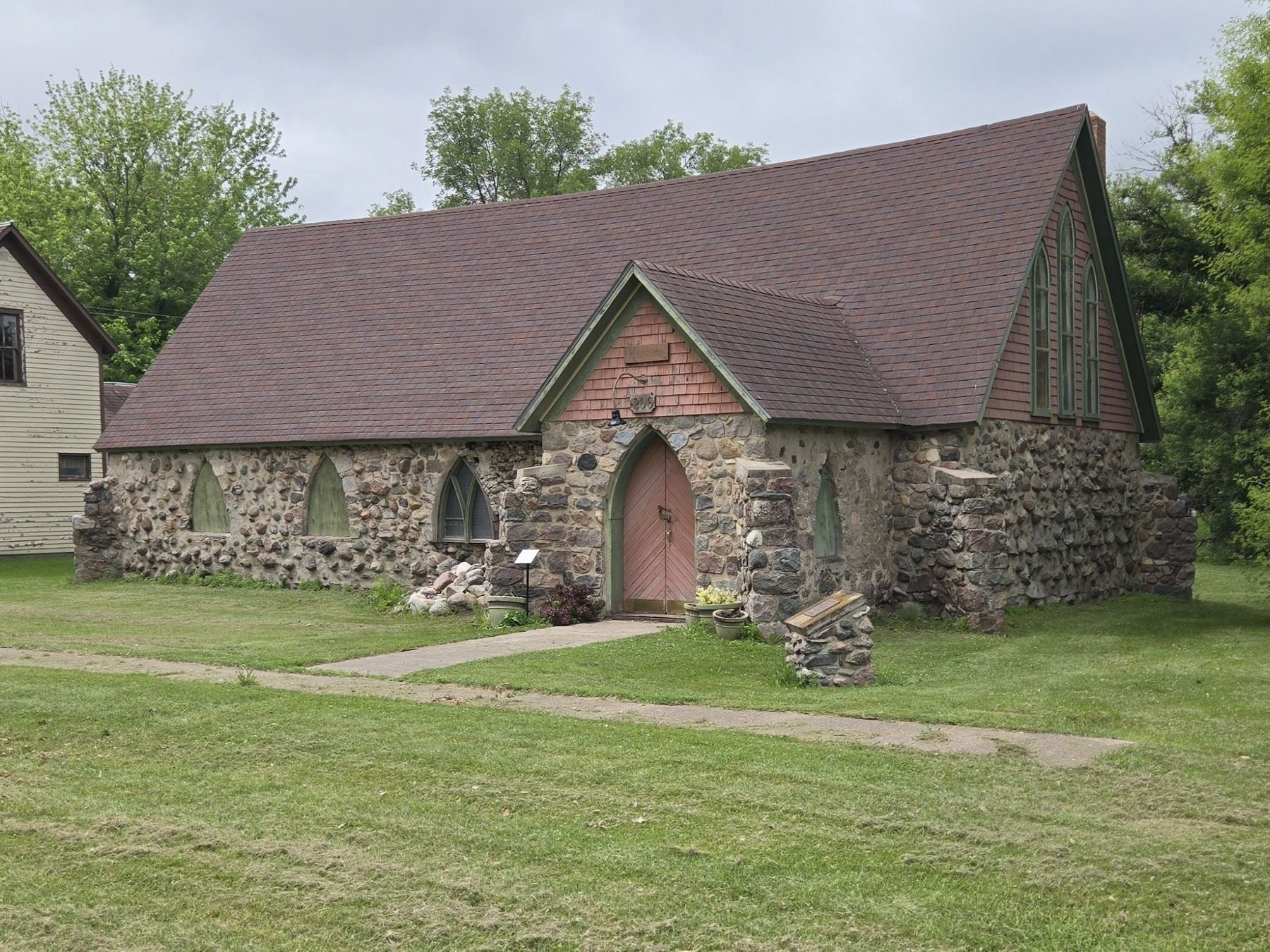
Photographed by Mark Parker, June 27, 2025
3. Full view of Old Stone Church
Mary Strong Wilson and her sister, Laura Strong Letchworth, donated the land on which the church was built. The sisters were heirs to the estate of John C. Strong, a wealthy New York landowner. Lots were donated to anyone who would build a business, church, or school in the city of Buffalo.
In July of 1885, during an elegant and impressive ceremony, the corner stone of the Episcopal Church was laid. The procession included Bishop Walker, the Reverends Cooley and Swan, several ladies and gentlemen, and the Episcopal Choirs of Moorhead, Minnesota, and Fargo, North Dakota. They arrived by tail in the Bishop's special car and were received by Reverend
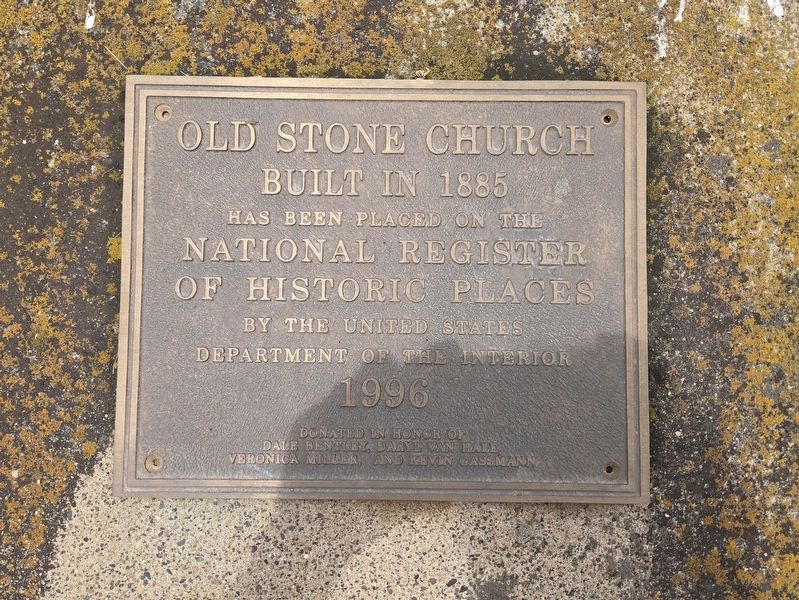
Photographed by Mark Parker, June 27, 2025
4. Old Stone Church National Register of Historic Places plaque
Credits. This page was last revised on July 18, 2025. It was originally submitted on July 17, 2025, by Mark Parker of Hickory, North Carolina. This page has been viewed 195 times since then and 56 times this year. Photos: 1, 2, 3, 4. submitted on July 17, 2025, by Mark Parker of Hickory, North Carolina. • Andrew Ruppenstein was the editor who published this page.
