Bishopville in Lee County, South Carolina — The American South (South Atlantic)
Bishopville High School
Photographed by Mike Stroud, 2010
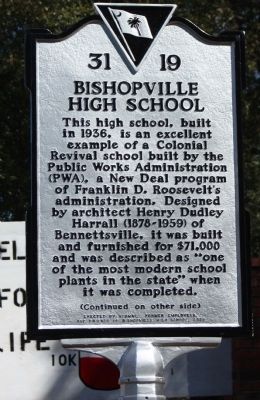
1. Bishopville High School Marker
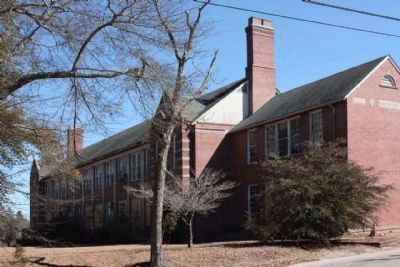
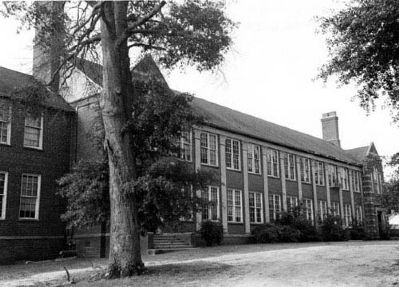
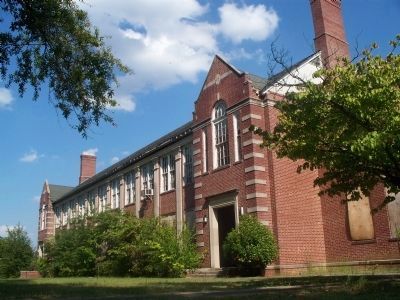
This high school, built in 1936, is an excellent example of a Colonial Revival school built by the Public Works Administration (PWA), a New Deal program of Franklin D. Roosevelt’s administration. Designed by architect Henry Dudley Harrall (1878-1959) of Bennettsville, it was built and furnished for $71,000 and was described as “one of the most modern school plants in the state” when it was completed.
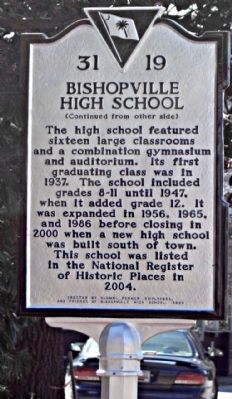
(Reverse text)
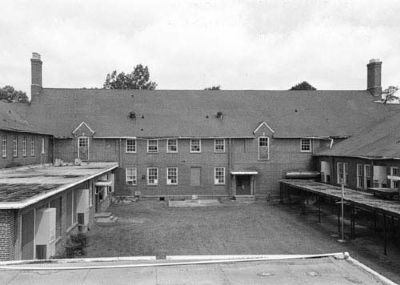
The high school featured sixteen large classrooms and a combination gymnasium and auditorium. Its first graduating class was in 1937. The school included grades 8-11 until 1947, when it added grade 12. It was expanded in 1956, 1965, and 1986 before closing in 2000 when a new high school was built south of town. This school was listed in the National Register of Historic Places in 2004.
Erected 2009 by The Alumni, Former Employees, and Friends of Bishopville High School. (Marker Number 31-19.)
Topics. This historical marker is listed in this topic list: Education. A significant historical year for this entry is 1936.
Location. 34° 13.435′ N, 80° 14.47′ W. Marker is in Bishopville, South Carolina, in Lee County. It is at the intersection of North Main Street (U.S. 15) and East College Street, on the left when traveling west on North Main Street. Touch for map. Marker is in this post office area: Bishopville SC 29010, United States of America. Touch for directions.

Regionally, this marker is in the Pee Dee. It is also in the American South and specifically in the Deep South. Globally, it is in North America, the Western Hemisphere, the Western World, and the Anglosphere. Historically, it finds itself in what was once the territory of the Mississippian Culture, one of the original Thirteen Colonies, one of the Confederate States of America, and the Antebellum
this page online
Other nearby markers. At least 8 other markers are within walking distance of this marker: Flag Park (approx. 0.4 miles away); Felix Anthony "Doc" Blanchard (approx. 0.4 miles away); Felix "Doc" Blanchard (approx. 0.4 miles away); Dennis High School (approx. 0.4 miles away); William Apollos James House (approx. half a mile away); James Capers (approx. half a mile away); Corporal James D. Heriot (approx. half a mile away); Gratitude Train - Merci America (approx. half a mile away). Touch for a list and map of all markers in Bishopville.
Regarding Bishopville High School. Bishopville High School, built in 1936, is an excellent example of the type of school architecture that flourished as a direct result of the educational reform campaign in South Carolina in the first quarter of the twentieth century. Additionally, it is a noteworthy example of the work of well-respected Bennettsville, South Carolina architect Henry Dudley Harrall. It is also significant as an excellent example of an educational building in the Colonial Revival style built during a period when emergency funds were made available and many projects of this
Photographed by Mike Stroud, February 18, 2010
2. Bishopville High School Marker, reverse side
Also see . . . Natives of Lee County South Carolina. Natives of Lee County South Carolina is the anchor site for the Friends of Bishopville High School which has a separate site for the disbursement of information on the preservation and renovation project for the school facility. (Submitted on March 21, 2010, by John Reames of Bishopville, South Carolina.)
Photographed by Mike Stroud, February 18, 2010
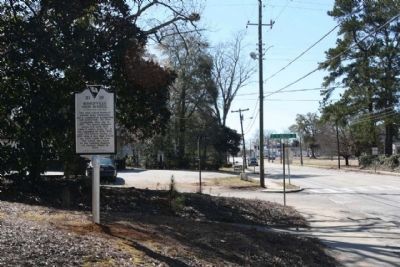
3. Bishopville High School Marker seen along North Main Street (US 15, State Road 34, State Road 341)
Photographed by Mike Stroud, February 18, 2010
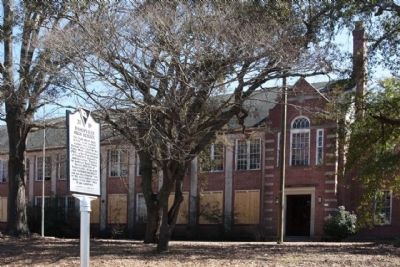
4. Bishopville High School and Marker
Photographed by Mike Stroud, February 18, 2010
5. Bishopville High School
National Register of Historic Places:
Bishopville High School (added 2004 - Building - #04001087)
Bishopville High School (added 2004 - Building - #04001087)
South Carolina Department of Archives and History, circa 2004
6. Bishopville High School
South Carolina Department of Archives and History, circa 2004
7. Bishopville High School rear view
Photographed by Melissa Roberts, November 30, 2010
8. Bishopville High School
Credits. This page was last revised on June 16, 2016. It was originally submitted on February 24, 2010, by Mike Stroud of Bluffton, South Carolina. This page has been viewed 2,217 times since then and 49 times this year. Photos: 1, 2, 3, 4, 5, 6, 7. submitted on February 24, 2010, by Mike Stroud of Bluffton, South Carolina. 8. submitted on December 20, 2011, by Melissa Roberts of Barnwell, South Carolina. • Craig Swain was the editor who published this page.
