Decatur in Morgan County, Alabama — The American South (East South Central)
Social and Cultural Opportunities
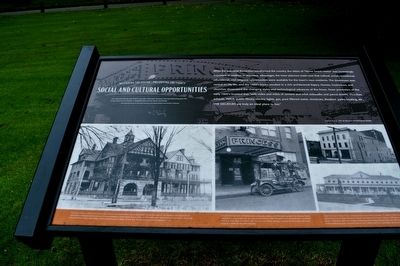
Restoring the Vision...Preserving The Legacy
Photographed by Sandra Hughes, October 13, 2009
1. Social and Cultural Opportunities Marker
"It is intended that the city shall be not only a first class business and manufacturing place but at the same time it shall be a delightful place for the home and family."
-Promotional brochure from the Decatur Land Improvement and Furnace Company
While the Industrial Revolution transformed the country, the vision of "Home Sweet Home" was increasingly important. In addition to economic advantages, the town's planners made sure that cultural, social, recreational, educational, and religious opportunities were available for the town's new residents. The downtown was central to city life, and the 1880's boom resulted in a rich architectural legacy. Homes, businesses, and churches showcased the changing styles and technological advances of the times. Town promoters of the early 1900's boasted that "with miles and miles of cement and brick sidewalks and paved streets, churches, schools, YMCA, public library, electric lights, gas, pure filtered water, streetcars, theaters, parks, boating, etc., The Decaturs are truly an ideal place to live."
Topics. This historical marker is listed in these topic lists: Entertainment
this page online
Location. 34° 35.898′ N, 86° 58.774′ W. Marker is in Decatur, Alabama, in Morgan County. It is at the intersection of 8th Street and Prospect Drive, on the right when traveling north on 8th Street. Touch for map. Marker is at or near this postal address: 608 Gordon Dr SE, Decatur AL 35601, United States of America. Touch for directions.

Regionally, this marker is in North Alabama. It is also in the American South, specifically in the Deep South, in Appalachia, and specifically in Southern Appalachia. Globally, it is in North America, a Gulf of Mexico state, the Western Hemisphere, the Western World, and the Anglosphere. Historically, it finds itself in what was once the original Cherokee Nation, the territory of the Mississippian Culture, one of the Confederate States of America, and the Antebellum South.
Other nearby markers. At least 8 other markers are within walking distance of this marker: Albany (within shouting distance of this marker); Beauty and Hope (within shouting distance of this marker); Carolyn Cortner Smith (about 600 feet away,
Photographed by Sandra Hughes, August 8, 2009
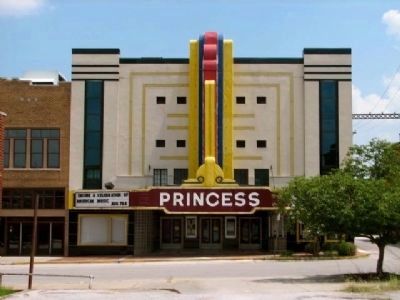
2. Princess Theater "today"
Also see . . . Decatur, Georgia. Wikipedia entry (Submitted on September 5, 2023, by Larry Gertner of New York, New York.)
Photographed by Sandra Hughes, August 8, 2009
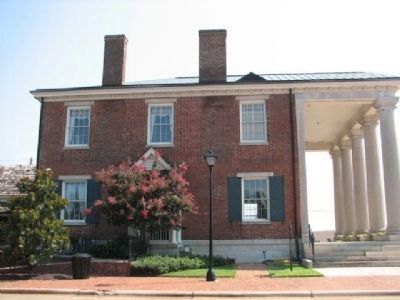
3. Old State Bank "today"
Photographed by Sandra Hughes, August 8, 2009
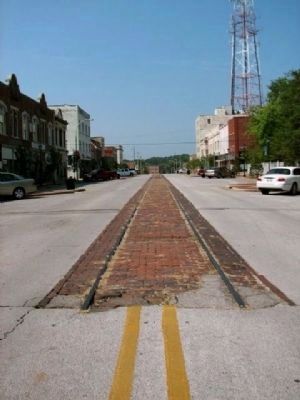
4. Street Car Tracks
"What is left of the street car tracks in Historic downtown Decatur"
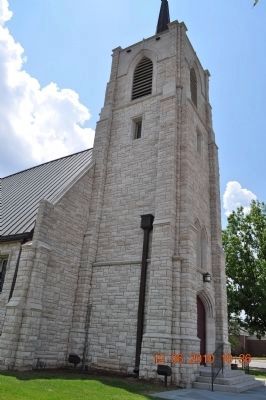
Photographed by Sandra Hughes, June 12, 2010
5. St. Johns Episcopal Church
Photographed by Sandra Hughes, October 13, 2009
6. Social and Cultural Opportunities Marker
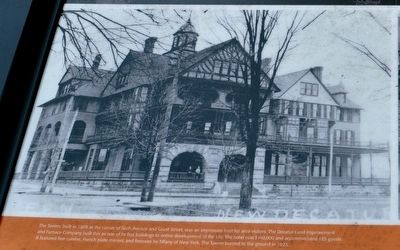
The Tavern, built in 1888 at the corner of Sixth Avenue and Grant Street, was an impressive host for area visitors. The Decatur Land Improvement and Furnace Company built this as one of its first buildings to entice development of the city. The hotel cost $140,000 and accommodated 125 guests. It featured fine cuisine, French plate mirrors, and frescoes by Tiffany of New York. The Tavern burned to the ground in 1923.
Photographed by Sandra Hughes, October 13, 2009
7. Social and Cultural Opportunities Marker
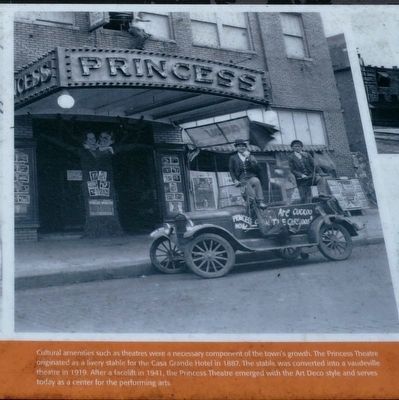
Cultural amenities such as theaters were a necessary component of the town's growth. The Princess Theater originated as a livery stable for the Casa Grande Hotel in 1887. The stable was converted into a vaudeville theater in 1919. After a facelift in 1941, the Princess Theater emerged with the Art Deco style and serves today as a center for the performing arts.
Photographed by Sandra Hughes, October 13, 2009
8. Social and Cultural Opportunities Marker
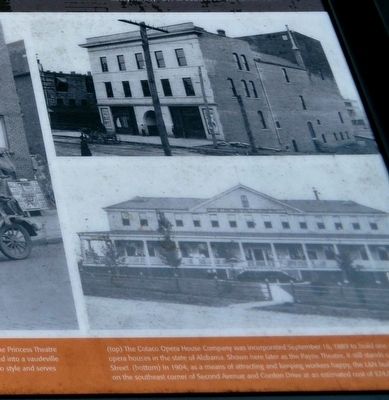
(top) The Cotaco Opera House Company was incorporated September 16, 1889 to build one of the first opera houses in the state of Alabama. Shown here later as the Payne Theatre, it still stands on Johnston Street. (bottom) In 1904, as a means of attracting and keeping workers happy, the L&N built a YMCA on the southeast corner of Second Avenue and Gordon Drive at an estimated cost of $24,000.
Credits. This page was last revised on July 26, 2025. It was originally submitted on March 18, 2012, by Sandra Hughes Tidwell of Killen, Alabama, USA. This page has been viewed 919 times since then and 28 times this year. Last updated on July 26, 2025, by Darren Jefferson Clay of Duluth, Georgia. Photos: 1, 2, 3, 4, 5, 6, 7, 8. submitted on March 18, 2012, by Sandra Hughes Tidwell of Killen, Alabama, USA. • Devry Becker Jones was the editor who published this page.
