
Trinidad in Las Animas County, Colorado — The American Mountains (Southwest)
The Methodist Church of Trinidad
Photographed by Cosmos Mariner, July 10, 2025
1. The Methodist Church of Trinidad Marker
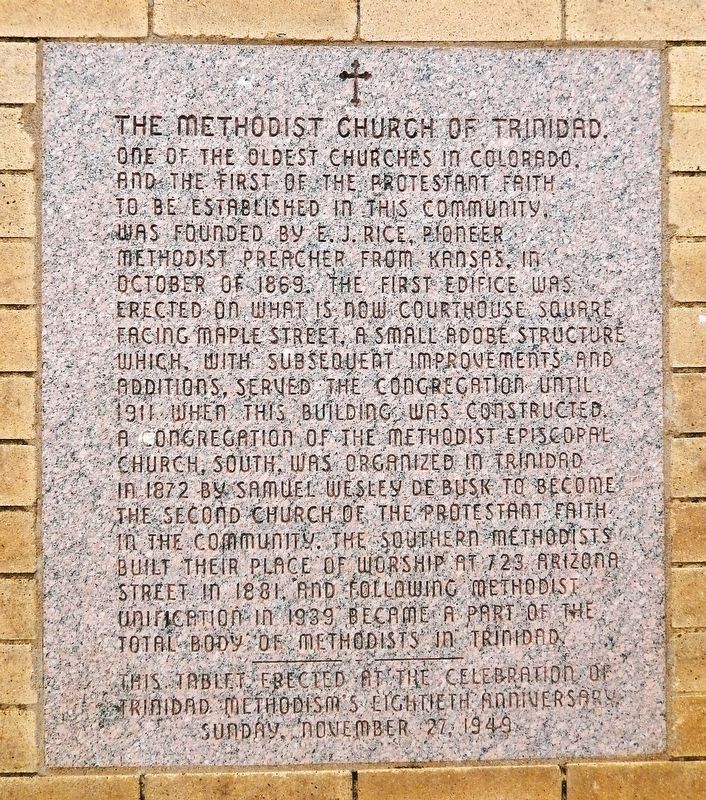
One of the oldest churches in Colorado, and the first of the Protestant faith to be established in this community, was founded by E. J. Rice, pioneer Methodist preacher from Kansas, in October of 1869. The first edifice was erected on what is now Courthouse Square facing Maple Street, a small adobe structure which, with subsequent improvements and additions, served the congregation until 1911 when this building was constructed. A congregation of the Methodist Episcopal Church, South, was organized in Trinidad in 1872 by Samuel Wesley De Busk to become the second church of the Protestant faith in the community. The Southern Methodists built their place of worship at 723 Arizona Street in 1881, and following Methodist Unification in 1939 became a part of the total body of Methodists in Trinidad.
Erected 1949.
Topics and series. This historical marker is listed in these topic lists: Architecture • Notable Buildings • Religion & Religious Structures • Settlements & Settlers. In addition,
this page online
Location. 37° 10.421′ N, 104° 30.673′ W. Marker is in Trinidad, Colorado, in Las Animas County. It is at the intersection of Broom Street and State Street, on the left when traveling west on Broom Street. The marker is at eye-level on the northwest corner of the church, facing Broom Street. Touch for map. Marker is at or near this postal address: 216 Broom Street, Trinidad CO 81082, United States of America. Touch for directions.

Regionally, this marker is in the American Mountain West, on the Great Plains, on the Southern Plains, and on the Santa Fe Trail Corridor. Globally, it is in North America, the Western Hemisphere, the Western World, and the Anglosphere. Historically, it finds itself in what was once New Spain, the Comanchería, the Dust Bowl, and the Republic of Texas.
Other nearby markers. At least 8 other markers are within walking distance of this marker: Zion's German Lutheran Church (approx. 0.2 miles away); Trinidad (approx. ¼ mile away); Welcome to Colorado / Trinidad Country / Trinidad / Army of the West
Photographed by Cosmos Mariner, July 10, 2025
2. National Register of Historic Places Marker
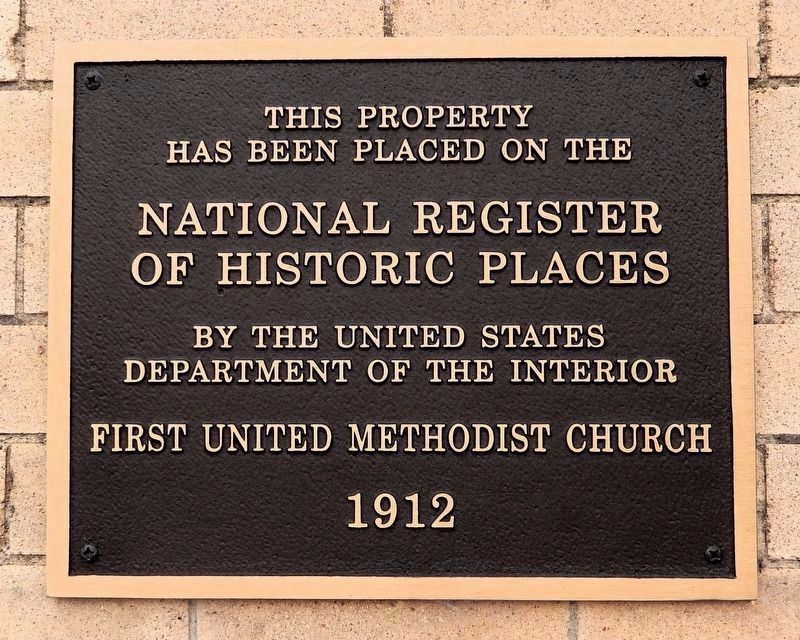
This property has been placed on the
National Register of Historic Places
by the United States Department of the Interior
First United Methodist Church
1912
Regarding The Methodist Church of Trinidad. National Register of Historic Places № 05000783, as “First Methodist Episcopal Church.”
From the National Register Nomination prepared by Rev. Nancy Mead w/ Constance La Lena, 11/2004:
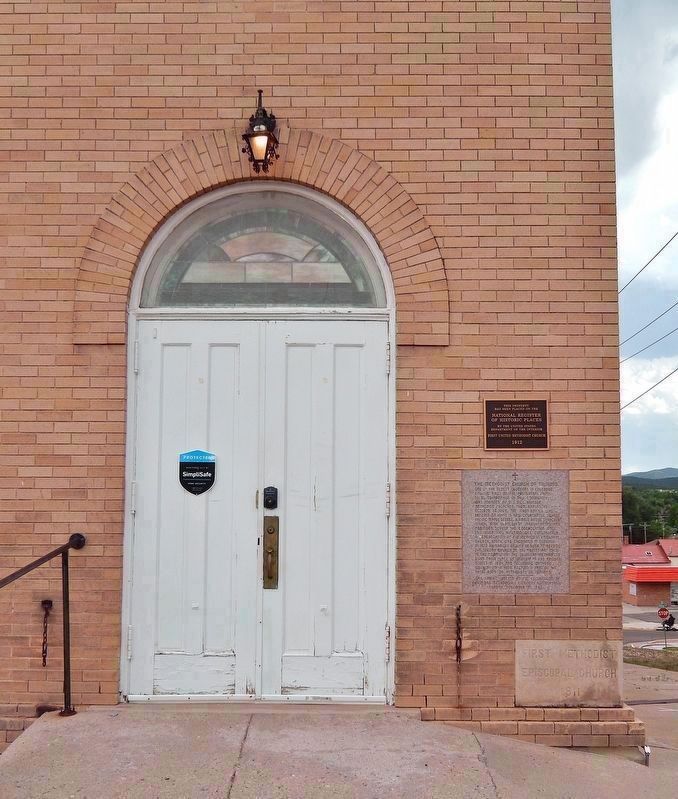
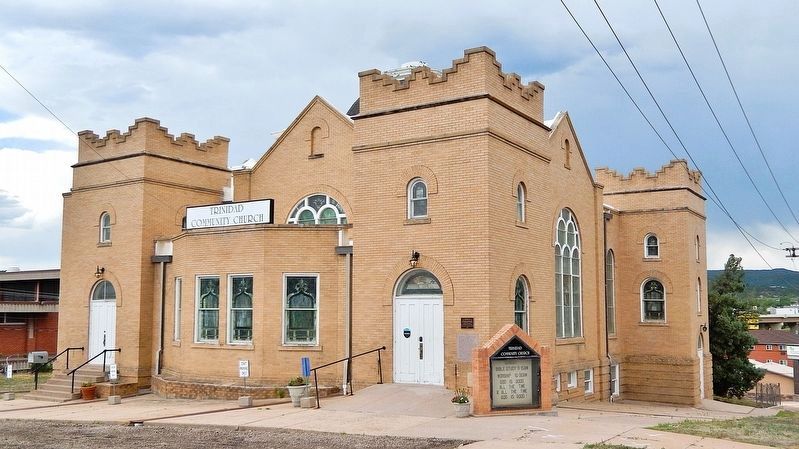
Construction began in 1911 on the First Methodist Episcopal Church, which occupies a commanding hilltop location on the north side of Trinidad overlooking the city. The church has an irregular plan and is two stories with a raised basement. Due to the slope of the site, more of the basement level is revealed as the building proceeds southward. A central, metal-clad dome sits atop a complex roofline and three short square towers with crenellated parapets anchor the northeast, northwest and southwest corners of the building. The foundation of the building is nativesandstone quarried near Trinidad, and the walls are buff colored brick laid in a running bond. Darker brick forms the basement level walls with slightly projecting courses forming a banded pattern. Cut Bedford (Indiana) limestone trims the building, used as windowsills, dripstone coursing on the towers, and coping that caps the parapets and crenellations.Photographed by Cosmos Mariner, July 10, 20253. The Methodist Church of Trinidad (NW corner)Both markers are on the right side of the northwest corner entrance, above the cornerstone, facing Broom Street.
The First Methodist Episcopal Church possesses the distinctive characteristics of the Romanesque Revival style. The building reflects elements of the style as seen in its overall massing, the use of the semi-circular arch for window and door openings, monochromatic brick walls, various roof shapes, crenellated parapets, and square towers flanking the facade.
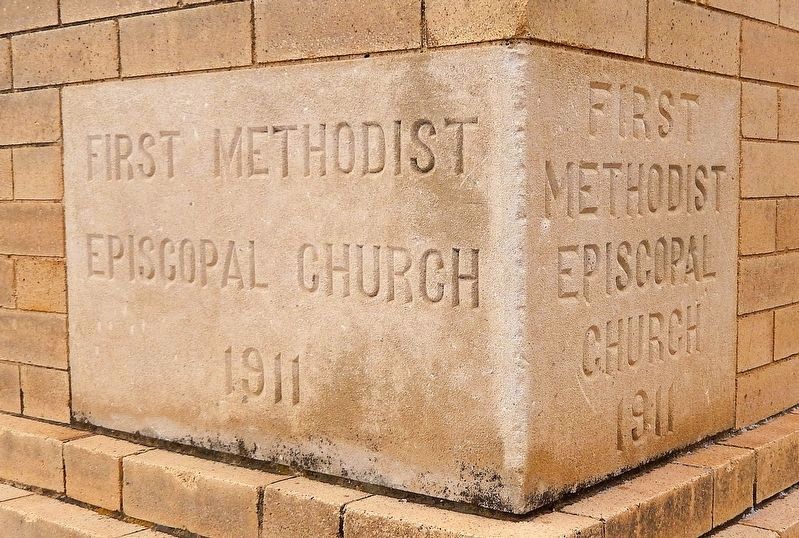
The congregation was forced to look for another location when Las Animas County planned to build a new courthouse and jail encompassing almost the entire block on which the first church and parsonage stood. Steps to secure a new church were taken soon after the arrival of Reverend W. F. Pitner, the new pastor. In May 1910, Rev. Pitner started to raise the sum of $12,500 toward the new church. In August the building committee announcedconsummation of a deal with J. M. John for the purchase of six lots at the corner of State and Broom streets for $2,500. Colorado Springs architect Thomas Barber was chosen as the architect. The contract was let in May the following year to the firm of Harlan and Schlesinger of Colorado Springs. Ground was broken shortly after, and the corner stone was laid July 30, 1911. Sub-contracts were let to local firms and local labor was employed throughout the project. Stained glass windows were ordered from St. Louis. The new structure was dedicated January 14, 1912. A large front-page article appeared in the Trinidad Chronicle-News the day before the dedication ceremonies. With a headline that read "Handsome New Methodist Episcopal Church Fulfills Members' Cherished Dream" the article reported that the cost for the site and the two buildings was $36,000 (of which $4,500 was for the parsonage).Photographed by Cosmos Mariner, July 10, 20254. Church CornerstoneFirst Methodist Episcopal Church
1911
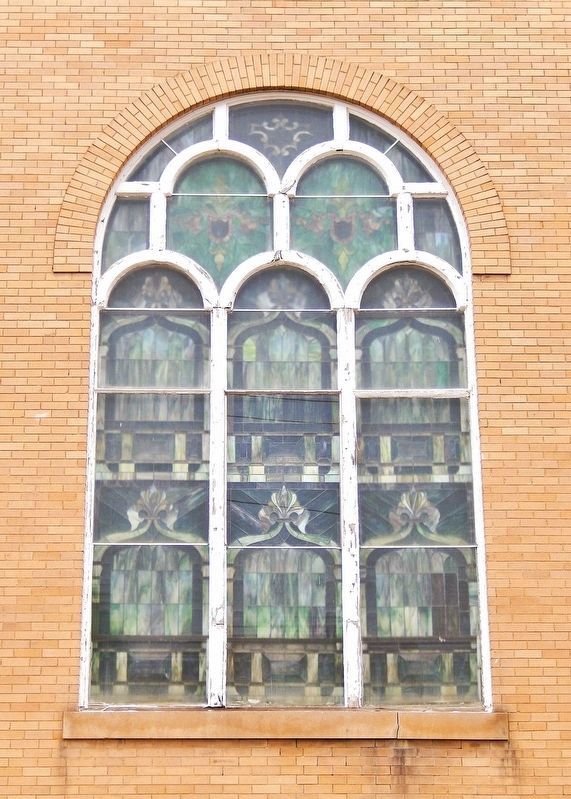
In its early history, Trinidad had three Methodist churches. A congregation of the Methodist Episcopal South Church was organized in 1872 to become the second church of the Protestant faith in the community. The African Methodist Episcopal Church metin the early 1900s. Following the Methodist Unification in 1939, these two congregations merged with First Methodist, and their buildings were eventually torn down.Photographed by Cosmos Mariner, July 10, 20255. West Church Window detail
In November 1949 during the 80th anniversary celebration, a historical marker of Colorado rose granite was set in the wall of the church above the cornerstone.
Also see . . . First Methodist Episcopal Church (Wikipedia).
Excerpt: The First Methodist Episcopal Church in Trinidad, Colorado, which has also been known as the First United Methodist Church, is a historic church at 216 Broom Street. It was built in 1911 and was added to the National Register in 2005.(Submitted on August 5, 2025, by Cosmos Mariner of Cape Canaveral, Florida.)
It was deemed a good local example of an ecclesiastical interpretation of the Romanesque Revival style. Its metal-clad, central dome roof is a distinctive feature within Trinidad's architectural heritage, as is its yellow brick construction. Dome roofs are not often seen in Romanesque Revival churches in Colorado and red brick was the material of choice for the majority of Trinidad's buildings. The church also reflects important elements of the Akron Plan, a Protestant church design utilized duringthe late 19th and early 20th centuries.Photographed by Cosmos Mariner, July 10, 20256. The Methodist Church of Trinidad (northwest elevation)
Photographed by Cosmos Mariner, July 10, 2025
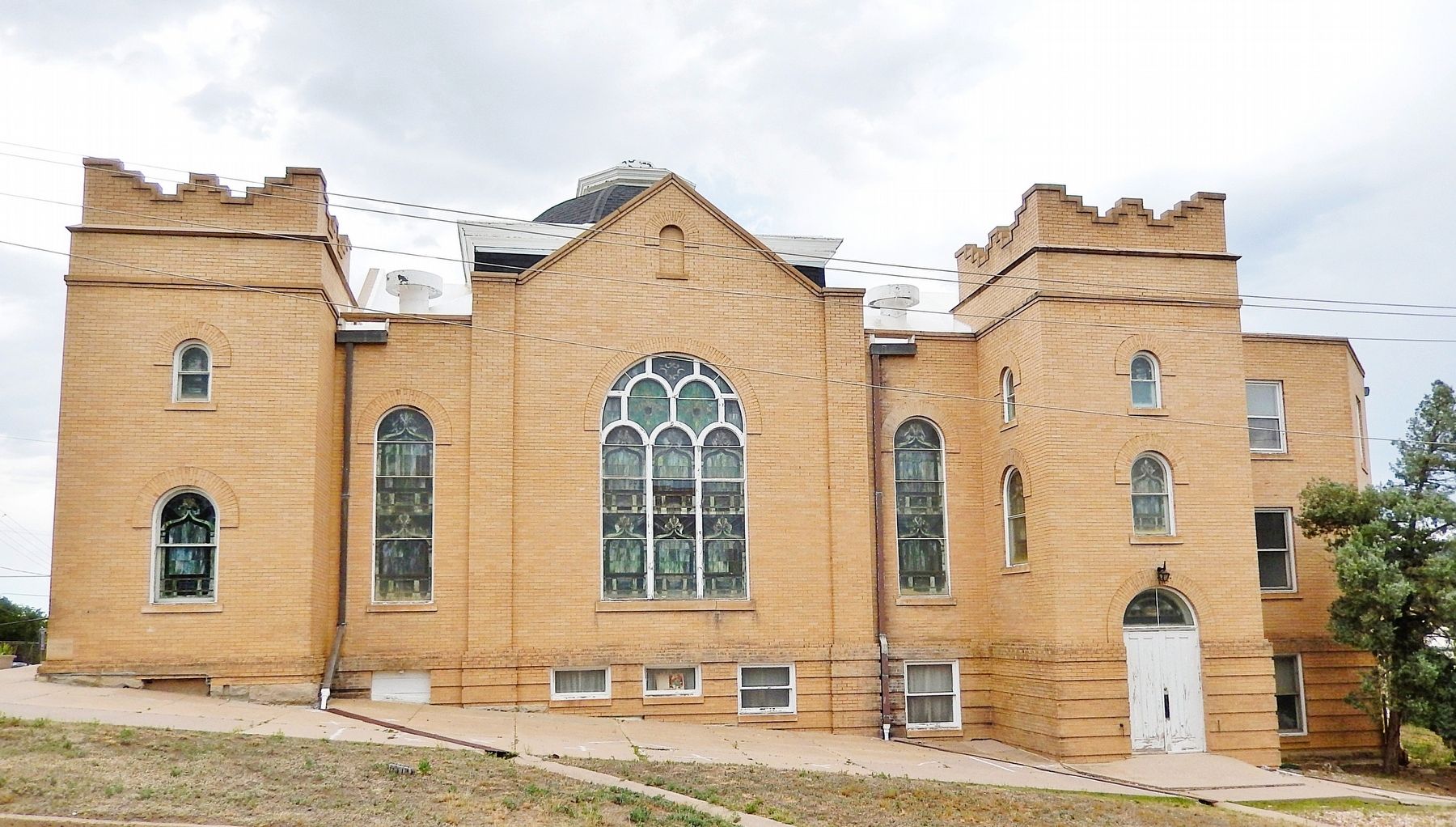
7. The Methodist Church of Trinidad (west elevation)
From the National Register Nomination: The west side faces State Street. Framed by two pilasters, the central gable contains a niche in the apex and a large arched stained-glass window that illuminates both the main floor and balcony. Two tall, narrow arched stained-glass windows flank the large window. The southwest tower, projecting out further than its northern counterpart, delineates the nave from the classroom and administrative area to the south.
Photographed by Cosmos Mariner, July 10, 2025
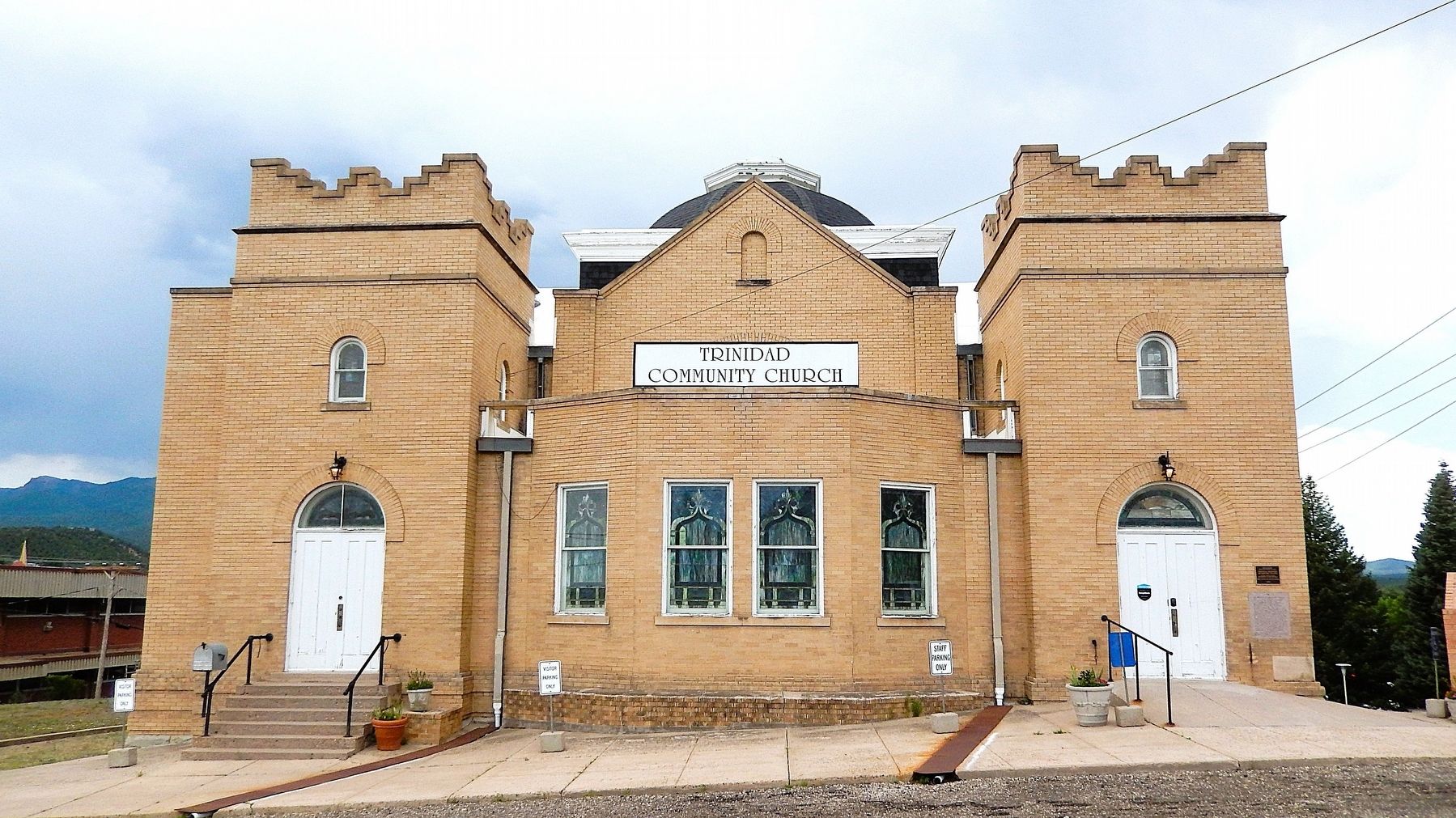
8. The Methodist Church of Trinidad (north/front elevation)
From the National Register Nomination: The corner towers set the tone for the massing of the church and its Akron Plan interior. The towers have a stone beltcourse and a sloped stone dripstone course under the slightly stepped-back crenellated parapet. Each tower contains an entrance — double leaf, vertical paneled wooden doors with a semicircular arched transom. The northwest tower contains a cornerstone that reads "First Methodist Episcopal Church 1911" near the entry. An historical marker of Colorado rose granite is set in the wall above the cornerstone.
Credits. This page was last revised on August 5, 2025. It was originally submitted on August 4, 2025, by Cosmos Mariner of Cape Canaveral, Florida. This page has been viewed 239 times since then and 78 times this year. Photos: 1, 2, 3, 4, 5, 6, 7, 8. submitted on August 5, 2025, by Cosmos Mariner of Cape Canaveral, Florida.
