Cheraw in Chesterfield County, South Carolina — The American South (South Atlantic)
Dizzy Gillespie Birthplace
Photographed by Michael Sean Nix, March 6, 2010
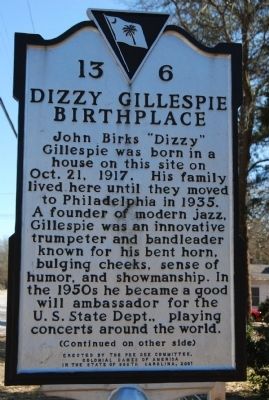
1. Dizzy Gillespie Birthplace Marker
John Birks "Dizzy" Gillespie was born in a house on this site on Oct. 21, 1917. His family lived here until they moved to Philadelphia in 1935. A founder of modern jazz, Gillespie was an innovative trumpeter and bandleader known for his bent horn, bulging cheeks, sense of humor, and showmanship. In the 1950s he became a good will ambassador for the U.S. State Dept., playing concerts around the world.
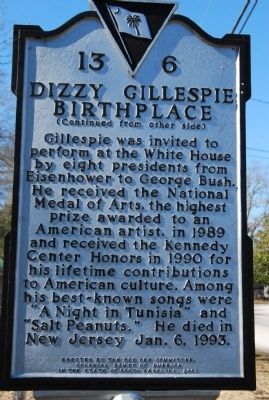
Gillespie was invited to perform at the White House by eight presidents from Eisenhower to George Bush. He received the National Medal of Arts, the highest prize awarded to an American artist, in 1989 and received the Kennedy Center Honors in 1990 for his lifetime contributions to American culture. Among his best-known songs were "A Night in Tunisia" and "Salt Peanuts." He died in New Jersey Jan. 6, 1993.
Erected 2001 by Pee Dee Committee, Colonial Dames of America in the State of South Carolina. (Marker Number 13-6.)
Topics and series. This historical marker is listed in these topic lists: African Americans • Arts, Letters, Music • Entertainment. In addition, it is included in the Former U.S. Presidents: #34 Dwight D. Eisenhower, the Former U.S. Presidents: #41 George H.W. Bush, and the The Colonial Dames of America, National Society of series lists. A significant historical date for this entry is January 6, 2010.
Location. 34° 41.922′ N, 79° 53.574′ W. Marker is in Cheraw, South Carolina, in Chesterfield County. It is on Huger Street 0.1 miles north of McDonald Street, on the left when traveling north. Touch for map. Marker is at or near this postal address: 337 Huger Street, Cheraw SC 29520, United States of America. Touch for directions.

Regionally, this marker is in South Carolina’s Pee Dee and in the Olde English District. It is also in the American South and specifically in the Deep South.
this page online
Other nearby markers. At least 10 other markers are within walking distance of this marker: Lafayette’s Tour (approx. 0.3 miles away); Coulter Memorial Academy Site (approx. 0.4 miles away); Robert Smalls School (approx. 0.6 miles away); Long High School Site (approx. 0.7 miles away); Francis Asbury's First Visit to S.C. (approx. ¾ mile away); Captain Mose Rogers (approx. ¾ mile away); The 71st Regiment of Foot (approx. ¾ mile away); Old St. David's (approx. ¾ mile away); Cheraw Confederate Memorial (approx. 0.8 miles away); Pee Dee Union Baptist Church (approx. 0.8 miles away). Touch for a list and map of all markers in Cheraw.
Another marker is no longer nearby. Grave of British Soldier (was approx. 0.8 miles away but has been replaced with another marker now near it).
Also see . . .
1. Dizzy Gillespie. John Birks
Photographed by Michael Sean Nix, March 6, 2010
2. Dizzy Gillespie Birthplace Marker
Reverse side
2. Dizzy Gillespie's B-flat Trumpet at the Smithsonian. (Submitted on March 10, 2010, by Bill Pfingsten of Bel Air, Maryland.)
3. Jazz Classics: Dizzy Gillespie - A Night In Tunisia. Audio recording of Gillespie. (Submitted on February 12, 2011, by Brian Scott of Anderson, South Carolina.)
4. Dizzy Gillespie - "Salt Peanuts" - 1947. Video (1947) of Gillespie. (Submitted on February 12, 2011, by Brian Scott of Anderson, South Carolina.)
Photographed by Michael Sean Nix, March 6, 2010
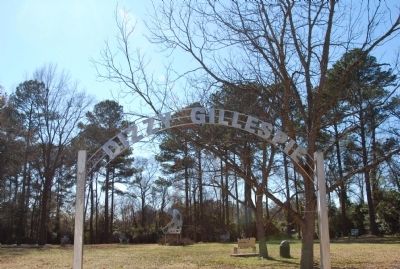
3. Dizzy Gillespie Park
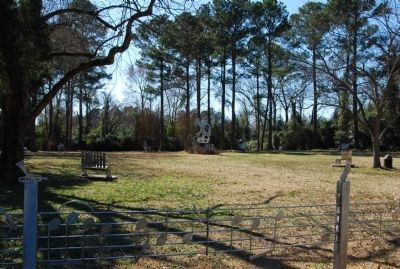
The park is built on the former home site.
Photographed by Michael Sean Nix, March 6, 2010
4. Dizzy Gillespie Park
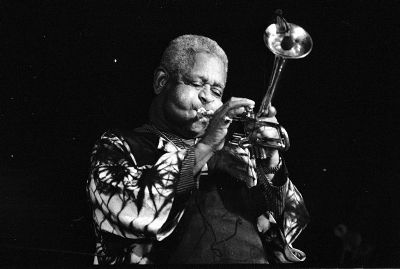
5. Dizzy Gillespie
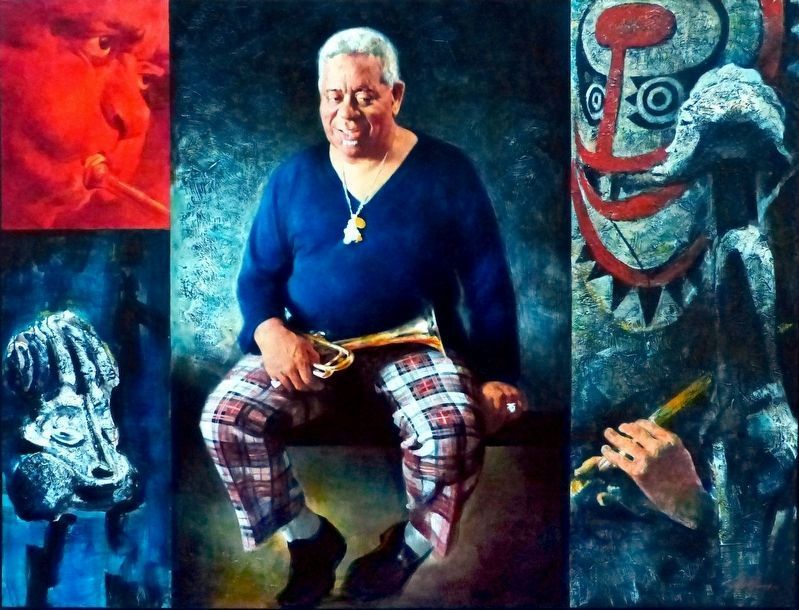
Photographed by Allen C. Browne, July 25, 2017
6. Dizzy Gillespie
This 1988 portrait of Dizzy Gillespie (1917-1993) by Marc Klionsky hangs in the National Portrait Gallery in Washington, DC.
“In the early 1940s, the young jazz trumpet player Dizzy Gillespie began meeting with several other musicians, including Thelonious Monk and Charlie Parker, at a New York nightclub to explore a new form of musical expression. Out of these sessions came the infectious energy of bebop, with Gillespie as one of its pioneers and eventually its elder statesman. Aimed at evolving jazz out of its earlier swing mode, the new music initially offended some jazz traditionalists but ultimately found a niche in the popular-music mainstream. In the 1970s a critic proclaimed Gillespie ‘the world's greatest trumpet [player] in or out of jazz.’ His interest in African American culture is reflected in this portrait, where artist Marc Klionsky following conversations with the musician about his heritage flanked Gillespie with African masks.” – National Portrait Gallery
“In the early 1940s, the young jazz trumpet player Dizzy Gillespie began meeting with several other musicians, including Thelonious Monk and Charlie Parker, at a New York nightclub to explore a new form of musical expression. Out of these sessions came the infectious energy of bebop, with Gillespie as one of its pioneers and eventually its elder statesman. Aimed at evolving jazz out of its earlier swing mode, the new music initially offended some jazz traditionalists but ultimately found a niche in the popular-music mainstream. In the 1970s a critic proclaimed Gillespie ‘the world's greatest trumpet [player] in or out of jazz.’ His interest in African American culture is reflected in this portrait, where artist Marc Klionsky following conversations with the musician about his heritage flanked Gillespie with African masks.” – National Portrait Gallery
Credits. This page was last revised on November 15, 2020. It was originally submitted on March 7, 2010, by Michael Sean Nix of Spartanburg, South Carolina. This page has been viewed 2,143 times since then and 53 times this year. Photos: 1, 2, 3, 4, 5. submitted on March 7, 2010, by Michael Sean Nix of Spartanburg, South Carolina. 6. submitted on November 18, 2017, by Allen C. Browne of Silver Spring, Maryland. • Bill Pfingsten was the editor who published this page.
