Antonito in Conejos County, Colorado — The American Mountains (Southwest)
Railroad Boom Town
Photographed by Cosmos Mariner, July 12, 2025
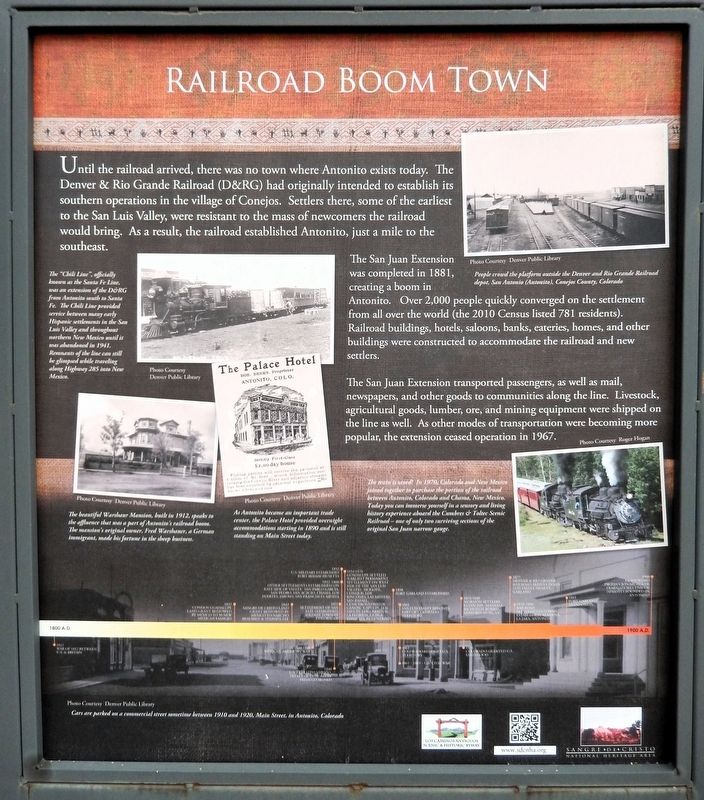
1. Railroad Boom Town Marker
Until the railroad arrived, there was no town where Antonito exists today. The Denver & Rio Grande Railroad (D&RG) had originally intended to establish its southern operations in the village of Conejos. Settlers there, some of the earliest to the San Luis Valley, were resistant to the mass of newcomers the railroad would bring. As a result, the railroad established Antonito, just a mile to the southeast.
The San Juan Extension was completed in 1881, creating a boom in Antonito. Over 2,000 people quickly converged on the settlement from all over the world (the 2010 Census listed 781 residents). Railroad buildings, hotels, saloons, banks, eateries, homes, and other buildings were constructed to accommodate the railroad and new settlers.
The San Juan Extension transported passengers, as well as mail, newspapers, and other goods to communities along the line. Livestock, agricultural goods, lumber, ore, and mining equipment were shipped on the line as well. As other modes of transportation were becoming more popular, the extension ceased operation in 1967.
[photo captions]
• The train is saved! In 1970, Colorado and New Mexico
this page online
• [background image] Cars are parked on a commercial street sometime between 1910 and 1920, Main Street, in Antonito, Colorado
Timeline [across bottom of interpretive panel]
1812 • War of 1812 between U.S. & Britain
1832 • Conejos Guadalupe Land Grant bestowed by Mexico to 50 New Mexican families
1843 • Sangre de Cristo Land Grant bestowed by Mexico to Narcisco Beaubien & Stephen Lee
1846-1848 • Mexican American War
1848 • U.S. defeated Mexico, Treaty of Guadalupe Hidalgo signed
1851 • Settlement of San Luis established (oldest town in Colorado)
1852 • U.S. military establishes Fort Massachusetts
1852-1860 • Other settlements established on east side of valley: San Pablo Garcia, San Pedro, San Acacio, Chama, Los Fuertes, Jaroso, San Francisco, Mesita
1854-1870 • Guadalupe settled (earliest permanent settlement on west side of the San Luis Valley): Mogote, Conejos, Los Rincones, Las Mesitas, San Rafael, Ceniceros/Lobatos, Cañon, Capulin, Los Sauces, Los Cerritos, La Florida, La Isla, Espinoza, El Centrito
1858 • Fort Garland established
1861 • San Luis Valley becomes part of Colorado Territory
1861 • Colorado becomes U.S. Territory
1861-1865 • U.S. Civil War
1874-1888 • Mormon settlers establish: Manassa, Richfield, Romeo, Sanford, Morgan
1876 • Colorado granted U.S. statehood
1877 • Denver & Rio Grande Railroad arrives in San Luis Valley near Fort Garland
1878-1880 • Railroad settlements/towns established: Alamosa, La Jara, Antonito
1883 • Fort Garland abandoned
1900 • La Sociedad Protección Mutua de Trabajadores Unidos (SPMDTU) founded in Antonito
Erected by Colorado
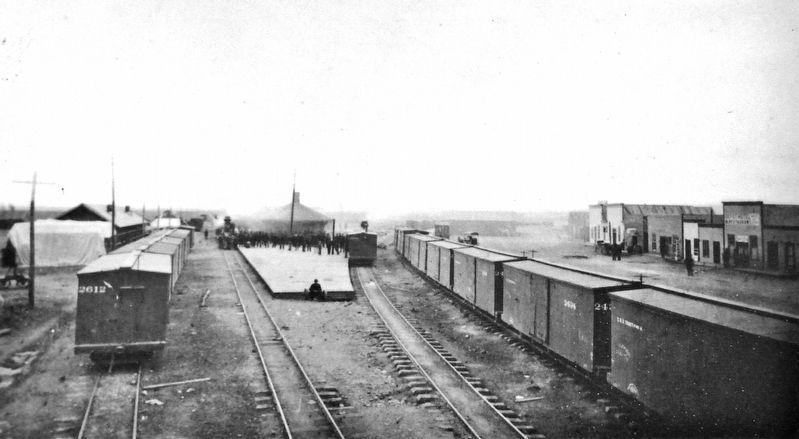
Denver Public Library
2. Marker detail: Denver & Rio Grande Railroad Depot
People crowd the platform outside the Denver and Rio Grande Railroad depot, San Antonio (Antonito), Conejos County, Colorado
Topics. This historical marker is listed in these topic lists: Industry & Commerce • Railroads & Streetcars • Settlements & Settlers. A significant historical year for this entry is 1881.
Location. 37° 4.266′ N, 106° 0.716′ W. Marker is in Antonito, Colorado, in Conejos County. It is on U.S. 285 just south of 1st Avenue, on the left when traveling north. Touch for map. Marker is in this post office area: Antonito CO 81120, United States of America. Touch for directions.

Regionally, this marker is in the San Juan Mountains and in the San Luis Valley. It is also in the American Mountain West. Globally, it is in North America, the Rocky Mountains, the Western Hemisphere, the Western World, and the Anglosphere. Historically, it finds itself in what was once New Spain and also the Republic of Texas.
Other nearby markers. At least 8 other markers are within walking distance of this marker: Foundations of Faith (here, next to this marker); Welcome to El Valle de San Luis (here, next to
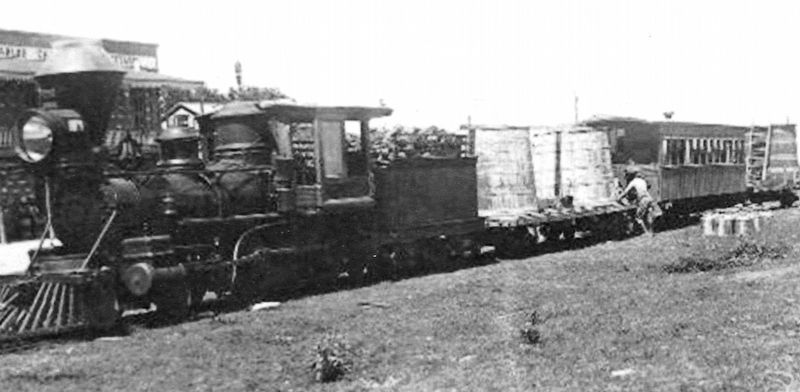
Denver Public Library
3. Marker detail: The Chili Line
The “Chili Line”, officially known as the Santa Fe Line, was an extension of the D&RG from Antonito south to Santa Fe. The Chili Line provided service between many early Hispanic settlements in the San Luis Valley and throughout northern New Mexico until it was abandoned in 1941. Remnants of the line can still be glimpsed while traveling along Highway 285 into New Mexico.
Related markers. Click here for a list of markers that are related to this marker.
Also see . . .
1. Antonito, Colorado (Wikipedia).
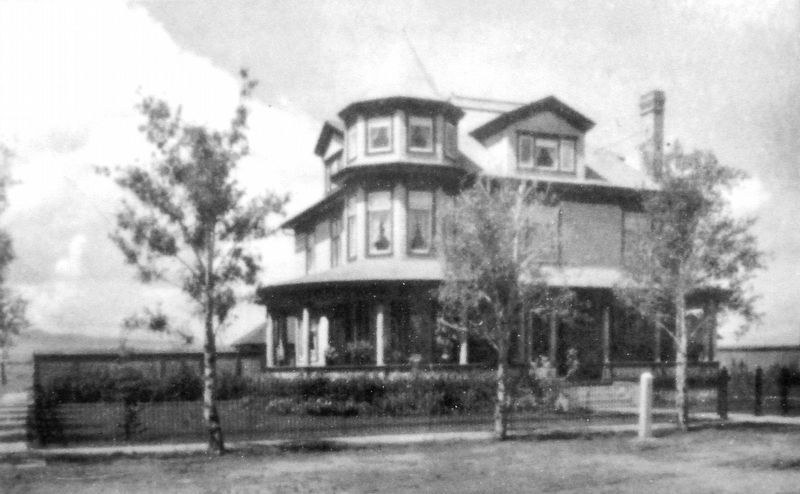
Excerpt: Antonito began life as a sheep herding camp known as San Antonio Junction, referring to its proximity to the Conejos and San Antonio rivers. When the Denver & Rio Grande Railroad built its line south from Alamosa, the town was renamed Antonito and became an important town on the railroad line. The San Antonio, Colorado, post office moved north to Antonito on January 24, 1881, and the Town of Antonito was incorporated on December 29, 1889. There are currently no major industries located in Antonito, but the historic(Submitted on August 29, 2025, by Cosmos Mariner of Cape Canaveral, Florida.)Cumbres & Toltec Scenic Railroad has one terminus in Antonito and the other in Chama, New Mexico. The C&TS also has maintenance facilities and rail yard in the town.Denver Public Library4. Marker detail: Warshauer MansionThe beautiful Warshauer Mansion, built in 1912, speaks to the affluence that was a part of Antonito’s railroad boom. The mansion’s original owner, Fred Warshauer, a German immigrant, made his fortune in the sheep business.
2. Cumbres and Toltec Scenic Railroad (Wikipedia).
Excerpt: The Cumbres and Toltec Scenic Railroad, often abbreviated as the C&TSRR, is a 3 ft narrow-gauge heritage railroad that operates on 64 miles of track between Antonito, Colorado, and Chama, New Mexico. The railroad is named for two geographical features along the route: the 10,015-foot-high Cumbres Pass and the Toltec Gorge. Originally part of the Denver and Rio Grande Western Railroad's narrow-gauge network, the line has been jointly owned by the states of Colorado and New Mexico since 1970.(Submitted on August 29, 2025, by Cosmos Mariner of Cape Canaveral, Florida.)
Denver Public Library
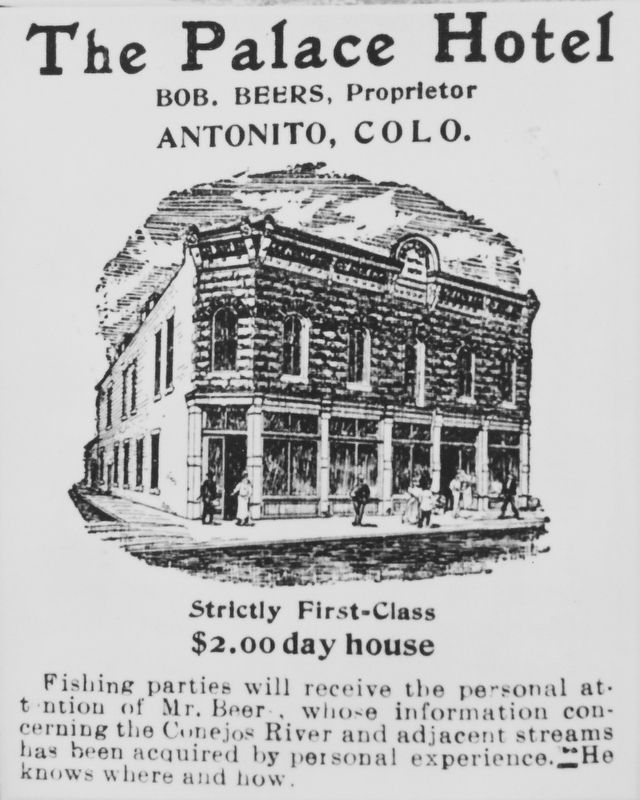
5. Marker detail: The Palace Hotel
Antonito, Colo.
Strictly First-Class
$2.00 day house
Photographed by Cosmos Mariner, July 12, 2025
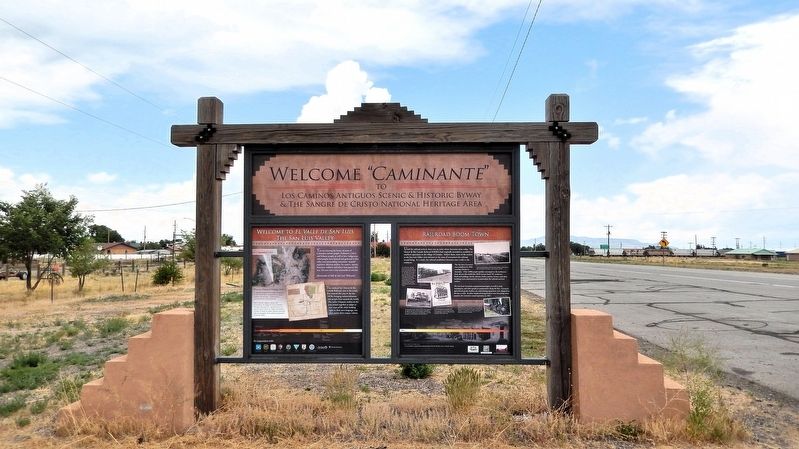
6. Railroad Boom Town Marker
Welcome “Caminante” — to Los Caminos Antiguos Scenic & Historic Byway and The Sangre de Cristo National Heritage Area
Looking north. This marker is the rightmost of two interpretive panels on the south side of the Los Caminos Antiguos Scenic & Historic Byway kiosk in Antonito. US Highway 285 is on the right.
Looking north. This marker is the rightmost of two interpretive panels on the south side of the Los Caminos Antiguos Scenic & Historic Byway kiosk in Antonito. US Highway 285 is on the right.
Photographed by Cosmos Mariner, July 13, 2025
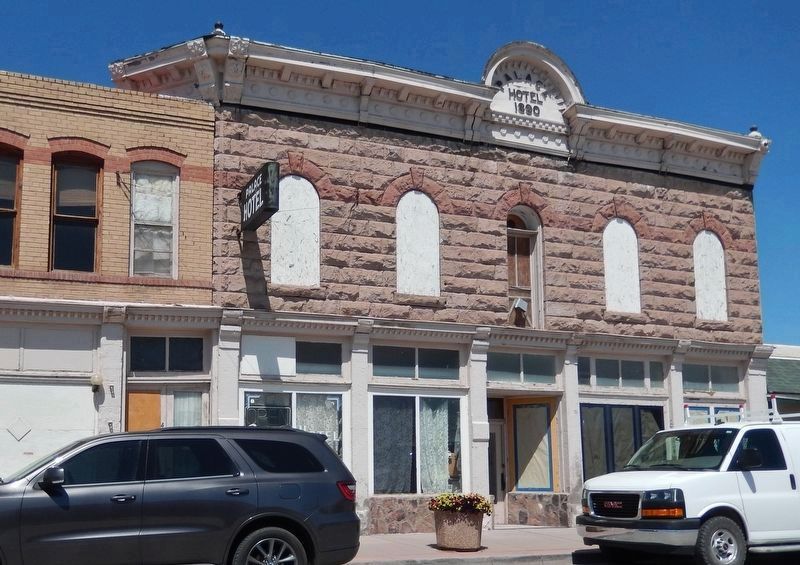
7. The Palace Hotel today
On Main Street in Antonito, Colorado.

Photographed by Cosmos Mariner, July 12, 2025
8. Antonito Railroad Station
Located just southeast across US Highway 285 from this historical marker. It is the Northeastern terminus of the Cumbres and Toltec Scenic Railroad.
Credits. This page was last revised on March 1, 2026. It was originally submitted on August 29, 2025, by Cosmos Mariner of Cape Canaveral, Florida. This page has been viewed 156 times since then and 55 times this year. Photos: 1, 2, 3, 4, 5, 6, 7, 8. submitted on August 29, 2025, by Cosmos Mariner of Cape Canaveral, Florida.
