Downtown in Asheville in Buncombe County, North Carolina — The American South (South Atlantic)
Flora Sorrell Boarding Home
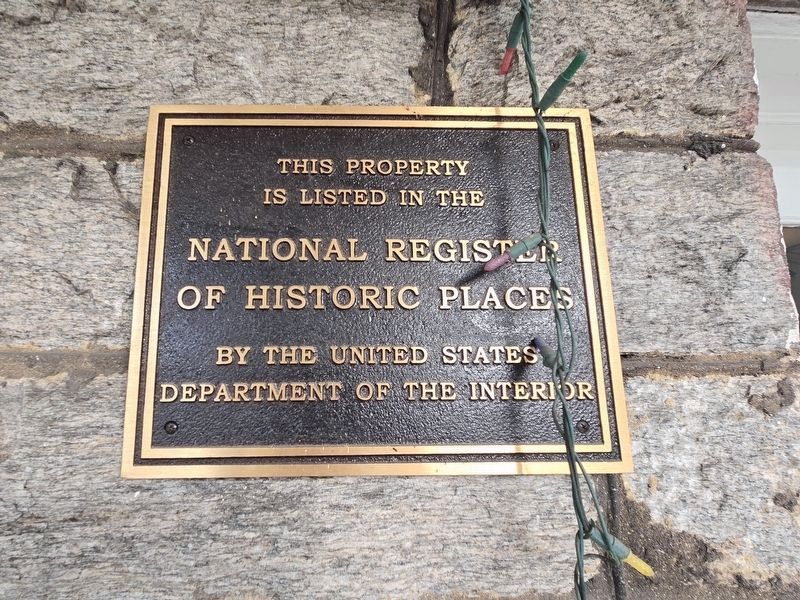
Photographed by Mark Parker, August 29, 2025
1. National Register marker at what is now The Gray Rock Inn
is listed in the
National Register
of Historic Places
by the United States
Department of the Interior
Erected by United States Department of the Interior.
Topics. This historical marker is listed in this topic list: Notable Buildings. A significant historical year for this entry is 1911.
Location. 35° 35.491′ N, 82° 33.039′ W. Marker is in Asheville, North Carolina, in Buncombe County. It is in Downtown. It is on Biltmore Avenue (U.S. 25) north of South Market Street, on the right when traveling north. Touch for map. Marker is at or near this postal address: 100 Biltmore Ave, Asheville NC 28801, United States of America. Touch for directions.

Regionally, this marker is in the Mountains. It is also in the American South, specifically in the Upper South, in Appalachia, and specifically in Southern Appalachia. Globally, it is in North America, the Western Hemisphere, the Western World, and the Anglosphere. Historically, it finds itself in what was once the original Cherokee Nation, the territory of the Mississippian Culture, one of the original Thirteen Colonies, one of the Confederate States
this page online
Other nearby markers. At least 8 other markers are within walking distance of this marker: The Bunkum Stone (here, next to this marker); Isaac Dickson and the Historical East End Neighborhood (about 400 feet away, measured in a direct line); Triangle Park Mural (about 500 feet away); Railroad Workers (about 500 feet away); Isaac And Delia Dickson (about 500 feet away); Catholic Hill School / Stephen’s – Lee High School (about 500 feet away); Lynching in America / The Lynching of Bob Brackett (about 500 feet away); Oscar Wong (about 600 feet away). Touch for a list and map of all markers in Asheville.
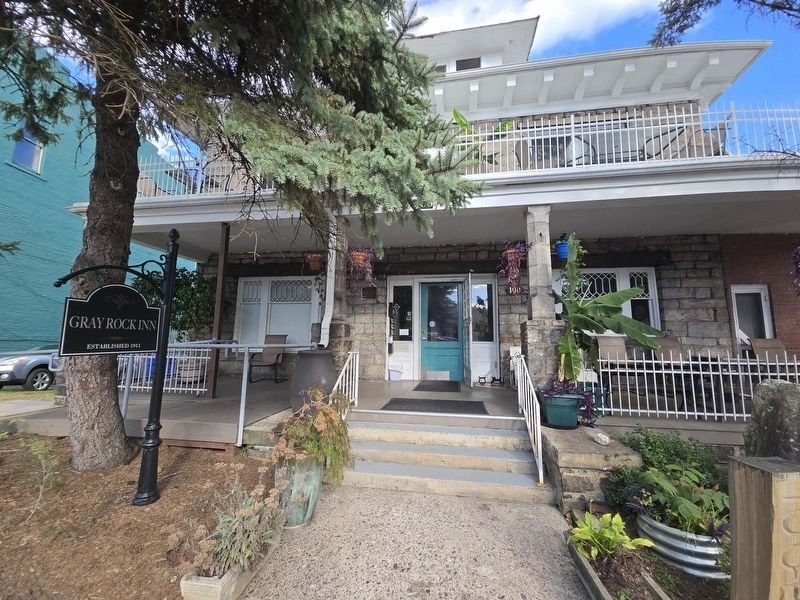
More about this marker. Currently the site of The Gray Rock Inn, the building is part of the Downtown Asheville Historic District
Regarding Flora Sorrell Boarding Home. Excerpt from the Downtown Asheville Historic District (Boundary III Increase) nomination form (pg. 43)
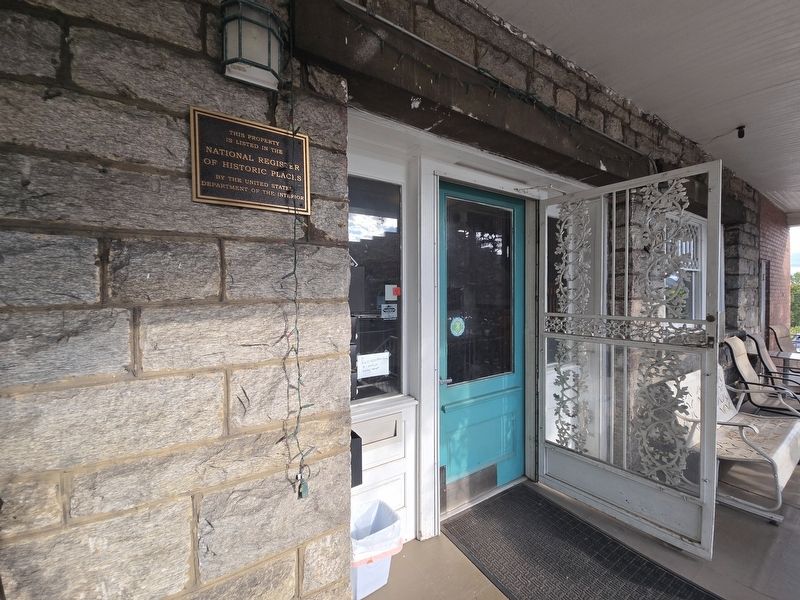
This imposing two-story Colonial Revival-style brick house has served as a boarding house, tourist home, and apartments. The building rests on an ashlar foundation with stone extending onto the porch, porch posts, and façadewhile the main body of the house is brick laid in American bond. The house features three interior brick chimneys, hip- and shed-roof dormers, deep eaves with modillions, and an attached one-story flat-roof porch that wraps around the south side of the house; the porch is now enclosed with brick on the south side. The porch is carried by chamfered stone posts on stone piers with a metal balustrade, and a metal balustrade surrounds the porch roof balcony. The central entrance is composed of a single-leaf glazed-and-paneled door flanked by wide sidelights over two wood panels. The first-story windows are three-part tracery-over-one double-hung sash. A second-story front entrance opens onto the porch roof balcony and is framed by tracery sidelights and an arched opening with a solid demi-lune panel. The second-story entrance is flanked by paired tracery-over-one windows. Windows on the side and rear elevations are typically one-over-one double-hung sash under flat brick arches. An array of solar panels is mounted on a steel frame at the enclosed south side of the porch. A one-story rear ell was added probably in the 1960s and rests onPhotographed by Mark Parker, August 29, 20252. Flora Sorrell Boarding Home Marker left of the main entrancea tall concrete-block foundation. The ell displays stepped side parapets and one-over-one windows.Photographed by Mark Parker, August 29, 20253. The Gray Rock Inn. Marker is on the porch to the left of the entrance
Flora McD. Sorrell, widow of Marcellus Sorrell, operated a boarding house here after its construction. It later became known as the Deluxe Tourist Home and operated as such through the middle of the twentieth century. Nick Poulos managed the tourist home through the 1960s while also working at the Carolina Grill. It is currently used as apartments.
Also see . . . Downtown Asheville Historic District Nomination Form (pdf). Form prepared by Clay Griffith, Acme Preservation Service, 2011 (Submitted on August 30, 2025, by Mark Parker of Hickory, North Carolina.)
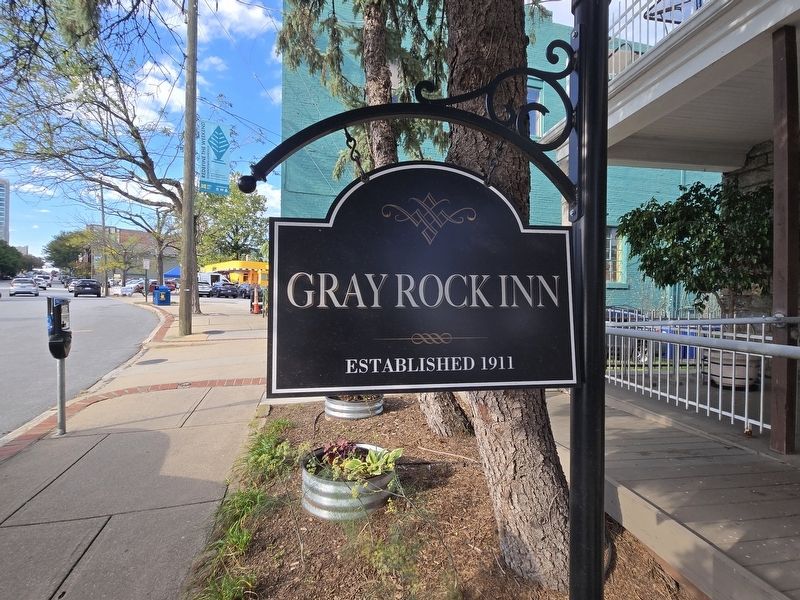
Photographed by Mark Parker, August 29, 2025
4. The Gray Rock Inn sign
Credits. This page was last revised on September 1, 2025. It was originally submitted on August 30, 2025, by Mark Parker of Hickory, North Carolina. This page has been viewed 83 times since then and 33 times this year. Photos: 1, 2, 3, 4. submitted on August 30, 2025, by Mark Parker of Hickory, North Carolina. • Bernard Fisher was the editor who published this page.
