
Anderson in Grimes County, Texas — The American South (West South Central)
Steinhagen Log Cabin
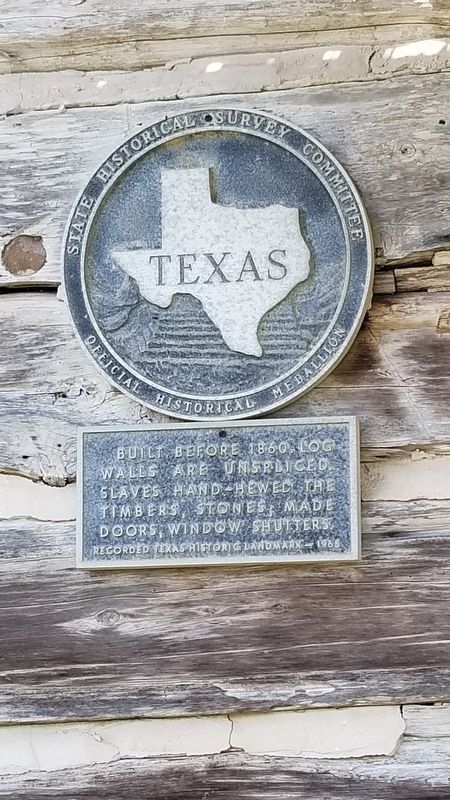
Photographed by James Hulse, September 7, 2020
1. Steinhagen Log Cabin Marker
Erected 1965 by State Historical Survey Committee. (Marker Number 8617.)
Topics. This historical marker is listed in this topic list: Settlements & Settlers. A significant historical year for this entry is 1860.
Location. 30° 29.204′ N, 95° 59.253′ W. Marker is in Anderson, Texas, in Grimes County. It is at the intersection of Houston Street and West Apalonia Avenue (Farm to Market Road 1774), on the left when traveling south on Houston Street. Touch for map. Marker is in this post office area: Anderson TX 77830, United States of America. Touch for directions.

Regionally, this marker is in the Prairies & Lakes Region. It is also in the American South. Globally, it is in North America, a Gulf of Mexico state, the Western Hemisphere, the Western World, and the Anglosphere. Historically, it finds itself in what was once New Spain, the Republic of Texas, one of the Confederate States of America, and the Antebellum South.
Other nearby markers. At least 8 other markers are within walking distance of this marker: Rocky Creek Bridge (about 300 feet away, measured in a direct line); Grimes County (about 700 feet away); Grimes County Courthouse (about 700 feet away); In Memory of Jesse Grimes and Mathew Caldwell (about 800 feet away); Veterans Memorial (about 800 feet away); Grimes County, C.S.A. (approx. 0.2 miles away); La Bahia Road (approx. 0.2 miles away); Michael Moore Kennard (approx. 0.3 miles away). Touch for a list and map of all markers in Anderson.
Another marker is no longer nearby. Anderson Baptist Church (was approx. 0.2 miles away but has been confirmed missing).
More about this marker. The cabin was hand-built before
this page online
Also see . . . Steinhagen family. TSHA Texas State Historical Association (Submitted on October 13, 2020, by James Hulse of Medina, Texas.)
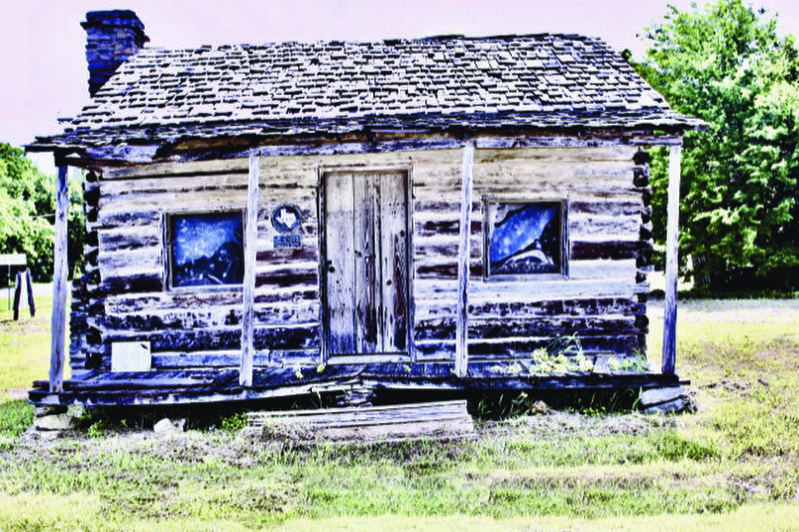
Photographed by Michael Roop, June 16, 2016
2. Steinhagen Log Cabin
Log Cabin Built before 1860.
Houston Street and West Apalonia Avenue FM 1774) Anderson, Texas Historical Marker
Log walis are unspliced. Slaves hand-hewed the timbers. They also hand quarried, shaped, and set the stones. Like the timbers, this was all done without machinery just chisels, hammers, and sheer physical effort. Joiners Made Doors, Windows Shutters.
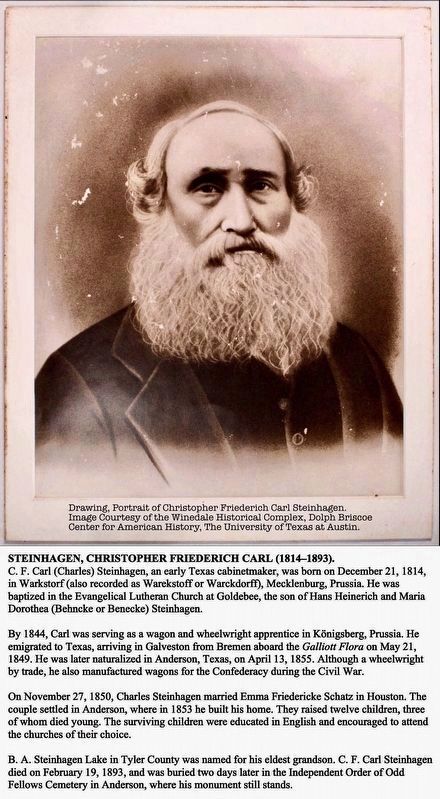
Drawing, Winedale Historical Complex, The University of Texas at Austin.
3. C. F. Carl (Charles) Steinhagen, an early Texas cabinetmaker
STEINHAGEN, CHRISTOPHER FRIEDERICH CARL (1814–1893).
C. F. Carl (Charles) Steinhagen, an early Texas cabinetmaker, was born on December 21, 1814, in Warkstorf (also recorded as Warekstoff or Warckdorff), Mecklenburg, Prussia. He was baptized in the Evangelical Lutheran Church at Goldebee, the son of Hans Heinerich and Maria Dorothea (Behncke or Benecke) Steinhagen.
By 1844, Carl was serving as a wagon and wheelwright apprentice in Königsberg, Prussia. He emigrated to Texas, arriving in Galveston from Bremen aboard the Galliott Flora on May 21, 1849. He was later naturalized in Anderson, Texas, on April 13, 1855. Although a wheelwright by trade, he also manufactured wagons for the Confederacy during the Civil War.
On November 27, 1850, Charles Steinhagen married Emma Friedericke Schatz in Houston. The couple settled in Anderson, where in 1853 he built his home. They raised twelve children, three of whom died young. The surviving children were educated in English and encouraged to attend the churches of their choice.
B. A. Steinhagen Lake in Tyler County was named for his eldest grandson. C. F. Carl Steinhagen died on February 19, 1893, and was buried two days later in the Independent Order of Odd Fellows Cemetery in Anderson, where his monument still stands.
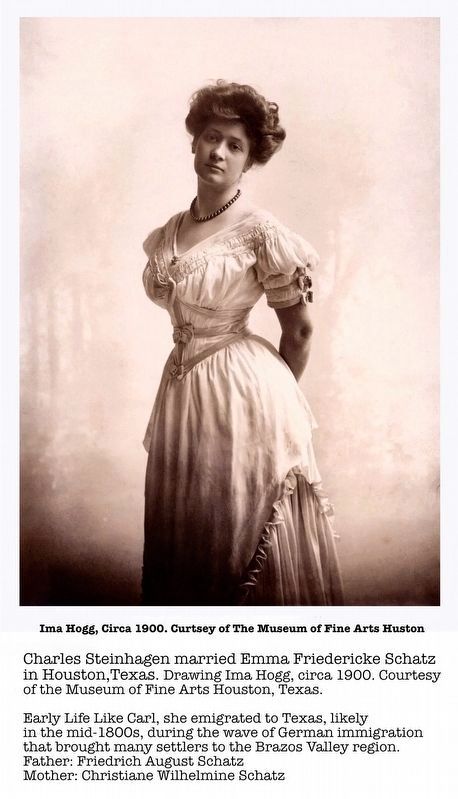
Courtesy of the Museum of Fine Arts Houston, Texas., circa 1900
4. Steinhagen Log Cabin Marker
Charles Steinhagen married Emma Friedericke Schatz in Houston, Texas. Drawing Ima Hogg, circa 1900. Courtesy of the Museum of Fine Arts Houston, Texas.
Early Life Like Carl, she emigrated to Texas, likely in the mid-1800s, during the wave of German immigration that brought many settlers to the Brazos Valley region.
Father: Friedrich August Schatz
Mother: Christiane Wilhelmine Schatz
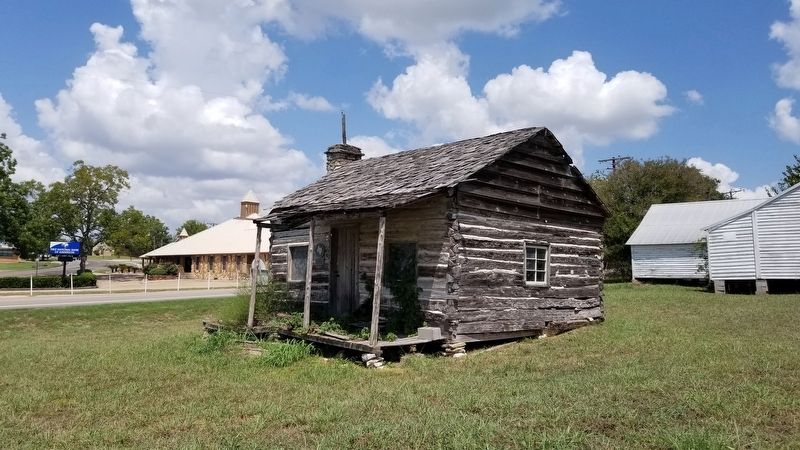
Photographed by James Hulse, September 7, 2020
5. Steinhagen Log Cabin and Marker
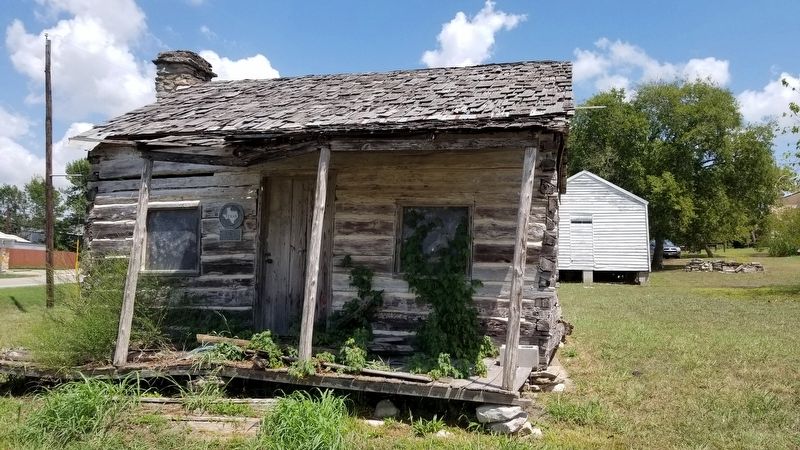
Photographed by James Hulse, September 7, 2020
6. Steinhagen Log Cabin
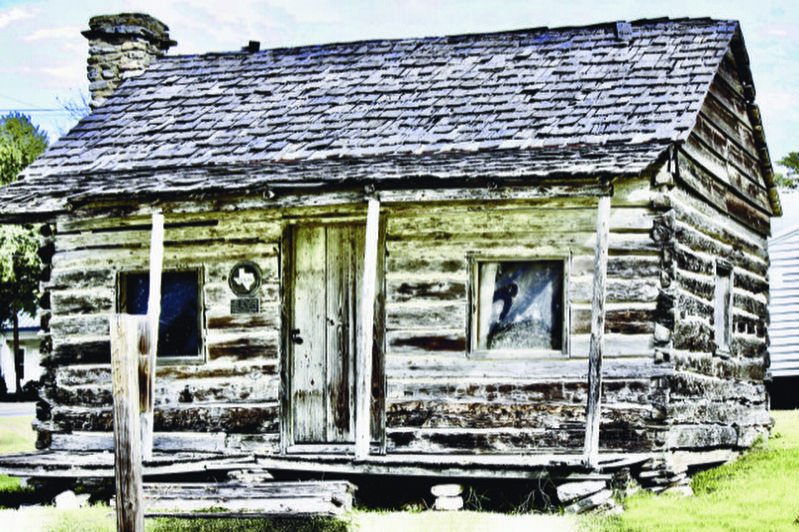
Photographed by Michael Roop, December 10, 2014
7. Steinhagen Log Cabin Marker
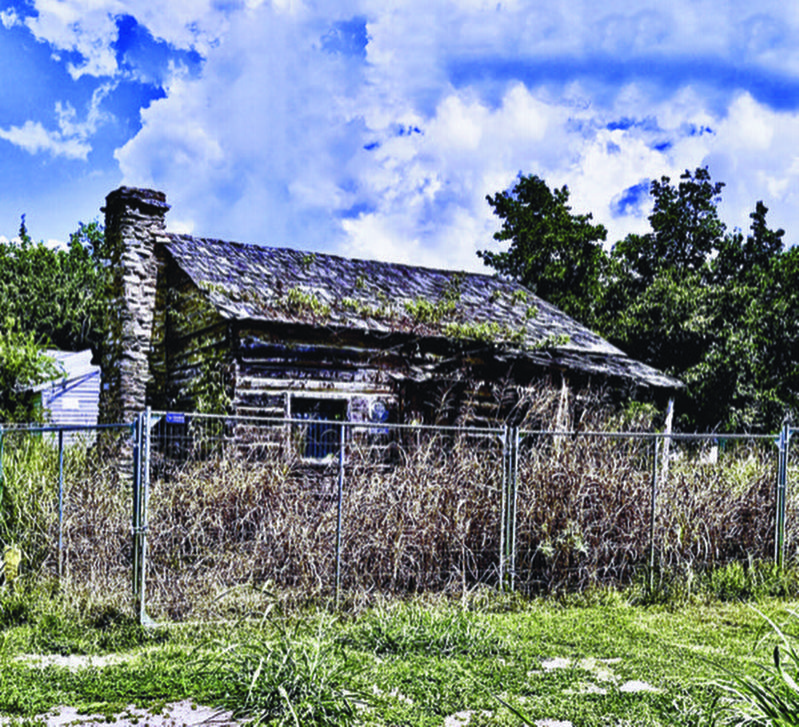
Photographed by Michael Roop, August 12, 2025
8. Steinhagen Log Cabin Marker
Credits. This page was last revised on May 11, 2026. It was originally submitted on October 13, 2020, by James Hulse of Medina, Texas. This page has been viewed 1,726 times since then and 171 times this year. Last updated on August 30, 2025, by Michael Roop of College Station, Texas. Photos: 1. submitted on October 13, 2020, by James Hulse of Medina, Texas. 2, 3, 4. submitted on August 23, 2025, by Michael Roop of College Station, Texas. 5, 6. submitted on October 13, 2020, by James Hulse of Medina, Texas. 7. submitted on August 18, 2025, by Michael Roop of College Station, Texas. 8. submitted on August 18, 2025.
