San Frediano in Firenze in Città Metropolitana di Firenze, Tuscany, Italy — Southern and Western Europe (Mediterranean)
Alphonse de Lamartine
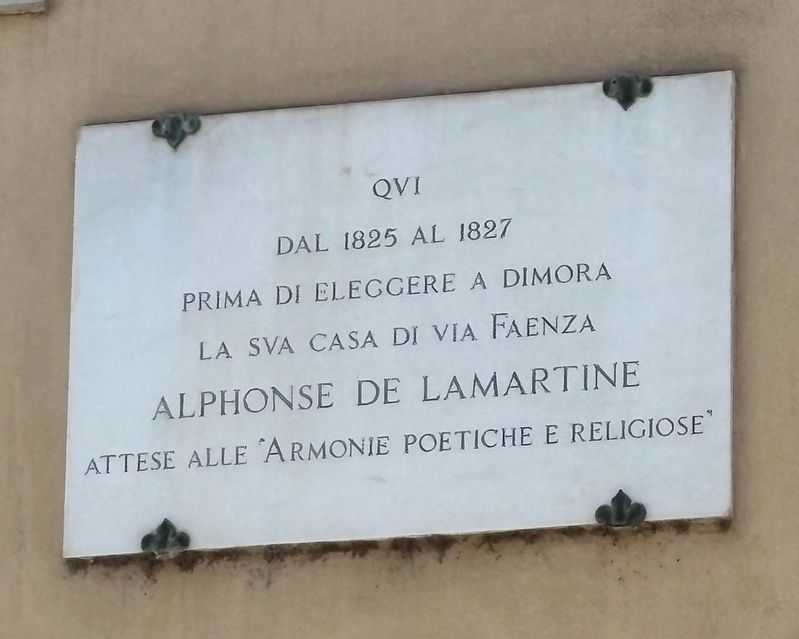
Photographed by Sean P. Flynn, July 30, 2025
1. Alphonse de Lamartine Marker
Qui dal 1825 al 1827 prima di eleggere a dimora la sua casa di via Faenza Alphonse de Lamartine attese alle armonie poetiche e religiose
[English translation of Italian text:]
Here, from 1825 to 1827, before choosing his home in Via Faenza as his residence, Alphonse de Lamartine devoted himself to poetic and religious harmonies
Topics. This historical marker is listed in these topic lists: Arts, Letters, Music • Notable Buildings. A significant historical year for this entry is 1825.
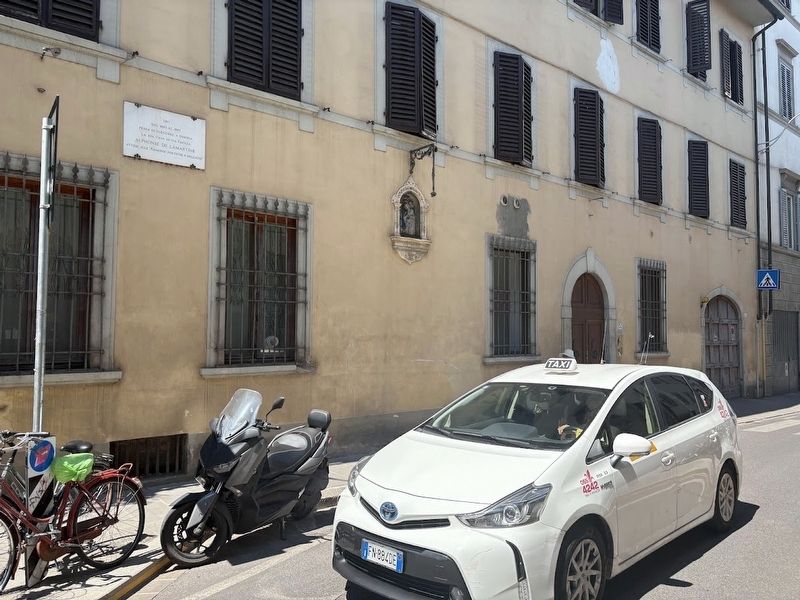
Location. 43° 45.847′ N, 11° 14.612′ E. Marker is in Firenze, Toscana (Tuscany), in Città Metropolitana di Firenze. It is in San Frediano. It is on Via dei Serragli 0.4 kilometers north of Piazzale di Porta Romana, on the right when traveling south. Touch for map. Marker is at or near this postal address: Via dei Serragli 136, Firenze, Toscana 50125, Italy. Touch for directions.

Regionally, it is in Europe, the European Union, the Schengen Area, a coastal Mediterranean country, and the Western World. Historically, it finds itself in what was once the Roman Empire and specifically also the Holy Roman Empire.
Other nearby markers. At
this page online
Also see . . . Britannica: Alphonse de Lamartine bio.
Excerpt: “He deplored the inhumanity of the worker’s plight; he denounced the trusts and their dominant influence on governmental politics, directing against them two discourses, one in 1838 and another in 1846; and he held that a working-class revolution was inevitable and did not hesitate to hasten the hour, promising the authorities, in July 1847, a 'revolution of scorn.' In the same year he published his Histoire des Girondins, a history of(Submitted on September 2, 2025, by Sean P. Flynn of Oak Park, Illinois.)the right, or moderate, Girondins during and after the French Revolution, which earned him immense popularity with the left-wing parties.”Photographed by Sean P. Flynn, July 30, 20252. Alphonse de Lamartine Marker
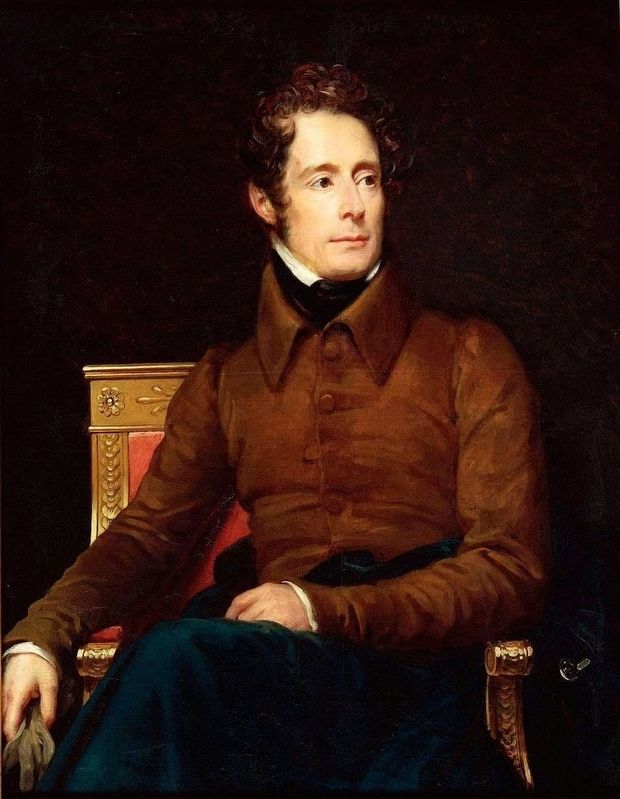
Painting by François Gérard, circa 1831
3. Alphonse de Lamartine Marker
Credits. This page was last revised on September 2, 2025. It was originally submitted on September 2, 2025, by Sean P. Flynn of Oak Park, Illinois. This page has been viewed 67 times since then and 13 times this year. Photos: 1, 2, 3. submitted on September 2, 2025, by Sean P. Flynn of Oak Park, Illinois.
