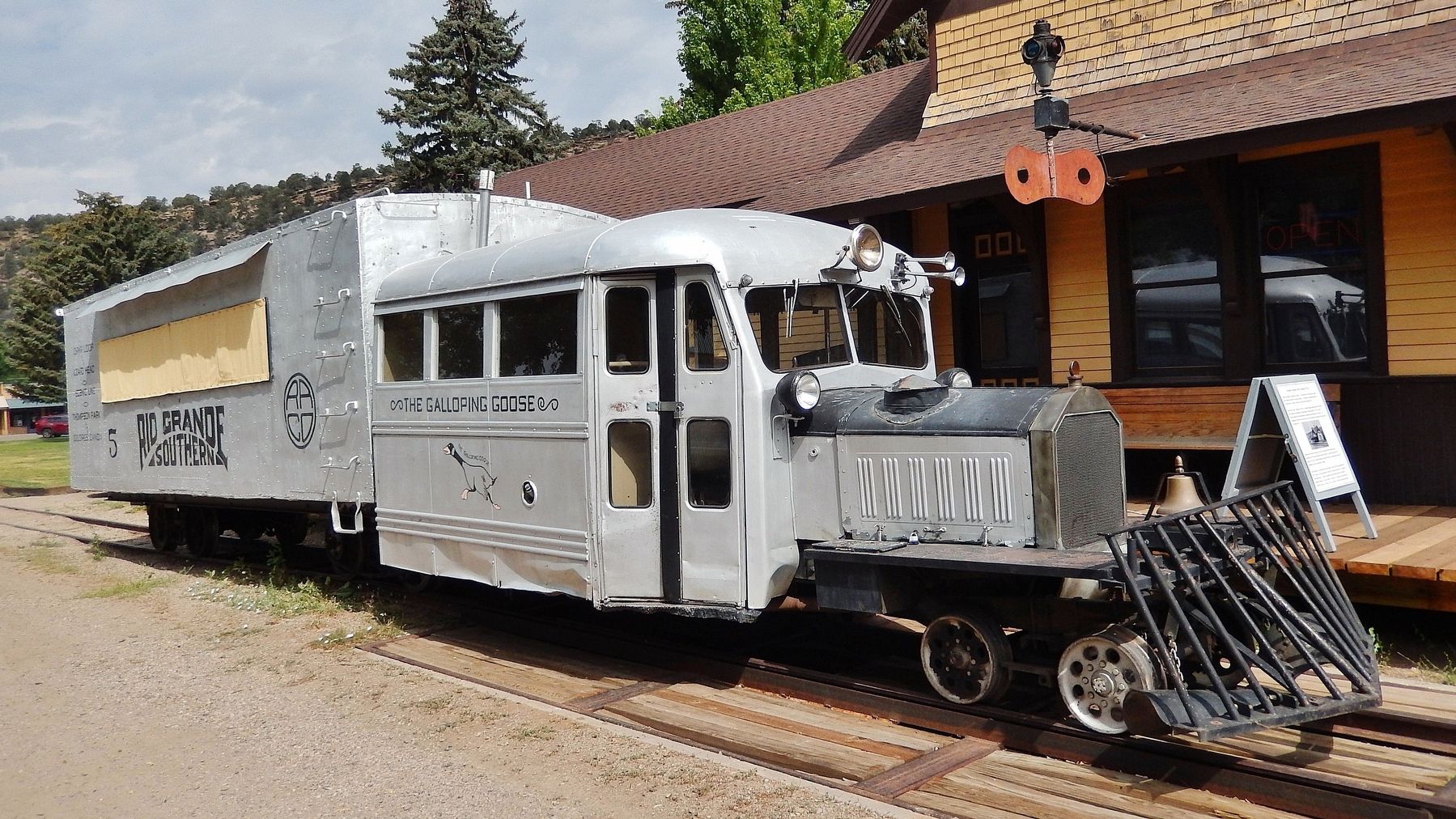
Galloping Goose #5
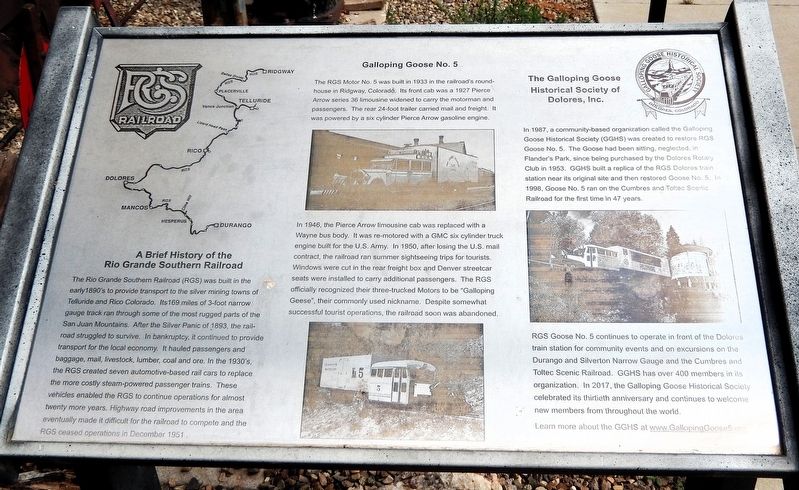
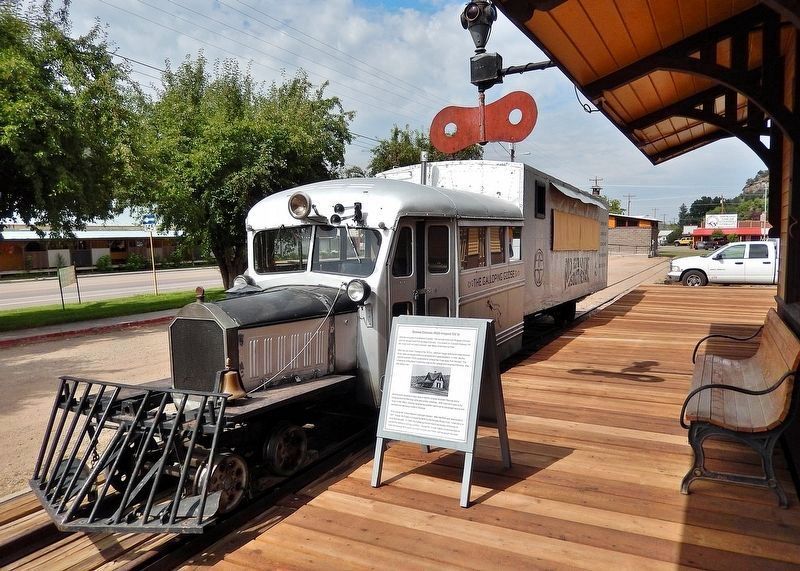
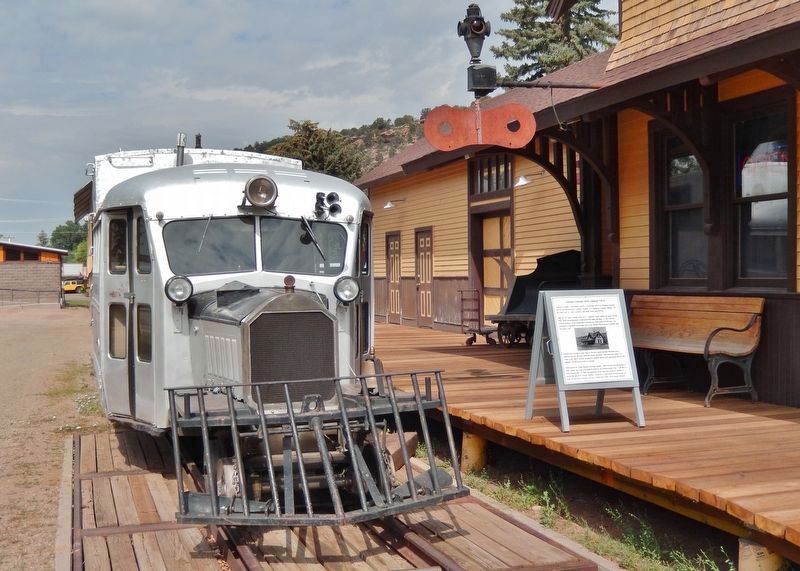
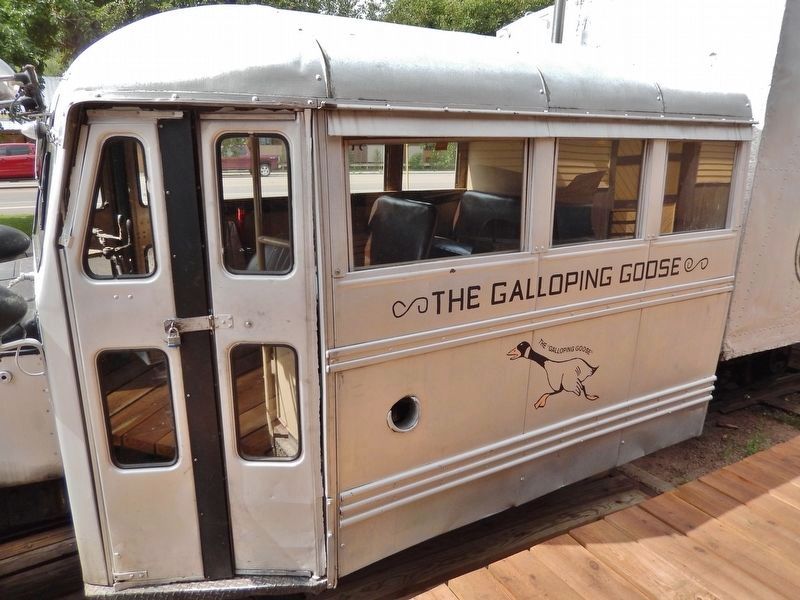
The RGS Motor No. 5 was built in 1933 in the railroad's roundhouse in Ridgway, Colorado. Its front cab was a 1927 Pierce Arrow series 36 limousine widened to carry the motorman and passengers. The rear 24-foot trailer carried mail and freight. It was powered by a six-cylinder Pierce Arrow gasoline engine.
In 1946, the Pierce Arrow limousine cab was replaced with a Wayne bus body. It was re-motored with a GMC six-cylinder truck engine built for the U.S. Army. In 1950, after losing the U.S. mail contract, the railroad ran summer sightseeing trips for tourists. Windows were cut in the rear freight box and Denver streetcar seats were installed to carry additional passengers. The RGS officially recognized their three-trucked Motors to be “Galloping Geese,” their commonly used nickname. Despite somewhat successful tourist operations, the railroad soon was abandoned.
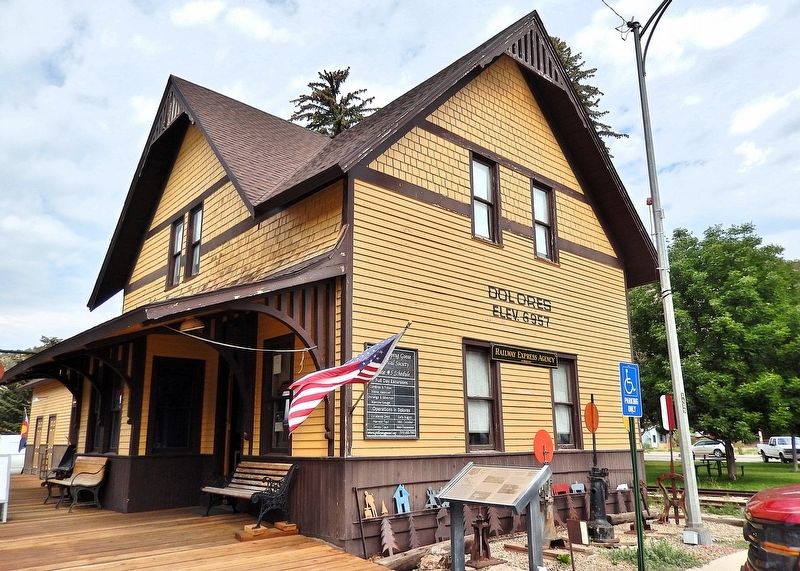
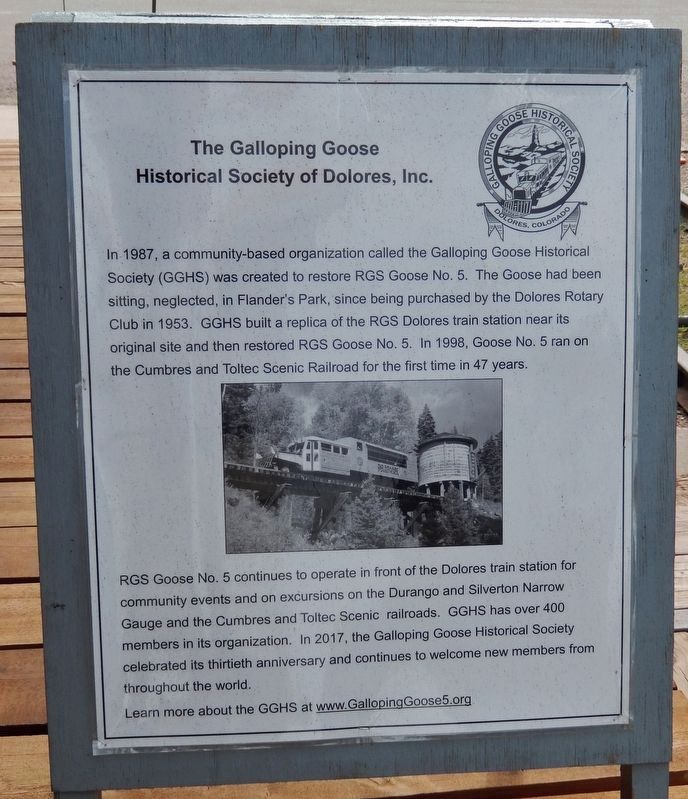
In 1987, a community-based organization called the Galloping Goose Historical Society (GGHS) was created to restore RGS Goose No. 5. The Goose had been sitting, neglected, in Flander's Park, since being purchased by the Dolores Rotary Club in 1953. GGHS built a replica
this page online
RGS Goose No. 5 continues to operate in front of the Dolores train station for community events and on excursions on the Durango and Silverton Narrow Gauge and the Cumbres and Toltec Scenic Railroad. GGHS has over 400 members in its organization. In 2017, the Galloping Goose Historical Society celebrated its thirtieth anniversary and continues to welcome new members from throughout the world.
Learn more about the GGHS at www.GallopingGoose5.org
A Brief History of the Rio Grande Southern Railroad
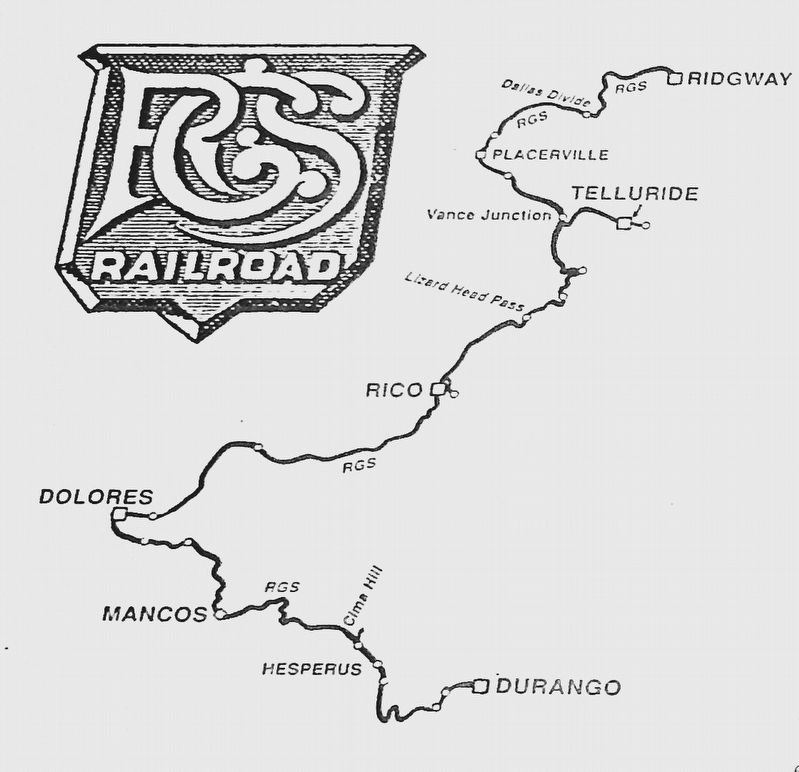
The Rio Grande Southern Railroad (RGS) was built in the early 1890's to provide transport to the silver mining towns of Telluride and Rico Colorado. Its 169 miles of 3-foot narrow gauge track ran through some of the most rugged parts of the San Juan Mountains. After the Silver Panic of 1893, the railroad struggled to survive. In bankruptcy, it continued to provide transport for the local economy. It hauled passengers and baggage, mail, livestock, lumber, coal
Erected by The Galloping Goose Historical Society of Dolores, Inc.
Topics. This historical marker is listed in these topic lists: Charity & Public Work • Fraternal or Sororal Organizations • Industry & Commerce • Railroads & Streetcars. A significant historical year for this entry is 1933.
Location. 37° 28.417′ N, 108° 30.197′ W. Marker is in Dolores, Colorado, in Montezuma County. It is on 5th Street just north of Railroad Avenue (State Highway 145), on the left when traveling north. The marker is located at the southeast corner of the Dolores Railroad Museum & Galloping Goose Historical Society building. Touch for map. Marker is at or near this postal address: 421 Railroad Avenue, Dolores CO 81323, United States of America. Touch for directions.

Regionally, this
Other nearby markers. At least 8 other markers are within 3 miles of this marker, measured as the crow flies: The Anasazi (a few steps from this marker); Respite Along the Dolores (a few steps from this marker); Galloping Geese of the Rio Grande Southern Railroad (within shouting distance of this marker); The Southern Hotel (within shouting distance of this marker); Father Escalante (about 300 feet away, measured in a direct line); Exon Mercantile (about 500 feet away); Big Bend and McPhee (approx. 0.8 miles away); The Landscape (approx. 2.3 miles away). Touch for a list and map of all markers in Dolores.
Related markers. Click here for a list of markers that are related to this marker. Galloping Geese of the Rio Grande Southern Railroad
Also see . . . Short History of the Rio Grande Southern Railroad & The Galloping Goose (GallopingGoose5.org).
(sandwich board - not permanent)
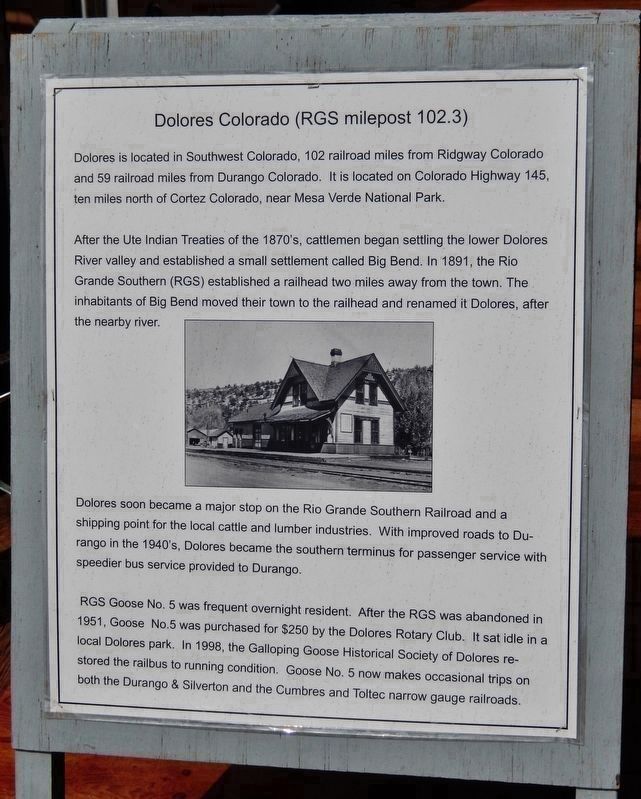
After the Ute Indian Treaties of the 1870's, cattlemen began settling the lower Dolores River valley and established a small settlement called Big Bend. In 1891, the Rio Grande Southern (RGS) established a railhead two miles away from the town. The inhabitants of Big Bend moved their town to the railhead and renamed it Dolores, after the nearby river.
Dolores soon became a major stop on the Rio Grande Southern Railroad and a shipping point for the local cattle and lumber industries. With improved roads to Durango in the 1940's, Dolores became the southern terminus for passenger service with speedier bus service provided to Durango.
RGS Goose No. 5 was frequent overnight resident. After the RGS was abandoned in 1951, Goose No. 5 was purchased for $250 by the Dolores Rotary Club. It sat idle in a local Dolores park. In 1998, the Galloping Goose Historical Society of Dolores restored the railbus to running condition. Goose No. 5 now makes occasional trips on both the Durango & Silverton and the Cumbres and Toltec narrow-gauge railroads.
(by Larry Spencer) Excerpt: If the Rio Grande Southern Railroad had ever been a profitable endeavor with the changing economy of its fledgling days, the “Galloping Goose” might never have been “hatched” to accommodate travel by rail in the remote and isolated regions of far southwestern Colorado.(Submitted on September 7, 2025, by Cosmos Mariner of Cape Canaveral, Florida.)
The RGS’s early revenues came mainly from the numerous silver and gold mines near Telluride, Ophir and Rico. Hauling hundreds of tons of precious metal ores and hundreds of passengers in and out of the area made the financial condition of the railroad extraordinarily strong for its first two and one-half years! However, the repeal of the Sherman Silver Purchase Act caused the Silver Panic of 1893, and silver prices plummeted. As a result, many silver mines were closed, people fled the area by the thousands, and the railroad slipped into its first receivership that same year.
Nevertheless, the railroad survived – just barely at times – for another 40 years hauling various kinds of freight and passengers until the stock market crash in 1929 spelled the almost certain financial failure of the railroad. However, there remained an obligationand responsibility for the railroad to provide reliable transportation for small amounts of freight, what few passengers there were, and the always-important U.S. Mail. It was time to economize! There had to be a way! There was. A new rail vehicle was born from an ingenious idea and developed into what later became widely known as the Galloping Geese…Photographed by Cosmos Mariner, July 17, 20255. Platform Interpretive Panel
(sandwich board - not permanent)In 1987, a community-based organization called the Galloping Goose Historical Society (GGHS) was created to restore RGS Goose No. 5. The Goose had been sitting, neglected, in Flander's Park, since being purchased by the Dolores Rotary Club in 1953. GGHS built a replica of the RGS Dolores train station near its original site and then restored RGS Goose No. 5. In 1998, Goose No. 5 ran on the Cumbres and Toltec Scenic Railroad for the first time in 47 years.RGS Goose No. 5 continues to operate in front of the Dolores train station for community events and on excursions on the Durango and Silverton Narrow Gauge and the Cumbres and Toltec Scenic railroads. GGHS has over 400 members in its organization. In 2017, the Galloping Goose Historical Society celebrated its thirtieth anniversary and continues to welcome new members from throughout the world.
Credits. This page was last revised on March 24, 2026. It was originally submitted on September 5, 2025, by Cosmos Mariner of Cape Canaveral, Florida. This page has been viewed 164 times since then and 51 times this year. Photos: 1. submitted on September 6, 2025, by Cosmos Mariner of Cape Canaveral, Florida. 2, 3, 4, 5, 6, 7, 8, 9. submitted on September 7, 2025, by Cosmos Mariner of Cape Canaveral, Florida.
