Huron in Beadle County, South Dakota — The American Midwest (Upper Plains)
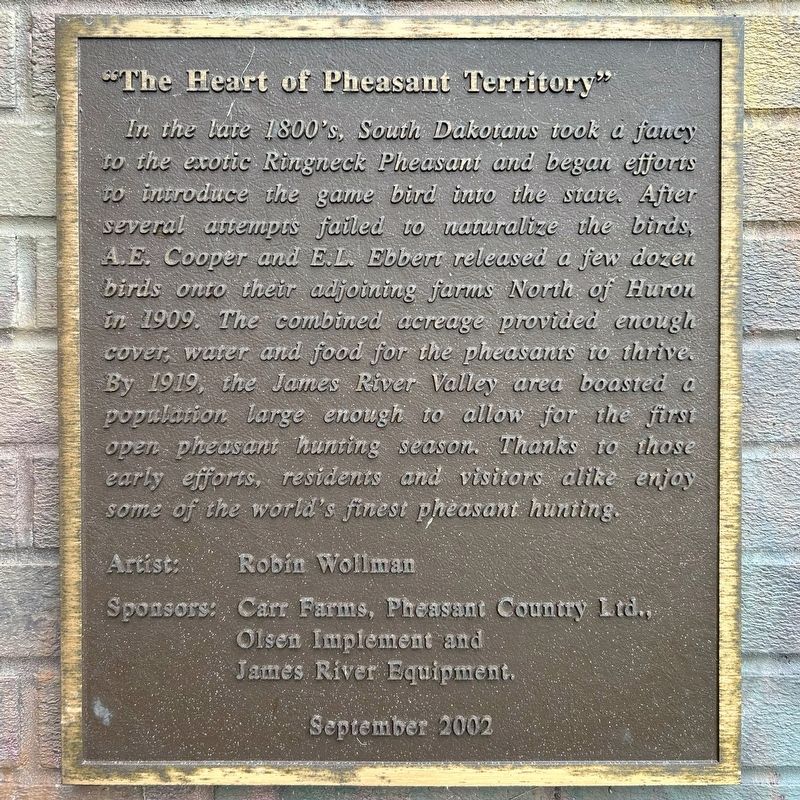
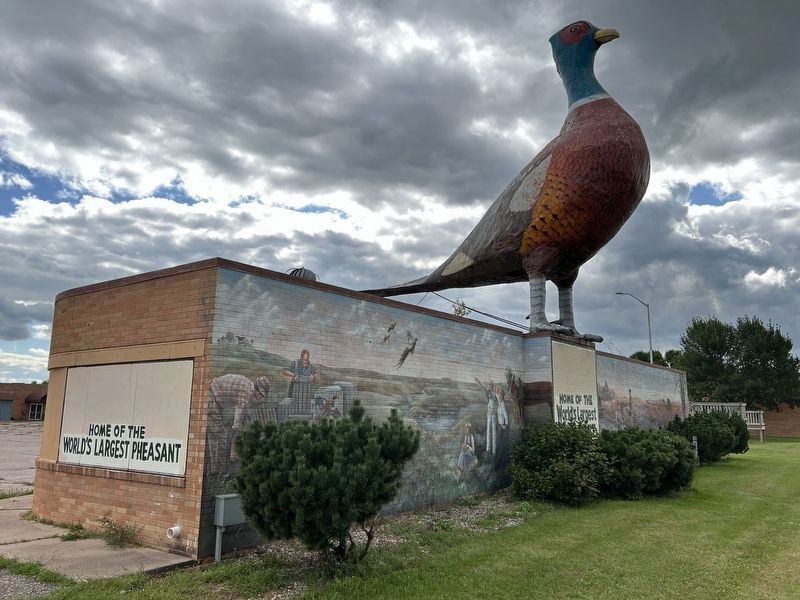
"The Heart of Pheasant Territory"
September 5, 2025
1. "The Heart of Pheasant Territory" Marker
Artist: Robin Wollman
Sponsors: Carr Farms, Pheasant Country Ltd., Olsen Implement and James River Equipment.
September 2002
Erected 2002.
Topics. This historical marker is listed in these topic lists: Animals • Arts, Letters, Music • Sports. A significant historical year for this entry is 1909.
Location. 44° 22.2′ N, 98° 12.005′ W. Marker is in Huron, South Dakota, in Beadle County. It is on 4th Street Northeast (U.S. 14) west of Jersey Avenue, on the right when traveling east. Located
this page online

Regionally, this marker is in East River and specifically in the James River Valley. It is also in the American Midwest, in the Lewis & Clark Corridor, in the Corn Belt, on the prairies, and on the Northern Plains. Globally, it is in North America, the Western Hemisphere, the Western World, and the Anglosphere. Historically, it finds itself in what was once Rupert’s Land and also the Louisiana Purchase.
Other nearby markers. At least 8 other markers are within walking distance of this marker: W. Glenn Sloan (about 300 feet away, measured in a direct line); The Pyle Home (approx. 0.7 miles away); Votes for Women (approx. 0.7 miles away); "The Evolution of Medicine" (approx. 0.8 miles away); Downtown Saturday Night (approx. 0.8 miles away); Grace Episcopal Church aka "The Centennial Center" (approx. 0.8 miles away); Dr. Karl J. Blessinger (approx. 0.9 miles away); Dr. Jeffrey S. Wheeler (approx. 0.9 miles away). Touch for a list and map of all markers in
September 5, 2025
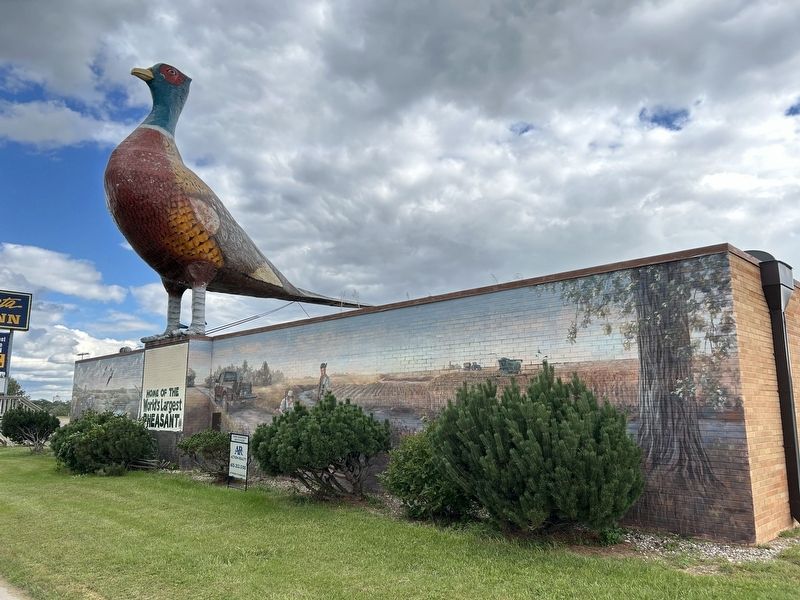
2. "The Heart of Pheasant Territory" Mural & Marker
Another marker is no longer nearby. History of the World's Largest Pheasant (was a few steps from this marker but has been permanently removed).
Also see . . .
1. The Culture of Pheasant Hunting in South Dakota | SDPB. "We Always Looked Forward to the Hunters Coming": The Culture of Pheasant Hunting in South Dakota by James Marten, from South Dakota History, volume 29 number 2 (1999).
Excerpt: "Pheasants have lived in the state that made them its official bird almost since the beginning of statehood. Borrowing a scheme that George Washington purportedly pursued over a hundred years earlier and Owen N. Denny, former United States consul general at Shanghai, China, instigated in 1880, individual South Dakotans began importing Chinese ring-necked pheasants in the early 1890s. The small-scale stocking efforts of hunters, farmers, and the Redfield Chamber of Commerce were replaced by an initiative of the State Game Department, which released seven thousand birds between 1914 and 1918."(Submitted on September 7, 2025.)
2. October 2013 - History of Pheasants in South Dakota | South Dakota Historical Society Foundation.
September 5, 2025
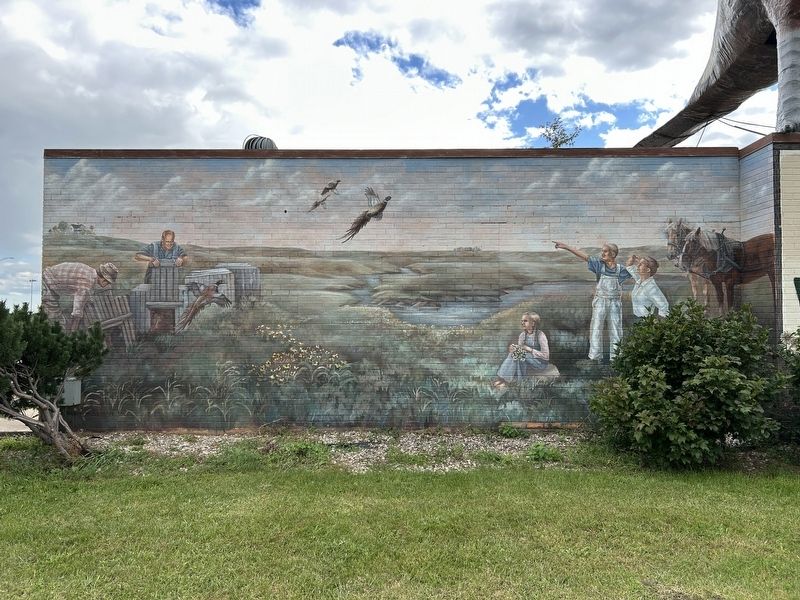
3. "The Heart of Pheasant Territory" Mural
Excerpt: "A. E. Cooper and E. L. Ebbert bought several pairs of pheasants from a Pennsylvania game farm in 1908 and introduced them in wooded sections of their farms south of Doland. Those pheasants fell victim to heavy snow that winter. Cooper and Ebbert’s efforts to release pheasants the next year met with success."(Submitted on September 7, 2025.)
September 5, 2025
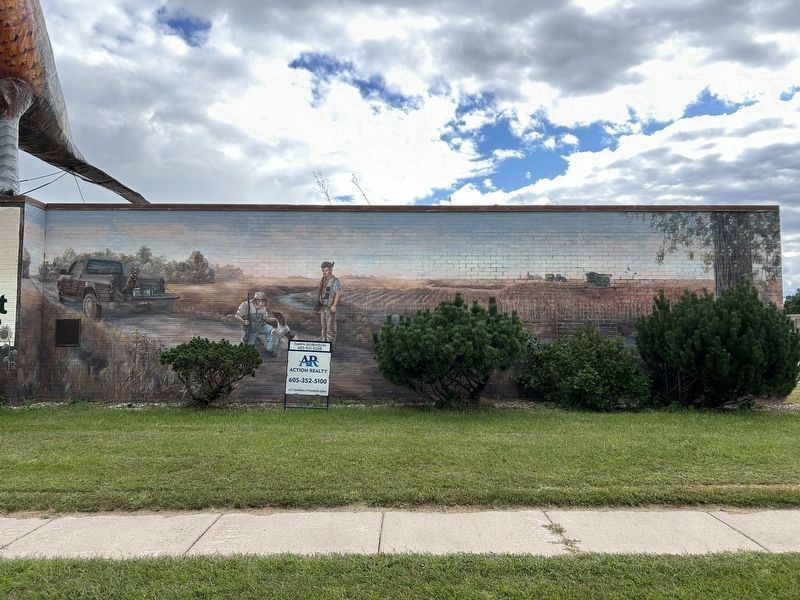
4. "The Heart of Pheasant Territory" Mural & Marker
September 5, 2025
5. "The Heart of Pheasant Territory" Mural
Credits. This page was last revised on September 7, 2025. It was originally submitted on September 7, 2025. This page has been viewed 102 times since then and 34 times this year. Photos: 1, 2, 3, 4, 5. submitted on September 7, 2025.
