
Smithville in West Lincoln in Niagara Region, Ontario — Central Canada (North America)
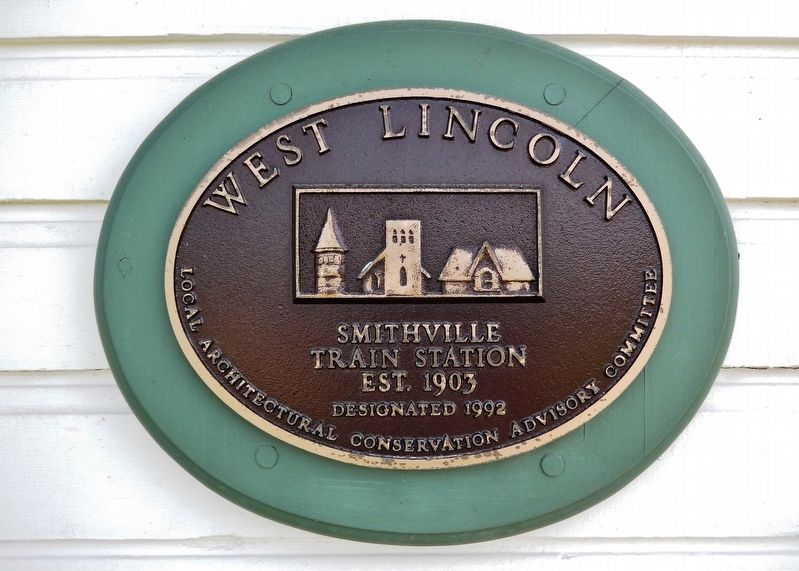
Smithville Train Station
Est. 1903
Photographed by Cosmos Mariner, May 24, 2022
1. Smithville Train Station Marker
West Lincoln
Local Architectural Conservation Advisory Committee
Topics. This historical marker is listed in these topic lists: Architecture • Notable Buildings • Railroads & Streetcars. A significant historical year for this entry is 1903.
Location. 43° 6.13′ N, 79° 32.685′ W. Marker is in West Lincoln, Ontario, in Niagara Region. It is in Smithville. It is on Station Street (Niagara Regional Road 14) 0.1 kilometers north of Forest Avenue, on the right when traveling north. The marker is mounted at eye-level on the southwest corner of the building, facing west. Touch for map. Marker is at or near this postal address: 288 Station Street, West Lincoln ON L0R 2A0, Canada. Touch for directions.

Regionally, this marker is on Ontario’s Golden Horseshoe and in Niagara Canada. It is also in Central Canada. Globally, it is in North America, on the Great Lakes, in the Western Hemisphere, in the Western World, and in the Anglosphere. Historically, it finds itself in what was once a British colony, the Viceroyalty of New France, the Haudenosaunee (Iroquois) Confederacy, and Rupert’s
this page online
Other nearby markers. At least 8 other markers are within 10 kilometers of this marker, measured as the crow flies: Smoke Box Cover (a few steps from this marker); Edward Griffin (approx. 0.3 kilometers away); Early Education In Beamsville (approx. 8.8 kilometers away); The Howard House 1847 (approx. 8.9 kilometers away); George Herbert Locke (approx. 8.9 kilometers away); Clinton Township Hall 1851 (approx. 8.9 kilometers away); Jacob Beam Mill Stone (approx. 8.9 kilometers away); Hamilton, Grimsby & Beamsville Electric Railway Company (approx. 8.9 kilometers away). Touch for a list and map of all markers in West Lincoln.
Also see . . .
1. A Brief History of the Railway Station at Smithville. Excerpt:
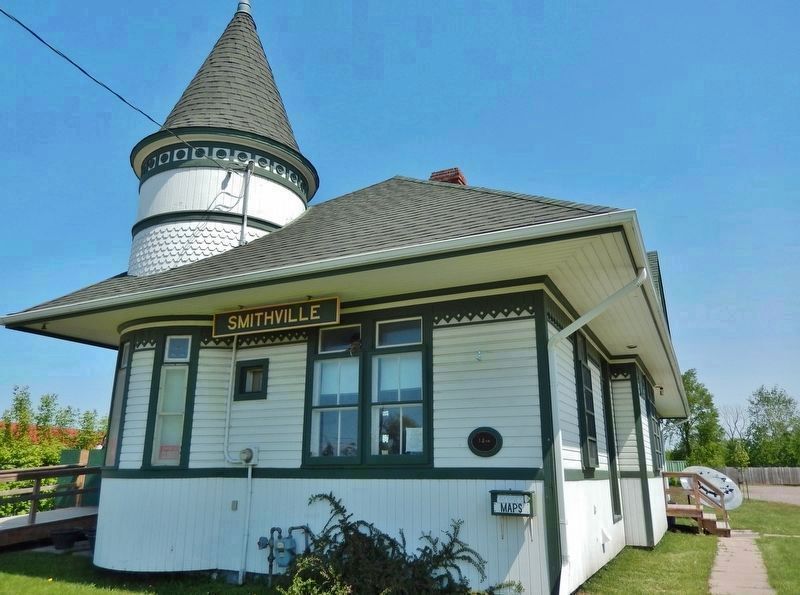
In 1884, the Ontario Legislature granted the TH&B Railway Company the right to build a rail line from Toronto to Buffalo. At that time, having a railway was a great boon to a town, as it furnished a link to nearby cities, facilitating shopping for the residents and transportation of farm products to city markets. Robert Murgatroyd Sr. became a Provisional Director of the railway and worked hard to have it come through(Submitted on November 7, 2023, by Cosmos Mariner of Cape Canaveral, Florida.)Smithville, rather than north of the town, as originally planned. A station was built and, in 1895, the first train stopped in Smithville. Unfortunately, this station was struck by lightning and burned, so the present one was built about 1903. Its role as a passenger station ended in 1981. Then it was sadly neglected until, in 1990 the West Lincoln Council purchased the station and property from Canadian Pacific. They then moved the building back from the railway right-of-way, and placed it on a good basement. The Local Architecture Conservation Advisory Committee arranged to have it provincially designated as of historical and architectural significance.Photographed by Cosmos Mariner, May 24, 20222. Smithville Train Station (southwest elevation)The marker is mounted near the southwest corner of the station building, just to the right of the west window.
2. Great Railroad Stations: Smithville, Ontario.
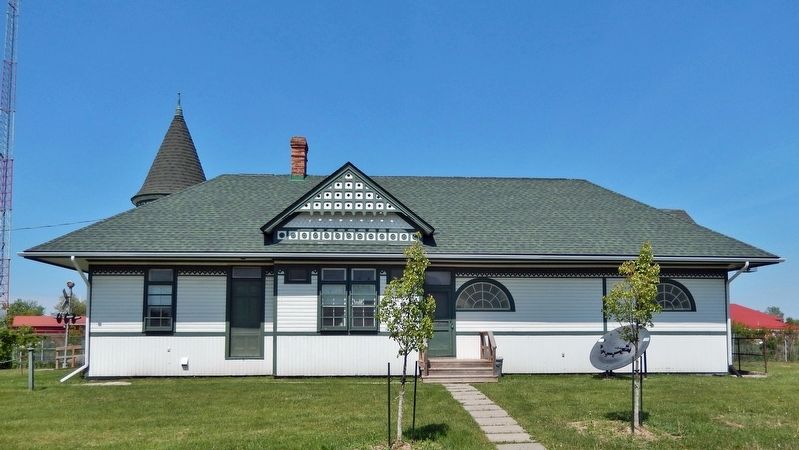
It has been called by Elizabeth A. Wilmont, Canadian author of several wonderful station history and photo albums, "the most decorative station in the Niagara Peninsula, certainly the most whimsical ever built by the T.H. & B. Company." The exterior, office and former waiting room with its magnificent fan windows have been restored. A full basement(Submitted on November 7, 2023, by Cosmos Mariner of Cape Canaveral, Florida.)was constructed, and an archive center for the local historical society established.Photographed by Cosmos Mariner, May 24, 20223. Smithville Train Station (south elevation)
Photographed by Cosmos Mariner, May 24, 2022
4. Smithville Train Station (east elevation)
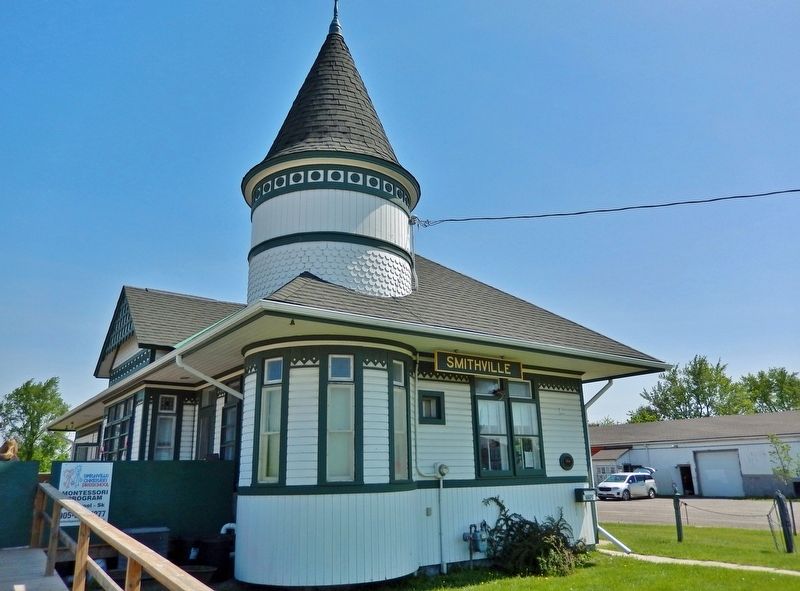
Photographed by Cosmos Mariner, May 24, 2022
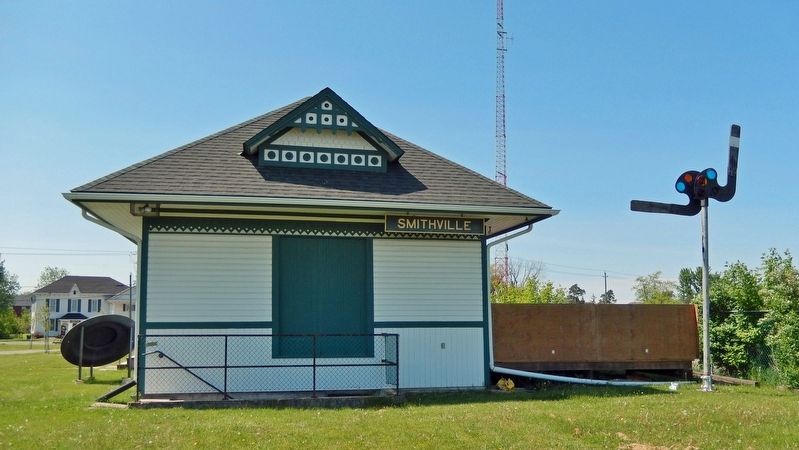
5. Smithville Train Station (northwest elevation)
The railroad tracks are beyond this image to the left [north].
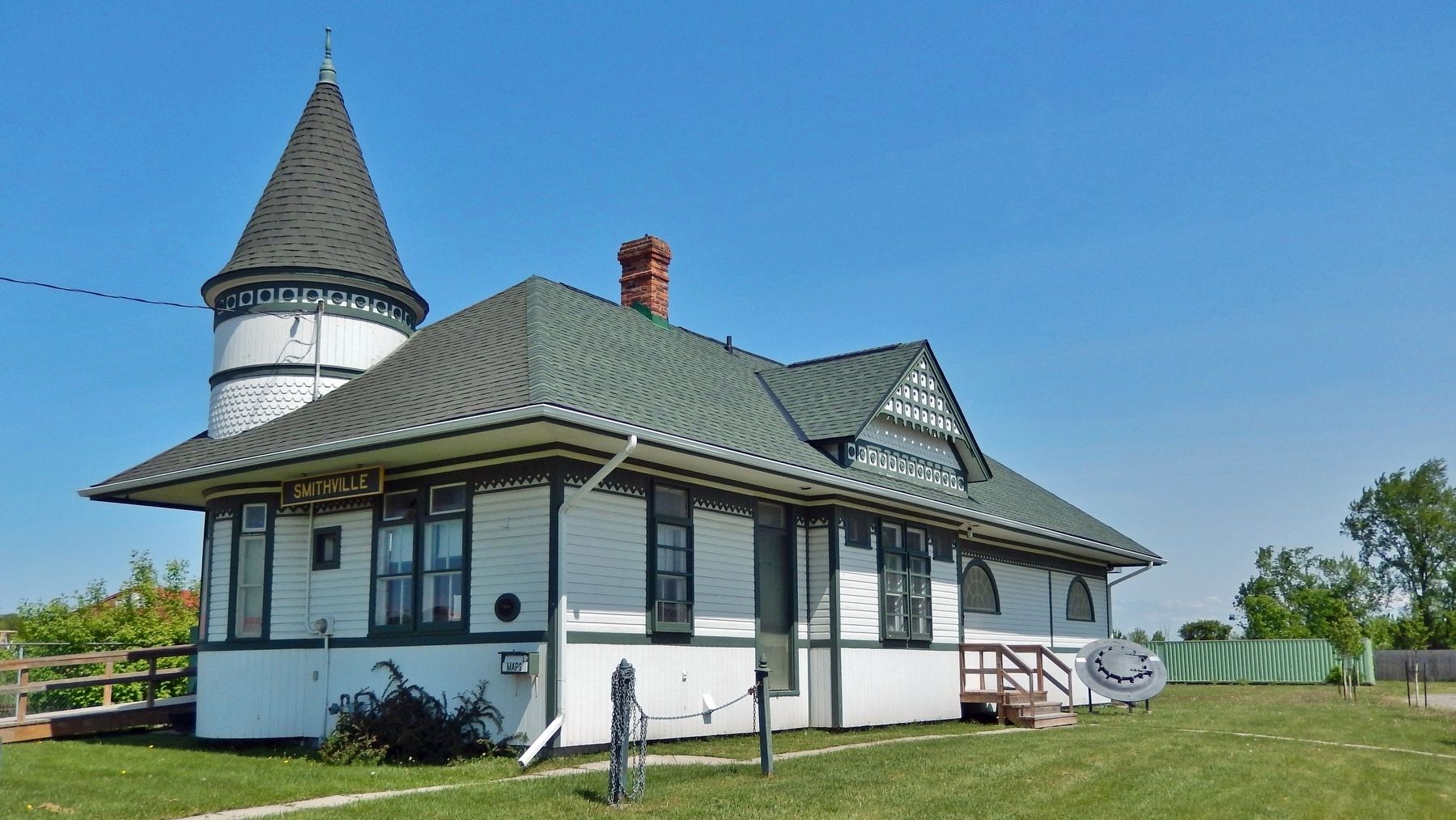
Photographed by Cosmos Mariner, May 24, 2022
6. Smithville Train Station
Credits. This page was last revised on February 25, 2026. It was originally submitted on November 7, 2023, by Cosmos Mariner of Cape Canaveral, Florida. This page has been viewed 620 times since then and 74 times this year. Last updated on September 10, 2025, by Kevin Westell of St. Catharines, Ontario. Photos: 1, 2, 3, 4, 5, 6. submitted on November 7, 2023, by Cosmos Mariner of Cape Canaveral, Florida. • Devry Becker Jones was the editor who published this page.
