Old Salem in Franklin County, Tennessee — The American South (East South Central)
Falls Mill
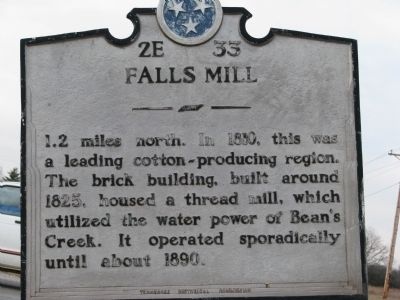
Photographed by Tom Gillard, January 3, 2010
1. Falls Mill Marker
Erected by Tennessee Historical Commission. (Marker Number 2E 33.)
Topics and series. This historical marker is listed in these topic lists: Industry & Commerce • Notable Buildings. In addition, it is included in the Tennessee Historical Commission series list. A significant historical year for this entry is 1810.
Location. Marker has been reported missing. It was located near 35° 5.063′ N, 86° 15.042′ W. Marker was in Old Salem, Tennessee, in Franklin County. It was at the intersection of Route 64 and Old Salem Lexie Rd, on the right when traveling west on Route 64. Touch for map. Marker was in this post office area: Belvidere TN 37306, United States of America. Touch for directions.

Regionally, this marker was in Middle Tennessee and in the Highland Rim. It was also in the American South and specifically in the Upper South. Globally, it was in North America, the Western Hemisphere,
this page online
Other nearby markers. At least 8 other markers are within 5 miles of this location, measured as the crow flies: Jesse Bean (here, next to this marker); Polly Finlay Crockett (approx. 1.6 miles away); Huntland Veterans Memorial (approx. 2½ miles away); Hunter's Grocery (approx. 2½ miles away); David and Polly Crockett: A Consise History (approx. 3.3 miles away); John Ruch (approx. 3.6 miles away); Lincoln County / Franklin County (approx. 4 miles away); First United Church, U.C.C. (approx. 4.7 miles away).
Another marker is no longer nearby. "Kentuck" (was approx. 2 miles away but has been confirmed missing).
Also see . . .
1. Falls Mill. (Submitted on January 3, 2010, by Tom Gillard of Tullahoma, Tennessee.)
2. Falls Mill Tennessee Facebook Page. (Submitted on January 3, 2020, by Kyle Dugger of Troy, Tennessee.)
Additional commentary.
1. Falls Mill, A Peacefull Escape
Everyone needs a place to escape
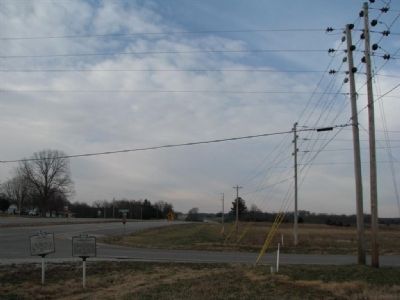
Photographed by Tom Gillard, January 3, 2010
2. Falls Mill Marker
Falls mill was built in 1873 as a cotton and woolen factory. Although Falls Mill started life as a woolen mill it has been other businesses through the years such as a cotton gin, wood working shop and grist mill. It is now the home of the Museum of Power and Industry, Inc. The mill is powered by a 32 foot diameter four foot wide Fitz
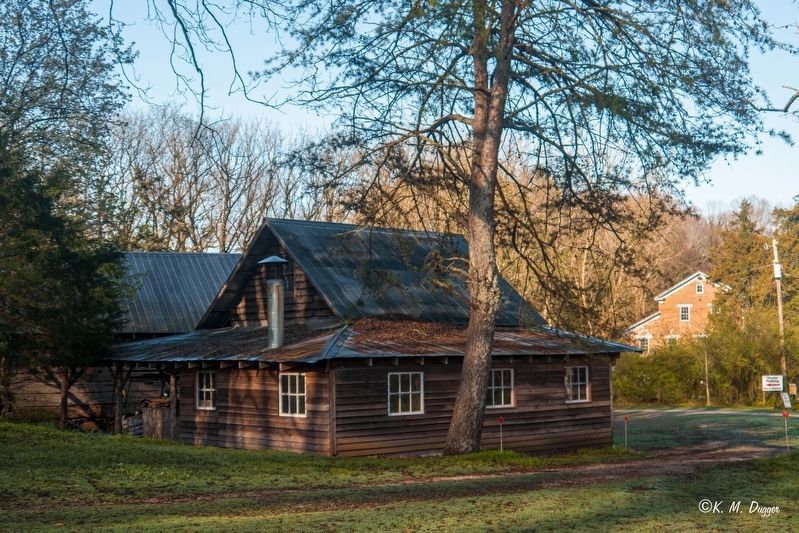
Photographed by Kyle Dugger, 32/20/2021
3. Blacksmith Shop
This is the Falls Mill blacksmith taken from the front porch of the Bed and Breakfast log cabin. Falls Mill can be seen in the background. The large flue vents the coal fired hand-built brick forge.
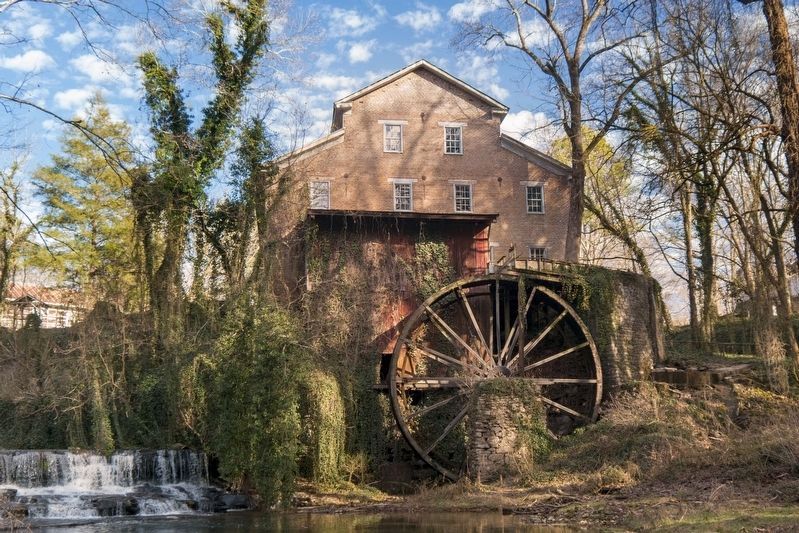
Photographed by Kyle Dugger, January 27, 2018
4. 32 Foot Fitz Water Wheel
This photo shows the 32' Fitz water that was installed at Falls Mill in 1906 which still powers machinery on all levels of the mill. It replaced an earlier wooden water. The mill race was moved from the North side of the building to the South side when this wheel was installed.
Since the mill is no longer commercially grinding they have been able to move their focus to the original purpose of Falls Mill, a textile factory. There is an excellent collection of textile machinery on the three main floors of the mill. On the first floor are the mill stones, an 1866 wool carding machine, and a Chandler and Price letterpress along with several other pieces of equipment used in both grain milling and textile production. On the second
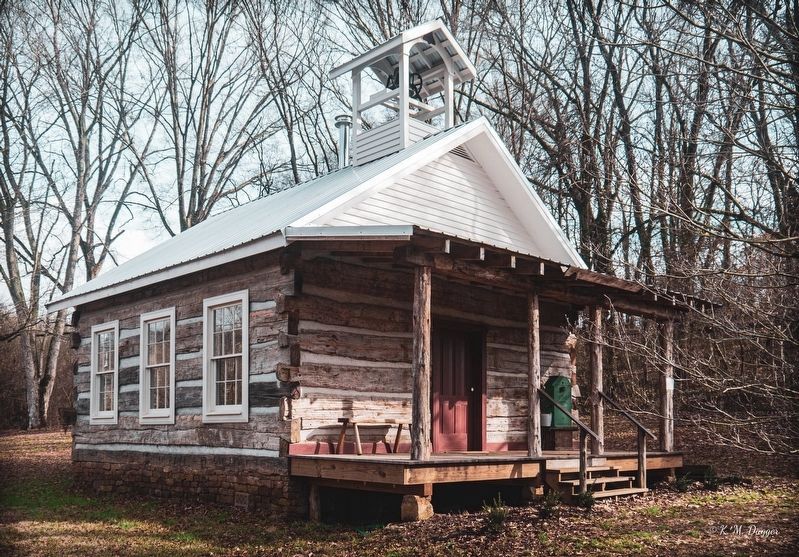
Photographed by Kyle Dugger, January 17, 2023
5. One Room Log School House
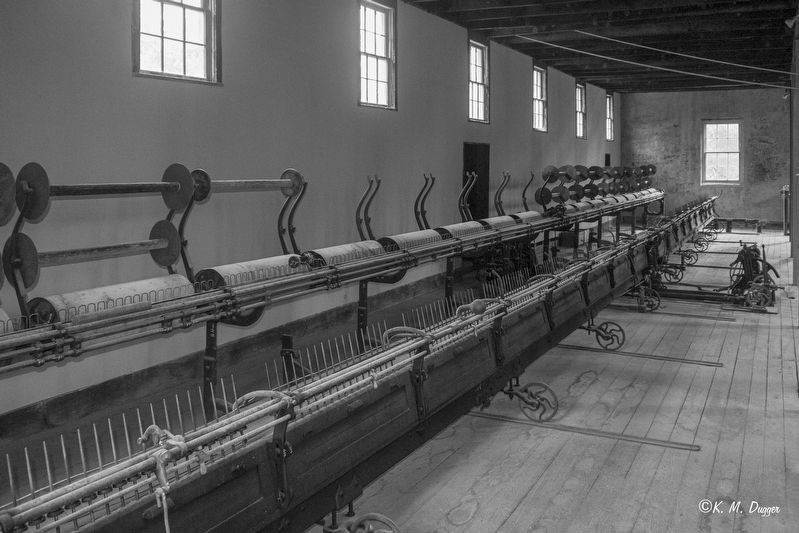
Photographed by Kyle Dugger, March 16, 2020
6. Spinning Mule
This is an 1883 model spinning mule that is located on the third floor of Falls Mill. It is a very complex and automatic machine used to spin yarn.
If spending the day watching flat belts tirelessly turn pulleys and shafts doesn’t sounds intriguing to you then the Bed and Breakfast might just hit the spot. It is an 1895 log cabin that has been transformed into the perfect retreat. Downstairs there is a small kitchen which is stocked with goodies from Janie’s kitchen, she is a fantastic cook. There is a wood burning fireplace that makes a great place to cuddle up and read a book during the chilly evenings of the winter months. Upstairs is the bedroom and bathroom, complete with a 1920s toilet. From the glider rocker on the front porch you can hear the sound of water rushing over the dam that provides water to power the mill. This is a great place to enjoy a cup of coffee in the morning with the delicious bread, muffins, or pastry that Janie has waiting in the kitchen for your breakfast. The cabin is a reminder of simpler times
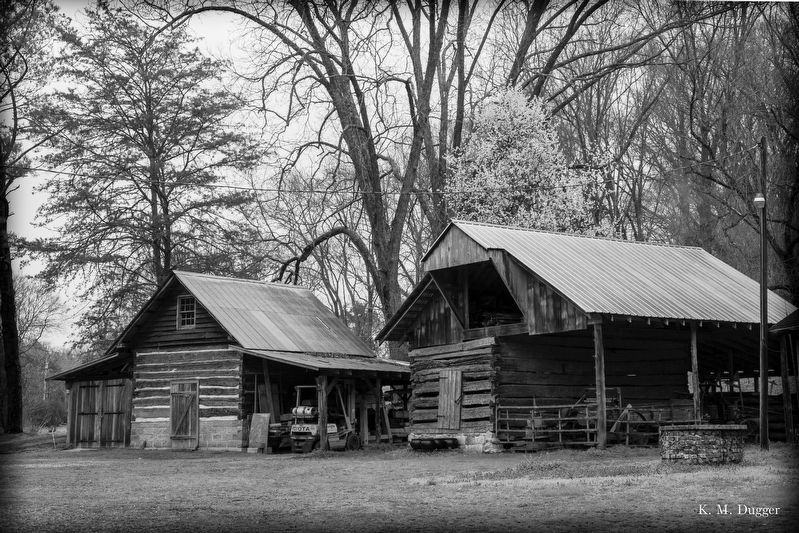
Photographed by Kyle Dugger, March 2, 2019
7. Falls Mill Shops
The building on the far left houses a blacksmith shop. This is a reproduction of the blacksmith shop that was once on the Falls Mill property. The original shop was located over the mill race and water for the forge could be accessed through a man hole cover.
Whether you are looking for a place to explore history, get away and relax, relive long forgotten childhood memories, or make new ones with your family; this could be just the place that you’ve been looking for. The Lovett’s are gracious host that have a passion for preserving history and teaching others about the past. The web site fallsmill.com has some of the history and contact information for the mill and the Bed and Breakfast. Who knows this place might just spark
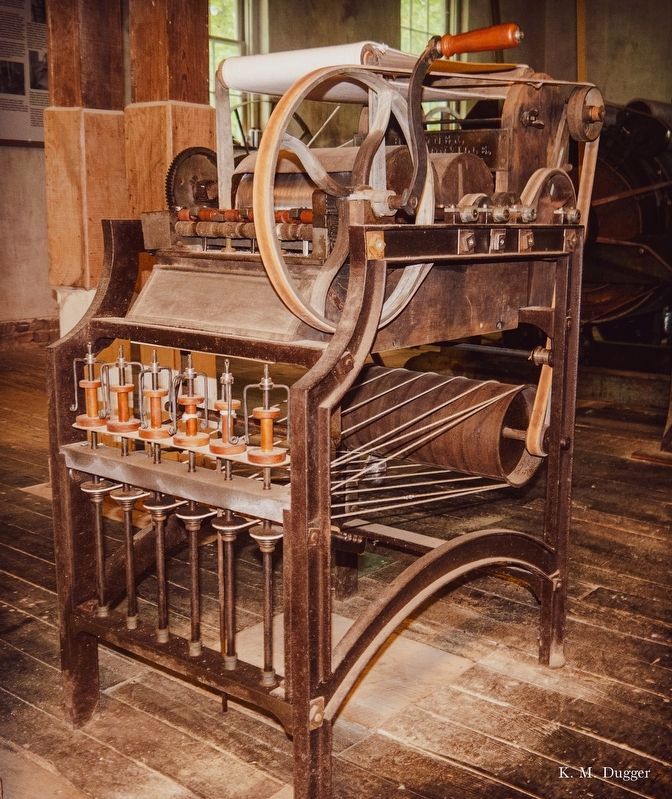
Photographed by Kyle Dugger, August 22, 2019
8. Falls Mill Plantation Spinner
This is a hand cranked machine that gins, cards, and spins cotton. The gins saws are arranged to create six streams of cotton. The raw cotton was placed on the feed apron on top of the machine and slowly feed to the saws. The seeds dropped down once the cotton was pulled off by the teeth of the saws and could be removed through a door under the feed bin. The spindles are powered by a single continuous band that is driven by the large drum at the rear of the machine.
— Submitted January 3, 2020, by Kyle Dugger of Troy, Tennessee.
Credits. This page was last revised on September 20, 2025. It was originally submitted on January 3, 2010, by Tom Gillard of Tullahoma, Tennessee. This page has been viewed 1,856 times since then and 60 times this year. Last updated on September 10, 2025, by Edward Troxel of Creal Springs, Illinois. Photos: 1, 2. submitted on January 3, 2010, by Tom Gillard of Tullahoma, Tennessee. 3. submitted on March 23, 2023, by Kyle Dugger of Troy, Tennessee. 4. submitted on January 3, 2020, by Kyle Dugger of Troy, Tennessee. 5, 6. submitted on March 23, 2023, by Kyle Dugger of Troy, Tennessee. 7, 8. submitted on January 3, 2020, by Kyle Dugger of Troy, Tennessee. • James Hulse was the editor who published this page.
