Rockwood in Wellington County, Ontario — Central Canada (North America)
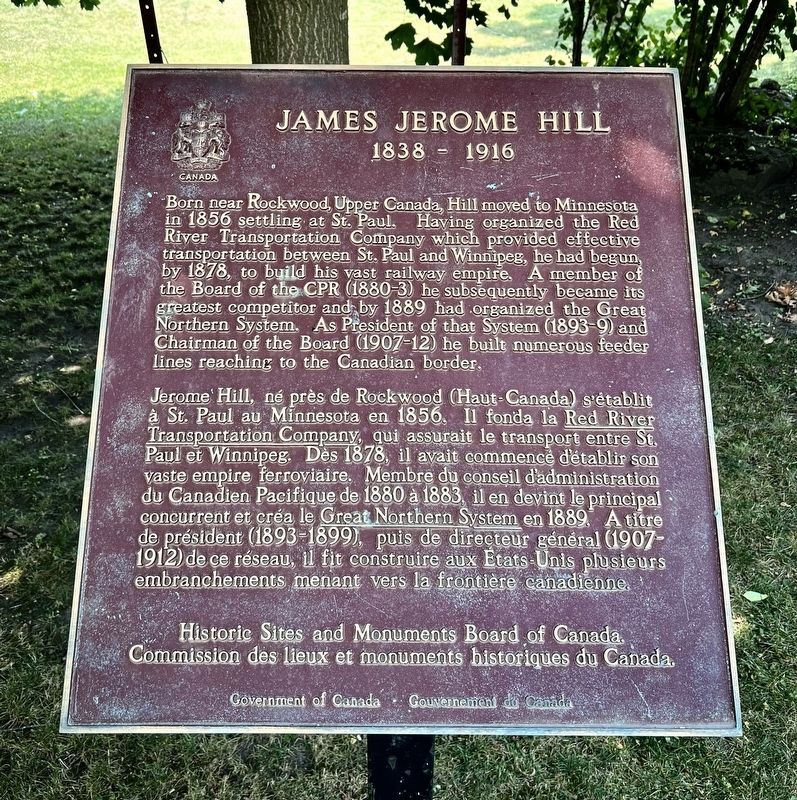
James Jerome Hill
1838 - 1916
Photographed by Tim Boyd, August 5, 2025
1. James Jerome Hill Marker

this page online
Erected by Government of Canada.
Topics and series. This historical marker is listed in this topic list: Railroads & Streetcars. In addition, it is included in the Canada, Historic Sites and Monuments Board series list. A significant historical year for this entry is 1856.
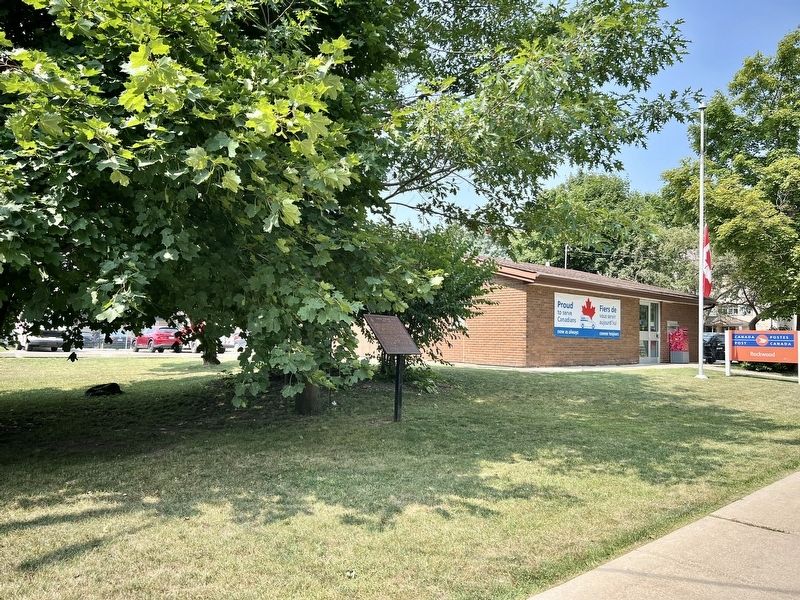
Location. 43° 36.97′ N, 80° 8.728′ W. Marker is in Rockwood, Ontario, in Wellington County. It is at the intersection of Guelph Street and Inkerman Street, on the right when traveling west on Guelph Street. Touch for map. Marker is at or near this postal address: 178 Guelph Street, Rockwood ON N0B N0B, Canada. Touch for directions.

Regionally, this marker is in the Huron-Perth-Waterloo-Wellington Area and in Southwestern Ontario. It is also in Central Canada. Globally, it is in North America, the Western Hemisphere, the Western World, and the Anglosphere. Historically, it finds itself in what was once a British colony, the Viceroyalty of New France, the Haudenosaunee (Iroquois) Confederacy, and Rupert’s Land.
Other nearby markers. At least 8 other markers are within 10 kilometers of this marker, measured as the crow flies: Rockwood Cenotaph
Photographed by Tim Boyd, August 5, 2024
2. James Jerome Hill Marker
Also see . . . Hill, James Jerome (Dictionary of Canadian Biography).
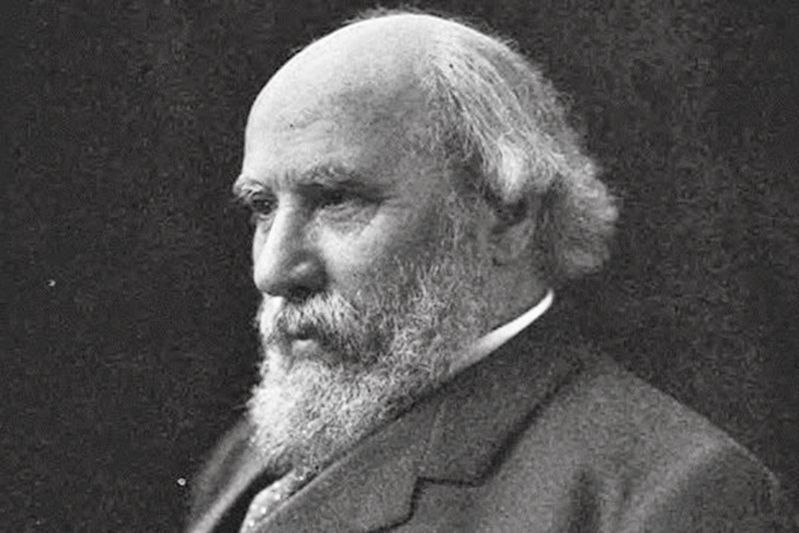
With his family pressed for money, Hill became a clerk in a grocery store in Rockwood and then in Guelph. Without a position from the fall of 1854, he left for New York in February 1856 and that summer accepted a clerkship with a commission and shipping firm in the booming city of St Paul, on the Mississippi. In 1865 he embarked on his own freight and forwarding business. The following year, in partnership, he built a warehouse, which was served by a siding of the St Paul and Pacific Railroad. An agreement in January 1867 gave him control of the line’s(Submitted on August 7, 2025, by Tim Boyd of Hamilton, Ontario.)riverside facilities and in September he took Egbert S. Litchfield, who had connections to the railway, into the business, freeing himself to pursue new interests, including the trade in coal.circa 19163. James Jerome Hill portrait, 1916Public domain
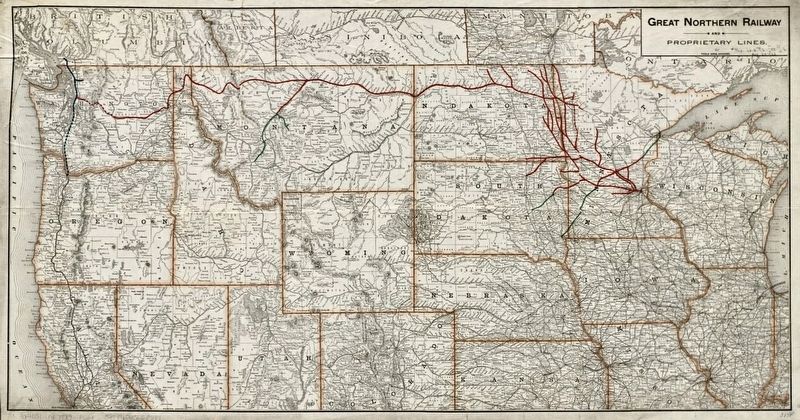
4. Map of the Great Northern Railroad in 1889
Boston Public Library (public domain)
Credits. This page was last revised on September 10, 2025. It was originally submitted on August 7, 2025, by Tim Boyd of Hamilton, Ontario. This page has been viewed 83 times since then and 14 times this year. Last updated on September 10, 2025, by Kevin Westell of St. Catharines, Ontario. Photos: 1, 2, 3, 4. submitted on August 7, 2025, by Tim Boyd of Hamilton, Ontario. • Devry Becker Jones was the editor who published this page.
