
Thorold in Niagara Region, Ontario — Central Canada (North America)
The Welland Mills
⎯⎯⎯
Le Moulin de Welland
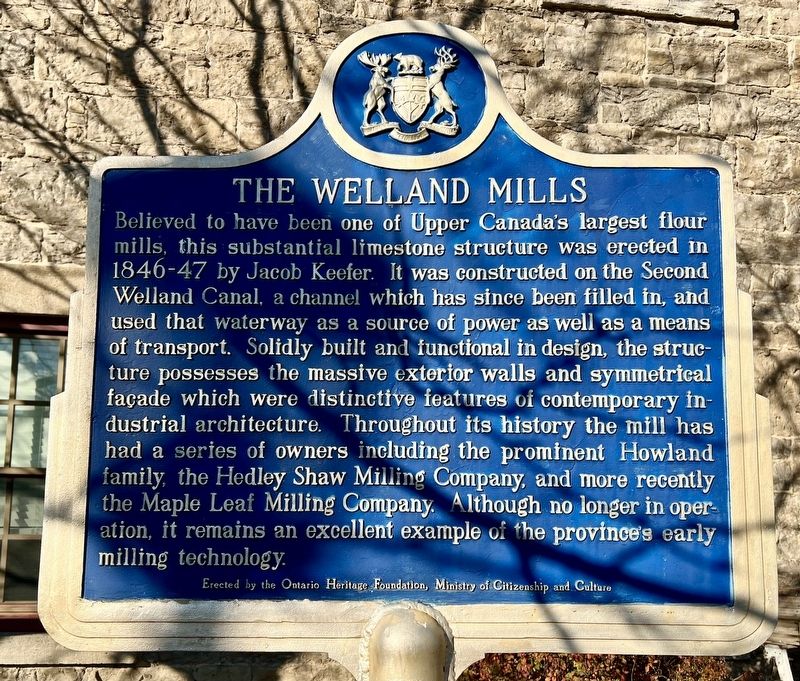
Photographed by Tim Boyd, November 7, 2024
1. The Welland Mills Marker

Erected by Ontario
this page online
Topics and series. This historical marker is listed in these topic lists: Architecture • Industry & Commerce. In addition, it is included in the Canada, Ontario Heritage Trust, and the The Welland Canals series lists. A significant historical year for this entry is 1846.
Location. 43° 7.539′ N, 79° 12.183′ W. Marker is in Thorold, Ontario, in Niagara Region. It is on Pine Street North 0.1 kilometers north of Albert Street East, on the right when traveling north. Touch for map. Marker is at or near this postal address: 20 Pine St N, Thorold ON L2V 0A1, Canada. Touch for directions.

Regionally, this marker is on Ontario’s Golden Horseshoe and in Niagara Canada. It is also in Central Canada. Globally, it is in North America, the Western Hemisphere, the Western World, and the Anglosphere. Historically, it finds itself in what was once a British colony, the Viceroyalty of New France, the Haudenosaunee (Iroquois) Confederacy, and Rupert’s Land.
Other nearby markers. At least 8 other markers are within walking distance of this marker: Millstone From Welland Mills c. 1846 (a few steps from
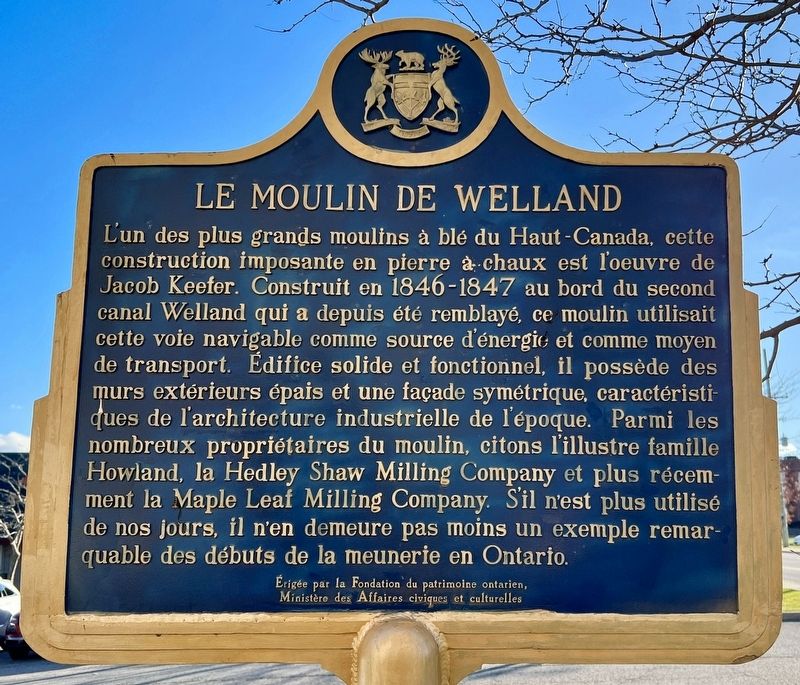
Photographed by Tim Boyd, November 7, 2024
2. The Welland Mills / Le Moulin de Welland Marker
Also see . . . Biggest flour mill in Canada, first cotton woven in Canada—both in Thorold.
From the opening of the Canal until the Manitoba wheat made its appearance upon the market, the Niagara district was unexcelled for the quantity and quality of its flour. A great many grist mills were in operation along the Canal, and thousands of barrels of flour were shipped each week to Montreal, and thence to Europe. hIn 1846, Jacob Keefer built the Welland Mills, then the largest in Canada. An advertisement in the Thorold Advocate in 1849 describes them as “in complete order for manufacturing from 200 to 300 barrels of flour per day, with ship elevator capable of discharging 1,000 bushels of wheat(Submitted on November 11, 2024, by Tim Boyd of Hamilton, Ontario.)per hour, and storage for 70,000 bushels of wheat and 5,000 barrels of flour.”Photographed by Tim Boyd, November 7, 20243. The Welland Mills / Le Moulin de Welland Marker
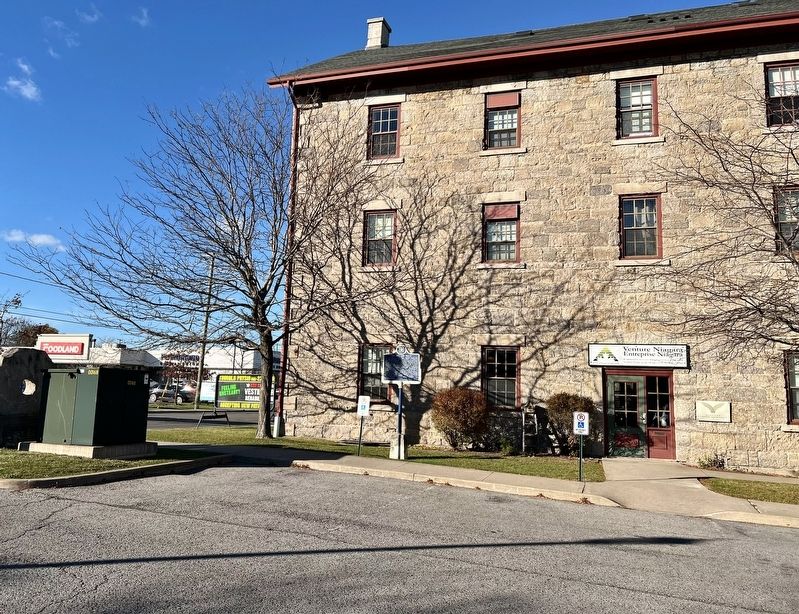
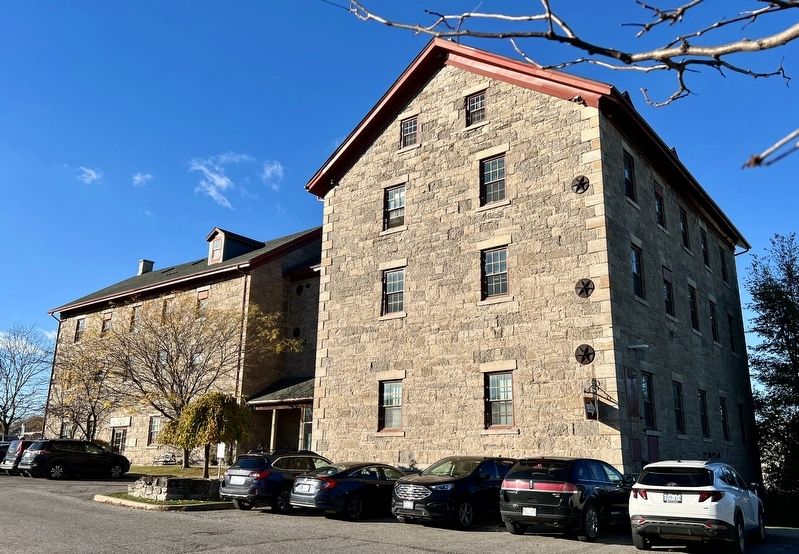
Photographed by Tim Boyd, November 7, 2024
4. The Welland Mills buildings, 2024

5. The Welland Mills ca 1900
Credits. This page was last revised on September 29, 2025. It was originally submitted on November 11, 2024, by Tim Boyd of Hamilton, Ontario. This page has been viewed 220 times since then and 32 times this year. Last updated on September 15, 2025, by Kevin Westell of St. Catharines, Ontario. Photos: 1, 2, 3, 4, 5. submitted on November 11, 2024, by Tim Boyd of Hamilton, Ontario. • Devry Becker Jones was the editor who published this page.
