Fanshawe in London in Middlesex County, Ontario — Central Canada (North America)
London Brewery
Photographed by Tim Boyd, September 14, 2025
1. London Brewery Marker
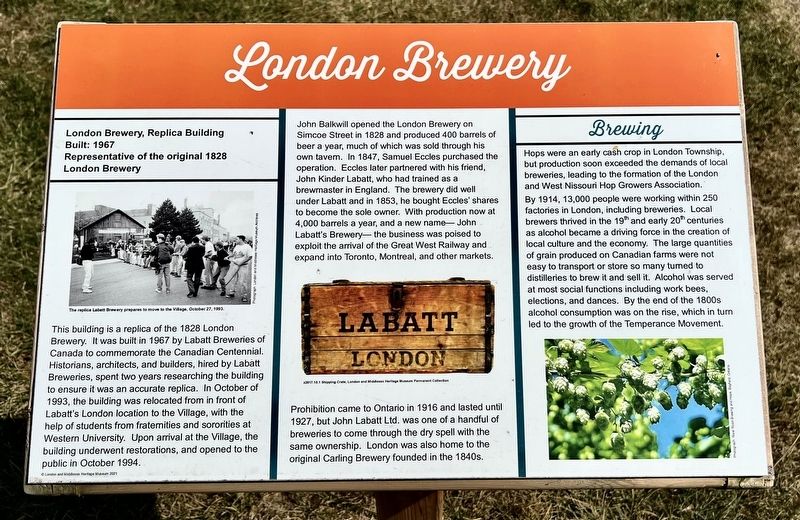
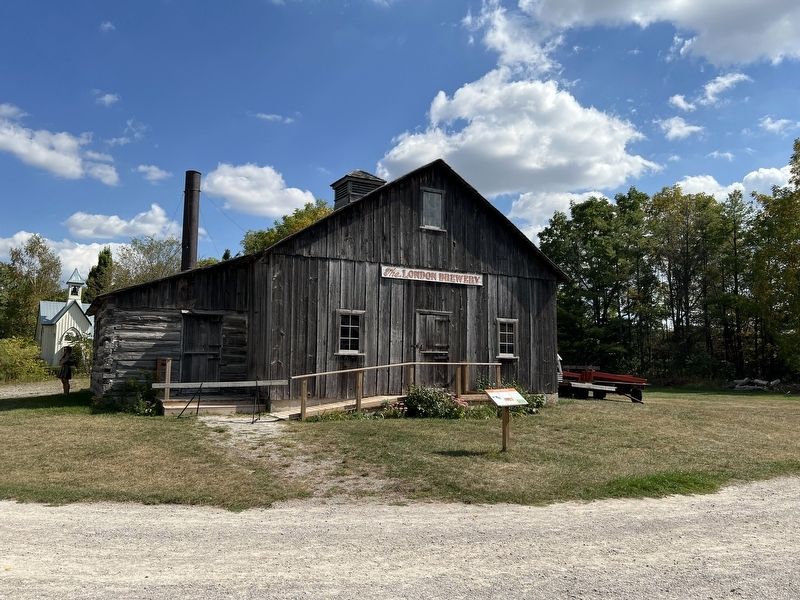
London Brewery, Replica Building
Built: 1967
Representative of the original 1828 London Brewery
This building is a replica of the 1828 London Brewery. It was built in 1967 by Labatt Breweries of Canada to commemorate the Canadian Centennial. Historians, architects, and builders, hired by Labatt Breweries, spent two years researching the building to ensure it was an accurate replica. In October of 1993, the building was relocated from in front of Labatt's London location to the Village, with the help of students from fraternities and sororities at Western University. Upon arrival at the Village, the building underwent restorations, and opened to the public in October 1994.
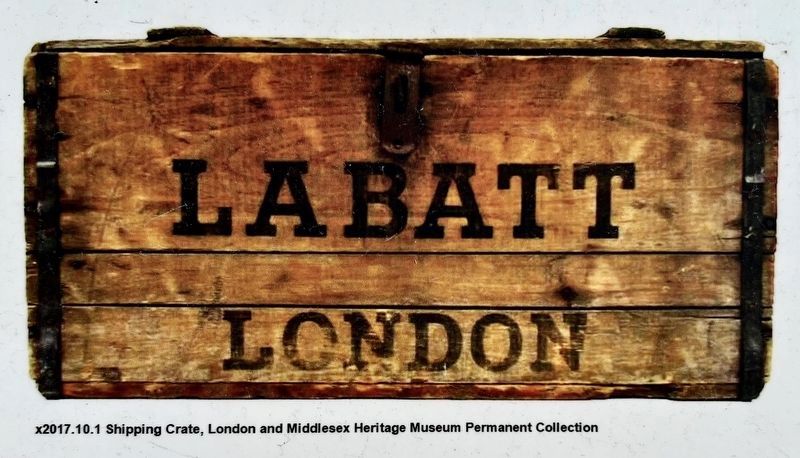
John Balkwill opened the London Brewery on Simcoe Street in 1828 and produced 400 barrels of beer a year, much of which was sold through his own tavern. In 1847, Samuel Eccles purchased the operation. Eccles later partnered with his friend, John Kinder Labatt, who had trained as a brewmaster in England. The brewery did well under Labatt and in 1853, he bought Eccles' shares to become the sole owner. With production now at 4,000 barrels a year,
this page online
Prohibition came to Ontario in 1916 and lasted until 1927, but John Labatt Ltd. was one of a handful of breweries to come through the dry spell with the same ownership. London was also home to the original Carling Brewery founded in the 1840s.
Brewing
Hops were an early cash crop in London Township, but production soon exceeded the demands of local breweries, leading to the formation of the London and West Nissouri Hop Growers Association.
By 1914, 13,000 people were working within 250 factories in London, including breweries. Local brewers thrived in the 19th and early 20th centuries as alcohol became a driving force in the creation of local culture and the economy. The large quantities of grain produced on Canadian farms were not easy to transport or store so many tured to distilleries to brew it and sell it. Alcohol was served at most social functions including work bees, elections, and dances. By the end of the 1800s alcohol consumption was on the rise, which
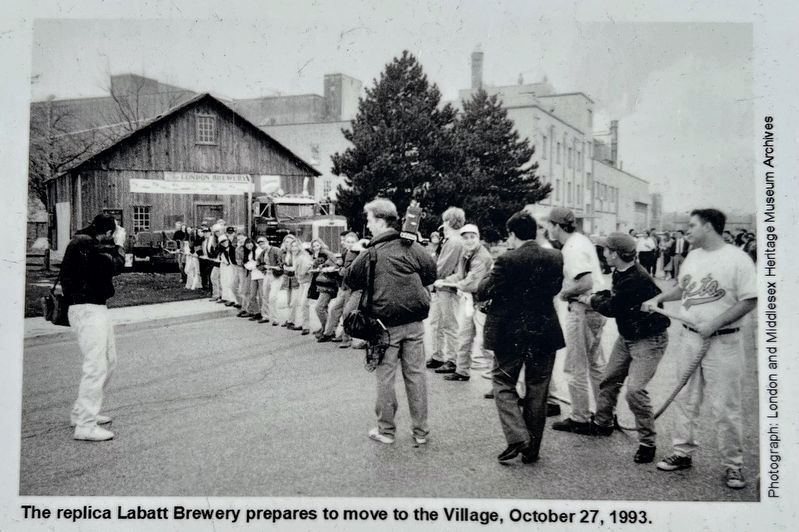
1993
2. London Brewery marker photo and caption detail (left)
Topics. This historical marker is listed in this topic list: Industry & Commerce. A significant historical year for this entry is 1828.
Location. 43° 3.272′ N, 81° 10.849′ W. Marker is in London, Ontario, in Middlesex County. It is in Fanshawe. It can be reached from Fanshawe Park Road East. The marker is on the grounds of the Fanshawe Pioneer Village, accessibility subject to its operating hours and requiring paid admission. The Village is accessed by driving east from the intersection of Clark Road and Veterans’ Parkway. Admission is paid at the entrance to the Fanshawe Conservation Area, and then follow signposts for approx. 2km to the Village. Touch for map. Marker is at or near this postal address: 2609 Fanshawe Park Road E, London ON N0M 2P0, Canada. Touch for directions.

Regionally, this marker is in the Southwest Ontario Area and in Southwestern Ontario. It is also in Central Canada. Globally, it is in North America, the Western Hemisphere, the Western World, and the Anglosphere. Historically, it finds itself in what was once a British colony, the Viceroyalty
3. London Brewery marker photo and caption detail (centre)
Other nearby markers. At least 8 other markers are within walking distance of this marker: Harmer Sawmill (a few steps from this marker); Denfield General Store (a few steps from this marker); The Cobbling Trade (a few steps from this marker); The W. Rigney Harness Shop (within shouting distance of this marker); Print Shop (within shouting distance of this marker); Village Hall (within shouting distance of this marker); Arrival of European Settlers (within shouting distance of this marker); Indigenous Peoples (within shouting distance of this marker). Touch for a list and map of all markers in London.
Photographed by Tim Boyd, September 14, 2025
4. London Brewery Marker
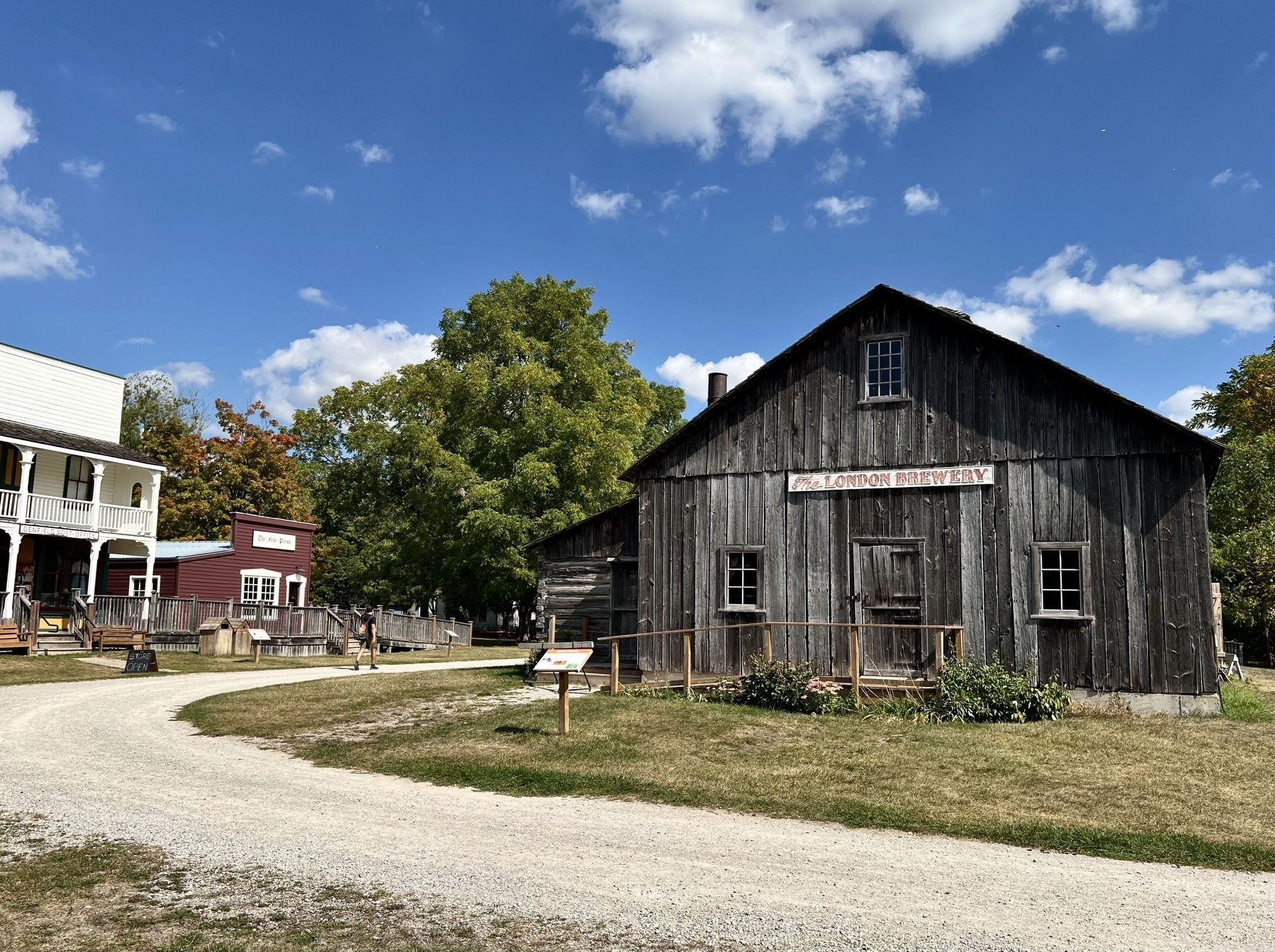
Photographed by Tim Boyd, September 14, 2025
5. London Brewery and Marker
Credits. This page was last revised on September 22, 2025. It was originally submitted on September 22, 2025, by Tim Boyd of Hamilton, Ontario. This page has been viewed 41 times since then and 11 times this year. Photos: 1, 2, 3, 4, 5. submitted on September 22, 2025, by Tim Boyd of Hamilton, Ontario. • Andrew Ruppenstein was the editor who published this page.
