Fanshawe in London in Middlesex County, Ontario — Central Canada (North America)
Fanshawe School S.S. #19

Photographed by Tim Boyd, September 14, 2025
1. Fanshawe School S.S. Marker
Fanshawe School S.S. #19, Original Building
Built: 1871, Middlesex County
London Township
Built in 1871, S.S. #19 was an improvement over the drafty log school that was its predecessor. Unfortunately, it was designed without consideration of proper ventilation and the schoolroom was often dark and smoky, especially during winter. Lighting was provided solely by natural sources until the installation of oil lamps in 1931. Water was drawn from a spring on the school property.
S.S. #19 closed in 1955, after providing education for more than three generations of residents and serving as a space for community functions, such as Christmas concerts, picnics, and social teas.
Thanks to the generosity of former teachers, students, and volunteers in the London community, this last surviving building of the once thriving hamlet of Fanshawe, for which the Village is named, was moved from its former site on Fanshawe Park Road in 1994.
School architecture was standardized and this 1871 school is typical of many in Middlesex County. All grades would be taught together in the one room. Until the School Act of 1871, school
this page online
The focus of early schools was to teach students the skills, and social and moral values thought necessary, by the majority, to become productive members of Canada's growing Anglocentric society. Even after 1871 the school experience varied drastically based on a student's race, ethnicity, religion, gender, economics, and location.
Outhouses were the only bathroom facilities available to S.S. #19 students until 1931, when chemical "sanitary closets" were installed at a cost of $300.
Segregated Education
In 1850, the School Act added a provision to the already-established separate-schools clause that allowed separate schools based on race to be created. As the Black population grew in Ontario, the majority of white parents, as well as school trustees were opposed to integration. This racism forced the opening of segregated schools.
Numerous petitions to the Education Department by Black parents called out exclusion from
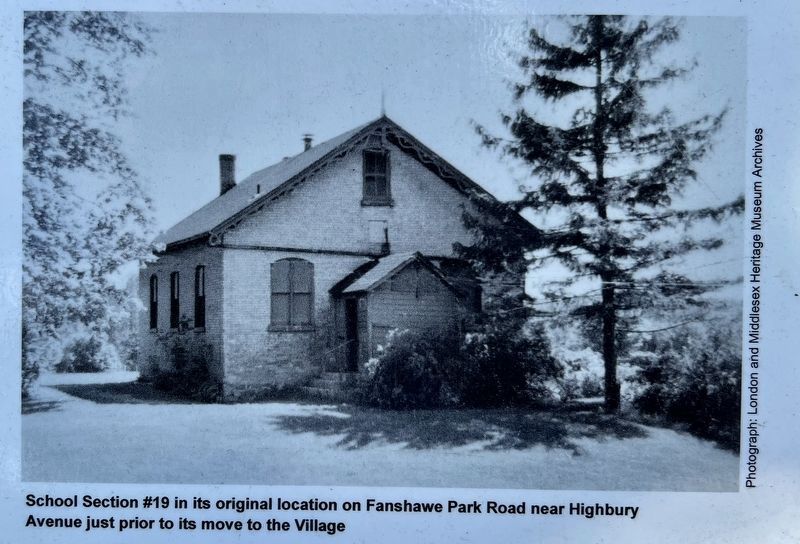
2. Fanshawe School S.S. #19 Marker photo and caption detail (left)
The first interracial school in London was the Colonial Church and School Society Mission School. It opened in 1854 when most schools in Canada were segregated. It closed in 1859 when all London schools became integrated.
The last segregated school in Ontario closed in 1965.
Topics. This historical marker is listed in these topic lists: African Americans • Architecture • Education. A significant historical year for this entry is 1871.
Location. 43° 3.282′ N, 81° 10.71′ W. Marker is in London, Ontario, in Middlesex County. It is in Fanshawe. It can be reached from Fanshawe Park Road East. The marker is on the grounds of the Fanshawe Pioneer Village, accessibility subject to its operating hours and requiring paid admission. The Village is accessed by driving east from the intersection of Clark Road and Veterans’ Parkway. Admission is paid at the entrance to the Fanshawe Conservation Area, and then follow signposts for approx. 2km to the Village. Touch for map. Marker is at or
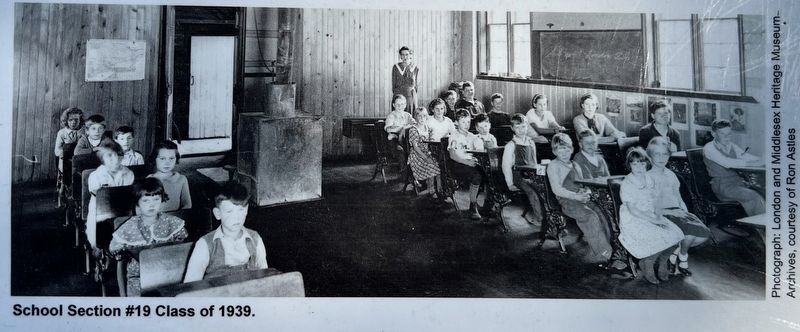
circa 1939
3. Fanshawe School S.S. #19 Marker photo and caption detail (centre)

Regionally, this marker is in the Southwest Ontario Area and in Southwestern Ontario. It is also in Central Canada. Globally, it is in North America, the Western Hemisphere, the Western World, and the Anglosphere. Historically, it finds itself in what was once a British colony, the Viceroyalty of New France, the Haudenosaunee (Iroquois) Confederacy, and Rupert’s Land.
Other nearby markers. At least 8 other markers are within walking distance of this marker: Jury House (within shouting distance of this marker); Caverhill Woodworking Shop (within shouting distance of this marker); Caverhill House (within shouting distance of this marker); Caverhill Stable (within shouting distance of this marker); Paul Peel (1860-1892) (about 90 meters away, measured in a direct line); Peel House (about 90 meters away); Tavern Carriage Shed (about 90 meters away); Alder’s Weaving Shed (about 90 meters away). Touch for a list and map of all markers in London.

Photographed by Tim Boyd, September 14, 2025
4. Fanshawe School S.S. #19 in 2025

Photographed by Tim Boyd, September 14, 2025
5. Fanshawe School S.S. #19 restored interior, 2025
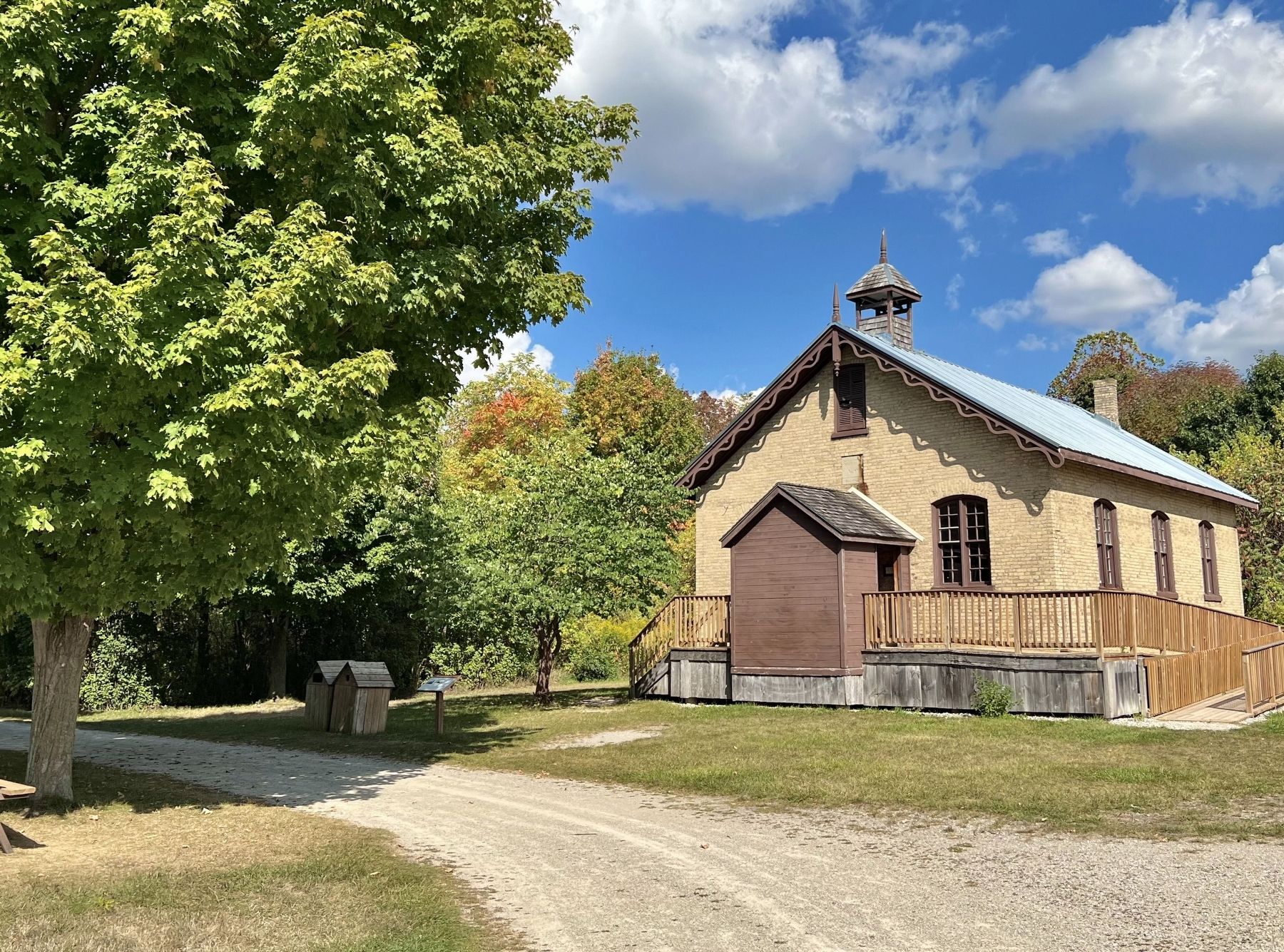
Photographed by Tim Boyd, September 14, 2025
6. Fanshawe School S.S. #19 and Marker
To the left of the building
Credits. This page was last revised on October 2, 2025. It was originally submitted on September 25, 2025, by Tim Boyd of Hamilton, Ontario. This page has been viewed 45 times since then and 18 times this year. Photos: 1, 2, 3, 4, 5, 6. submitted on September 25, 2025, by Tim Boyd of Hamilton, Ontario. • Andrew Ruppenstein was the editor who published this page.
