Fanshawe in London in Middlesex County, Ontario — Central Canada (North America)
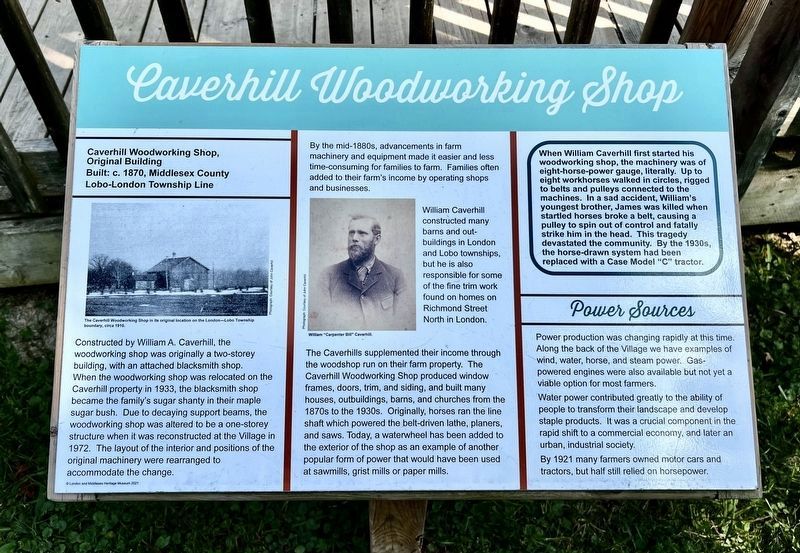
Caverhill Woodworking Shop
Photographed by Tim Boyd, September 14, 2025
1. Caverhill Woodworking Shop Marker
Caverhill Woodworking Shop, Original Building
Built: c. 1870, Middlesex County
Lobo-London Township Line
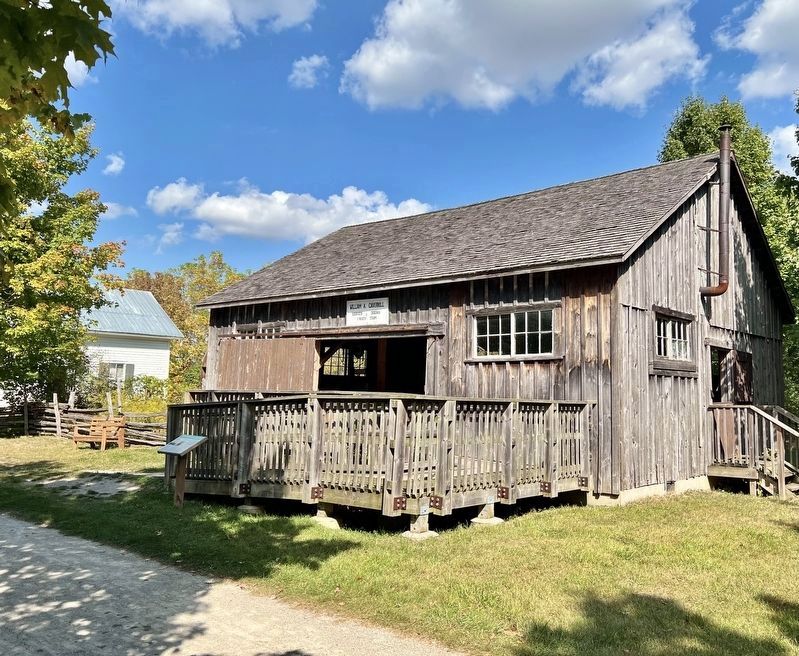
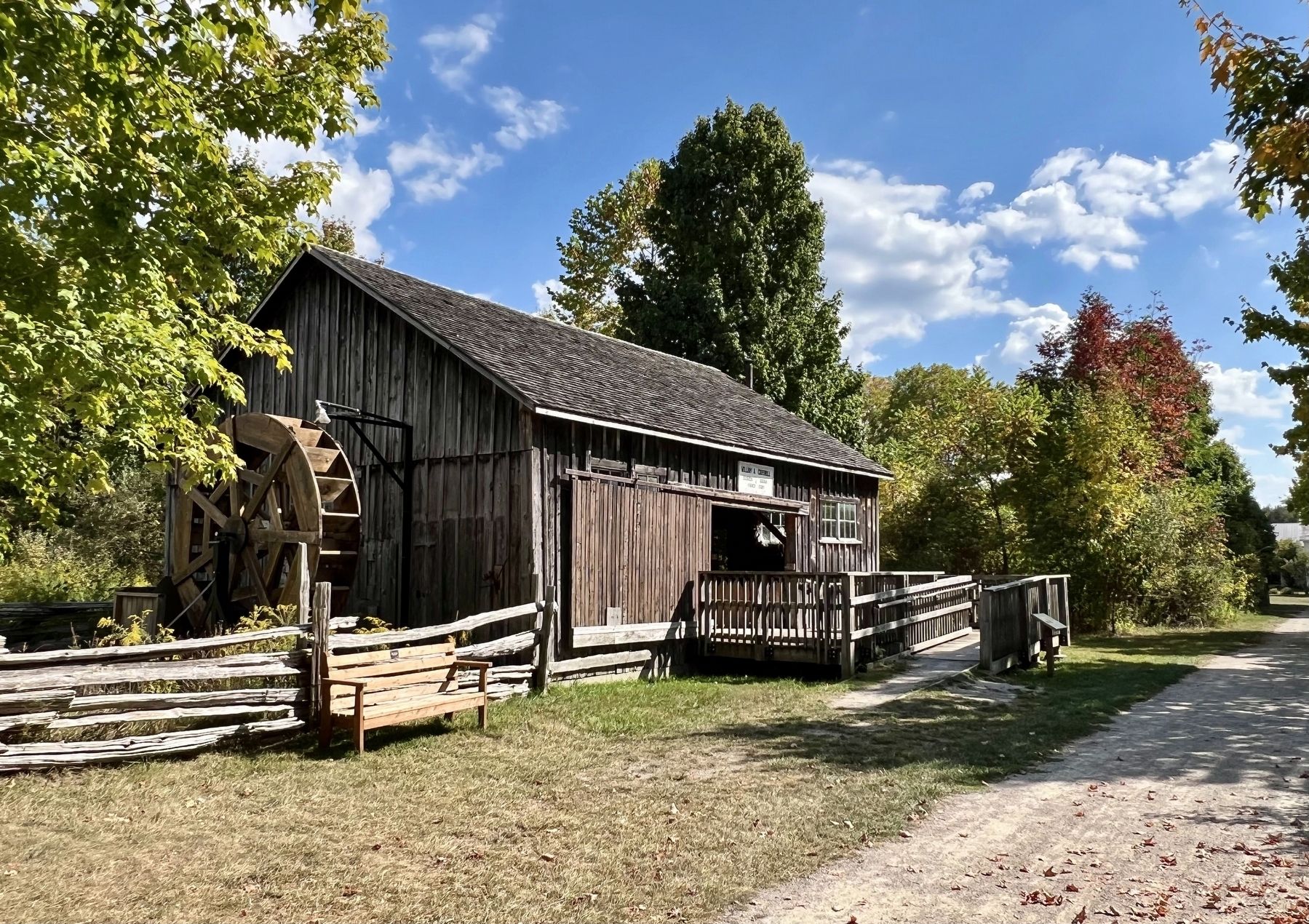
Constructed by William A. Caverhill, the woodworking shop was originally a two-storey building, with an attached blacksmith shop. When the woodworking shop was relocated on the Caverhill property in 1933, the blacksmith shop became the family's sugar shanty in their maple sugar bush. Due to decaying support beams, the woodworking shop was altered to be a one-storey structure when it was reconstructed at the Village in 1972. The layout of the interior and positions of the original machinery were rearranged to accommodate the change.
By the mid-1880s, advancements in farm machinery and equipment made it easier and less time-consuming for families to farm. Families often added to their farm's income by operating shops and businesses.
William Caverhill constructed many barns and outbuildings in London and Lobo townships, but he is also responsible for some of the fine trim work found on homes on Richmond Street North in London.
The Caverhills supplemented their income through the woodshop run on their farm
this page online
When William Caverhill first started his woodworking shop, the machinery was of eight-horse-power gauge, literally. Up to eight workhorses walked in circles, rigged to belts and pulleys connected to the machines. In a sad accident, William's youngest brother, James was killed when startled horses broke a belt, causing a pulley to spin out of control and fatally strike him in the head. This tragedy devastated the community. By the 1930s, the horse-drawn system had been replaced with a Case Model "C" tractor.
Power Sources
Power production was changing rapidly at this time. Along the back of the Village we have examples of wind, water, horse, and steam power. Gas-powered engines were also
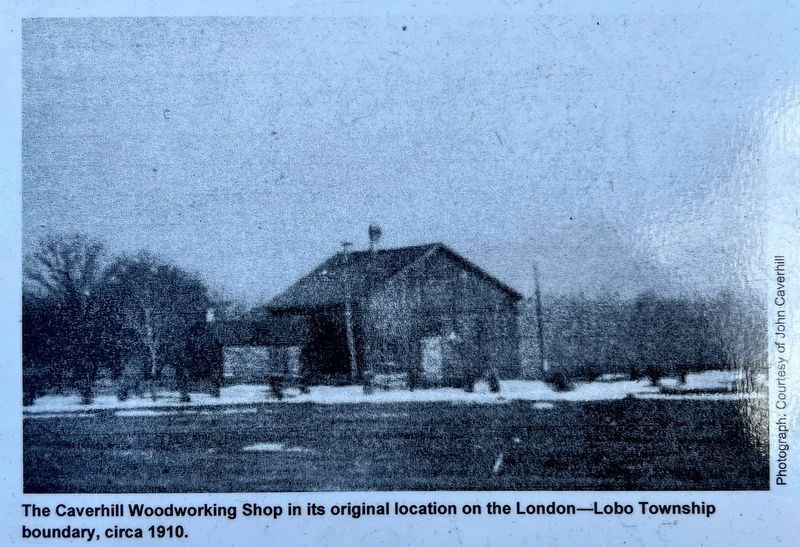
circa 1910
2. Caverhill Woodworking Shop marker photo and caption detail (left)
Water power contributed greatly to the ability of people to transform their landscape and develop staple products. It was a crucial component in the rapid shift to a commercial economy, and later an urban, industrial society.
By 1921 many farmers owned motor cars and tractors, but half still relied on horsepower.
Topics. This historical marker is listed in this topic list: Industry & Commerce. A significant historical year for this entry is 1870.
Location. 43° 3.306′ N, 81° 10.712′ W. Marker is in London, Ontario, in Middlesex County. It is in Fanshawe. It can be reached from Fanshawe Park Road East. The marker is on the grounds of the Fanshawe Pioneer Village, accessibility subject to its operating hours and requiring paid admission. The Village is accessed by driving east from the intersection of Clark Road and Veterans’ Parkway. Admission is paid at the entrance to the Fanshawe Conservation Area, and then follow signposts for approx. 2km to the Village. Touch for map. Marker is at or near this postal address: 2609 Fanshawe Park Road E, London ON N0M 2P0, Canada. Touch for directions.

Regionally,
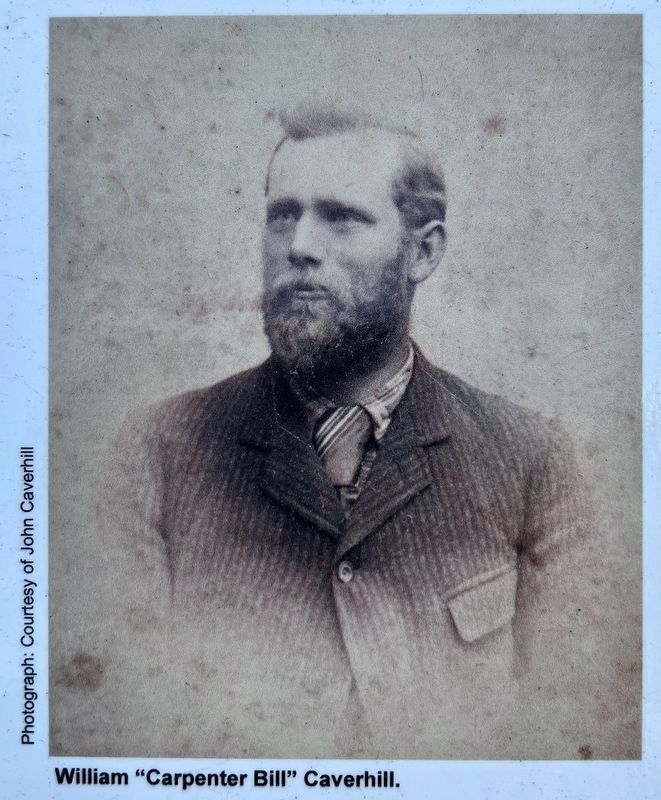
3. Caverhill Woodworking Shop marker photo and caption detail (centre)
Other nearby markers. At least 8 other markers are within walking distance of this marker: Caverhill House (within shouting distance of this marker); Caverhill Stable (within shouting distance of this marker); Fanshawe School S.S. #19 (within shouting distance of this marker); Tavern Carriage Shed (within shouting distance of this marker); Mount Moriah Masonic Lodge (within shouting distance of this marker); Jury House (within shouting distance of this marker); Lochaber Church (about 90 meters away, measured in a direct line); Lochaber Carriage Shed (about 90 meters away). Touch for a list and map of all markers in London.
Photographed by Tim Boyd, September 14, 2025
4. Caverhill Woodworking Shop Marker
Photographed by Tim Boyd, September 14, 2025
5. Caverhill Woodworking Shop, 2025
Credits. This page was last revised on October 2, 2025. It was originally submitted on September 25, 2025, by Tim Boyd of Hamilton, Ontario. This page has been viewed 64 times since then and 25 times this year. Photos: 1, 2, 3, 4, 5. submitted on September 25, 2025, by Tim Boyd of Hamilton, Ontario. • Andrew Ruppenstein was the editor who published this page.
