
Leesylvania in Prince William County, Virginia — The American South (Mid-Atlantic)
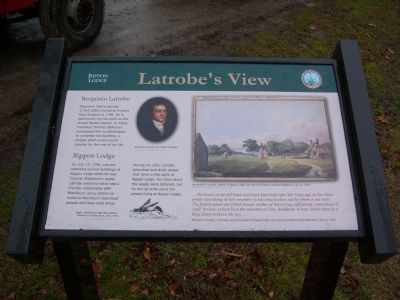
Latrobe's View
Rippon Lodge
Photographed by Kevin W., February 22, 2008
1. Latrobe's View Marker
Benjamin Latrobe
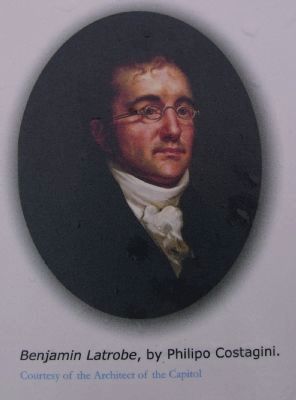
Benjamin Henry Latrobe (1764-1820) moved to Virginia from England in 1796. He is best known for his work on the United States Capitol. In 1803, President Thomas Jefferson summoned him to Washington to complete the building, a project which preoccupied Latrobe for the rest of his life.
Rippon Lodge
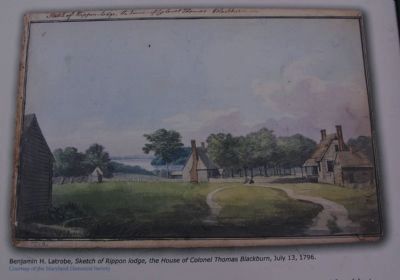
On July 13, 1796, Latrobe sketched several buildings at Rippon Lodge while he was Thomas Blackburn’s guest. Latrobe seems to have had a friendly relationship with Blackburn, since letters he wrote to Blackburn described people who they both knew.
During his visit, Latrobe described and drew wasps that lived in the walls at Rippon Lodge. His notes about the wasps were detailed, but he did not write about the people living at Rippon Lodge.
…The house on the left hand must have been built near 100 Years ago, as the oldest people now living do not remember to have heard when and by whom it was built. The family makes use of both houses, neither of them being sufficiently commodious of itself. It seems to have been the intention of Coln. Blackburn to have united them by a large Room between the two…
BenjaminLatrobe’s comments about his Sketch of Rippon Lodge, the House of Colonel Thomas Blackburn, July 13, 1796.
Click or scan to see
this page online
Erected 2007 by Prince William County.
Topics. This historical marker is listed in these topic lists: Animals • Arts, Letters, Music • Settlements & Settlers. A significant historical month for this entry is July 1935.
Location. This marker has been replaced by another marker nearby. It was located near 38° 36.892′ N, 77° 16.697′ W. Marker was in Leesylvania, Virginia, in Prince William County. It could be reached from Admiral Black Drive west of Blackburn Road, on the left when traveling west. The marker along the old Potomac Path, and between Rippon Lodge and the new visitor parking. Touch for map. Marker was at or near this postal address: 15520 Blackburn Road, Woodbridge VA 22191, United States of America. Touch for directions.

Regionally, this marker was in the Washington Metropolitan Area, in Northern Virginia, and in the Piedmont. It was also in the American South, specifically in the Upper South, in the Mid-Atlantic, and on the Eastern Seaboard. Globally, it was in the North Atlantic Region, North America,
Photographed by Kevin W., February 22, 2008
2. Latrobe's View Marker
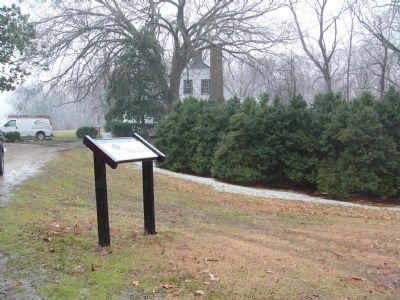
Rippon Lodge can be seen through the fog, just beyond the marker.
Other nearby markers. At least 8 other markers are within walking distance of this location: Rippon Lodge (a few steps from this marker); a different marker also named Latrobe's View (within shouting distance of this marker); Neabsco Creek (within shouting distance of this marker); Historic Landscape (within shouting distance of this marker); a different marker also named Centuries of History (within shouting distance of this marker); The Burying Ground (about 400 feet away, measured in a direct line); Stones, but No Bones (about 500 feet away); Collo. Richard Blackburn (about 700 feet away). Touch for a list and map of all markers in Leesylvania.
Other markers no longer nearby. Historic Landscape (was within shouting distance of this marker but has been replaced with another marker now near it); Centuries of History (was within shouting distance of this marker
Photographed by Kevin W., February 22, 2008
3. Benjamin H. Latrobe
Benjamin Latrobe, by Philipo Costagini. Courtesy of the Architect of the Capitol.
More about this marker. In the lower center of the marker is a drawing of a Mud Wasp sketched in July 1796 by Benjamin Latrobe. It is entitled, Masons or Dirtdaubers and provided for the marker courtesy of the Maryland Historical Society
Photographed by Kevin W., February 22, 2008
4. Picture on right of Latrobe's View Marker
Benjamin H. Latrobe, Sketch of Rippon Lodge, the House of Colonel Thomas Blackburn, July 13, 1796. Courtesy of the Maryland Historical Society
Photographed by Kevin W., February 22, 2008
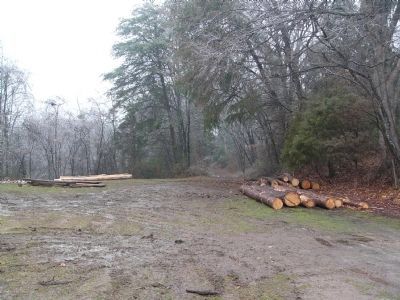
5. The Old Potomac Path, from the marker.
Credits. This page was last revised on October 2, 2025. It was originally submitted on February 22, 2008, by Kevin W. of Stafford, Virginia. This page has been viewed 2,121 times since then and 37 times this year. Last updated on October 1, 2025, by N. Jozsa of Woodbridge, Virginia. Photos: 1, 2, 3, 4, 5. submitted on February 22, 2008, by Kevin W. of Stafford, Virginia. • Devry Becker Jones was the editor who published this page.
