Northwest Portland in Multnomah County, Oregon — The American West (Northwest)
St. Patrick’s Roman Catholic Church and Rectory
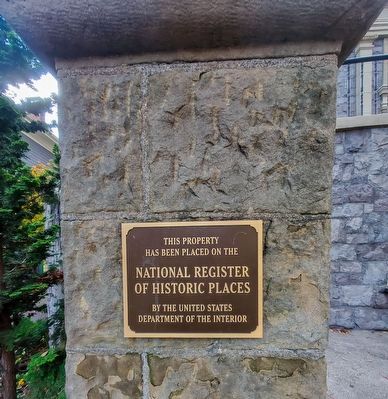
Photographed by Douglass Halvorsen, November 6, 2021
1. St. Patrick's Roman Catholic Church and Rectory Marker
Placed on the
National
Register of
Historic Places
by the United States
Department of the Interior
Topics and series. This historical marker is listed in this topic list: Religion & Religious Structures. In addition, it is included in the National Register of Historic Places (NRHP) series list.
Location. 45° 32.084′ N, 122° 41.447′ W. Marker is in Portland, Oregon, in Multnomah County. It is in Northwest Portland. It is at the intersection of Northwest 19th Avenue and NW Savier Street, on the right when traveling south on Northwest 19th Avenue. Touch for map. Marker is at or near this postal address: 1623 NW 19th Avenue, Portland OR 97209, United States of America. Touch for directions.

Regionally, this marker is in the Columbia River Gorge and in the Willamette Valley. It is also on the American Pacific Coast, in the Pacific Northwest, and in the Lewis & Clark Corridor. Globally, it is in North America, on the Ring of Fire, on the Pacific Rim, in the Western Hemisphere, in the Western World, and in the Anglosphere.
Other nearby markers. At least 8 other markers are within walking distance of this marker: Systems Building (approx. 0.9 miles away);
this page online
Also see . . . National Register of Historic Places Inventory Inventory - Nomination Form (1974). Statement of Significance
St. Patrick's Roman Catholic Church, completed in 1891, is the second oldest surviving church building of any denomination in the city of Portland still used for religious purposes. St. Patrick's played an important role in the religious, cultural and educational activities of several Northwest Portland ethnic settlements, especially the Irish and Croatian populations. For many who worked in the lumber mills, coal bunkers, Northern Pacific Railroad yards and the navigation yards located on the west side of the Willamette River in Portland, St. Patrick's was an important landmark in "Slabtown". Slabtown got its name from huge piles of slab piled around the lumber mills in the area. The Portland City(Submitted on October 11, 2025, by Douglass Halvorsen of Klamath Falls, Oregon.)Council designated the property a Portland Historical Landmark. The church and rectory are protected by city ordinance from precipitous demolition and unapproved exterior alterations.Photographed by Douglass Halvorsen, November 6, 20212. St. Patrick’s Roman Catholic Church and Rectory Marker
The laying of the cornerstone of St. Patrick's was celebrated during a widely attended ceremony on March 17, 1889, St. Patrick's Day. Over 5,000 Portlanders, many of whom had just paraded from downtown Portland watched in the rain as the 500-pound locally-quarried stone was hoisted into place at the corner of what is now NW 19th and Savier streets. Inside the cornerstone the group had placed numerous mementos of the times, both from Ireland and Oregon.
The plans as drawn up at the time the cornerstone was laid (1889) were not followed precisely. Kleeman intended the structure to be of brick masonry instead of stone. The foundation on which the cornerstone rests is of brick. A large portico surmounted by a statue of St. Patrick, eleven feet high was not built according to design. The builders followed Kleeman's concept for the remainder of the edifice.
The building of St. Patrick's, which was dedicated on the Saint's day, March 17, 1891, made heavy demands on parish funds. Bazaars, fairs, dinners and auctions were held in 1889, 1890 and 1891 to raise capital. Uponcompletion of the exterior, the interior was left entirely bare, with the rough inner surfaces of the stone walls exposed. The nation was in an economic recession and fund raising was a difficult task.Photographed by Douglass Halvorsen, November 6, 20213. St. Patrick’s Roman Catholic Church and Rectory
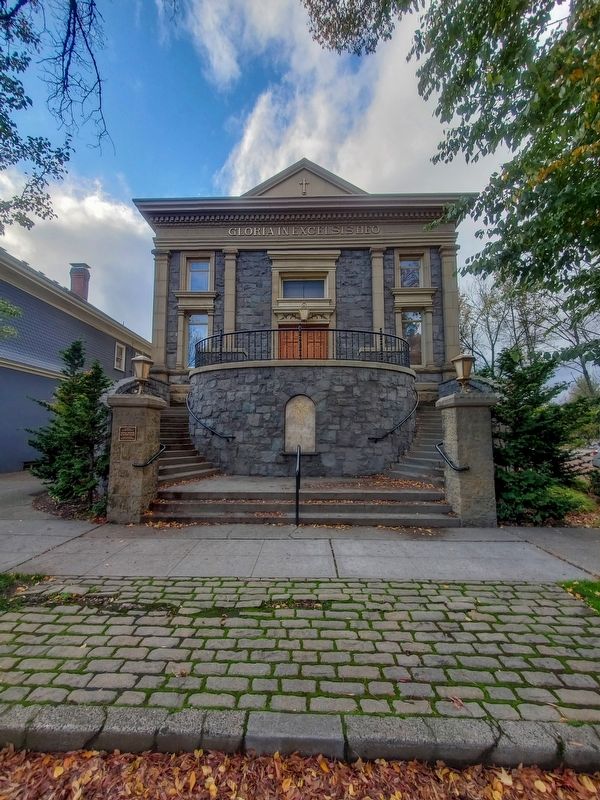
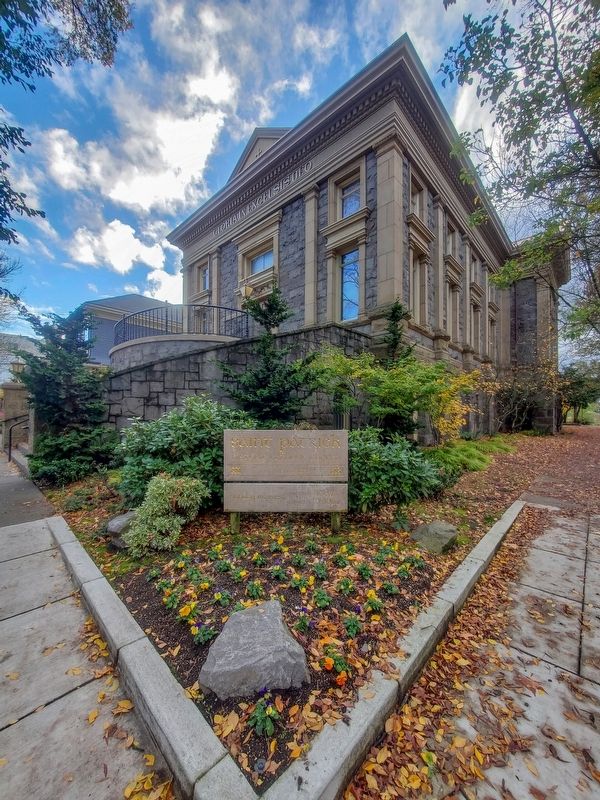
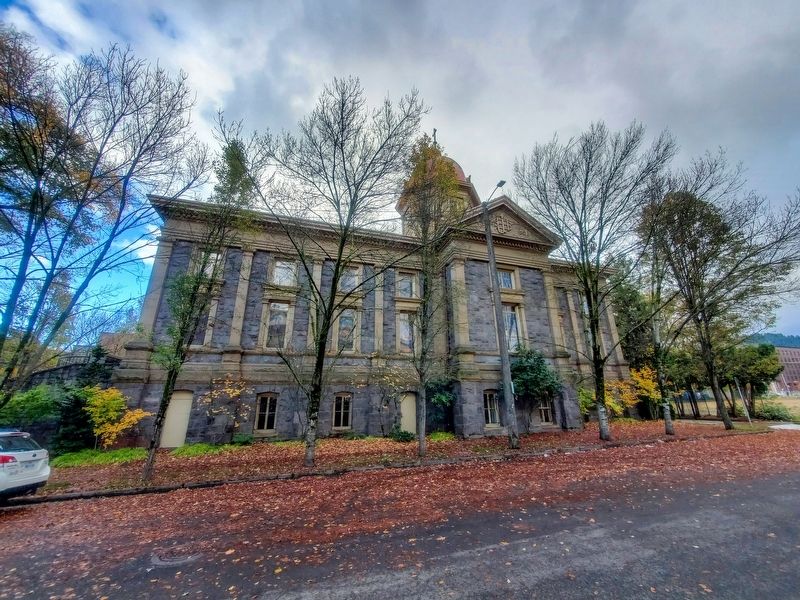
Photographed by Douglass Halvorsen, November 6, 2021
4. St. Patrick’s Roman Catholic Church and Rectory
Credits. This page was last revised on October 15, 2025. It was originally submitted on October 11, 2025, by Douglass Halvorsen of Klamath Falls, Oregon. This page has been viewed 93 times since then and 26 times this year. Photos: 1, 2, 3, 4. submitted on October 11, 2025, by Douglass Halvorsen of Klamath Falls, Oregon. • Andrew Ruppenstein was the editor who published this page.
