Central Area in Salem in Marion County, Oregon — The American West (Northwest)
Grand Theater & Odd Fellows Lodge
1900
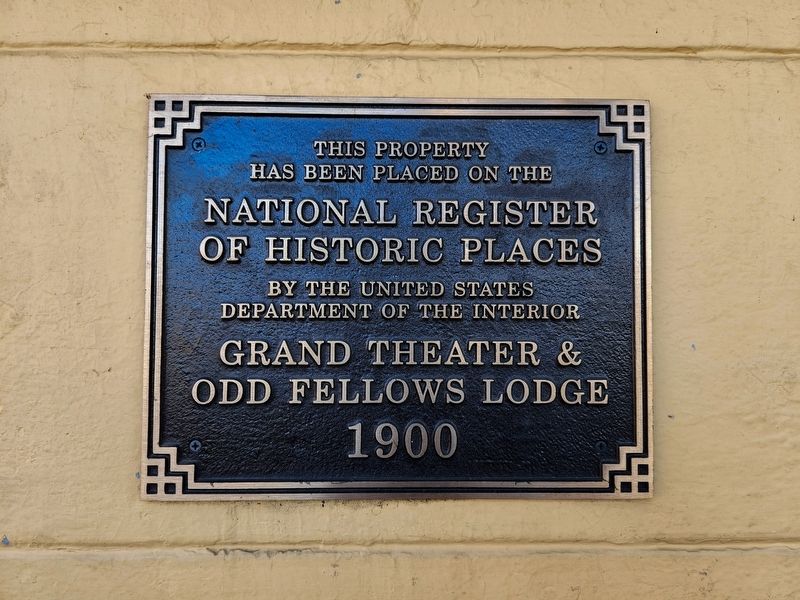
Photographed by Douglass Halvorsen, October 14, 2025
1. Grand Theater & Odd Fellows Lodge Marker
has been placed on the
National Register
of Historic Places
by the United States
Department of the Interior
Topics and series. This historical marker is listed in this topic list: Industry & Commerce. In addition, it is included in the National Register of Historic Places (NRHP) series list. A significant historical year for this entry is 1900.
Location. 44° 56.438′ N, 123° 2.216′ W. Marker is in Salem, Oregon, in Marion County. It is in the Central Area. It is at the intersection of High Street Northeast and Court Street, on the right when traveling east on High Street Northeast. Touch for map. Marker is at or near this postal address: 191 High Street NE, Salem OR 97301, United States of America. Touch for directions.

Regionally, this marker is in Oregon Wine Country and in the Willamette Valley. It is also on the American Pacific Coast, in the Pacific Northwest, and in the Lewis & Clark Corridor. Globally, it is in North America, in the Cascade Range, on the Ring of Fire, on the Pacific Rim, in the Western Hemisphere, in the Western World, and in the Anglosphere.
Other nearby markers. At
this page online
Also see . . . National Register of Historic Places Registration Form (1988). Statement of Significance:
Each of the component buildings was developed by the Odd Fellows in the historic period ending in 1936, which year marked completion of historic improvements. Progressive development of the property is illustrative of a common practice of the period. Fraternal organizations secured a solid financial underpinning for their charitable services by leasing space for commercial purposes in their buildings. The building's position opposite(Submitted on October 25, 2025, by Douglass Halvorsen of Klamath Falls, Oregon.)the location of the Marion County Courthouse reflects the stature of fraternal groups at the turn of the century. The Odd Fellows Temple and associated hotel have long provided a visual backdrop for the Courthouse Square, one of the key parcels for civic buildings concentrated at the center of the town plat.Photographed by Douglass Halvorsen, October 14, 20252. Grand Theater & Odd Fellows Lodge Marker
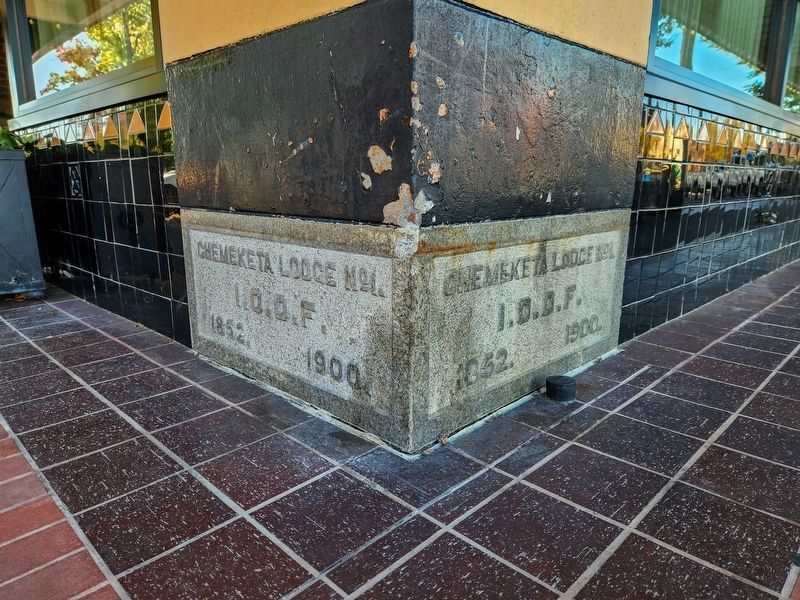
Notwithstanding its important contribution to the city's historic civic center, the property is primarily significant under Criterion A as the long-time headquarters of the state's "Mother Lodge" of Odd Fellowship. Chemeketa Lodge No. 1 was founded at Salem, Oregon Territory, in 1852. It was the first to be chartered in the Pacific Northwest. In the following, a statement concerning the contributions of fraternal organizations to communities in the American West during the Victorian period is provided as a context for evaluating the significance of the historic work of Chemeketa Lodge No.l. The latter included establishing a community cemetery and a public reading room; providing benefits to members and their survivors, and instituting new lodges.
Odd Fellowship was one of the first and most successful of over 200 fraternalorders founded in 19th Century America. Since 1900, Chemeketa Lodge's third floor hall and rooms have been home to Lodges of the Order in Oregon's capital. Commercial uses in lower floors not only provided income for support of the work of the Lodge, they influenced the development of Salem's central business district, its theatrical history, and its transportation system.Photographed by Douglass Halvorsen, October 14, 20253. Grand Theater & Odd Fellows Lodge Cornerstone
In Salem, as elsewhere, a high point of prosperity for fraternal organizations was reached in the late 1920s. By 1936, the year the last historic redesign of ground-story storefronts of the Odd Fellows Temple occurred, fraternal orders of all kinds were losing some of their former strength and influence to economic depression, institutionalized welfare programs, a more mobile population, and changing social values.
Criterion C is met by the buildings as the Opera House is one of two surviving examples of the Richardsonian Romanesque style of business buildings in Downtcwn Salem. Although lacking its original tower, it is of interest because of the smooth cement surface of the upper two stories. It is the only example by Salem's architect, Walter D. Pugh, knownto have survived in the downtown. Ihe lodge hall is preserved, intact spatially and in many features and is still used by I.O.O.F. lodges in Salem.Photographed by Douglass Halvorsen, October 14, 20254. Grand Theater & Odd Fellows Lodge
The business area of Downtown Salem has grown and changed around the buildings since World War II. This building is currently key point in the mass transportation system of the city, and its Grand Theatre is part of the current significant civic theater movement in this country.

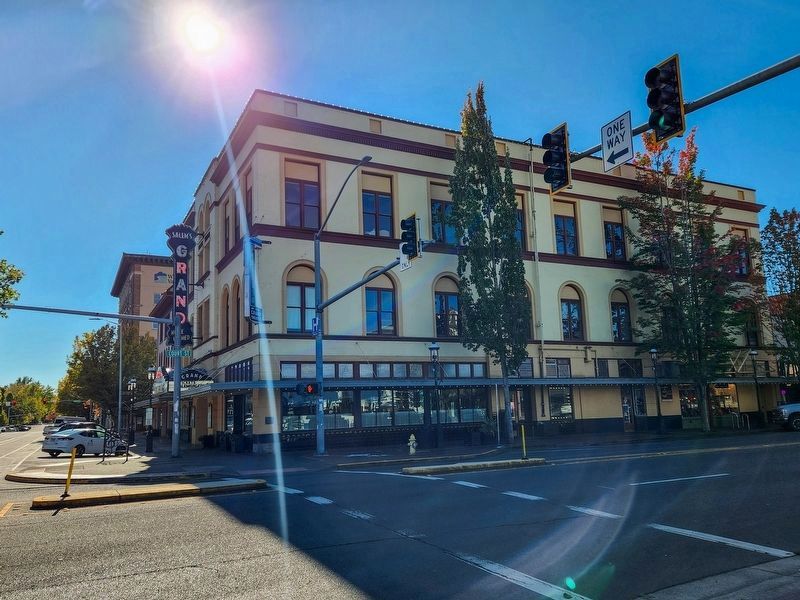
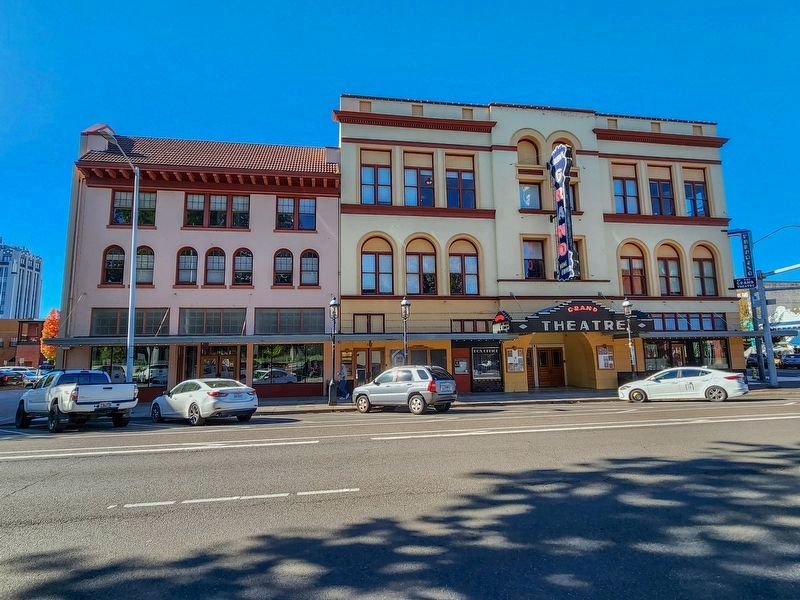
Photographed by Douglass Halvorsen, October 14, 2025
5. Grand Theater & Odd Fellows Lodge
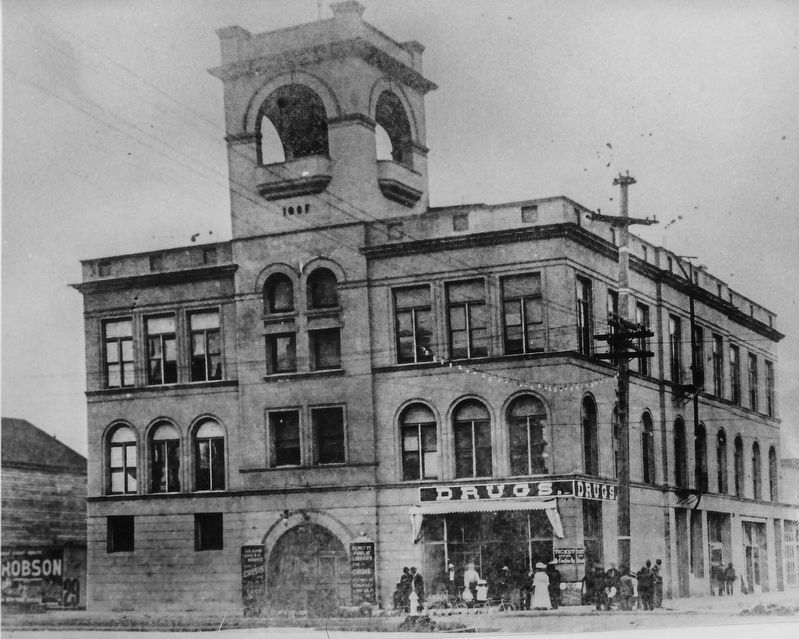
circa 1900
6. Chemeketa Lodge No. 1 Odd Fellows Building
Photo of the Odd Fellows Building, not long after its completion in 1900.
Credits. This page was last revised on October 27, 2025. It was originally submitted on October 25, 2025, by Douglass Halvorsen of Klamath Falls, Oregon. This page has been viewed 89 times since then and 51 times this year. Last updated on October 26, 2025, by Douglass Halvorsen of Klamath Falls, Oregon. Photos: 1, 2, 3, 4, 5. submitted on October 25, 2025, by Douglass Halvorsen of Klamath Falls, Oregon. 6. submitted on October 26, 2025, by Douglass Halvorsen of Klamath Falls, Oregon. • Devry Becker Jones was the editor who published this page.
