Cross Roads in Denton County, Texas — The American South (West South Central)
Roark-Griffith Pottery Site
Photographed by James Hulse, April 26, 2024
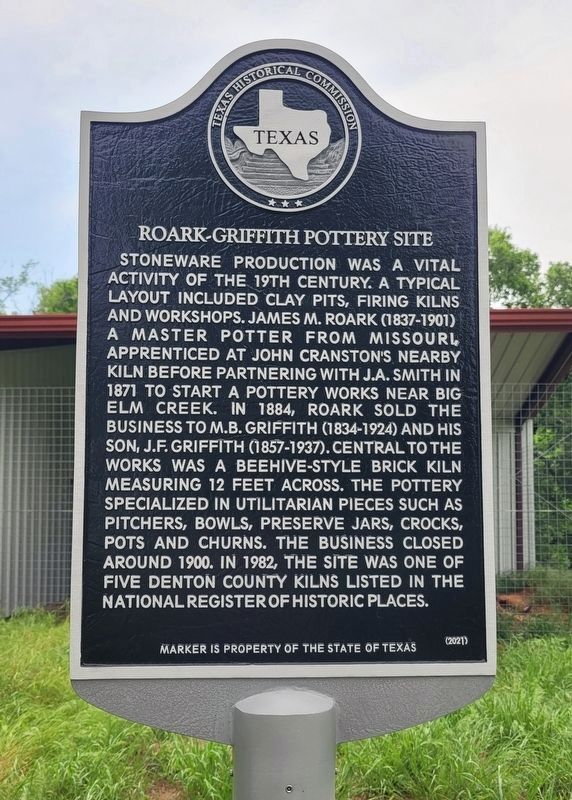
1. Roark-Griffith Pottery Site Marker
National Register of Historic Places Nomination Form
Click for more information.
Click for more information.
Erected 2021 by Texas Historical Commission. (Marker Number 23316.)
Topics. This historical marker is listed in this topic list: Industry & Commerce. A significant historical year for this entry is 1871.
Location. 33° 12.696′ N, 96° 59.892′ W. Marker is in Cross Roads, Texas, in Denton County. It is on Historic Lane half a mile west of Raylor Road, on the right when traveling west. Touch for map.
this page online

Regionally, this marker is in the Prairies & Lakes Region and in the Dallas-Fort Worth Metropolitan Area. Globally, it is in North America, a Gulf of Mexico state, the Western Hemisphere, the Western World, and the Anglosphere. Historically, it finds itself in what was once New Spain, the Republic of Texas, and one of the Confederate States of America.
Other nearby markers. At least 8 other markers are within 6 miles of this marker, measured as the crow flies: Taylor Family Cemetery (approx. 0.9 miles away); Oak Grove Methodist Church (approx. 1.4 miles away); William Edmunds Bates (approx. 1½ miles away); Harrington, Cassady and Clark Cemeteries (approx. 2 miles away); Button Memorial United Methodist Church (approx. 4.9 miles away); Community of Little Elm (approx. 5.1 miles away); Corinth Shiloh Cemetery (approx. 5.1 miles away); Cooper Creek Baptist Church (approx. 5.1 miles away).
More about this marker. Roark-Griffith Site — NPS Asset Detail (Ref. No. 82004501)
NPGallery
The nomination
Photographed by James Hulse, April 26, 2024
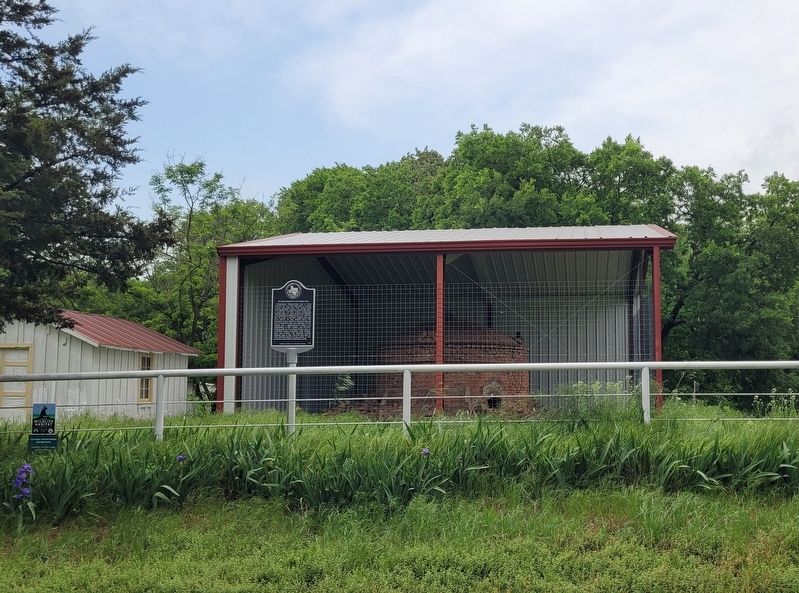
2. The view Roark-Griffith Pottery Site and Marker from the street
NPGallery
Citation of historical significance
The Roark-Griffith Site, listed August 21, 1982 (Ref. 82004501) as part of the “19th Century Pottery Kilns of Denton County” thematic group, is significant for its association with industry and art—specifically the stoneware pottery manufacture that played a role in the economic development of Denton County in the late 1800s
Also see . . . Roark-Griffith - Pieces of the Past: A History of Pottery in Denton County. Denton County Office of History and Culture
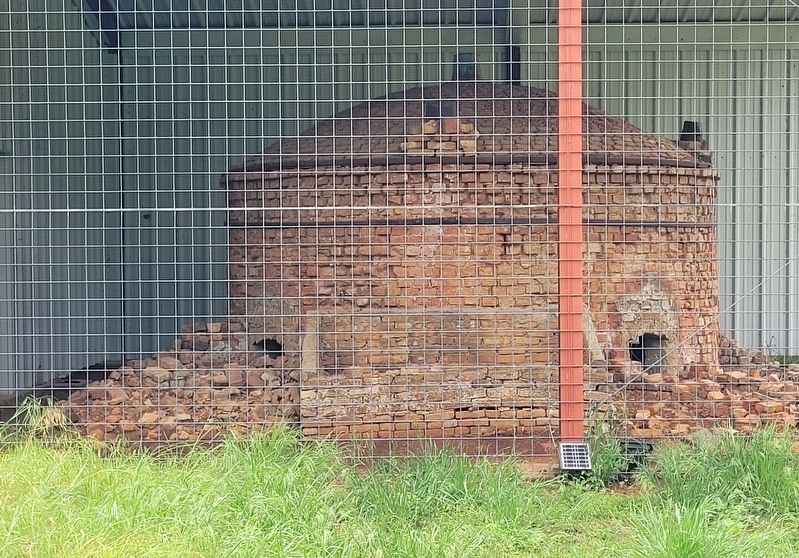
New settlers discovered that the clay-heavy soil of Denton County was great for making pottery, thus an industry was born. Between the mid-1800’s until the end of the 19th century, the field boomed and kilns became common infrastructure. In North Texas, making pottery proved to be a successful business venture. Local potters produced houseware for early settlers who were not able to bring those items during(Submitted on May 4, 2024, by James Hulse of Medina, Texas.)their move.Photographed by James Hulse, April 26, 20243. The beehive-style brick kiln
Credits. This page was last revised on November 11, 2025. It was originally submitted on May 3, 2024, by James Hulse of Medina, Texas. This page has been viewed 1,206 times since then and 141 times this year. Last updated on November 7, 2025, by Carolyn Sanders of Plano, Texas. Photos: 1, 2, 3. submitted on May 4, 2024, by James Hulse of Medina, Texas.
