Douglas in Chicago in Cook County, Illinois — The American Midwest (Great Lakes)
William J. Otterson
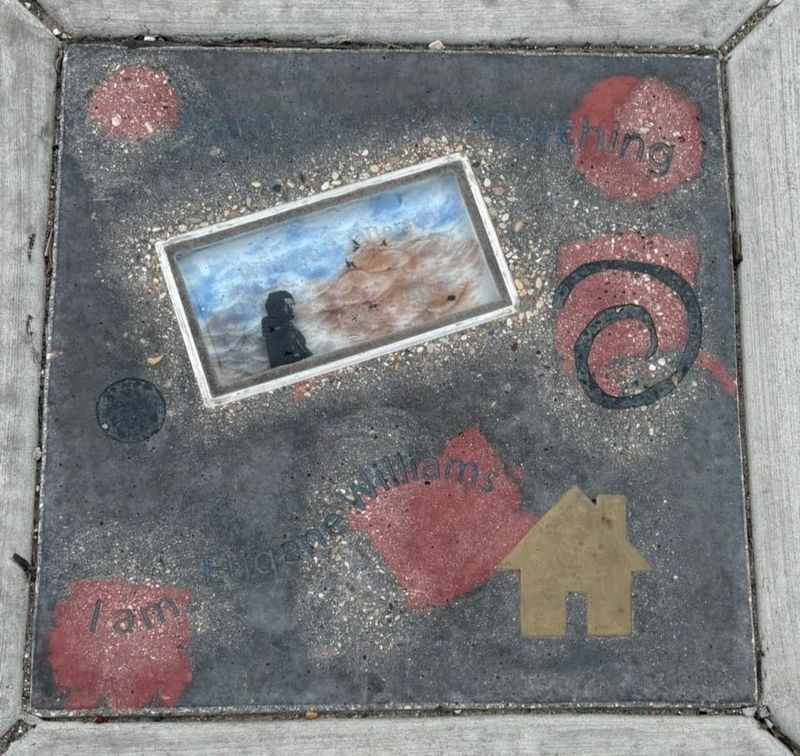
1885-1919
Photographed by Sean P. Flynn, April 14, 2025
1. William J. Otterson Marker
I am searching
I am Eugene Williams
Topics and series. This historical marker is listed in these topic lists: African Americans • Disasters. In addition, it is included in the Chicago Race Riot of 1919 Commemoration Project, Illinois series list. A significant historical date for this entry is July 28, 1919.
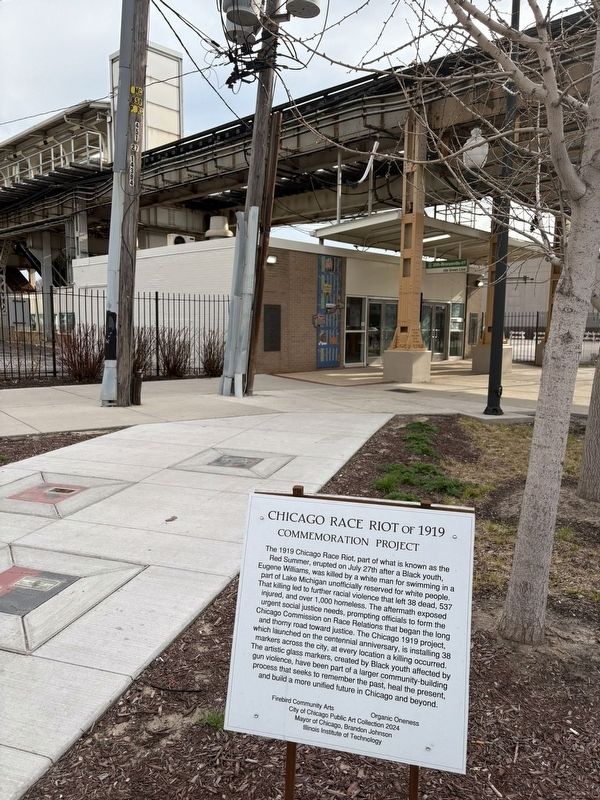
Location. 41° 49.87′ N, 87° 37.563′ W. Marker is in Chicago, Illinois, in Cook County. It is in Douglas. It is on East 35th Street east of South State Street, on the right when traveling west. The marker is just west of the entrance to the 35th-Bronzeville-IIT station on the CTA Green Line elevated train. Touch for map. Marker is in this post office area: Chicago IL 60616, United States of America. Touch for directions.

Regionally, this marker is on Chicago’s South Side and in Chicago’s Bronzeville. It is also in the American Midwest. Globally, it is in North America, on the Great Lakes, in the Western Hemisphere, in the Western World, and in the Anglosphere. Historically, it finds itself in what was once the Viceroyalty of New France, the territory of the Mississippian Culture, and the Northwest Territory.
this page online
Other nearby markers. At least 8 other markers are within walking distance of this marker: John Walter Humphrey (here, next to this marker); Edward Lee (here, next to this marker); Hymes Taylor (here, next to this marker); Chicago Race Riot of 1919 (here, next to this marker); Joseph Sanford (here, next to this marker); Welcome to Bronzeville (within shouting distance of this marker); a different marker also named Welcome to Bronzeville (within shouting distance of this marker); State Street (within shouting distance of this marker). Touch for a list and map of all markers in Chicago.
More about this marker. The sidewalk marker is one of 19 erected (including five at this location near 35th and State) by the Chicago Race Riot of 1919 Commemoration Project in remembrance of those killed during the deadly racial violence that gripped Chicago in the summer of 1919. Inspired by the Stolpersteine ("Stumbling Stones") project in Europe, which erects sidewalk markers honoring Holocaust victims, these markers in Chicago have been placed on sidewalks at sites where people were killed in 1919.
Regarding William J. Otterson. On July
Photographed by Sean P. Flynn, April 14, 2025
2. Five markers honoring the Chicago Race Riot of 1919
Five markers lead up to the CTA Green Line "L" stop at 35th-Bronzeville-IIT.
A day after Williams's death, on July 28, rumor spread that a white tenant of the Angelus, an all-white apartment building that stood not far from this location, had shot a Black child. A crowd of several hundred Black protesters converged at the Angelus, drawing more than 100 policemen to the scene. After they searched the building and found no one, a policeman was hit by a brick from a protester. Chaos ensued as police and protesters fought and traded gunfire.
William Otterson, an Irishman who was native of Isle of Man, came to the United States in 1904 and worked
Photographed by Sean P. Flynn, April 14, 2025
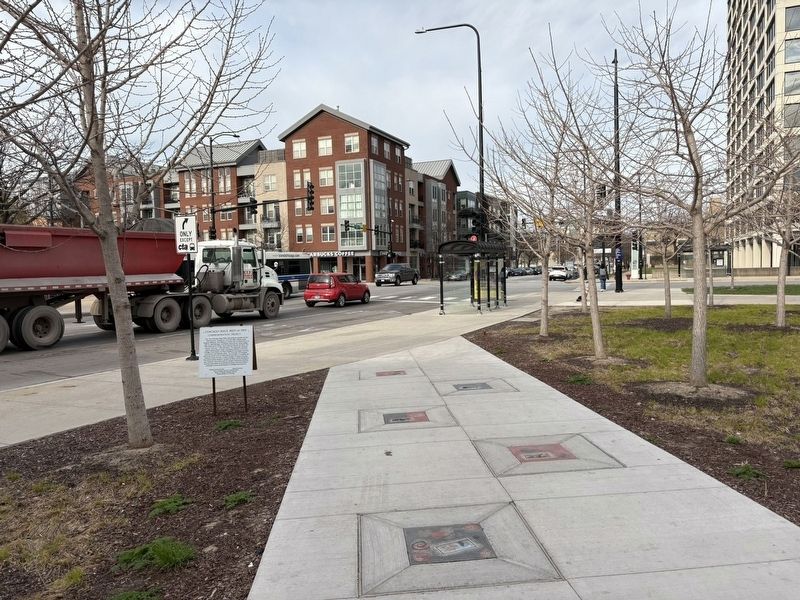
3. Hymes Taylor Marker
This marker is the next-to-last one before the sidewalk.
Also see . . . Commemorating the Killed: William Otterson. (Submitted on November 18, 2025, by Sean P. Flynn of Oak Park, Illinois.)
Chicago Daily News collection, Chicago History Museum, circa 1919
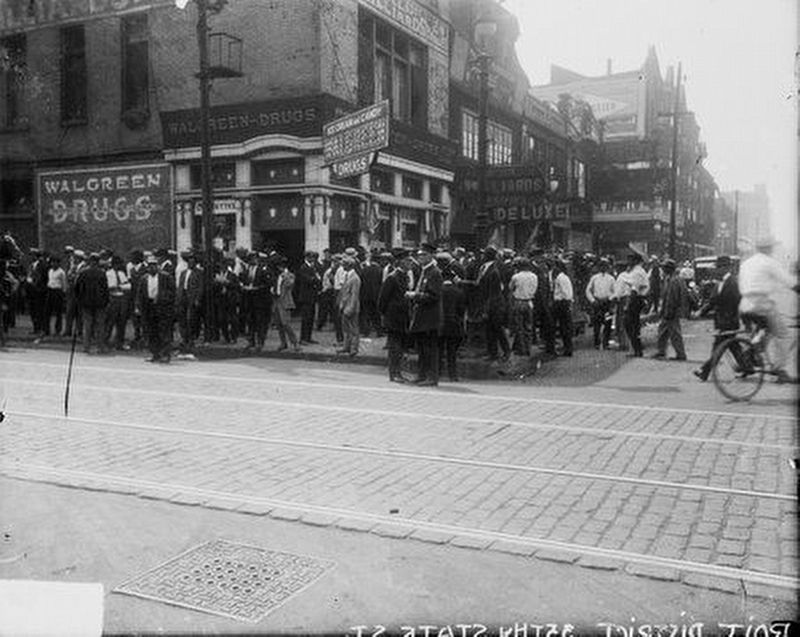
4. Black men crowd at 35th and State
This photo was taken very close to where this sidewalk marker is now located on 35th. The caption from the Chicago History Museum: "Crowd of African-American men standing on the sidewalks in front of a Walgreen Drugs at 3501 South State Street during a race riot in Chicago, Illinois, 1919. Police officers are standing at the forefront of the crowd."
Credits. This page was last revised on September 29, 2026. It was originally submitted on November 18, 2025, by Sean P. Flynn of Oak Park, Illinois. This page has been viewed 55 times since then and 28 times this year. Photos: 1. submitted on November 18, 2025, by Sean P. Flynn of Oak Park, Illinois. 2, 3. submitted on November 17, 2025, by Sean P. Flynn of Oak Park, Illinois. 4. submitted on November 18, 2025, by Sean P. Flynn of Oak Park, Illinois.
