Near Cerro Gordo in Inyo County, California — The American West (Pacific Coastal)
Saline Valley Salt Tram
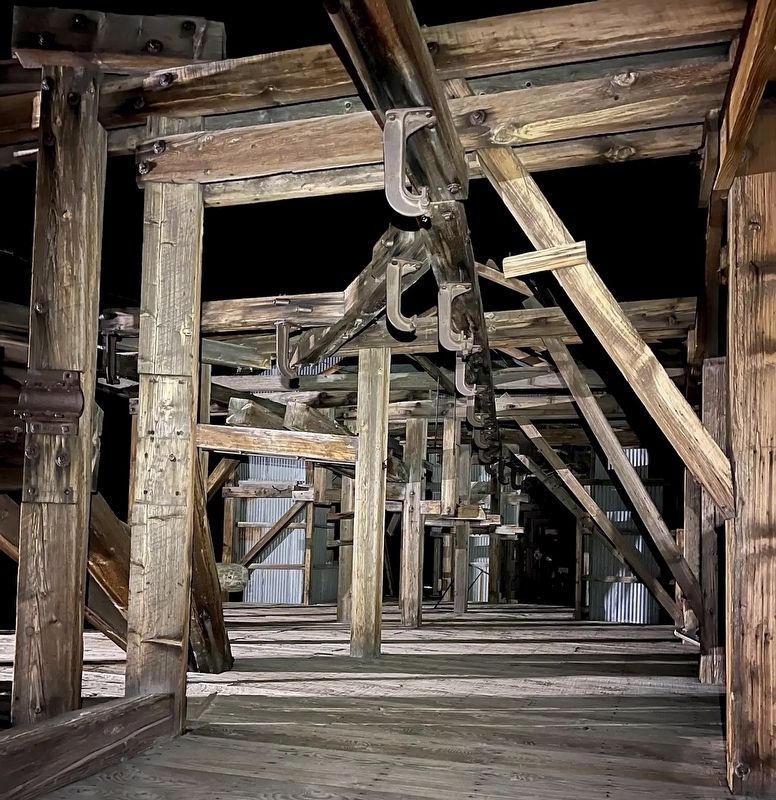
Salt Tram Summit Station
Photographed by Craig Baker
1. Saline Valley Salt Tram Marker
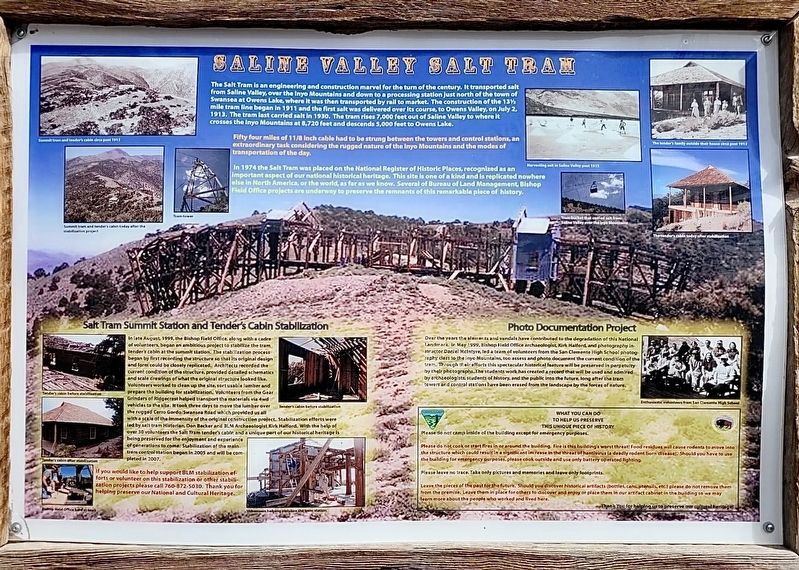
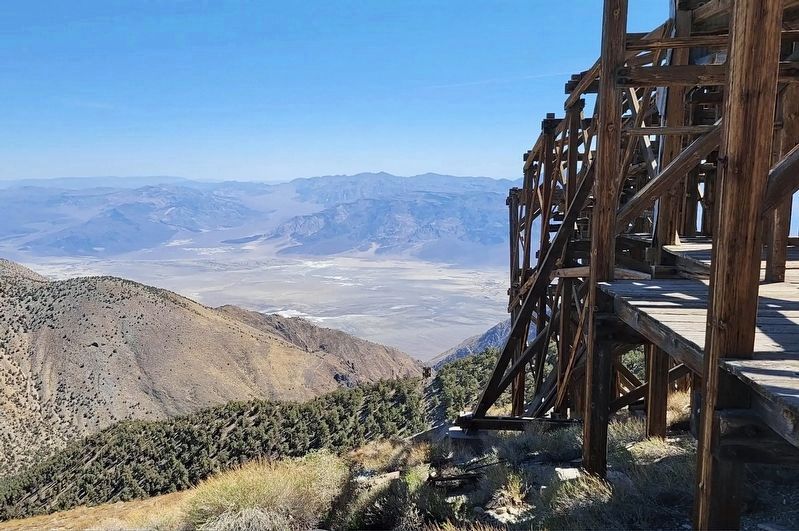
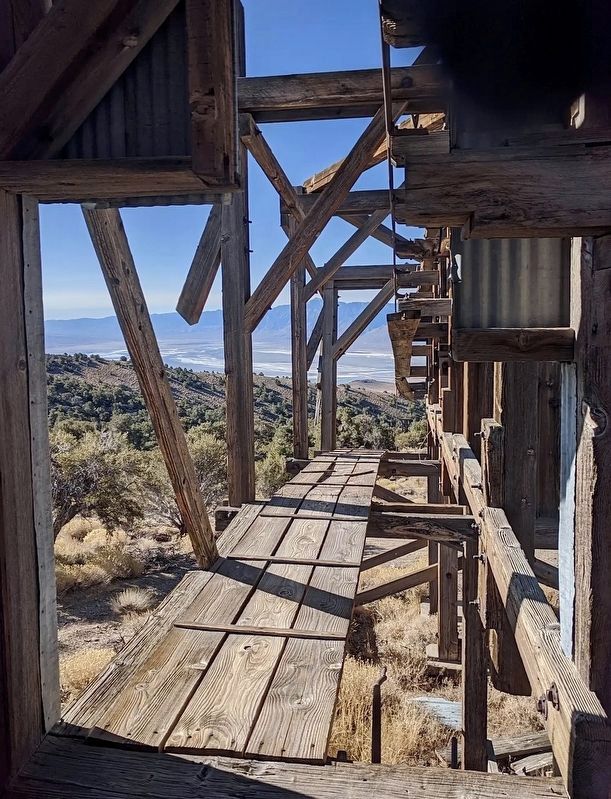
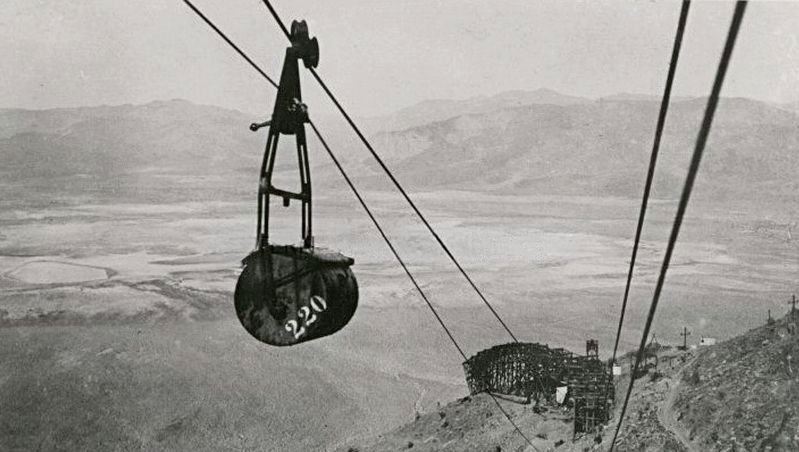
The Salt Tram is an engineering and construction marvel for the turn of the century. It transported salt from Saline Valley, over the Inyo Mountains and down to a processing station just north of the town of Swansea at Owens Lake, where it was then transported by rail to market. The construction of the 13½ mile tram line began in 1911 and the first salt was delivered over its course, to Owens Valley, on July 2, 1913. The tram last carried salt in 1930. The tram rises 7,000 feet out of Saline Valley to where it crosses the Inyo Mountains at 8,720 feet and descends 5,000 feet to Owens Lake.
Fifty four miles of 11/8 inch cable had to be strung between the towers and control stations, an extraordinary task considering the rugged nature of the Inyo Mountains and the modes of transportation of the day.
In 1974 the Salt Tram was placed on the National Register of Historic Places, recognized as an important aspect of our national historical heritage. This site is one of a kind and is replicated nowhere else in North America, or the world, as far as we know. Several of Bureau of Land Management, Bishop Field
this page online
Salt Tram Summit Station and Tender's Cabin Stabilization
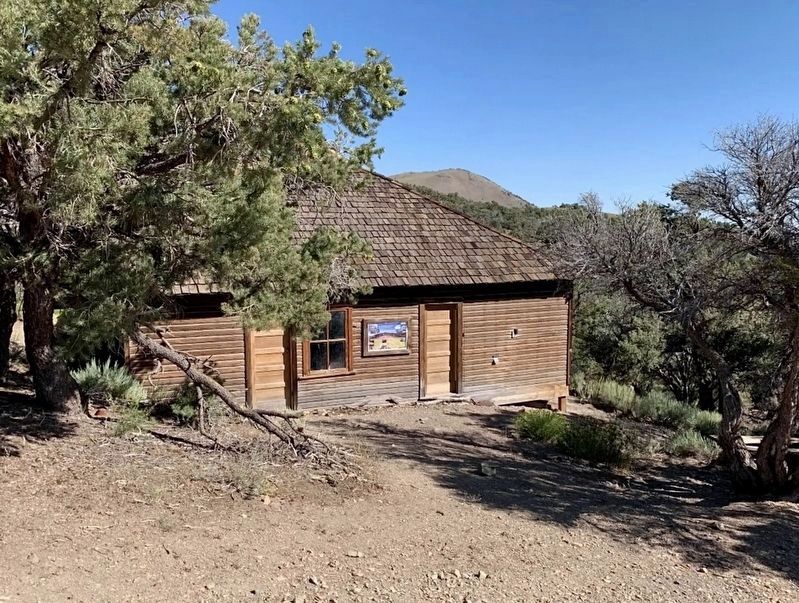
In late August 1999, the Bishop Field Office, along with a cadre of volunteers, began by first recording the structure so that its original design and form could be closely replicated. Architects recorded the current condition of the structure, provided detailed schematics and scale drawings of what the original structure looked like. Volunteers worked to clean up the site, sort usable lumber and prepare the building for stabilization. Volunteers from the Gear Grinders of Ridgecrest helped transport the materials via 4wd vehicles to the site. It took three days to move the lumber over the rugged Cerro Gordo/Swansea Road which provided us all with a scale of the immensity of the original construction project. Stabilization efforts were led by salt tram historian Don Becker and BLM Archaeologist Kirk Halford. With the help of over 30 volunteers the Salt Tram tender's cabin and a unique part of our historical heritage is being preserved for the enjoyment and experience of generations
Photographed by Craig Baker
2. Saline Valley Salt Tram Marker
Photo Documentation Project
Over the years the elements and vandals have contributed to the degradation of this National Landmark. In May 1999, Bishop Field Office archaeologist, Kirk Halford, and photography instructor Daniel McIntyre, led a team of volunteers from the San Clemente High School photography class to the Inyo Mountains, to assess and photo document the current condition of the tram. Through their efforts this spectacular historical feature will be preserved in perpetuity by their photographs. The students work has created a record that will be used and admired by archeologists, students of history, and the public into the future, long after the tram towers and control stations have been erased from the landscape by the forces of nature.
What You Can Do to Help Us Preserve this Unique Piece of History
Please de not camp inside of the building except for emergency purposes.
Please do not cook or start fires in or around the building. Fire is this building's worst threat! Food residues will
Photographed by Craig Baker
3. Saline Valley Salt Tram
Please leave no trace. Take only pictures and memories and leave only footprints.
Leave the pieces of the past for the future. Should you discover historical artifacts (bottles, cans, utensils, etc.) please do not remove them from the premises. Leave them in place for others to discover and enjoy or place them in our artifact cabinet in the building so we may learn more about the people who worked and lived here.
If you would like to help support BLM stabilization efforts or volunteer on this stabilization or other stabilization projects please call 760-872-5030.
Thank you for helping preserve our National and Cultural Heritage.
Topics and series. This historical marker is listed in these topic lists: Industry & Commerce • Natural Resources. In addition, it is included in the National Register of Historic Places (NRHP) series list. A significant historical year for this entry is 1911.
Location. 36° 36.452′ N,
Photographed by Craig Baker
4. Saline Valley Salt Tram

Regionally, this marker is in the Sierra Nevada. It is also in the American Mountain West. Globally, it is in North America, on the Ring of Fire, on the Pacific Rim, in the Western Hemisphere, in the Western World, and in the Anglosphere. Historically, it finds itself in what was once New Spain and also Mexico’s Alta California.
Other nearby markers. At least 8 other markers are within 9 miles of this marker, measured as the crow flies: Dolomite Mine (approx. 6.3 miles away); Owens Lake Silver-Lead Furnace (approx. 6½ miles away); New Water, New Life (approx. 7.2 miles away); Traces of the Past (approx. 7.2 miles away); Owens Lake Dust Mitigation Program (approx. 7.3 miles away); Gifts of Rock and Water (approx. 7.3 miles away); Keeler Then to Now (approx. 8.3 miles away); Keeler
Photographed by Craig Baker
5. Saline Valley Salt Tram
courtesy Eastern California Museum
6. Saline Valley Salt Tram
Credits. This page was last revised on May 25, 2026. It was originally submitted on November 20, 2025, by Craig Baker of Sylmar, California. This page has been viewed 119 times since then and 58 times this year. Photos: 1, 2, 3, 4, 5. submitted on November 20, 2025, by Craig Baker of Sylmar, California. 6. submitted on May 25, 2026, by Craig Baker of Sylmar, California.
