Naperville in DuPage County, Illinois — The American Midwest (Great Lakes)
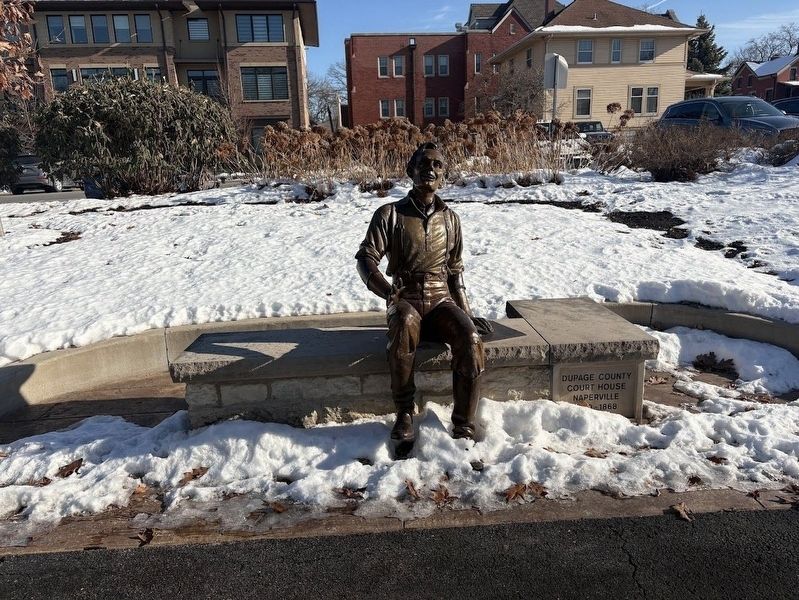
Laughing Lincoln
December 2, 2018

Photographed by Sean P. Flynn, December 16, 2025
1. Laughing Lincoln Marker
In that year Lincoln and Naper voted to relocate the State Capital to Springfield and to carve DuPage County out of Cook County. The first courthouse was located here in Central Park. Naperville was the county seat until 1868 when it was moved to Wheaton after a county referendum. In 1875, the county board deeded the 3.82 acres to Naperville "to be used as and for a public park".
The document under Lincoln's hand represents this legal transfer of property. City Councilman and lifelong resident, Don
this page online
Erected 2018.
Topics and series. This historical marker is listed in these topic lists: Arts, Letters, Music • Government & Politics • Notable Buildings • Settlements & Settlers. In addition, it is included in the Former U.S. Presidents: #16 Abraham Lincoln
Photographed by Sean P. Flynn, December 16, 2025
2. Laughing Lincoln
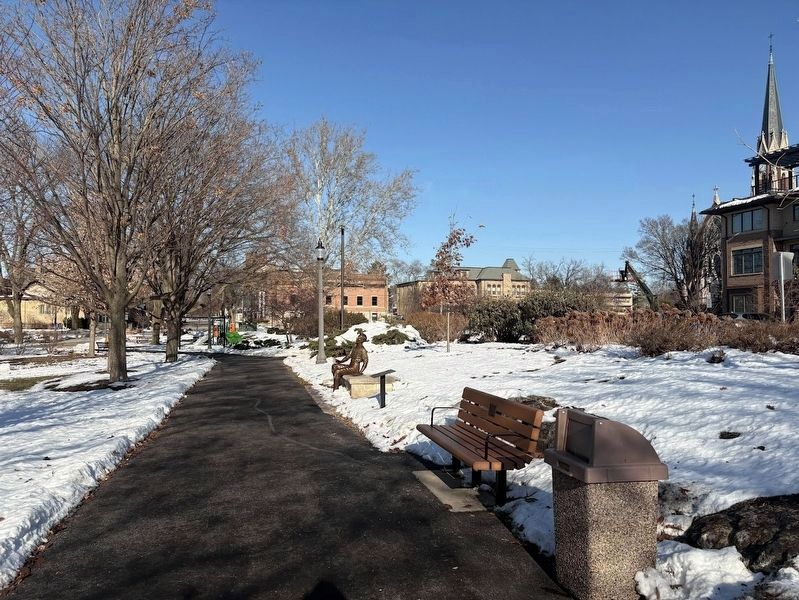
Location. 41° 46.463′ N, 88° 8.784′ W. Marker is in Naperville, Illinois, in DuPage County. It is on Court Place south of Benton Avenue, on the right when traveling south. The marker is near the Laughing Lincoln statue in Naperville's Central Park. Touch for map. Marker is at or near this postal address: 104 East Benton Avenue, Naperville IL 60540, United States of America. Touch for directions.

Regionally, this marker is in Greater Chicago. It is also in the American Midwest. Globally, it is in North America, on the Great Lakes, in the Western Hemisphere, in the Western World, and in the Anglosphere. Historically, it finds itself in what was once the territory of the Mississippian Culture and also the Northwest Territory.
Other nearby markers. At

Photographed by Sean P. Flynn, December 16, 2025
3. Laughing Lincoln statue
Also see . . .
1. Naperville Sun: ‘Laughing Lincoln’ sculpture makes its debut in Naperville’s Central Park.
Excerpt: “When DuPage County was carved out of Cook(Submitted on December 18, 2025, by Sean P. Flynn of Oak Park, Illinois.)County in 1839, Lincoln and town founder Joseph Naper served in the state legislature together, Wehrli said. Lincoln wanted the state capital moved from Vandalia to Springfield and Naper wanted DuPage County carved out of Cook County, she said. 'They didn’t typically vote the same way, but in this case they made one another’s vision come true,' Wehrli said.”Photographed by Sean P. Flynn, December 16, 20254. Laughing Lincoln in Central Park
2. Naperville and Mr. Lincoln. A blog post about links between Naperville and Abraham Lincoln. While there is a legend that Lincoln spoke in Naperville, there is no evidence this event, or any other visits to DuPage County, ever happened. (Submitted on December 28, 2025, by Sean P. Flynn of Oak Park, Illinois.)
3. David Alan Clark Sculpture official site. (Submitted on December 18, 2025, by Sean P. Flynn of Oak Park, Illinois.)
Credits. This page was last revised on December 28, 2025. It was originally submitted on December 17, 2025, by Sean P. Flynn of Oak Park, Illinois. This page has been viewed 84 times since then and 29 times this year. Photos: 1. submitted on December 17, 2025, by Sean P. Flynn of Oak Park, Illinois. 2, 3, 4. submitted on December 18, 2025, by Sean P. Flynn of Oak Park, Illinois.
