Longues-sur-Mer in Calvados, Normandy, France — Western Europe
La prise de la batterie
⎯⎯⎯
Capturing the battery
Photographed by James Hulse, June 4, 2025
1. La prise de la batterie / Capturing the battery Marker

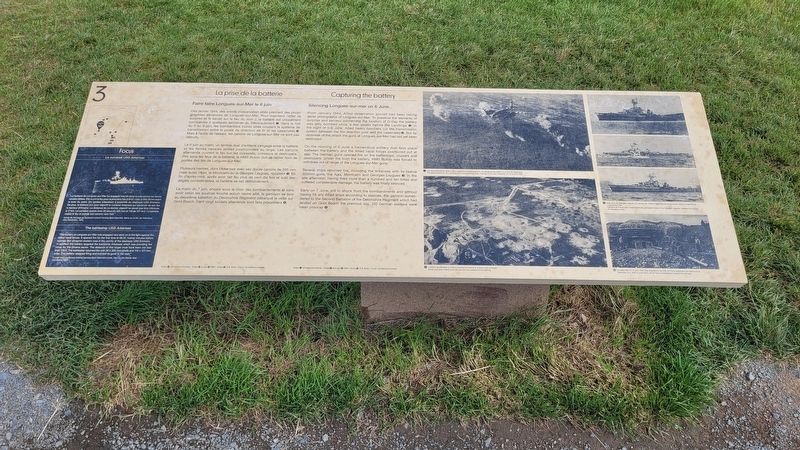
Faire taire Longues-sur-Mer le 6 juin
Dès janvier 1944, des avions d'observation alliés prennent des photographies aériennes de Longues-sur-Mer. Pour maintenir l'effet de surprise et le secret sur le lieu du Jour J, la batterie est uniquement bombardée à quelques semaines du Débarquement (1). Dans la nuit du 5 au 6 juin, les bombardiers lourds alliés coupent le système de transmission entre le poste de direction de tir et les casemates (2). Mais à l'aube de l'assaut, les canons de Longues-sur-Mer ne sont pas détruits.
Le 6 juin au matin, un terrible duel d'artillerie s'engage entre la batterie et les forces navales alliées positionnées au large. Les canons allemands ouvrent le feu sur les cuirassés, croiseurs et destroyers. Pris sous les feux de la batterie, le HMS Bulolo doit se replier hors de portée des tirs de Longues-sur-Mer.
Plusieurs navires, dont l'Arkansas avec ses douze canons de 305 mm mais aussi l'Ajax, le Montcalm ou le Georges Leygues, ripostent (3). En fin d'après-midi, après avoir fait feu plus de cent dix fois et subi des dégâts considérables, la batterie se tait définitivement.
Le matin du 7 juin, encore sous le choc des bombardements et sans avoir selon les sources touché aucun navire allié, la garnison se livre au deuxième bataillon du Devonshire Regiment débarqué la veille sur Gold Beach: Cent vingt soldats allemands sont faits prisonniers (4).
© doc.(1) US National Archives - © doc.(2) et doc.(4), IWM - © doc.(3), D.R. © doc. Focus, US National Archives
Le cuirassé USS Arkansas
"La batterie de Longues-sur-Mer fut engagée très tôt dans la lutte contre les forces navales alliées. Elle ouvrit le feu pour la première fois à 5h37, c'est-à-dire 20 mn avant le lever du soleil. Dix gerbes s'élevèrent à proximité du destroyer USS Emmons. De plus, la batterie prit pour objectif le cuirassé Arkansas qui soutenait de son feu le secteur d'Omaha. La distance de ce dernier objectif ne devait pas être inférieure à 17 km. Le cuirassé riposta avec 20 obus de 305 mm et 110 de 127 mm. La batterie cessa le feu et pointa ses canons vers l'est."
Extrait de l'ouvrage du lieutenant-colonel Henning Bertil Stjernfelt, Alerte sur le Mur de l'Atlantique, paru Stockholm, 1953.
Légendes
(Photo #1) Les bombardements aériens alliés préparent le Débarquement. Un déluge de feu s'abat sur le Mur de l'Atlantique.
(Photo #2) Cratères de bombes ou d'obus marquent le site et la violence des combats.
(Photo #3) Avec ceux du Georges Leygues, les canons du croiseur léger français le Montcalm ciblent la batterie de Longues-sur-Mer.
(Photo #4) La casemate n° 1 fin juin 1944. Des enquêteurs de l'US Air Force inspectent les destructions.
Silencing Longues-sur-mer on 6 June
From
this page online
On the morning of 6 June a tremendous artillery duel took place between the battery and the Allied naval forces positioned out at sea. The German guns opened fire on the battleships, cruisers and destroyers. Under fire from the battery, HMS Bulolo was forced to withdraw out of range of the Longues-sur-Mer guns.
Several ships returned fire, including the Arkansas with its twelve 305mm guns, the Ajax, Montcalm and Georges Leygues (3). In the late afternoon, having fired more than a hundred and ten times and suffered considerable damage, the battery was finally silenced.
Early on 7 June, still in shock from the bombardments and without having hit any Allied ships according to sources, the garrison surrendered to the Second Battalion of the Devonshire Regiment which had landed on Gold Beach the previous day. 120 German soldiers were taken prisoner (4).
© doc.(1) US National Archives - © doc.(2) et doc.(4), IWM - © doc.(3), D.R. © doc. Focus, US National Archives
The battleship USS Arkansas
"The battery at Longues-sur-Mer was engaged very early on in the fight against the Allied naval forces. It opened fire for the first time at 05.37, twenty minutes before sunrise. Ten shrapnel clusters rose in the vicinity of the destroyer USS Emmons. In addition the battery targeted the battleship Arkansas which was providing fire cover for the Omaha sector. The distance of this target must have been not less than 17km. The battleship returned fire with 20 x 305-mm shells and 110 x 127-mm ones. The battery stopped firing and pointed its guns to the east."
Extract from Lieutenant-Colonel Henning Bertil Stjernfelt's book, Alert on the Atlantic Wall, Stockholm, 1953.
Captions
(Photo #1) The Allies prepare for the Landings with aerial bombing raids. A deluge of fire was unleashed on the Atlantic Wall.
(Photo #2) Bomb and shell craters show the site and the violence of the fighting.
(Photo #3) The guns of French light cruiser Montcalm, alongside those of the Georges Leygues, targeted the battery of Longues-sur-Mer.
(Photo #4) Casemate no 1, end of June 1944. US Air Force investigators inspect the damage.
Erected by Longues-sur-Mer
Photographed by James Hulse, June 4, 2025
2. La prise de la batterie / Capturing the battery Marker
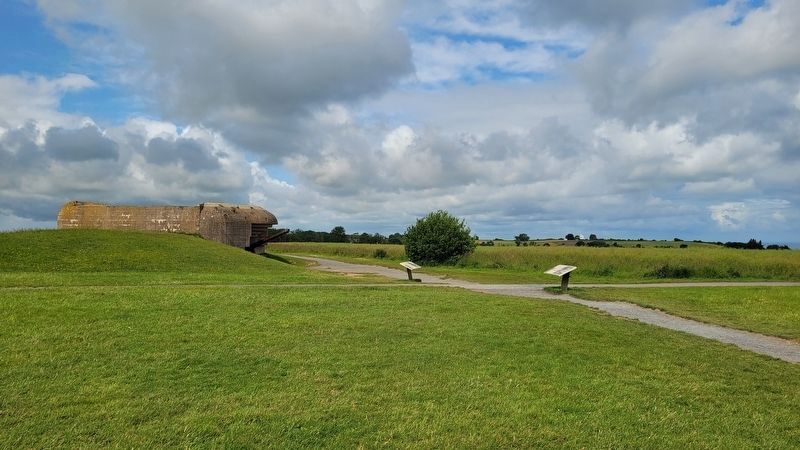
The marker is the first marker on the right side. Casemate No. 2 is visible in the background of the markers.
Topics. This historical marker is listed in this topic list: War, World II. A significant historical month for this entry is January 1944.
Location. 49° 20.617′ N, 0° 41.701′ W. Marker is in Longues-sur-Mer, Normandie (Normandy), in Calvados. It is on Rue de la Mer just north of Rue des Batteries. The marker is located on the grounds of the Longues-sur-Mer Battery Historical Monument Site. Touch for map. Marker is at or near this postal address: 39 Rue de la Mer, Longues-sur-Mer, Normandie 14400, France. Touch for directions.

Regionally, it is in the North Atlantic Region, Europe, the European Union, Atlantic Europe, the Schengen Area, Western Europe, a coastal Mediterranean country, and the Western World. Historically, it finds itself in what was once a French colony and also the Roman Empire.
Other nearby markers. At least 8 other markers are within walking distance of this marker: Les casemates / The casemates (a few steps from this marker); Une batterie allemande de défense côtière / A German coastal defence battery (about 150 meters away, measured in a direct line); Un site d'exception / An exceptional site (about 240 meters away); Aérodrome B-11 de Longues-sur-Mer / B-11 airfield at Longues-sur-Mer (approx. 0.2 kilometers away); La piste d'aviation B-11 / The B-11 airfield (approx. 0.2 kilometers away); Un rédoutable système défensif / A formidable defensive system (approx. 0.2 kilometers away); Le poste de commandement de tir / The fire command post (approx. 0.3 kilometers away); Canon russe Putilov / Putilov Russian cannon (approx. 0.3 kilometers away). Touch for a list and map of all markers in Longues-sur-Mer.
Photographed by James Hulse, June 4, 2025
3. La prise de la batterie / Capturing the battery Marker
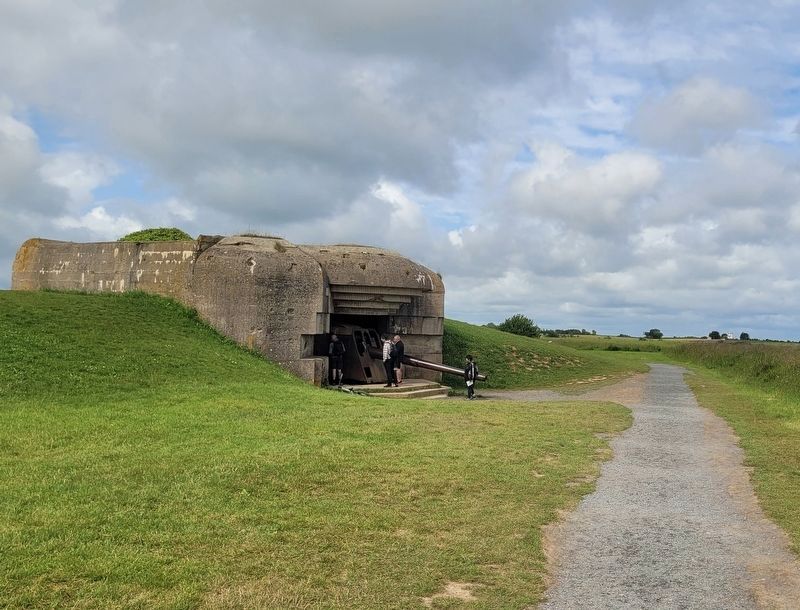
The view of Casemate No. 3 with a 120 mm gun on the trail.
Photographed by James Hulse, June 4, 2025
4. La prise de la batterie / Capturing the battery Marker
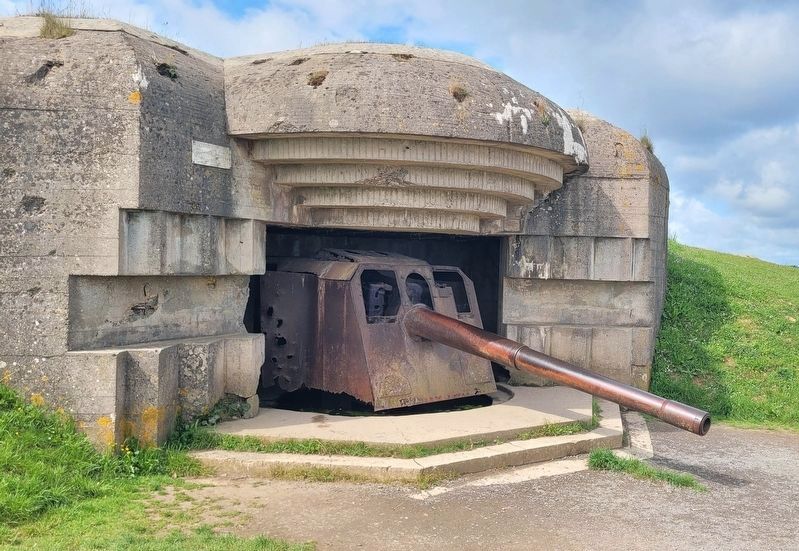
Closeup view of Casemate No. 3
Photographed by James Hulse, June 4, 2025
5. La prise de la batterie / Capturing the battery Marker
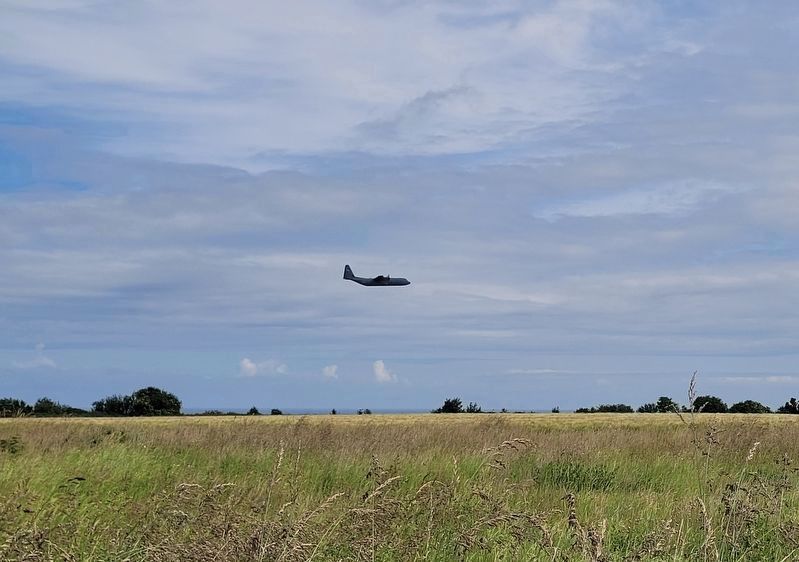
An American C-130 performing a flyby of the Longues-sur-Mer Battery during the Normandy D-Day celebration activities in June 2025.
Photographed by James Hulse, June 4, 2025
6. La prise de la batterie / Capturing the battery Marker
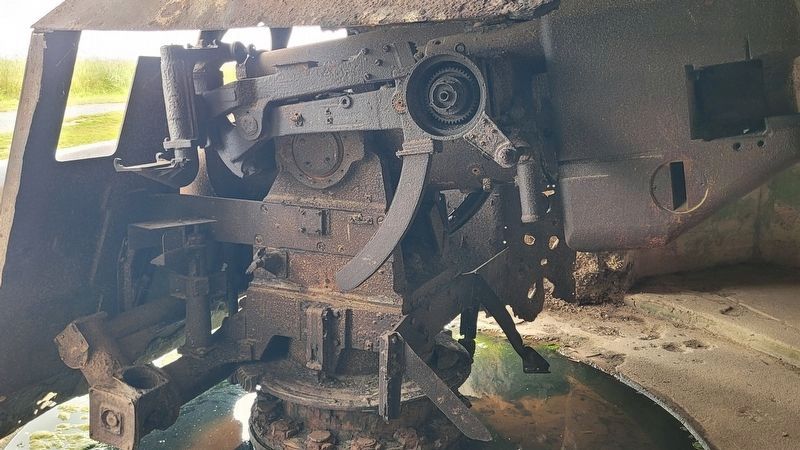
Closeup view of the 120 mm gun in the casement
Credits. This page was last revised on December 27, 2025. It was originally submitted on December 26, 2025, by James Hulse of Medina, Texas. This page has been viewed 125 times since then and 95 times this year. Photos: 1, 2, 3, 4, 5, 6. submitted on December 27, 2025, by James Hulse of Medina, Texas.
