Wheaton in DuPage County, Illinois — The American Midwest (Great Lakes)
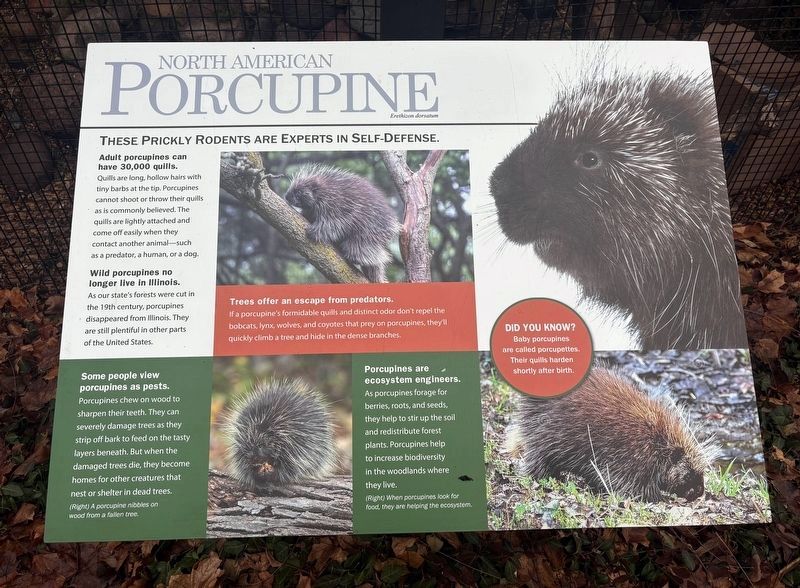
North American Porcupine
Erithizon dorsatum
| — | These prickly rodents are experts in self-defense. | — |
Photographed by Sean P. Flynn, January 6, 2026
1. North American Porcupine Marker
Quills are long, hollow hairs with tiny barbs at the tip. Porcupines cannot shoot or throw their quills as is commonly believed. The quills are lightly attached and come off easily when they contact another animal-such as a predator, a human, or a dog.
Wild porcupines no longer live in Illinois.
As our state's forests were cut in the 19th century, porcupines disappeared from Illinois. They are still plentiful in other parts of the United States.
Trees offer an escape from predators.
If a porcupine's formidable quills and distinct odor don't repel the bobcats, lynx, wolves, and coyotes that prey on porcupines, they'll quickly climb a tree and hide in the dense branches.
Some people view porcupines as pests.
Porcupines chew on wood to sharpen their teeth. They can severely damage trees as they strip off bark to feed on the tasty layers beneath. But when the damaged trees die, they become homes for other creatures that nest or shelter in dead trees.
Porcupines are ecosystem engineers.
As porcupines forage for berries, roots, and seeds, they help to stir up the soil
this page online
Did You Know?
Baby porcupines are called porcupettes. Their quills harden shortly after birth.
Erected by Cosley Zoo.
Topics. This historical marker is listed in these topic lists: Animals • Horticulture & Forestry.
Location. 41° 52.703′ N, 88° 7.242′ W. Marker is in Wheaton, Illinois, in DuPage County. It can be reached from Gary Avenue south of Jewell Road, on the right when traveling south. The sign is in Cosley Zoo, near the porcupine pen. Touch for map. Marker is at or near this postal address: 1356 North Gary Avenue, Wheaton IL 60187, United States of America. Touch for directions.

Regionally, this marker is in Greater Chicago. It is also in the American Midwest. Globally, it is in North America, on the Great Lakes, in the Western Hemisphere, in the Western World, and in the Anglosphere. Historically, it finds itself in what was once the territory of the Mississippian Culture and also the Northwest Territory.
Other nearby markers. At least 8 other
Photographed by Sean P. Flynn, January 6, 2026
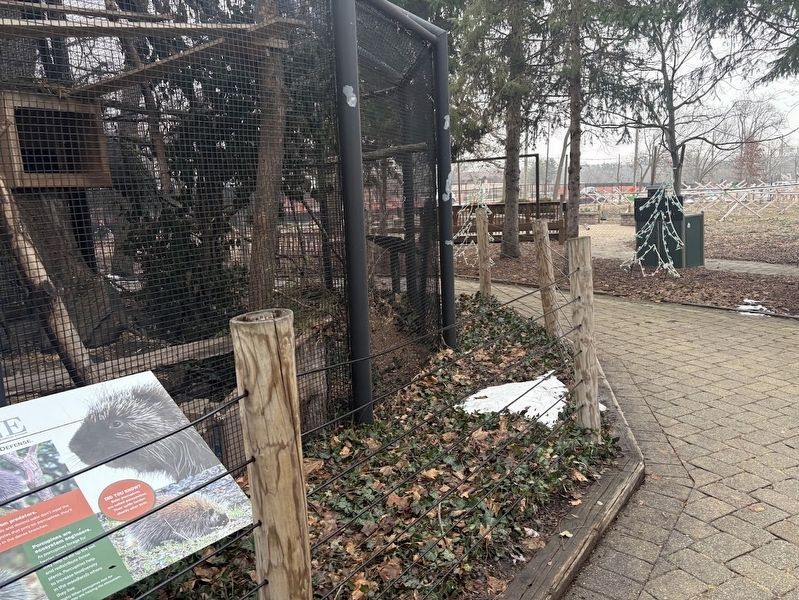
2. North American Porcupine at Cosley Zoo
Also see . . .
1. Animals from Illinois' Past. The Illinois Department of Natural Resources looks at animals that were once found in the state. It says that porcupines used to be common in Northern Illinois. (Submitted on January 7, 2026, by Sean P. Flynn of Oak Park, Illinois.)
2. Cosley Zoo official site. (Submitted on January 7, 2026, by Sean P. Flynn of Oak Park, Illinois.)
Photographed by Sean P. Flynn, January 6, 2026
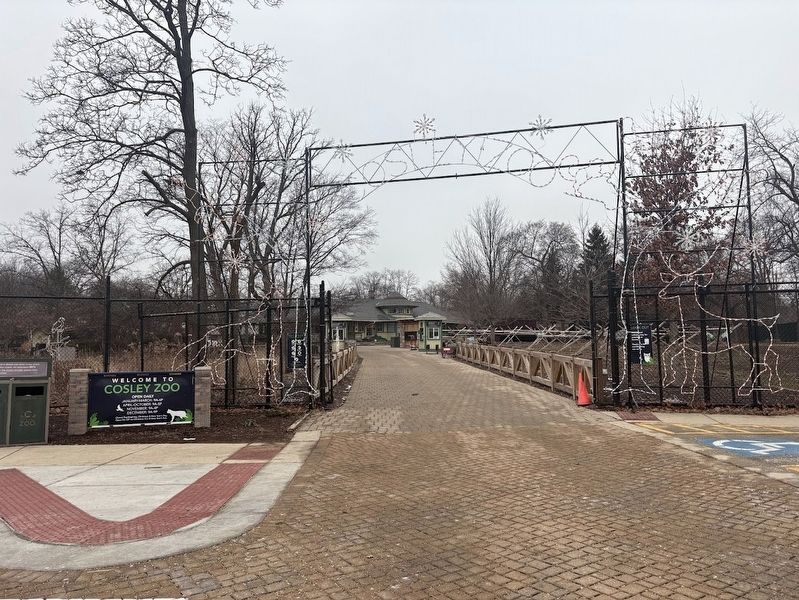
3. Cosley Zoo entrance
Credits. This page was last revised on January 7, 2026. It was originally submitted on January 7, 2026, by Sean P. Flynn of Oak Park, Illinois. This page has been viewed 89 times since then. Photos: 1, 2, 3. submitted on January 7, 2026, by Sean P. Flynn of Oak Park, Illinois.
