Stonington in Southeastern Region, Connecticut — The American Northeast (New England)
First Railroad Operated in Connecticut
Photographed by Cosmos Mariner, June 14, 2017
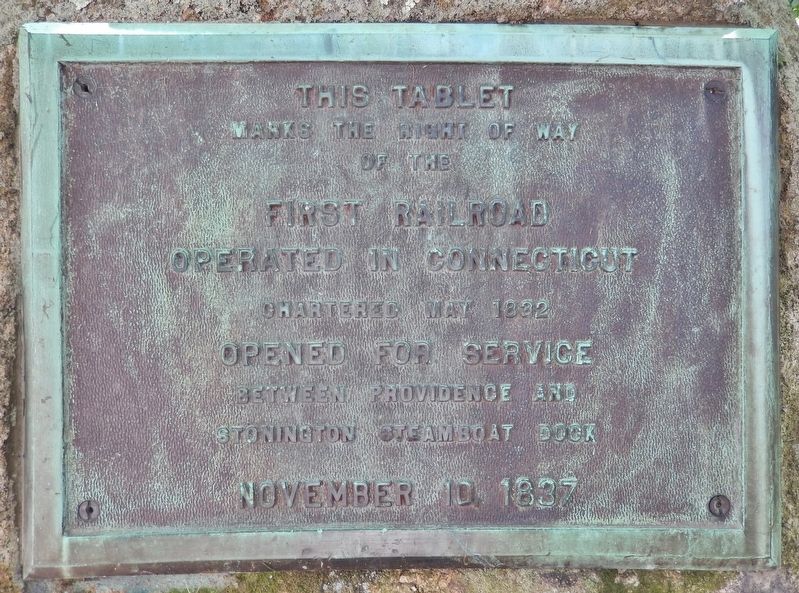
1. First Railroad Operated in Connecticut Marker
marks the right of way
of the
First railroad
operated in Connecticut
Chartered May 1832
Opened for service
between Providence and
Stonington Steamboat Dock
November 10, 1837
Erected 1937.
Topics. This historical marker is listed in this topic list: Railroads & Streetcars. A significant historical date for this entry is November 10, 1837.
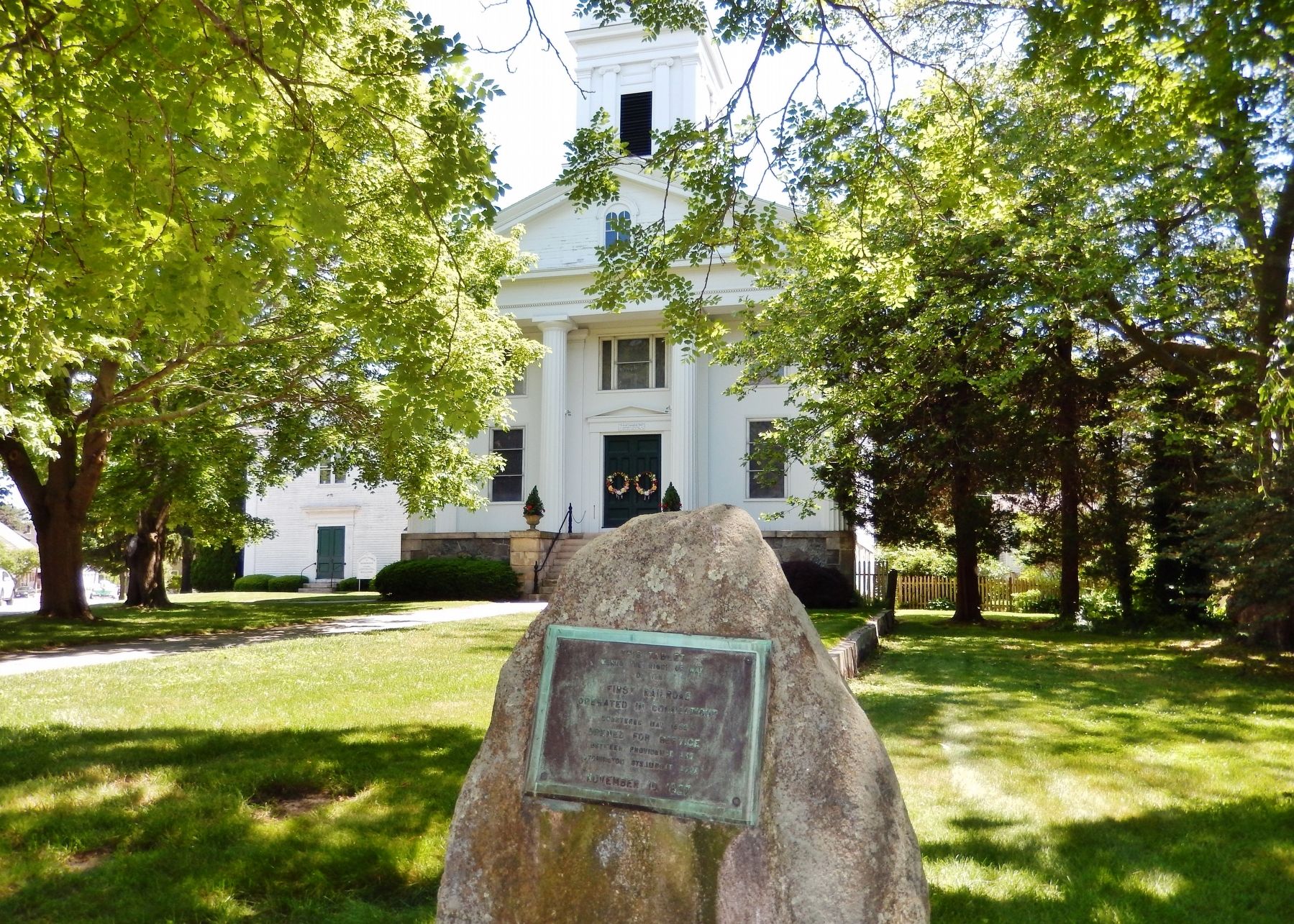
Location. 41° 20.11′ N, 71° 54.346′ W. Marker is in Stonington in Southeastern Region, Connecticut. It is on Main Street south of Pearl Street, on the right when traveling north. Marker is located near the sidewalk, directly in front of the United Church of Stonington. Touch for map. Marker is at or near this postal address: 67 Main Street, Stonington CT 06378, United States of America. Touch for directions.

Regionally, this marker is on the Connecticut Shoreline, in Greater New London, in Mystic and the Eastern Shore, and in the Thames River Valley. It is also in the American Northeast, in New England, and on the Eastern Seaboard. Globally, it is in the North Atlantic Region, North America, the Western Hemisphere, the Western World, and the Anglosphere.
this page online
Other nearby markers. At least 8 other markers are within walking distance of this marker: Dr. Silas Holmes House (within shouting distance of this marker); Thomas Howe House (about 400 feet away, measured in a direct line); Stonington Land Battery (about 600 feet away); The Defenders of the Fort (approx. ¼ mile away); Stonington Community Garden (approx. 0.4 miles away); World War I Memorial (approx. 0.4 miles away); Veterans Memorial (approx. 0.4 miles away); John W. Richmond (approx. half a mile away). Touch for a list and map of all markers in Stonington.
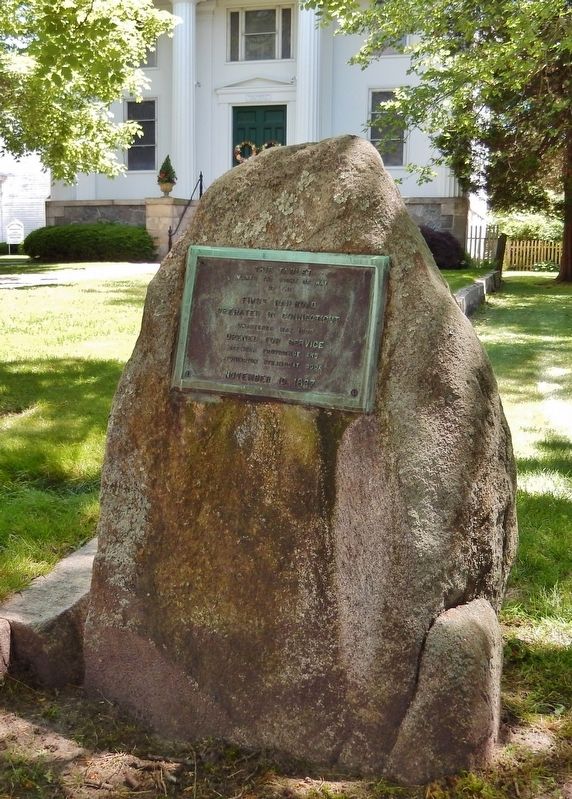
More about this marker. Marker is a metal tablet mounted on a large granite boulder.
Also see . . . Steam Railroads Transform Connecticut Travel and Commerce.
As the potential of the steam engine became apparent in the late 18th century, men looked for ways to apply steam power to overland transportation. Ultimately, it was the perfection of the steam locomotive, and the low rolling friction of running metal wheels over metal rails, that made
Photographed by Cosmos Mariner, June 14, 2017
2. First Railroad Operated in Connecticut Marker (tall view)
Photographed by Cosmos Mariner, June 14, 2017
3. First Railroad Operated in Connecticut Marker (wide view; church in background)

November 11, 1937
4. November 11, 1937 newspaper article
Article appearing in "The Day" newspaper of New London describing the installation of the plaque. Credit: Newspapers.com
Credits. This page was last revised on May 19, 2026. It was originally submitted on March 19, 2018. This page has been viewed 401 times since then and 42 times this year. Last updated on January 18, 2026. Photos: 1, 2, 3. submitted on March 19, 2018, by Cosmos Mariner of Cape Canaveral, Florida. 4. submitted on January 18, 2026, by Conrad Ward of Guilford, Connecticut. • Devry Becker Jones was the editor who published this page.
