Lake City in Hinsdale County, Colorado — The American Mountains (Southwest)
Henry Kohler House — Built 1880-81
Photographed by Cosmos Mariner, July 21, 2025
1. Henry Kohler House — Built 1880-81 Marker
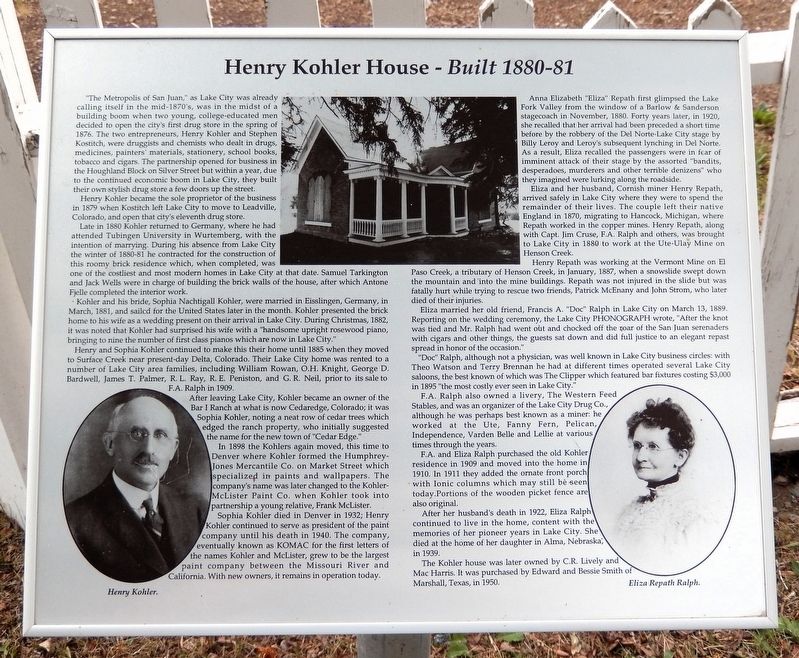
“The Metropolis of San Juan,” as Lake City was already calling itself in the mid-1870's, was in the midst of a building boom when two young, college-educated men decided to open the city's first drug store in the spring of 1876. The two entrepreneurs, Henry Kohler and Stephen Kostitch, were druggists and chemists who dealt in drugs, medicines, painters' materials, stationery, school books, tobacco and cigars. The partnership opened for business in the Houghland Block on Silver Street but within a year, due to the continued economic boom in Lake City, they built their own stylish drug store a few doors up the street.
Henry Kohler became the sole proprietor of the business in 1879 when Kostitch left Lake City to move to Leadville, Colorado, and open that city's eleventh drug store.
Late in 1880 Kohler returned to Germany, where he had attended Tubingen University in Wurtemberg, with the intention of marrying. During his absence from Lake City the winter of 1880-81 he contracted for the construction of this roomy brick residence which, when completed, was one of the costliest and most modern homes in Lake City at that date.
this page online
Kohler and his bride, Sophia Nachtigall Kohler, were married in Eisslingen, Germany, in March, 1881, and sailed for the United States later in the month. Kohler presented the brick home to his wife as a wedding present on their arrival in Lake City. During Christmas, 1882, it was noted that Kohler had surprised his wife with a “handsome upright rosewood piano, bringing to nine the number of first class pianos which are now in Lake City.”
Henry and Sophia Kohler continued to make this their home until 1885 when they moved to Surface Creek near present-day Delta, Colorado. Their Lake City home was rented to a number of Lake City area families, including William Rowan, O.H. Knight, George D. Bardwell, James T. Palmer, R.L. Ray, R.E. Peniston, and G.R. Neil, prior to its sale to F.A. Ralph in 1909.
After leaving Lake City, Kohler became an owner of the Bar I Ranch at what is now Cedaredge, Colorado; it was Sophia Kohler, noting a neat row of cedar trees which edged the ranch property, who initially
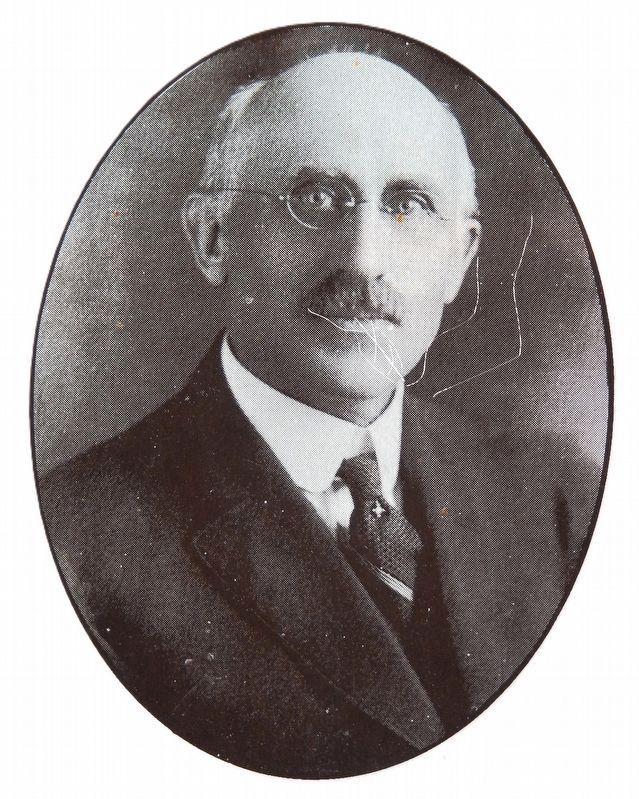
2. Marker detail: Henry Kohler
In 1898 the Kohlers again moved, this time to Denver where Kohler formed the Humphrey-Jones Mercantile Co. on Market Street which specialized in paints and wallpapers. The company's name was later changed to the Kohler-McLister Paint Co. when Kohler took into partnership a young relative, Frank McLister.
Sophia Kohler died in Denver in 1932; Henry Kohler continued to serve as president of the paint company until his death in 1940. The company, eventually known as KOMAC for the first letters of the names Kohler and McLister, grew to be the largest paint company between the Missouri River and California. With new owners, it remains in operation today.
Anna Elizabeth “Eliza” Repath first glimpsed the Lake Fork Valley from the window of a Barlow & Sanderson stagecoach in November, 1880. Forty years later, in 1920, she recalled that her arrival had been preceded a short time before by the robbery of the Del Norte-Lake City stage by Billy Leroy and Leroy's subsequent lynching in Del Norte. As a result, Eliza recalled the passengers were in fear of imminent attack of their stage by the assorted
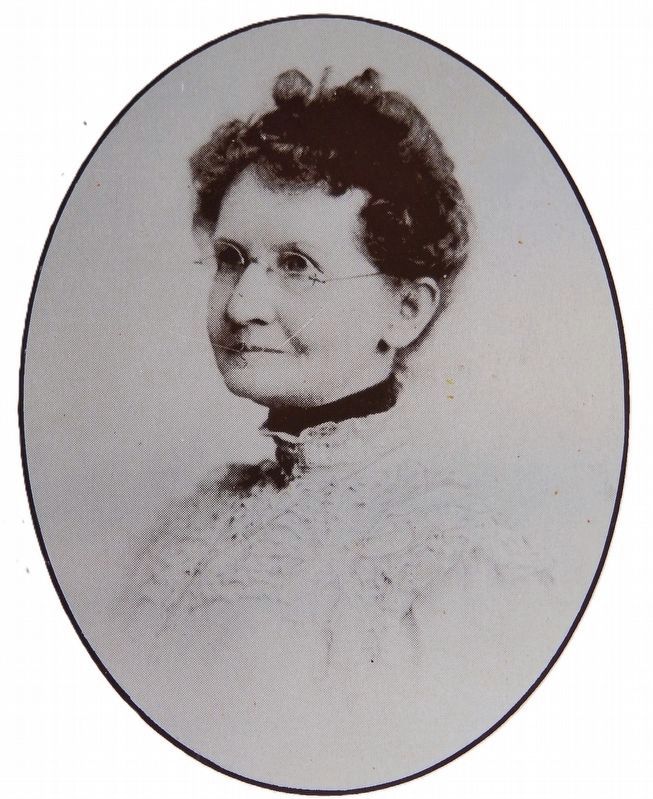
3. Marker detail: Eliza Repath Ralph
Eliza and her husband, Cornish miner Henry Repath, arrived safely in Lake City where they were to spend the remainder of their lives. The couple left their native England in 1870, migrating to Hancock, Michigan, where Repath worked in the copper mines. Henry Repath, along with Capt. Jim Cruse, F.A. Ralph and others, was brought to Lake City in 1880 to work at the Ute-Ulay Mine on Henson Creek.
Henry Repath was working at the Vermont Mine on El Paso Creek, a tributary of Henson Creek, in January, 1887, when a snowslide swept down the mountain and into the mine buildings. Repath was not injured in the slide but was fatally hurt while trying to rescue two friends, Patrick McEnany and John Strom, who later died of their injuries.
Eliza married her old friend, Francis A. “Doc” Ralph in Lake City on March 13, 1889. Reporting on the wedding ceremony, the Lake City PHONOGRAPH wrote, “After the knot was tied and Mr. Ralph had went out and chocked off the war of the San Juan serenaders with cigars and other things, the guests sat down

Photographed by Cosmos Mariner, July 21, 2025
4. Henry Kohler House — Built 1880-81
The marker is directly in front of the Kohler House, just outside the picket fence.
“Doc” Ralph, although not a physician, was well known in Lake City business circles: with Theo Watson and Terry Brennan he had at different times operated several Lake City saloons, the best known of which was The Clipper which featured bar fixtures costing $3,000 in 1895 “the most costly ever seen in Lake City.”
F.A. Ralph also owned a livery, The Western Feed Stables, and was an organizer of the Lake City Drug Co., although he was perhaps best known as a miner: he worked at the Ute, Fanny Fern, Pelican, Independence, Varden Belle and Lellie at various times through the years.
F.A. and Eliza Ralph purchased the old Kohler residence in 1909 and moved into the home in 1910. In 1911 they added the ornate front porch with Ionic columns which may still be seen today. Portions of the wooden picket fence are also original.
After her husband’s death in 1922, Eliza Ralph continued to live in the home, content with the memories of her pioneer years in Lake City. She died at the home of her daughter in Alma, Nebraska in 1939.
The Kohler house was later owned by C.R. Lively and Mac Harris. It was purchased by Edward and Bessie Smith of Marshall, Texas, in 1950.
Topics and series. This historical marker is listed in these topic lists: Architecture • Industry & Commerce • Settlements & Settlers. In addition, it is included in the National Register of Historic Places (NRHP) series list. A significant historical year for this entry is 1880.
Location. 38° 1.89′ N, 107° 18.942′ W. Marker is in Lake City, Colorado, in Hinsdale County. It is at the intersection of Silver Street and 5th Street, on the left when traveling south on Silver Street. The marker is in front of the subject property, at the northeast corner of the intersection. Touch for map. Marker is at or near this postal address: 500 Silver Street, Lake City CO 81235, United States of America. Touch for directions.

Regionally, this marker is in the Colorado High Rockies. It is also in the American Mountain West. Globally, it is in North America, the Rocky Mountains, the Western Hemisphere, the Western World, and the Anglosphere.
Other nearby markers. At least 8 other markers are within walking distance of this marker: Presbyterian Church and Manse (within shouting distance of this marker); St. James Episcopal Chapel — 1876 (about 300 feet away, measured in a direct line); John S. Hough House — Built 1877 (about 400 feet away); Green Garage — 1917 (about 500 feet away); Pioneer Education in Western Colorado (about 500 feet away); Matterhorn Motel — 1949 (about 600 feet away); G & M Cabins — 1936, 1947 (about 700 feet away); First Baptist Church — Built 1891 (about 700 feet away). Touch for a list and map of all markers in Lake City.
Regarding Henry Kohler House — Built 1880-81. Contributing property, Lake City Historic District, National Register of Historic Places № 78000859. Also Colorado State Register of Historic Properties Site № 5HN.68.38
From the National Register Nomination prepared by Suzanne Mason, 3/1/1977:
Built by Samuel Tarkington, Jack Wells, and A.J. Fjelle contractors in 1881. The one-story, gabled-L dwelling features masonry bearing walls of locally fired red brick, Romanesque-inspired arched windows, interesting extended brick design work and a metal roof. The Classical Revival porch featuring Ionic columns supporting an entablature; turned balusters; and pediment was added in 1911. The property is notable for its large corner lot edged in towering cottonwoods and the intact shed and outhouse.
Also see . . .
1. Kohler House (Society of Architectural Historians).
(by Thomas J. Noel) Excerpt: Henry Kohler, the town druggist, built a small, L-shaped Queen Anne cottage of stone faced in ornate local brickwork. The house is distinguished by Ionic porch columns (1911) and round-arched windows with shutters. Kohler later moved to Denver and, with partner Frank McLister, founded the largest paint plant in the Rockies, the Komac Paint Company.(Submitted on January 27, 2026, by Cosmos Mariner of Cape Canaveral, Florida.)
2. Lake City National Historic District (Wikipedia).
Excerpt: The Lake City Historic District contains a collection of intact buildings associated with the 1875-1881 boom as well as buildings constructed during the second boom period of the 1890s. The town's remote location and decades of economic decline helped conserve the buildings from the mining era, and the weak local economy discouraged new construction; thus Lake City avoided many of the modern “improvements” to historic buildings that often occurs in more prosperous towns. The Hinsdale County Historical Society formed in 1973 and began accumulating documents and photographs recording the town's history, and has been a strong advocate for preservation in Lake City since then. In 1978, the Lake City Historic District was listed in the National Register of Historic Places.(Submitted on January 27, 2026, by Cosmos Mariner of Cape Canaveral, Florida.)
Credits. This page was last revised on January 27, 2026. It was originally submitted on January 23, 2026, by Cosmos Mariner of Cape Canaveral, Florida. This page has been viewed 40 times since then. Photos: 1, 2, 3, 4. submitted on January 27, 2026, by Cosmos Mariner of Cape Canaveral, Florida.
