
Polk City in Polk County, Iowa — The American Midwest (Upper Plains)
Town Square
The Bandstand
Photographed by Cosmos Mariner, September 17, 2025
1. Town Square Marker
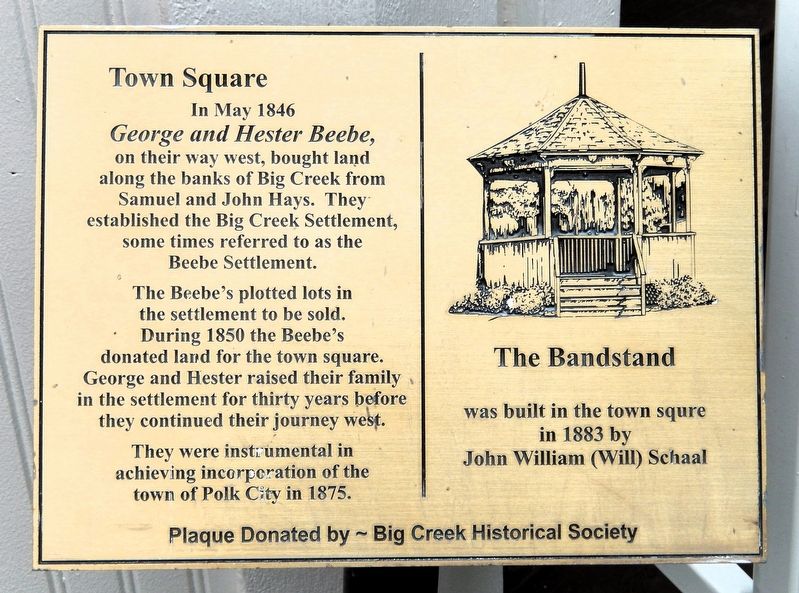
Town Square
In May 1846 George and Hester Beebe, on their way west, bought land along the banks of Big Creek from Samuel and John Hays. They established the Big Creek Settlement, some times referred to as the Beebe Settlement.
The Beebe's plotted lots in the settlement to be sold. During 1850 the Beebe's donated land for the town square. George and Hester raised their family in the settlement for thirty years before they continued their journey west.
They were instrumental in achieving incorporation of the town of Polk City in 1875.
The Bandstand
was built in the town square in 1883 by John William (Will) Schaal
Erected by Big Creek Historical Society.
Topics and series. This historical marker is listed in this topic list: Settlements & Settlers. In addition, it is included in the Former U.S. Presidents: #11 James K. Polk series list. A significant historical month for this entry is May 1846.
Location. 41° 46.276′ N, 93° 42.827′ W. Marker is in Polk City, Iowa, in Polk County. It can be reached from Van Dorn Street just south of South 3rd Street, on the left when traveling south. The marker and bandstand are at the center of
this page online

Regionally, this marker is in Greater Des Moines. It is also in the American Midwest and in the Corn Belt. Globally, it is in North America, the Western Hemisphere, the Western World, and the Anglosphere. Historically, it finds itself in what was once the territory of the Mississippian Culture and also the Louisiana Purchase.
Other nearby markers. At least 8 other markers are within 13 miles of this marker, measured as the crow flies: Big Creek Schoolhouse (within shouting distance of this marker); Josiah Hopkins' 20-Mile House (approx. 4.3 miles away); Granger Subsistence Homestead Project (approx. 6½ miles away); Veterans Memorial (approx. 9.1 miles away); Cassel Corner Park (approx. 9.1 miles away); Prairie Engine (approx. 11½ miles away); Walnut Creek, Clive (approx. 11.7 miles away); Paint It Black (approx. 12.1 miles away). Touch for a list and map of all markers in Polk City.
Also see . . .
1. Polk City, Iowa (Wikipedia).
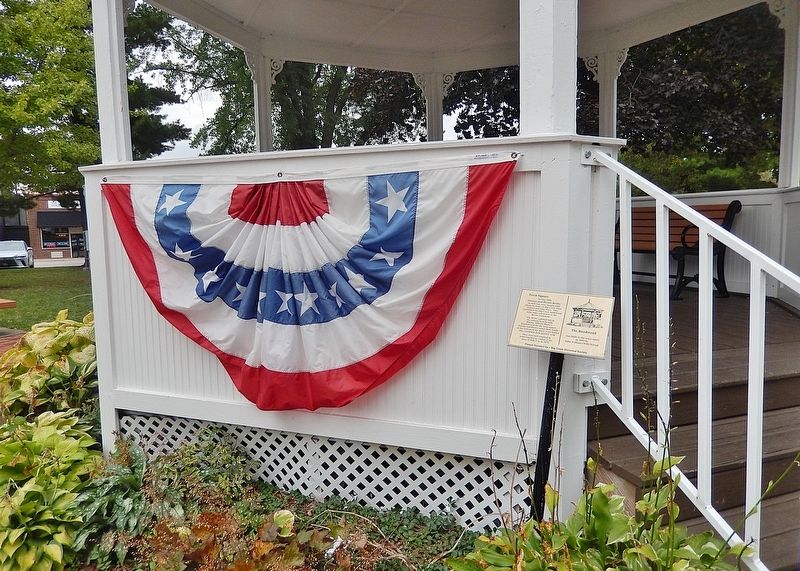
Excerpt: Polk(Submitted on February 5, 2026, by Cosmos Mariner of Cape Canaveral, Florida.)City was settled in 1846 and incorporated as a city on March 13, 1875. It was an early contender for the seat of Polk County before Des Moines was ultimately chosen. The city was named after President James K. Polk, who was president at the time of its founding. Polk City is also known for having the only "town square" in all of Polk County.Photographed by Cosmos Mariner, September 17, 20252. Town Square MarkerThe marker is located beside the Polk City Town Square Bandstand.
2. Polk City History (Big Creek Historical Society).
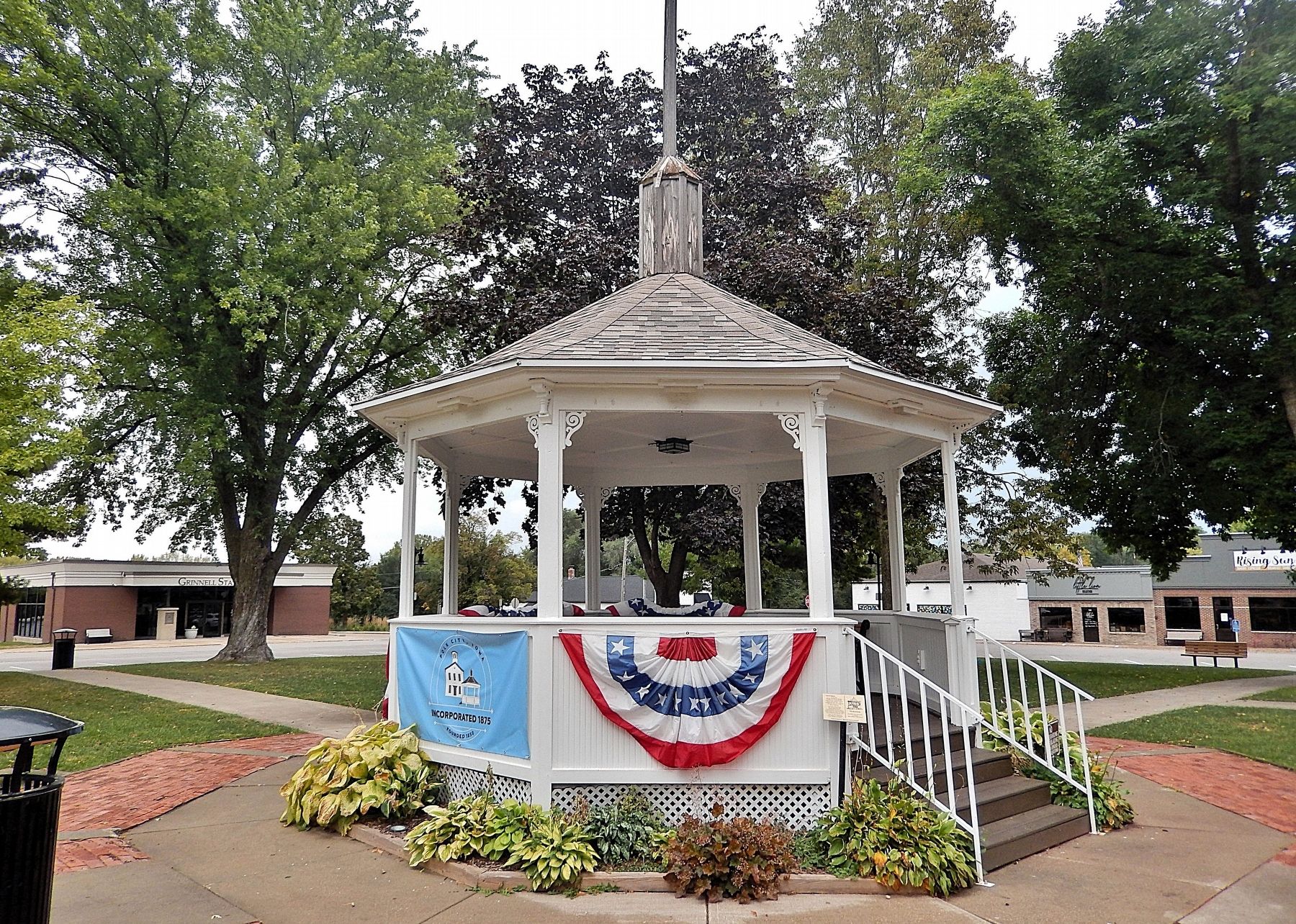
Excerpt: Settlers started to stream into this area in 1840. The very early families to settle in the Big Creek area on their arrival found the remnants of an abandoned Waukonsa Indian village, rich soil, large stands of hardwoods and a water source large enough to power multiple mills. One of those families was George and Hester Beebe and their children who stopped in the Big Creek area on their way to Utah. The settlement became known as the 'Big Creek Settlement.' In 1857 the settlement was considered along with Fort Des Moines for the Polk County seat designation. Through some political maneuvering Fort Des Moines was chosen. In 1863 John Adam Schaal(Submitted on February 5, 2026, by Cosmos Mariner of Cape Canaveral, Florida.)built a new two-story schoolhouse from native black walnut lumber harvested about 1-2 miles south of the building site. In 1875, with the population of 630, the town incorporated and became Polk City; named after the 11th President of the United States James Knox Polk. In 1883 the bandstand was built in the town square. This bandstand was restored in 1997 and continues to serve as a focal point for the community.Photographed by Cosmos Mariner, September 17, 20253. Polk City Town Square Bandstand
Credits. This page was last revised on February 5, 2026. It was originally submitted on February 2, 2026, by Cosmos Mariner of Cape Canaveral, Florida. This page has been viewed 50 times since then. Photos: 1, 2, 3. submitted on February 5, 2026, by Cosmos Mariner of Cape Canaveral, Florida.
