Salida in Chaffee County, Colorado — The American Mountains (Southwest)
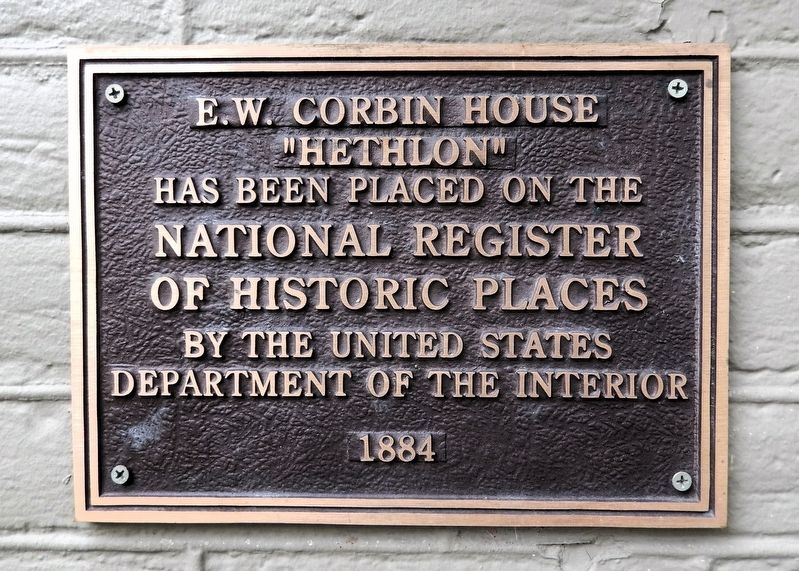
E. W. Corbin House
“Hethlon”
Photographed by Cosmos Mariner, July 23, 2025
1. E. W. Corbin House Marker
Has been placed on the
National Register of Historic Places
by the United States Department of the Interior
1884
Topics and series. This historical marker is listed in these topic lists: Architecture • Notable Buildings • Settlements & Settlers. In addition, it is included in the National Register of Historic Places (NRHP) series list. A significant historical year for this entry is 1884.
Location. 38° 31.884′ N, 105° 59.578′ W. Marker is in Salida, Colorado, in Chaffee County. It is at the intersection of East 5th Street (TransAmerica Trail) and D Street, on the left when traveling west on East 5th Street (TransAmerica Trail). The marker is mounted beside the front entrance, near the northwest corner of the subject house. Touch for map. Marker is at or near this postal address: 303 East 5th Street, Salida CO 81201, United States of America. Touch for directions.

Regionally, this marker is in the Arkansas River Valley, in the Colorado High Rockies and on the Continental Divide. It is also in the American Mountain West. Globally, it is in North America, the Rocky Mountains, the Western Hemisphere, the Western
this page online
Other nearby markers. At least 8 other markers are within walking distance of this marker: Votes for Women (about 400 feet away, measured in a direct line); Chaffee County Honor Roll Board (approx. ¼ mile away); Old Rails New Trails (approx. 0.4 miles away); Heart of the Rockies (approx. 0.4 miles away); A Railroad Town (approx. 0.4 miles away); The Salida Steam Plant (approx. 0.4 miles away); FIBArk: First in Boating on the Arkansas (approx. half a mile away); Water Use and Water Rights (approx. half a mile away). Touch for a list and map of all markers in Salida.
Regarding E. W. Corbin House. National Register of Historic Places № 96001239. Also Colorado State Register of Historic Properties Site № 5CF.849.
From the National Register Nomination prepared by Melanie Milam, 1/19/1996:
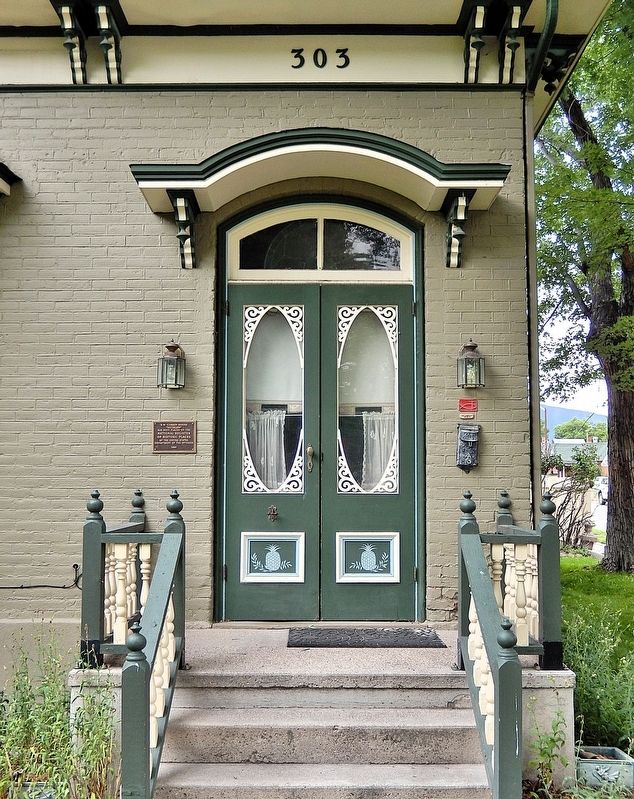
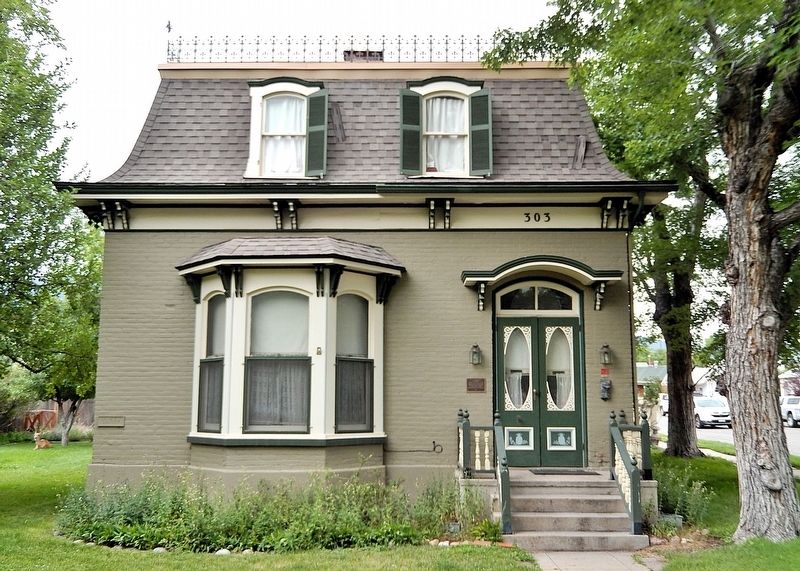
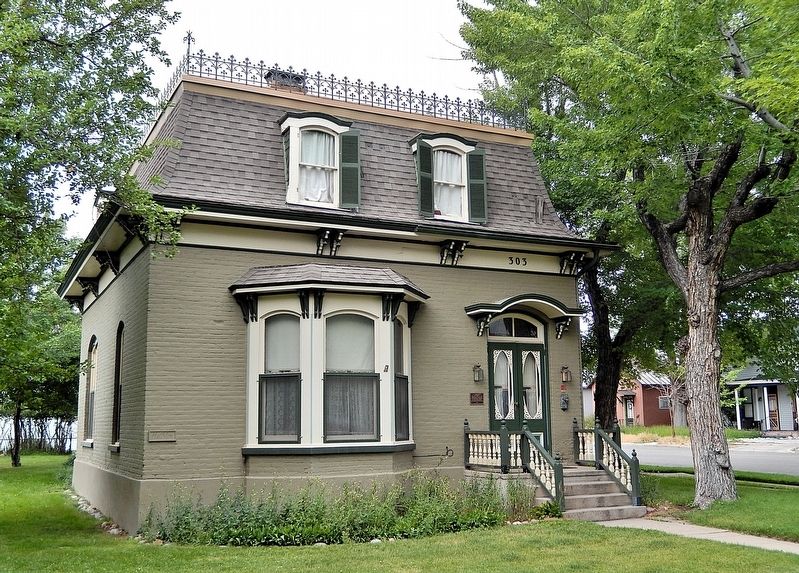
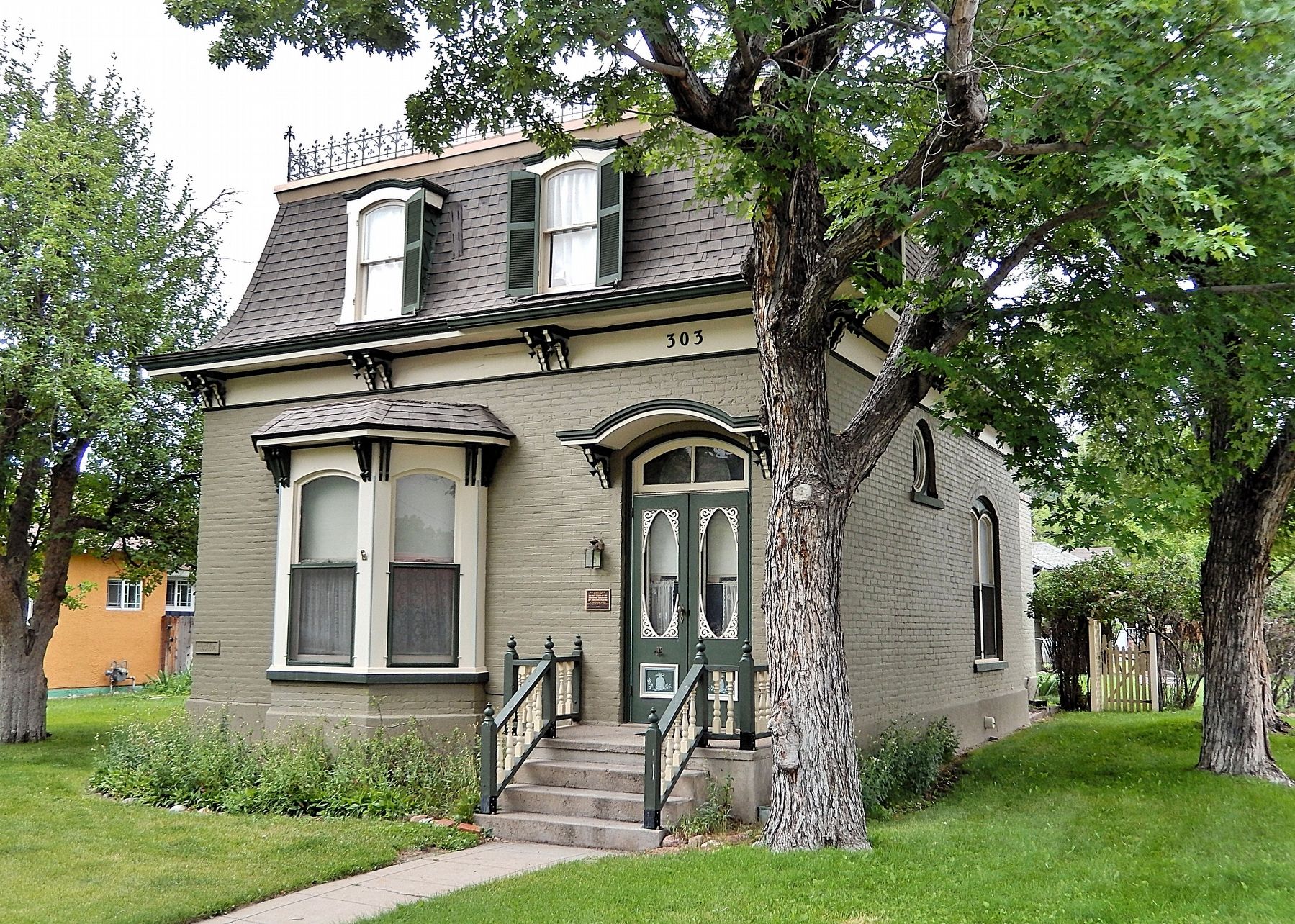
The E.W. Corbin House is a 1½ story, painted brick, Second Empire style residence in a rectangular plan, with a rectangular one-story addition on the rear, front bay window and porch, and mansard roof. The walls and foundation are painted native brick with a concrete parge coat to two feet above grade. Thesloping mansard roof surfaces are covered with asphalt shingles and broken by segmentally arched dormers with wood shutters.Photographed by Cosmos Mariner, July 23, 20252. E. W. Corbin House MarkerThe marker is mounted on the left side of the northwest/front entrance.
Lower elevations contain a mixture of double hung windows with one circular stained-glass window lighting the interior stairway. The roof meets the walls with a plain wood frieze, molding, and four pairs of decorative wood brackets on each of three elevations. The central chimney is brick. The interior has high ceilings on the lower level and retains its historic floor plan.
The house, built in 1884, is locally known to be the oldest brick home still standing in Salida. It was one of the first improvements in the Haskell's addition to Salida, an area which was later developed with churches and homes, often more modest in construction type and size.
The yard and street frontage retain many trees that were planted as a beautification project by the City of Salida in the 1880s. The house is extraordinary in its retention of original elements and is in excellent condition. The few modifications to this house have been completed with great sensitivity to its architectural and historical significance.
The E. W. CorbinHouse is significant for its association with the early settlement of Salida, Colorado. Corbin was one of the first to establish a residence and business in what was first known as South Arkansas. In 1884, he built the second brick residence in Salida. The Corbin House is also architecturally significant as the best and earliest example of the Second Empire style in Salida.Photographed by Cosmos Mariner, July 23, 20253. E. W. Corbin House (north/front elevation)
Also see . . .
1. E.W. Corbin House (Newsbreak.com).
Excerpt: In 1878, Edwin Willis Corbin helped to establish a business in Cleora [now Salida] called Webb & Corbin. When Corbin arrived in Cleora with his wife, Mary, he was 28. They came from Illinois. Once his business was set up, he was involved in developing the town. He owned one of the largest buildings and was a real estate speculator.(Submitted on February 12, 2026, by Cosmos Mariner of Cape Canaveral, Florida.)
By the spring of 1880, the railroad reached Salida. After the commercial district was mostly destroyed by fire, an ordinance was passed prohibiting the construction of wood-frame buildings. Brick became the chief building material in town. The fire destroyed at least 30 buildings.
Looking for a place to build a home for his wife and daughter, Corbin bought propertyin 1884 at 5th and D Streets. This was where he built the second brick residence in Salida. Back then, it was considered a modern home. The Second Empire architectural style was popular in the East first before it made its way out West.Photographed by Cosmos Mariner, July 23, 20254. E. W. Corbin House (northeast elevation)
In 1887, Corbin served as the town's mayor. He was also the founder, president, and first manager of the Salida Opera House Association. When Corbin died in 1889, he was still the manager of the Opera House and an agent for the Continental Oil Company.
2. E.W. Corbin House (History Colorado).
Excerpt: The 1884 E.W. Corbin House is associated with the early settlement of Salida.(Submitted on February 12, 2026, by Cosmos Mariner of Cape Canaveral, Florida.)
3. Cleora, Colorado (Salida Regional Library).
Excerpt: The town of Cleora, Colorado was located at the southeastern end of the Arkansas Valley, at the mouth Bighorn Sheep Canyon. Today, this puts it at 5005 U.S. Highway 50, where Rocky Mountain Livestock Sales are located.(Submitted on February 12, 2026, by Cosmos Mariner of Cape Canaveral, Florida.)
The Cleora Post Office was established December 5, 1876, and discontinuedMarch 7, 1882. Cleora was a small railroad station and village established by the Santa Fe Railroad. When the Denver & Rio Grande won right-of-way into the Arkansas Valley, Cleora’s death knell was imminent. The D&RG established Salida in 1880, and Cleora townsfolk soon relocated to downtown Salida, some even transferring their houses and buildings.Photographed by Cosmos Mariner, July 23, 20255. E. W. Corbin House (northwest elevation)
4. E.W. Corbin House (Wikipedia).
Excerpt: The E.W. Corbin House is a one-and-a-half-story painted brick house, Second Empire in style. It was listed on the National Register of Historic Places in 1996.(Submitted on February 12, 2026, by Cosmos Mariner of Cape Canaveral, Florida.)
Credits. This page was last revised on July 6, 2026. It was originally submitted on February 11, 2026, by Cosmos Mariner of Cape Canaveral, Florida. This page has been viewed 76 times since then. Photos: 1, 2, 3, 4, 5. submitted on February 12, 2026, by Cosmos Mariner of Cape Canaveral, Florida.
