Near Hallettsville in Lavaca County, Texas — The American South (West South Central)
William E. Summers
(March 29, 1811 – March 6, 1836)
Photographed by Dave W, February 14, 2026
1. William E. Summers Marker
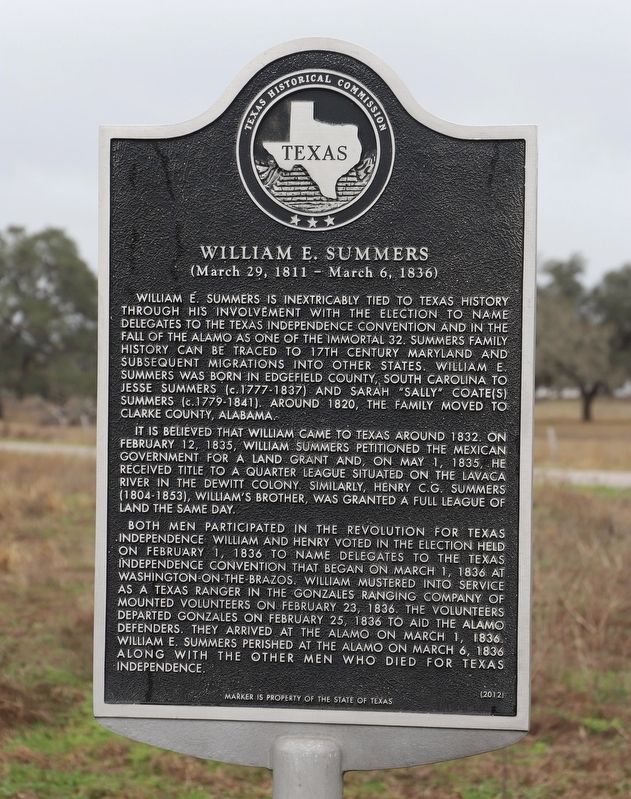
William E. Summers is inextricably tied to Texas history through his involvement with the election to name delegates to the Texas Independence Convention and in the fall of the Alamo as one of the Immortal 32. Summers family history can be traced to 17th century Maryland and subsequent migration to other states. William E. Summers was born in Edgefield County, South Carolina to Jesse Summers (c. 1777-1837) and Sara “Sally” Coate(s) Summers (c. 1779-1841). Around 1820, the family moved to Clarke County, Alabama.
It is believed that William came to Texas around 1832. On February 12, 1835 William Summers petitioned the Mexican government for a land grant and, on May 1, 1835, he received title to a quarter league situated on the Lavaca River in the DeWitt Colony. Similarly, Henry C.G. Summers (1804-1853), William’s brother, was granted a full league of land the same day.
Both men participated in the revolution for Texas Independence. William and Henry voted in the election held on February 1, 1836 to name delegates to the Texas Independence Convention that began on March 1, 1836 at Washington-on-the-Brazos. William
this page online
Erected 2012 by Texas Historical Commission. (Marker Number 17286.)
Topics. This historical marker is listed in these topic lists: Settlements & Settlers • War, Texas Independence. A significant historical date for this entry is March 29, 1811.
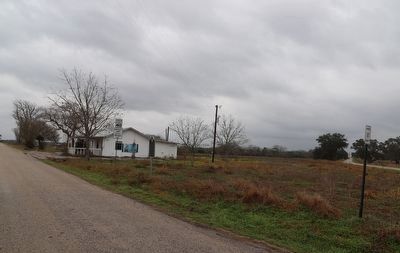
Location. 29° 16.807′ N, 96° 53.939′ W. Marker is near Hallettsville, Texas, in Lavaca County. It is at the intersection of County Road 12 and County Road 1, on the right when traveling east on County Road 12. Touch for map. Marker is at or near this postal address: 5959 Co Rd 12, Hallettsville TX 77964, United States of America. Touch for directions.

Regionally, this marker is in the American South and on the Gulf Coast. Globally, it is in North America, a Gulf of Mexico state, the Western Hemisphere, the Western World, and the Anglosphere.
Photographed by Dave W, February 14, 2026
2. William E. Summers Marker
Other nearby markers. At least 8 other markers are within 12 miles of this marker, measured as the crow flies: Ezzell School (about 300 feet away, measured in a direct line); Andrew Kent (approx. 2.1 miles away); John Himes Livergood (approx. 6.8 miles away); The United Methodist Church of Hope (approx. 7½ miles away); Hope Baptist Church (approx. 7½ miles away); William Smothers (approx. 10.3 miles away); Queen of Peace Catholic Church (approx. 11.1 miles away); The Wreck of the Don Milo (approx. 11.2 miles away). Touch for a list and map of all markers in Hallettsville.
Credits. This page was last revised on February 15, 2026. It was originally submitted on February 15, 2026, by Dave W of Co, Colorado. This page has been viewed 57 times since then. Photos: 1, 2. submitted on February 15, 2026, by Dave W of Co, Colorado. • James Hulse was the editor who published this page.
