Oak Ridge in Anderson County, Tennessee — The American South (East South Central)
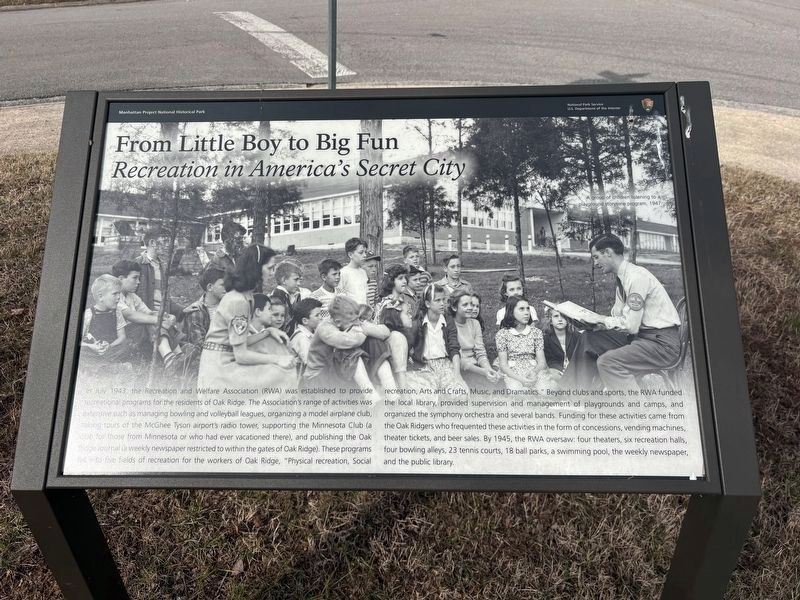
From Little Boy to Big Fun
Recreation in America's Secret City
Photographed by Darren Jefferson Clay, February 14, 2026
1. From Little Boy to Big Fun Marker
this page online
Erected by Manhattan Project National Historical Park, National Park Service, Department of the Interior.
Topics. This historical marker is listed in this topic list: War, World II. A significant historical year for this entry is 1943.
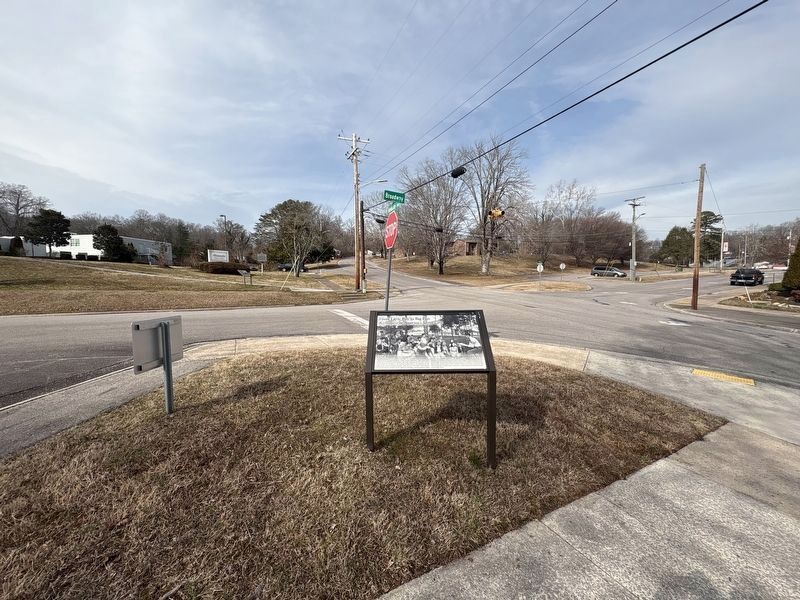
Location. 36° 1.723′ N, 84° 14.458′ W. Marker is in Oak Ridge, Tennessee, in Anderson County. It is at the intersection of Kentucky Avenue and Broadway Ave, on the left when traveling north on Kentucky Avenue. Touch for map. Marker is at or near this postal address: 30 Kentucky Ave, Oak Ridge TN 37830, United States of America. Touch for directions.

Regionally, this marker is in East Tennessee and in Greater Knoxville. It is also in the American South, specifically in the Upper South, in Appalachia, and specifically in Southern Appalachia. Globally, it is in North America, the Western Hemisphere, the Western World, and the Anglosphere. Historically, it finds itself in what was once the original Cherokee Nation, the territory of the Mississippian Culture, one of the Confederate States of America, and the Antebellum
Photographed by Darren Jefferson Clay, February 14, 2026
2. From Little Boy to Big Fun Marker
Other nearby markers. At least 8 other markers are within walking distance of this marker: The Guest House (a few steps from this marker); a different marker also named The Guest House (within shouting distance of this marker); Jackson Square (about 400 feet away, measured in a direct line); Chapel on the Hill (about 400 feet away); Historic Oak Ridge Playhouse (about 400 feet away); The Chapel-on-the-Hill (about 500 feet away); The Dormitories of Manhattan Project (about 500 feet away); The Castle (about 600 feet away). Touch for a list and map of all markers in Oak Ridge.
Credits. This page was last revised on February 20, 2026. It was originally submitted on February 16, 2026, by Darren Jefferson Clay of Duluth, Georgia. This page has been viewed 51 times since then. Photos: 1, 2. submitted on February 16, 2026, by Darren Jefferson Clay of Duluth, Georgia. • James Hulse was the editor who published this page.
