
Altstadt in Heidelberg, Baden-Württemberg, Germany — Central Europe
Karl Bernhard Stark
Photographed by James Hulse, February 19, 2026
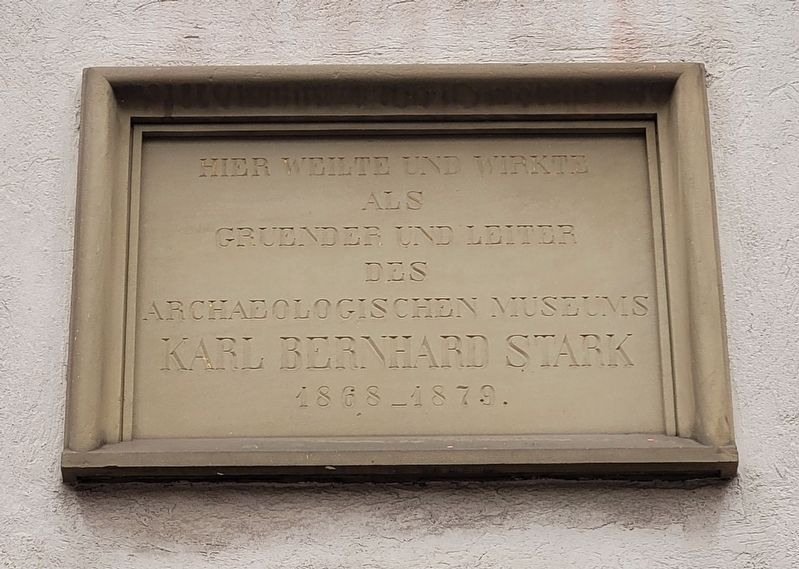
1. Karl Bernhard Stark Marker

Hier weilte und wirkte als Gründer und Leiter des Archäologischen Museums Karl Bernhard Stark 1868–1879.
Here lived and worked as founder and director of the Archaeological Museum Karl Bernhard Stark 1868–1879.
Topics. This historical marker is listed in this topic list: Notable Buildings.
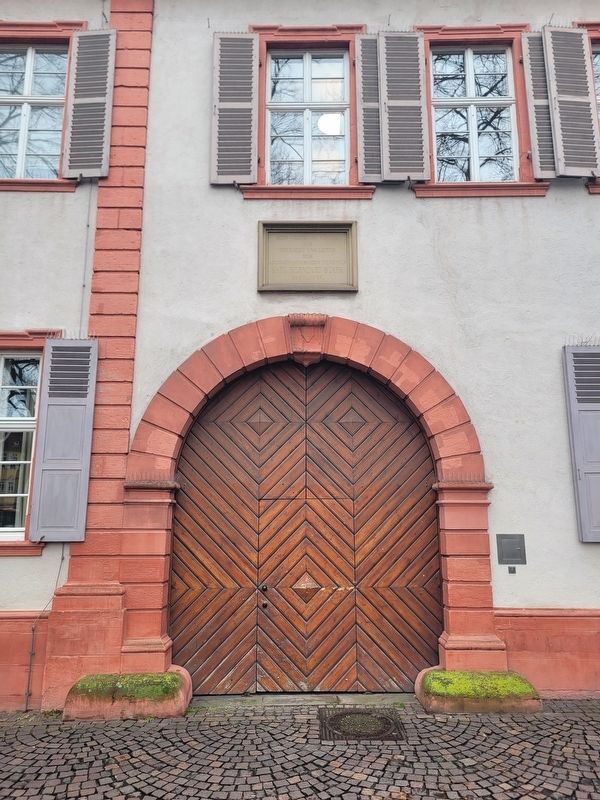
Location. 49° 24.655′ N, 8° 42.417′ E. Marker is in Heidelberg, Baden-Württemberg. It is in Altstadt. It is on Augustinergasse just south of Merianstraße, on the left when traveling south. Touch for map. Marker is at or near this postal address: Augustinergasse 9, Heidelberg BW 69117, Germany. Touch for directions.

Regionally, it is in Europe, the European Union, Atlantic Europe, Central Europe, the Schengen Area, Western Europe, and the Western World. Historically, it finds itself in what was once the Roman Empire and specifically also the Holy Roman Empire.
Other nearby markers. At least 8 other markers are within walking distance of this marker: Karl Gottfried Nadler (here, next to this marker); Nationalsozialisten Bücherverbrennung / National Socialist Book Burning
this page online
Also see . . . Stark, Karl Bernhard. Dictionary of Art Historians
Classicist art historian. Stark hailed from an illustrious professional family who saw to it that he gained a classical education early. He read the Odyssey in Greek at age nine. Stark studied philology at the University in Jena and then Leipzig between 1841 and 1845. The lectures of August Böckh (1785-1867) turned his interest to classical art. He traveled to Italy. In 1850, at just age 26, he was associate professor and director of the museum. At Jena he wrote a book on Albrecht Dürer in 1851. His book on the arts of Gaza, a broadly conceived cultural history, appeared in 1852. By 1855, at the untimely death of Karl Friedrich(Submitted on February 23, 2026, by James Hulse of Medina, Texas.)Hermann at the University in Heidelberg, Stark moved to become its first chair in archaeology. He also took over subsequent publications of Hermann’s Lehrbuch der griechischen Antiquitäten with Johann C. F. Bähr (1798-1872). His publications at Heidelberg included a study of the myth of Niobe in 1863. Stark conceived of a survey of the archaeology of art from the fifteenth to the nineteenth centuries. It was characteristic of Stark’s broad vision of the nascent disciplines of art and archaeology in which he worked. However, only volume one appeared, and that posthumously in 1880. Stark also wrote a travel book on France and Belgium.Photographed by James Hulse, February 19, 20262. Karl Bernhard Stark MarkerThe view of the marker above the doorway.
Photographed by James Hulse, February 19, 2026
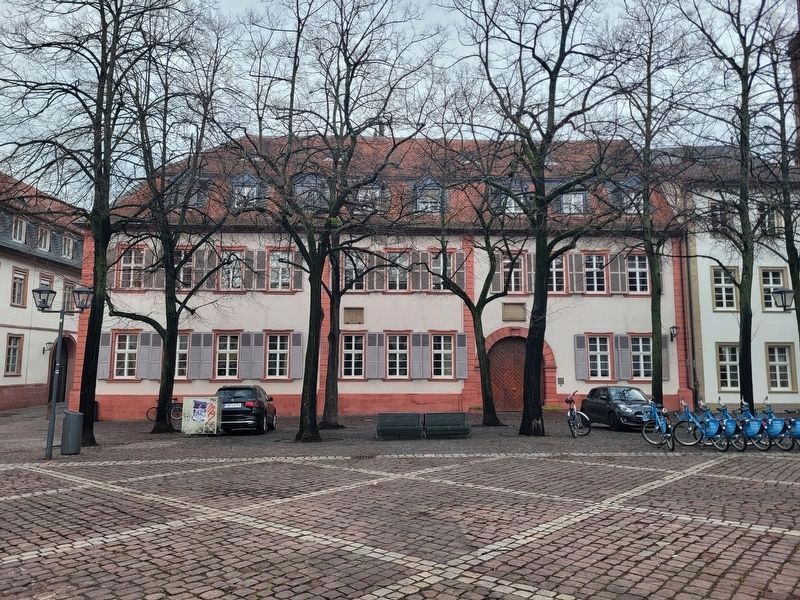
3. Karl Bernhard Stark Marker
Of the two markers mounted on the building, this is the one on the right; the marker on the left commemorates Karl Gottfried Nadler.
Credits. This page was last revised on February 23, 2026. It was originally submitted on February 22, 2026, by James Hulse of Medina, Texas. This page has been viewed 37 times since then. Photos: 1, 2, 3. submitted on February 23, 2026, by James Hulse of Medina, Texas.
