Valparaiso in Porter County, Indiana — The American Midwest (Great Lakes)
Chapel of the Resurrection

Photographed by Daniel Barriball, February 28, 2026
1. Chapel of the Resurrection Marker
Dedicated 1959
Charles E. Stade, Architect
has been placed on the
National Register
of Historic Places
by the United States
Department of the Interior
Erected 2021 by Valparaiso University.
Topics. This historical marker is listed in these topic lists: Architecture • Religion & Religious Structures. A significant historical year for this entry is 1959.
Location. 41° 27.792′ N, 87° 2.54′ W. Marker is in Valparaiso, Indiana, in Porter County. It is on Chapel Drive east of McIntyre Court, on the right when traveling east. This marker is to the left of the main entrance into the Chapel of the Resurrection on the campus of Valparaiso University. Touch for map. Marker is at or near this postal address: 1600 Chapel Dr, Valparaiso IN 46383, United States of America. Touch for directions.

Regionally, this marker is in Northwest Indiana and in the Calumet Region. It is also in the American Midwest and in the Corn Belt. Globally, it is in North America, on the Great Lakes, in the Western Hemisphere, in the Western World, and in the Anglosphere. Historically, it finds itself
this page online
Other nearby markers. At least 8 other markers are within walking distance of this marker: Victory (approx. 0.4 miles away); Navy Mothers Club Memorial (approx. 0.4 miles away); To the Unknown Dead (approx. 0.6 miles away); Founders' Rock (approx. 0.6 miles away); a different marker also named Founders' Rock (approx. 0.6 miles away); Music Hall Bench (approx. 0.6 miles away); Kirchhoff Park (approx. 0.7 miles away); Banta School (approx. 0.9 miles away). Touch for a list and map of all markers in Valparaiso.
Regarding Chapel of the Resurrection.
From the National Register of Historic Places nomination form's Statement of Significance:
Valparaiso University’s Chapel of the Resurrection, one of the largest campus chapels in America, meets National Register Criterion C because of its innovative and striking mid-century modernism that heralded a major change in regional church design. This building is the most monumental and important work of the notable mid-century church architect, Charles E. Stade. Unlike anything previously built in
Photographed by Daniel Barriball, February 28, 2026
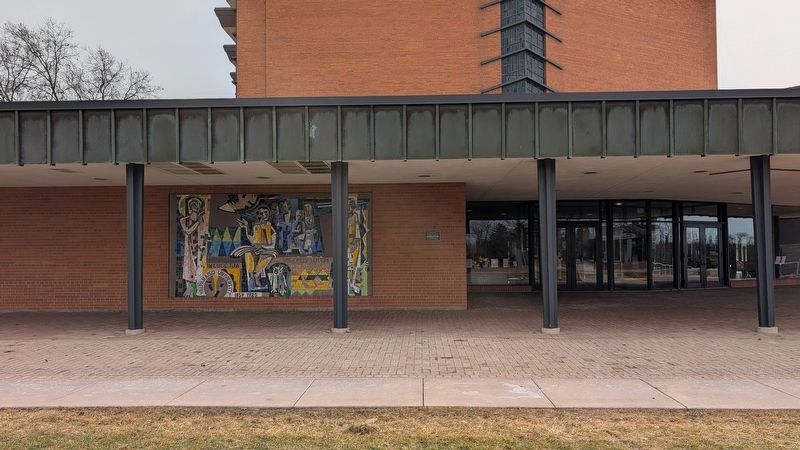
2. Chapel of the Resurrection Marker in context
The marker is to the left of the entrance. To the left of the marker is the Christian Scholar mosaic.
Also see . . .
1. History of the Chapel. Official website
Originally called Memorial Chapel in recognition of the many memorial gifts made to help fund its construction, it was named the Chapel of the Resurrection in 1969. The chapel was built as a thanksgiving to God in the form of a place for corporate worship, and as a gathering place for the university community to participate in convocations, concerts, recitals, lectures and assemblies of a similar nature.(Submitted on March 2, 2026, by Daniel Barriball of Chesterton, Indiana.)
2. National Register of Historic Places Nomination Form.
Photographed by Daniel Barriball, February 28, 2026
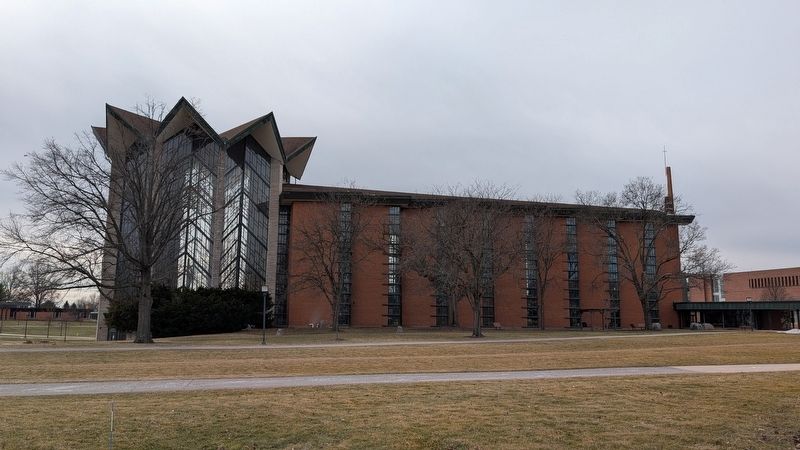
3. North side of the Chapel of the Resurrection
3. The Shape of a New Era: Valparaiso's Chapel of the Resurrection in Historical Context. The Cresset This article describes the architectural milieu in which Charles Stade designed the Chapel of the Resurrection and some of the ideas and influences that went into the design.
Stade was not a major national player but was devoted to the modern church movement, attending conferences and building exclusively modern buildings. The Valparaiso chapel was his most significant commission, and, according to his daughter, he felt it was his greatest work. Conversations with the university began in the fall of 1955, when Stade was just thirty-two, and he and his associates worked on the initial plans for nearly a year (Johnson, 22 March 2009). Jean Labatut also assisted with the design. After one meeting in 1956, Stade wrote to his mentor: “It was certainly beyond and above the call of duty to stay(Submitted on March 4, 2026, by Daniel Barriball of Chesterton, Indiana.)up half the night to work on the chapel” (Stade, 10 April 1956).Photographed by Daniel Barriball, February 28, 20264. Chapel of the Resurrection with the Brandt Campanile

Photographed by Daniel Barriball, February 28, 2026
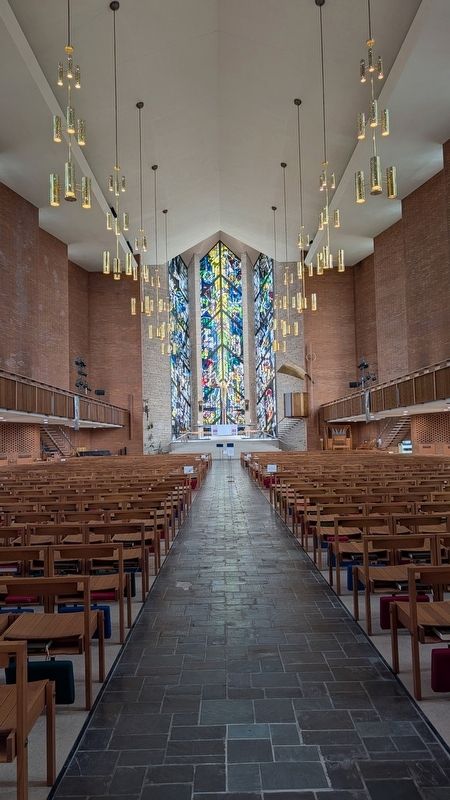
5. Chapel of the Resurrection Nave and Chancel

Photographed by Daniel Barriball, February 28, 2026
6. Close-up of the Chancel and Stained Glass
The stained glass and the altar was designed by Peter Dohman Studios of St. Paul, Minnesota. The Christus Rex statue was fabricated by David Elder from the university's art department.

Photographed by Daniel Barriball, February 28, 2026
7. Baptistery
Photographed by Daniel Barriball, February 28, 2026
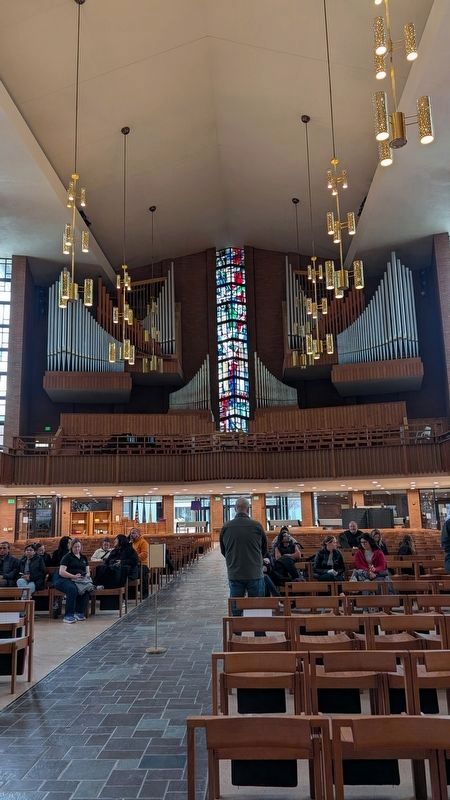
8. Organ Loft With Stained Glass
This view is looking west opposite the chancel.
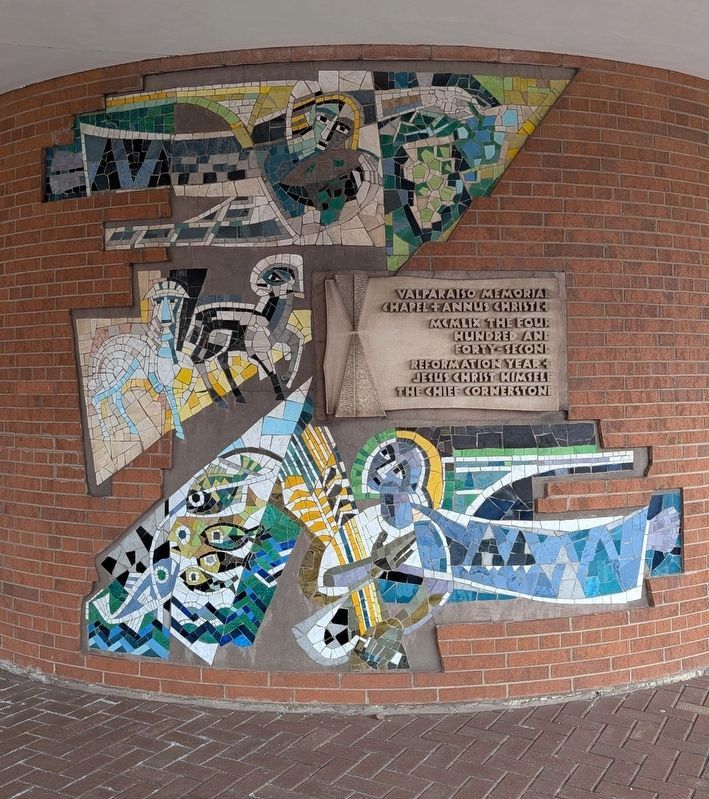
Photographed by Daniel Barriball, February 28, 2026
9. Cornerstone Mosaic
This mosaic is located on the northern exterior wall of the narthex.
Credits. This page was last revised on March 15, 2026. It was originally submitted on March 2, 2026, by Daniel Barriball of Chesterton, Indiana. This page has been viewed 58 times since then. Photos: 1, 2, 3, 4, 5, 6. submitted on March 2, 2026, by Daniel Barriball of Chesterton, Indiana. 7, 8, 9. submitted on March 3, 2026, by Daniel Barriball of Chesterton, Indiana. • Devry Becker Jones was the editor who published this page.
